The oil and gas industry has always relied on engineering innovation to survive in some of the world’s harshest operating environments. From offshore drilling platforms exposed to saltwater corrosion to high-pressure refinery systems operating around the clock, equipment reliability is directly tied to operational profitability.
In recent years, one technology has started to reshape how energy companies approach manufacturing, maintenance, and supply chain management: metal additive manufacturing.
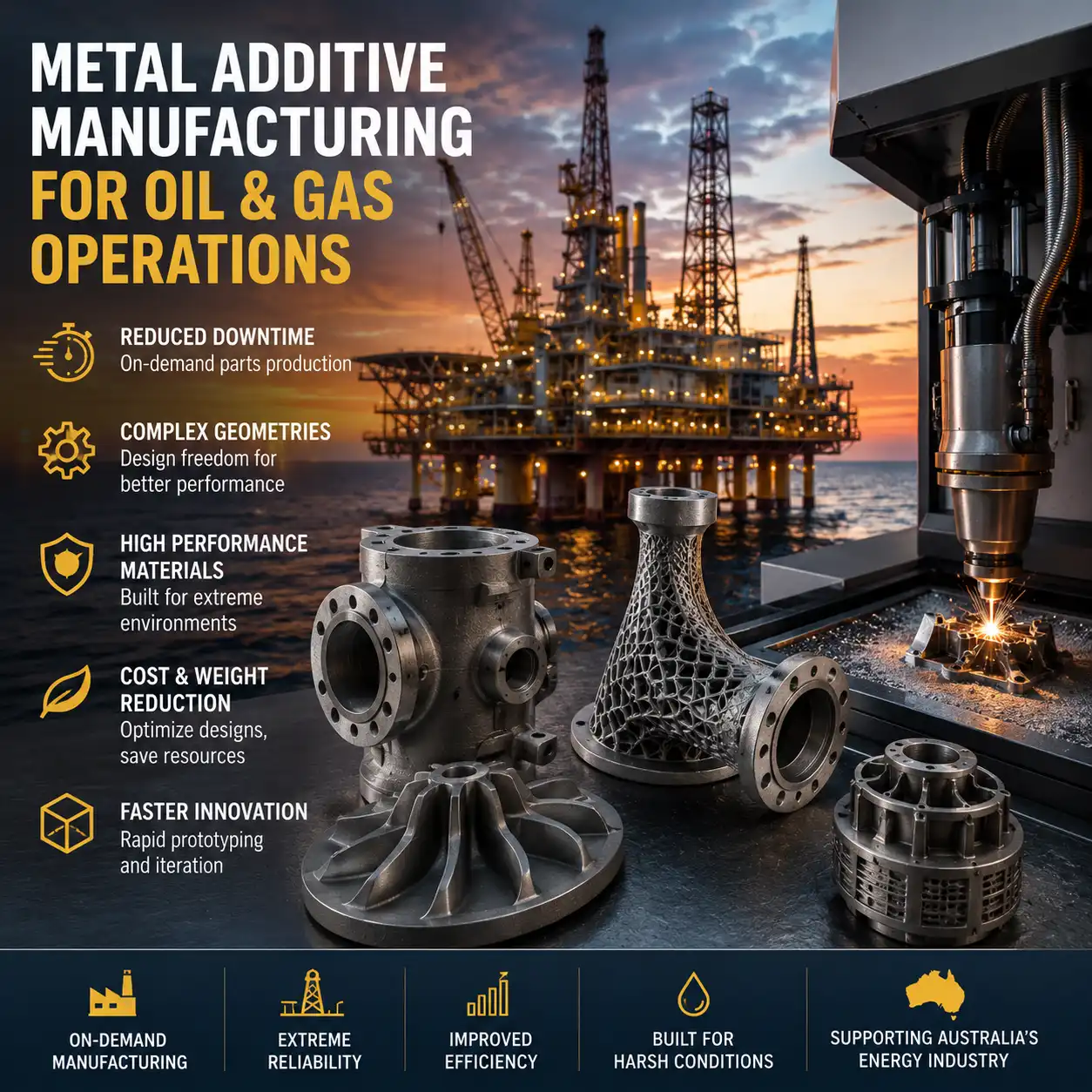
Also known as metal 3D printing, this advanced manufacturing method is becoming increasingly important for oil and gas operations across Australia and global energy markets. Companies are now using additive manufacturing to reduce downtime, improve part performance, accelerate repairs, and lower production costs.
At E-Metal3D, we’ve seen firsthand how industrial sectors are moving away from traditional manufacturing limitations and embracing smarter, more agile production methods.
Why Oil & Gas Companies Are Turning to Metal Additive Manufacturing
Traditional manufacturing works well for mass production, but oil and gas operations often require something different:
- Custom components
- Fast replacement parts
- Corrosion-resistant materials
- Lightweight but strong structures
- Reduced downtime
This is exactly where metal additive manufacturing excels.
Instead of machining parts from solid blocks of metal or waiting weeks for cast components, additive manufacturing builds parts layer by layer directly from a digital design. The result is faster production, less waste, and far greater design flexibility.
For oil and gas operators, these advantages can translate into millions of dollars in operational savings.
1. Reduced Downtime Through On-Demand Manufacturing
One of the biggest financial risks in oil and gas operations is equipment downtime.
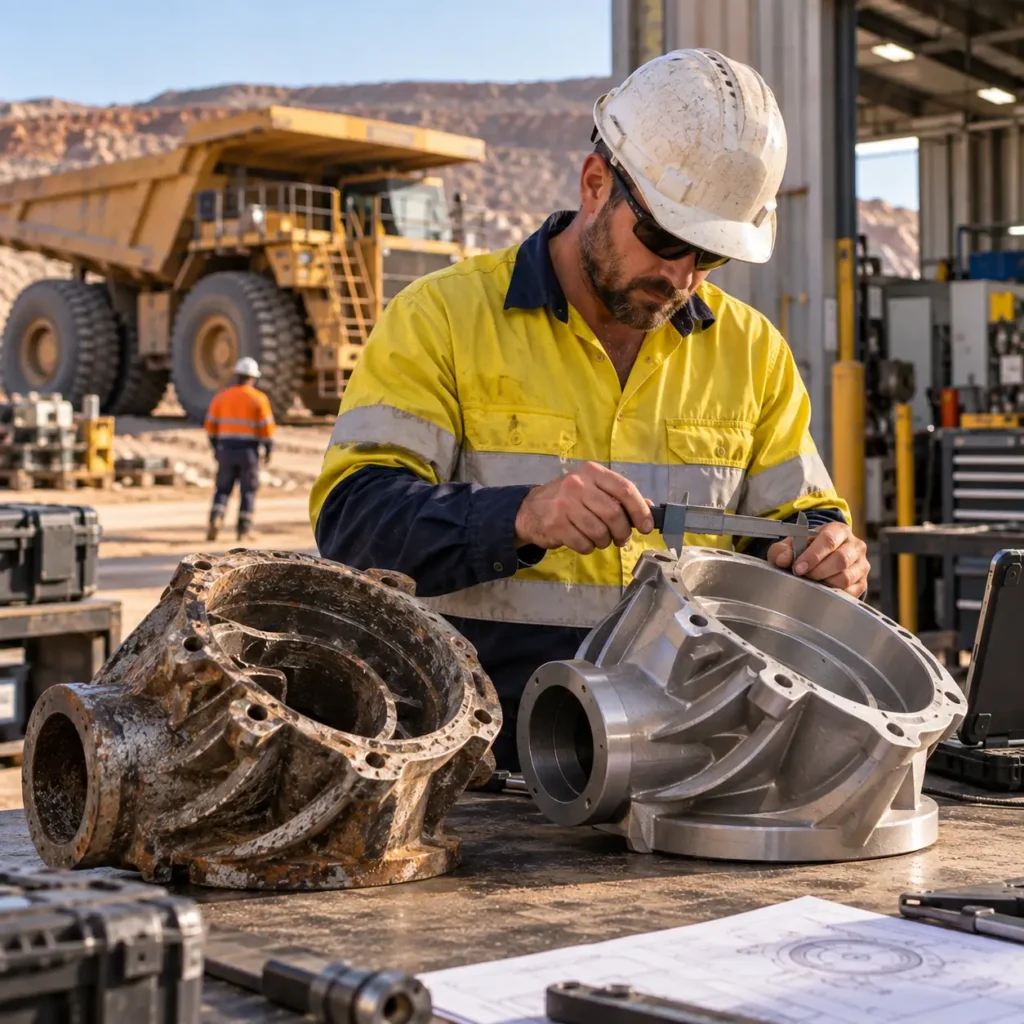
A failed valve housing, damaged impeller, or worn pump component can stop production entirely. Traditional supply chains often require long lead times for replacement parts — especially for offshore facilities or remote industrial sites.
With metal 3D printing, spare parts can be manufactured on demand.
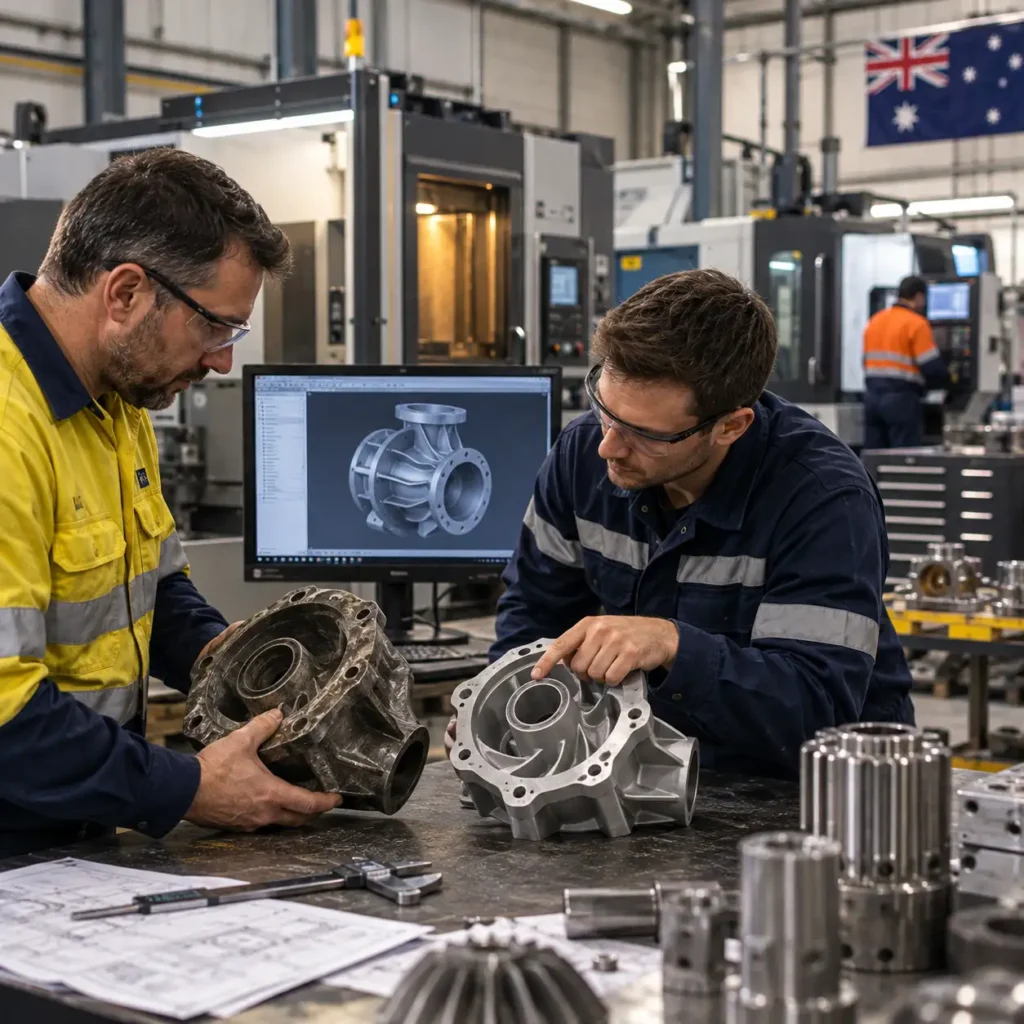
Instead of waiting several weeks for overseas suppliers, companies can produce high-performance metal parts locally and significantly reduce operational interruptions.
Real Industry Impact
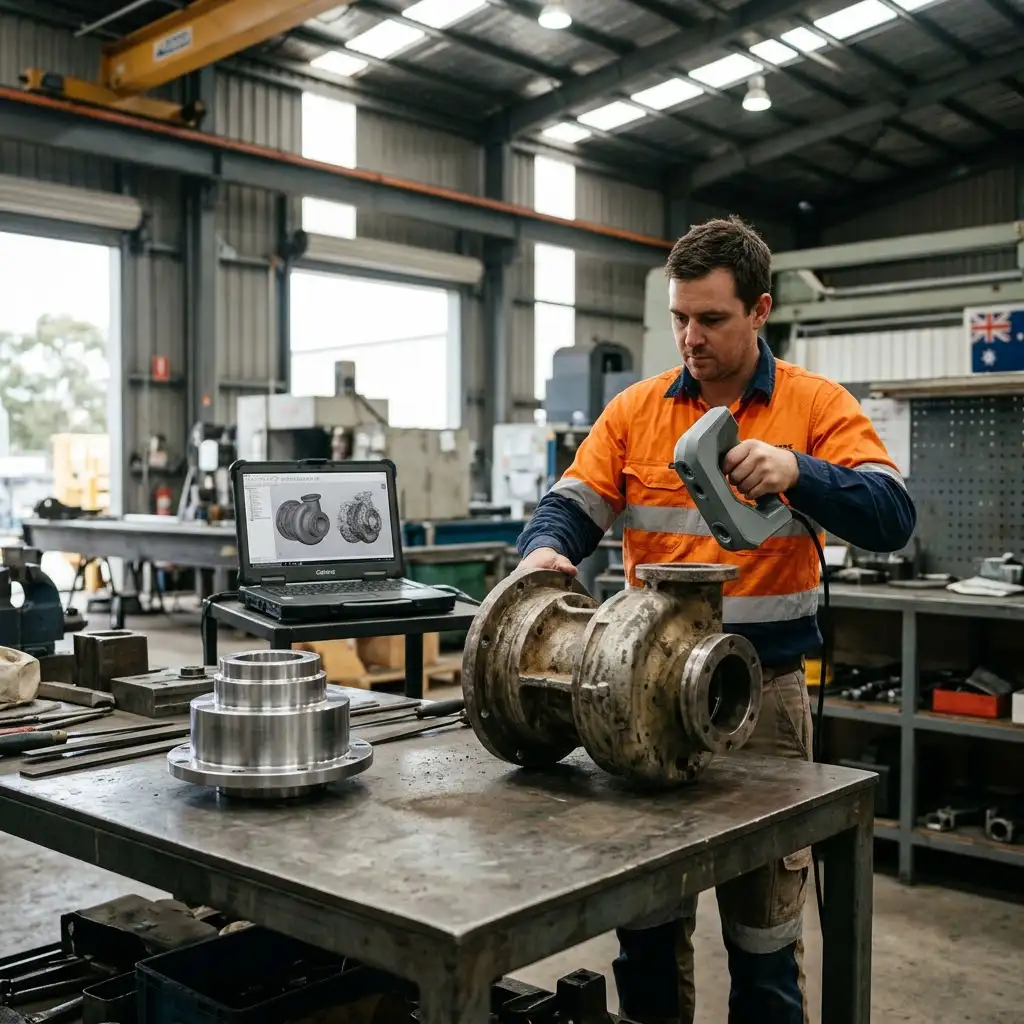
Many energy companies are now building digital inventories instead of physical warehouses. Once a component is scanned and validated, the CAD file can be stored digitally and reproduced whenever required.
This approach reduces:
- Inventory costs
- Storage requirements
- Supply chain dependency
- Emergency procurement expenses
At E-Metal3D, this has become one of the most requested engineering solutions from industrial clients.
2. Complex Parts Can Be Manufactured More Efficiently
Traditional manufacturing methods often struggle with highly complex geometries.
In oil and gas systems, components frequently include:
- Internal cooling channels
- Fluid optimization paths
- Thin-wall structures
- Complex flow systems
Using technologies like Laser Powder Bed Fusion (LPBF), manufacturers can produce geometries that would be nearly impossible using casting or CNC machining.
Why Does This Matter?
Better geometry means:
- Improved fluid dynamics
- Reduced turbulence
- Higher energy efficiency
- Better heat management
- Reduced mechanical stress
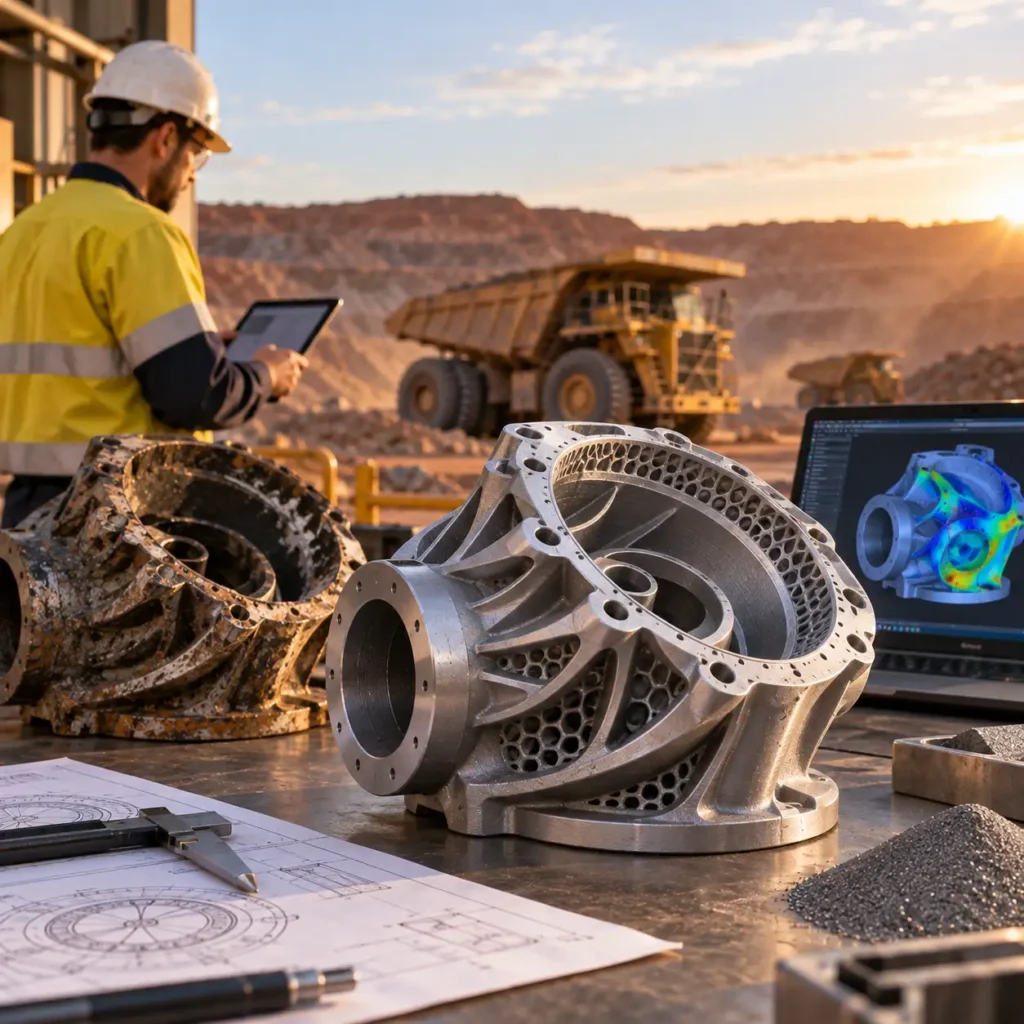
For example, turbine components and flow control devices can be redesigned with optimized internal structures that improve performance while reducing weight.
3. Stronger and More Durable Components
Oil and gas environments are brutal on equipment.
Extreme temperatures, abrasive materials, pressure fluctuations, and chemical exposure can quickly degrade conventional components.
That’s why material selection is critical.
Metal additive manufacturing supports advanced industrial alloys such as:
- Stainless Steel 316L
- Inconel 718
- Titanium alloys
- Aluminum alloys
- Maraging steel
These materials offer excellent:
- Corrosion resistance
- Heat resistance
- Fatigue performance
- Structural integrity
At E-Metal3D, we regularly work with these materials for industrial applications where durability is non-negotiable.
4. Lightweight Components Improve Operational Efficiency
Weight reduction is a major priority in offshore and energy operations.
Heavy components increase:
- Transportation costs
- Fuel consumption
- Installation complexity
- Structural loads
One of the major benefits of metal additive manufacturing is topology optimization.
What Is Topology Optimization?
It’s an engineering process that removes unnecessary material while maintaining structural strength.
The result:
- Lighter parts
- Lower material usage
- Improved efficiency
- Better overall performance
This is particularly valuable for:
- Offshore systems
- Pump assemblies
- Aerospace-grade energy equipment
- Remote installations
5. Faster Prototyping Accelerates Innovation
The oil and gas sector is under increasing pressure to modernize operations while reducing costs and emissions.
Traditional product development can take months because tooling, molds, and machining setups require significant preparation.
Metal additive manufacturing changes that completely.
Rapid Prototyping Advantages
Engineers can:
- Design a part digitally
- Print prototypes quickly
- Test performance
- Modify the design
- Reprint improved versions within days
This dramatically shortens development cycles.
Instead of waiting months for validation, companies can iterate rapidly and bring solutions to market much faster.
Frequently Asked Questions About Metal Additive Manufacturing
Is metal additive manufacturing suitable for oil and gas applications?
Yes. Modern additive manufacturing systems produce industrial-grade metal components capable of operating in high-pressure, high-temperature, and corrosive environments.
Can 3D-printed metal parts replace traditionally manufactured components?
In many cases, yes. Especially for custom components, low-volume production, repair parts, and optimized geometries.
Which industries benefit most from metal additive manufacturing?
Industries such as:
- Oil & Gas
- Mining
- Aerospace
- Defence
- Medical manufacturing
- Energy production
are rapidly adopting additive manufacturing technologies.
Is metal 3D printing expensive?
Not always.
While initial production costs can sometimes be higher for small components, the long-term savings from:
- Reduced downtime
- Lower inventory costs
- Faster production
- Improved efficiency
often make additive manufacturing highly cost-effective.
Sustainability Is Becoming a Major Advantage
The oil and gas industry is increasingly focused on sustainability and operational efficiency.
Metal additive manufacturing helps by reducing waste during production.
Traditional machining can waste up to 80% of raw material, while additive manufacturing uses only the material needed to build the component.
Additional sustainability benefits include:
- Lower transport emissions
- Reduced warehousing
- Less tooling waste
- Localized manufacturing capabilities
For Australian industries, this aligns well with broader industrial modernization strategies.
The Future of Oil & Gas Manufacturing
The shift toward digital manufacturing is accelerating.
As additive manufacturing technologies become faster and more affordable, more energy companies are expected to integrate metal 3D printing into daily operations.
The combination of:
- Engineering flexibility
- Faster production
- Better materials
- Reduced downtime
- Lower waste
makes metal additive manufacturing one of the most important industrial technologies shaping the future of oil and gas operations.
At E-Metal3D, we believe the companies that adopt these technologies early will gain a major competitive advantage in reliability, efficiency, and innovation.
Final Thoughts
Metal additive manufacturing is no longer an experimental technology reserved for research labs. It is now a practical industrial solution delivering measurable value across the oil and gas sector.
From custom metal parts and rapid prototyping to corrosion-resistant components and digital inventory systems, additive manufacturing is helping energy companies rethink how industrial equipment is designed, produced, and maintained.
As the industry continues evolving, technologies like LPBF and industrial metal 3D printing will play a central role in building more efficient, sustainable, and resilient operations.