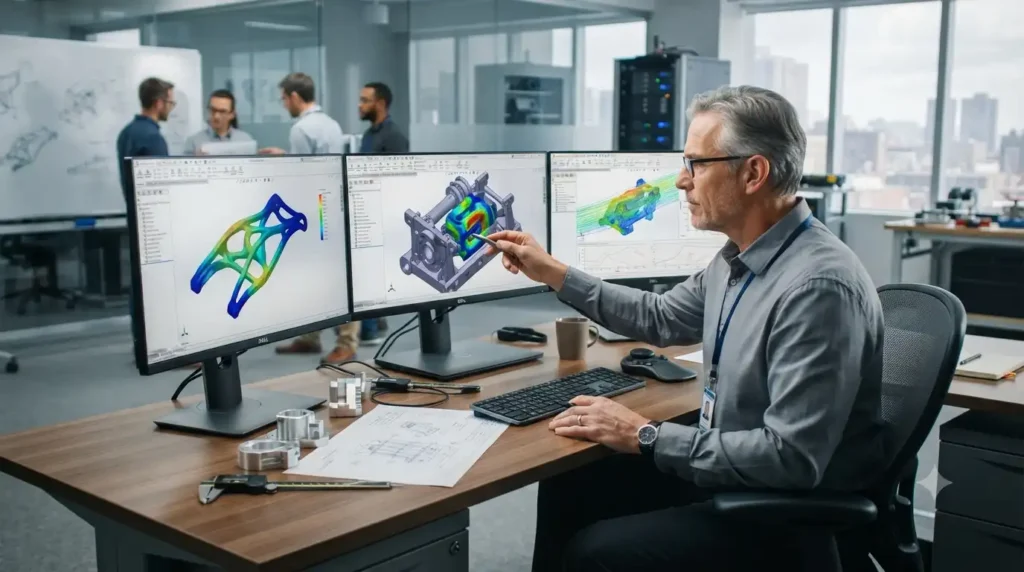
Engineering challenges require more than standard design services. At E-Metal3D, we provide integrated engineering solutions that help manufacturers repair obsolete components, develop replacement spare parts, optimise existing designs, and prepare products for advanced manufacturing.
By combining Reverse Engineering, 3D Scanning, CAD Modelling, Digital Twin development, Engineering Analysis, Metal 3D Printing, and CNC Machining, we deliver practical, end-to-end solutions for companies that need reliable components, shorter lead times, and improved operational performance.
Whether you need to reproduce a discontinued part, redesign a legacy component, or develop a new product for production, our engineering team supports every stage of the process—from concept and validation to manufacturing and final delivery.
Engineering Solutions Built Around Your Project
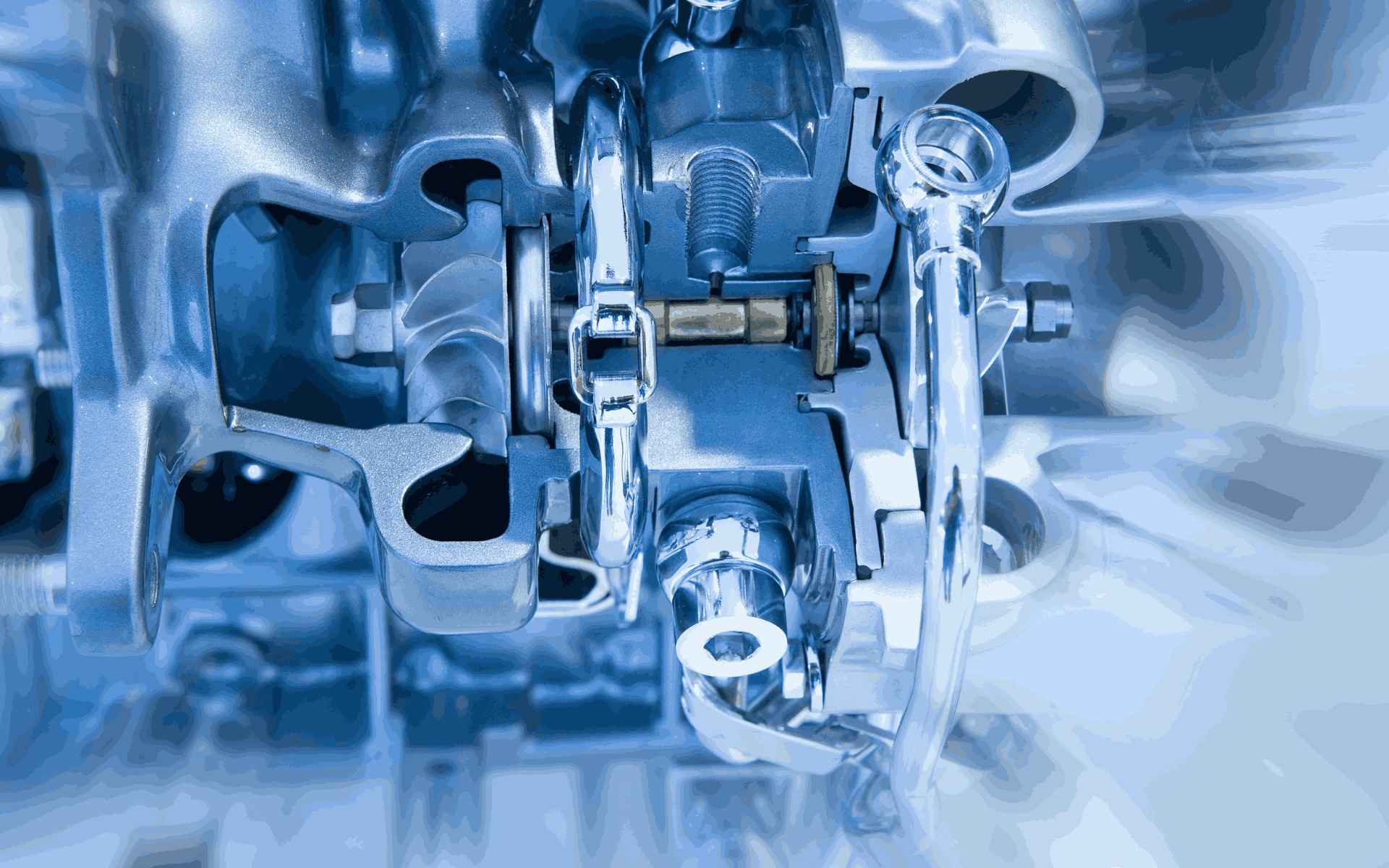
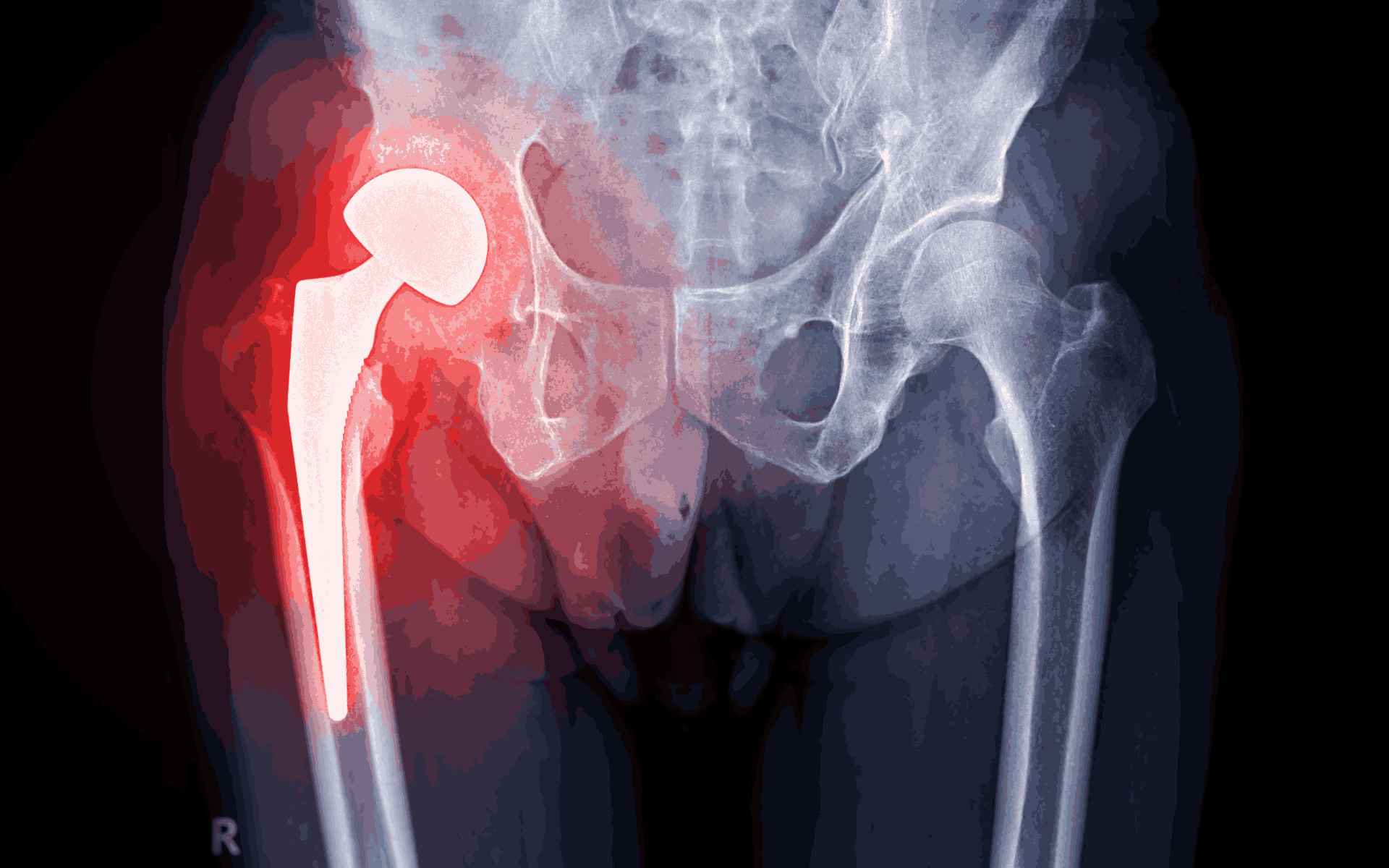
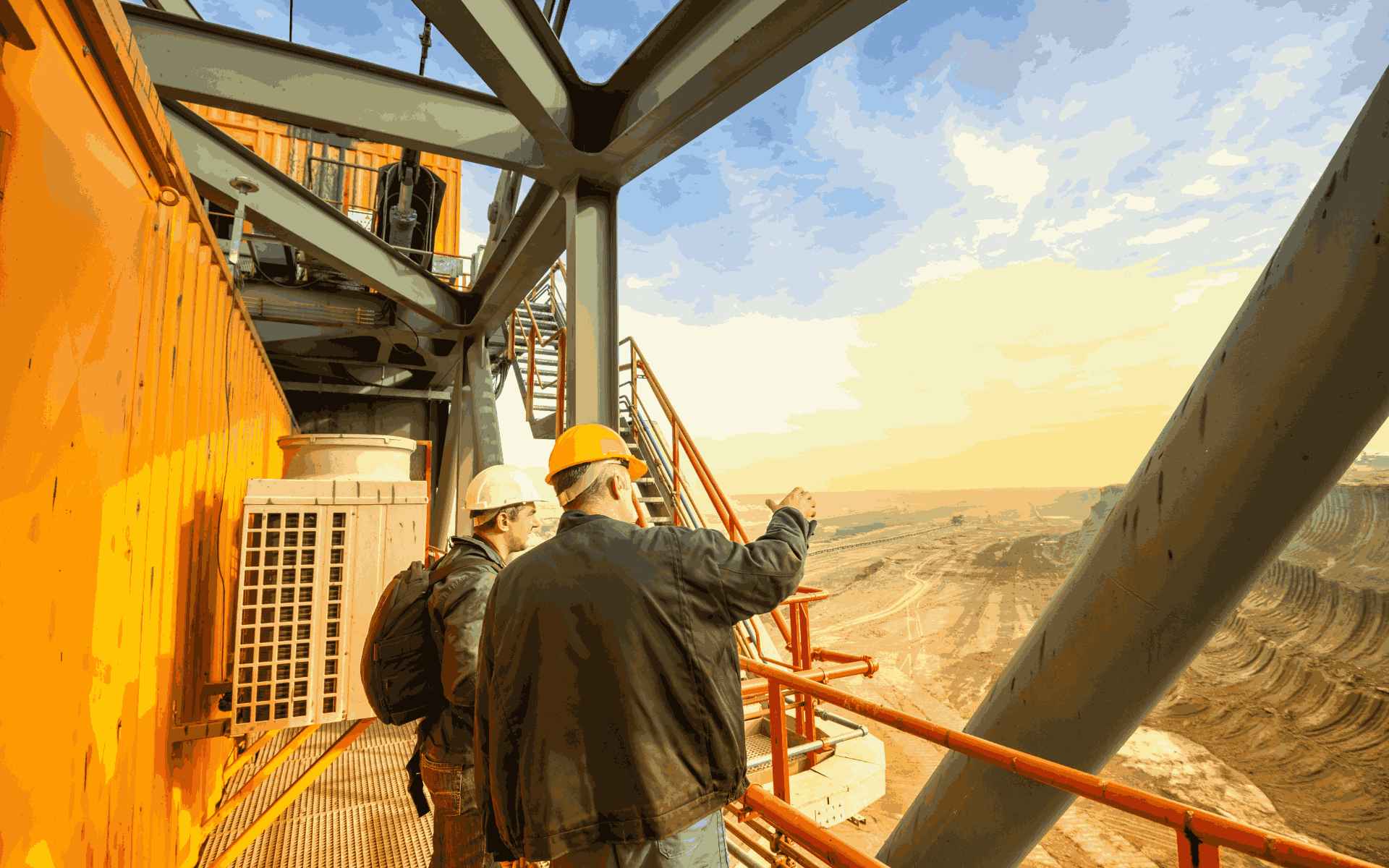
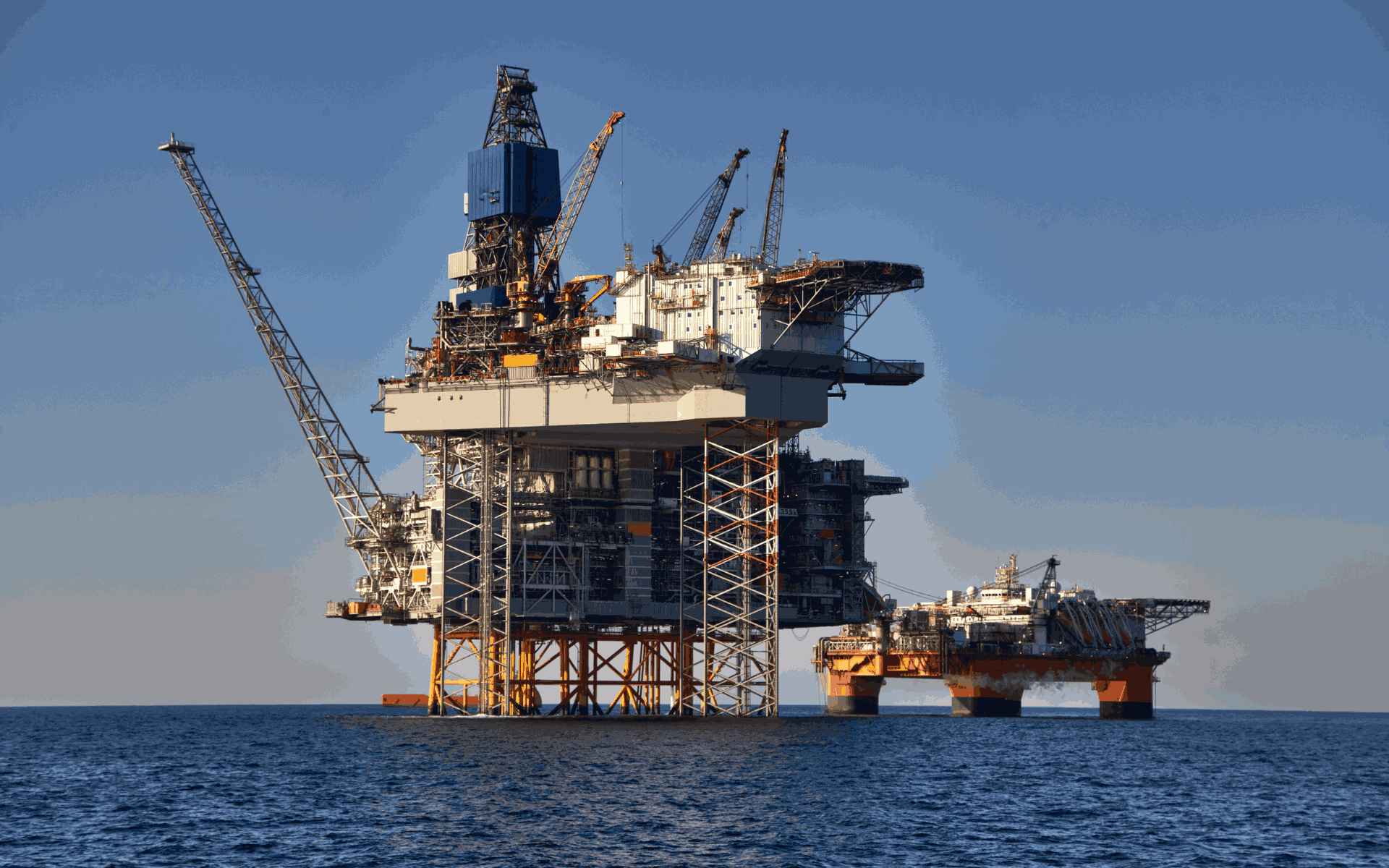
Every project is different, which is why our engineering approach is tailored to your technical and operational requirements. We work with mining, oil & gas, medical, manufacturing, defence, and industrial companies across Australia to solve complex engineering challenges using a combination of advanced design tools and modern manufacturing technologies.
Our capabilities include:
- Reverse Engineering
- 3D Scanning and Scan-to-CAD
- Digital Twin Development
- Product Design and CAD Modelling
- Design for Additive Manufacturing (DfAM)
- Finite Element Analysis (FEA)
- Computational Fluid Dynamics (CFD)
- Functional Prototyping
- Spare Parts Manufacturing Support
- Obsolete Parts Reproduction
From a single replacement component to complete product development projects, our goal is to reduce downtime, improve manufacturability, and deliver engineering solutions that provide long-term value.
Digital Twin Development
Digital Twin technology enables manufacturers to create an accurate digital representation of physical components, equipment, or entire systems. By combining 3D Scanning, CAD Modelling, and Reverse Engineering, E-Metal3D helps businesses transform existing assets into intelligent digital models that can be analysed, modified, and reproduced whenever required.
A Digital Twin provides a reliable engineering reference throughout the product lifecycle. It simplifies maintenance, supports product improvements, and allows obsolete or damaged components to be recreated without relying on outdated drawings or unavailable documentation. For many industrial organisations, it also reduces the risks associated with equipment downtime and spare parts availability.
Whether you’re preserving critical assets, planning equipment upgrades, or building a digital library of engineering data, our Digital Twin solutions provide a practical foundation for smarter maintenance, faster decision-making, and more efficient manufacturing.
Design for Additive Manufacturing (DfAM)
Designing a part for additive manufacturing requires a different engineering mindset. Components originally created for casting, machining, or fabrication are often not optimised for Metal 3D Printing. At E-Metal3D, we apply Design for Additive Manufacturing (DfAM) principles to redesign components that fully leverage the capabilities of advanced manufacturing technologies.
Rather than simply reproducing an existing design, we evaluate each component to identify opportunities for improved performance, reduced weight, fewer assemblies, and greater manufacturing efficiency. This approach allows businesses to achieve better results while reducing material usage, production complexity, and overall project costs.
Using advanced engineering software, topology optimisation, and lattice structure design, our team develops components that are stronger, lighter, and better suited to demanding industrial applications. We also consider factors such as build orientation, support structures, thermal behaviour, and post-processing requirements to ensure every design is optimised for successful production.
DfAM is particularly valuable for industries such as mining, oil & gas, aerospace, defence, medical, and industrial manufacturing, where high-performance components, shorter lead times, and improved operational efficiency provide a significant competitive advantage.
Reverse Engineering for Obsolete Parts and Product Improvement
When critical components become obsolete or replacement parts are no longer available, reverse engineering provides a practical and cost-effective solution. At E-Metal3D, we help manufacturers recover, redesign, and reproduce parts that are difficult—or even impossible—to source through traditional supply chains.
Using advanced 3D Scanning, CAD Modelling, and precision engineering techniques, we transform existing physical components into accurate digital models that can be analysed, modified, and prepared for manufacturing. This process not only enables the reproduction of discontinued parts but also creates opportunities to improve their performance, durability, and manufacturability.
Our reverse engineering capabilities support a wide range of industrial applications, including legacy equipment upgrades, custom spare parts manufacturing, product redesign, and digital asset creation. By combining engineering expertise with modern manufacturing technologies such as Metal 3D Printing and CNC machining, we deliver complete solutions—from data capture and design optimisation to final production.
Whether you’re looking to replace a worn component, modernise an existing design, or reduce equipment downtime, our engineering team provides the technical knowledge and manufacturing support needed to keep your operations running efficiently.
Engineering Analysis and Design Optimisation
Successful engineering goes beyond creating a functional design. Before a component reaches production, it must be evaluated to ensure it performs reliably under real operating conditions. At E-Metal3D, we use advanced engineering analysis to validate designs, reduce development risks, and optimise component performance before manufacturing begins.
Our engineering team applies simulation tools such as Finite Element Analysis (FEA) and Computational Fluid Dynamics (CFD) to assess structural strength, thermal behaviour, fluid flow, and mechanical performance. By identifying potential issues early in the design process, we help clients avoid costly design changes, reduce material consumption, and improve overall product reliability.
Engineering analysis also plays an important role in Design for Additive Manufacturing (DfAM), allowing us to optimise components before they are produced using Metal 3D Printing or conventional manufacturing methods. This integrated approach results in lighter, stronger, and more efficient products that are ready for demanding industrial environments.
Whether developing a new product or improving an existing component, our engineering team focuses on delivering practical solutions that increase performance, extend service life, and support long-term operational efficiency.
Professional 3D Scanning Services
Rapid Prototyping and Product Development
Bringing a new product to market requires speed, flexibility, and confidence in the design. Our rapid prototyping capabilities enable businesses to evaluate concepts, test functionality, and refine components before committing to full-scale production.
Using Metal 3D Printing, we can produce functional metal prototypes in a significantly shorter timeframe than conventional manufacturing methods. This allows engineers to assess fit, performance, and manufacturability while reducing development costs and avoiding expensive tooling during the early stages of a project.
Rapid prototyping is particularly valuable for product development, design validation, and low-volume production, where fast design iterations can accelerate decision-making and shorten time-to-market. Once a design has been validated, our engineering team can further optimise the component for production using additive manufacturing or other suitable manufacturing processes.
Whether you’re developing a new industrial product, improving an existing component, or preparing a replacement part for production, we help transform ideas into reliable, production-ready solutions with greater speed and efficiency.
Manufacturing Optimisation and Production Support
Effective manufacturing starts with the right engineering strategy. At E-Metal3D, we work with clients to optimise designs and production processes, ensuring every component is practical to manufacture, cost-effective, and ready for real-world industrial applications.
Our engineering team evaluates every stage of the manufacturing process—from material selection and build strategy to production planning and post-processing requirements. By identifying opportunities to simplify production and improve efficiency, we help reduce lead times, minimise material waste, and lower overall manufacturing costs.
Our production support services include:
- Manufacturing feasibility studies
- Material selection and engineering guidance
- Build orientation optimisation
- Support structure optimisation
- Production workflow planning
- Cost and process optimisation
Whether the final component is manufactured using Metal 3D Printing, CNC machining, or a hybrid production approach, our goal is to ensure the most efficient manufacturing solution for your project. By combining engineering expertise with practical production knowledge, we help businesses move from design to manufacturing with greater confidence, consistency, and long-term reliability.
Why Choose E-Metal3D Engineering Solutions
Choosing the right engineering partner can significantly impact the success of your project. At E-Metal3D, we combine engineering expertise with advanced manufacturing technologies to deliver practical solutions that improve performance, reduce production challenges, and support long-term operational success.
Our multidisciplinary approach brings together Reverse Engineering, 3D Scanning, CAD Modelling, Engineering Analysis, Design for Additive Manufacturing (DfAM), Metal 3D Printing, and CNC Machining into a seamless workflow. This enables us to support projects from the initial concept through to final production, providing a single point of expertise throughout the entire development process.
Businesses across Australia choose E-Metal3D because we focus on solving real engineering challenges—not simply delivering individual services. Whether the objective is to reproduce an obsolete component, manufacture replacement spare parts, optimise an existing design, or develop an entirely new product, our team works closely with clients to deliver reliable, efficient, and commercially viable outcomes.
With extensive industry experience and a commitment to quality, innovation, and continuous improvement, we help organisations reduce downtime, improve productivity, and adopt modern manufacturing technologies with confidence.
Industrial Additive Manufacturing Systems
Partner with E-Metal3D
Every engineering challenge is different, and the best solutions begin with the right technical partner. Whether you need to reverse engineer a critical component, develop a digital twin, optimise a product for additive manufacturing, or manufacture complex metal parts, E-Metal3D pr
What engineering solutions does E-Metal3D provide?
E-Metal3D offers engineering solutions including product design, Design for Additive Manufacturing (DfAM), reverse engineering, FEA analysis, CFD simulation, rapid prototyping, product optimisation, and manufacturing support for industrial applications.
How can engineering solutions improve manufacturing efficiency?
Engineering solutions help identify design improvements before production begins, reducing material waste, shortening development time, improving product performance, and lowering overall manufacturing costs.
What industries benefit from your engineering services?
Our engineering solutions support mining, oil and gas, aerospace, medical, defence, automotive, and advanced manufacturing industries across Australia.
Can E-Metal3D optimise existing components?
Yes. We analyse existing components using engineering simulations and reverse engineering techniques to improve performance, manufacturability, durability, and cost efficiency.