Introduction
Additive manufacturing (AM) is transforming how manufacturers design and produce parts. But printing a part exactly as it is designed for traditional machining rarely delivers the full benefits of AM. This is where Design for Additive Manufacturing (DFAM) becomes essential.
DFAM focuses on designing parts specifically for AM technologies—especially Laser Powder Bed Fusion (LPBF)—to achieve better performance, lower weight, faster production, and reduced material usage.
At E-Metal3D, our engineering team uses DFAM principles to help manufacturers unlock maximum efficiency from their metal 3D printed components. Through advanced simulation, topology optimization, lattice design, and process-driven modeling, we ensure every part performs better, lasts longer, and costs less to produce.
1. What Is DFAM and Why It Matters
DFAM is not just redesigning a part—it is rethinking the entire function and structure of a component.
Traditional designs are limited by machining tools, cutting directions, mold restrictions, or casting constraints. AM removes most of these limitations.
DFAM enables:
-
Complex geometries with no tooling
-
Lightweight structures
-
Consolidated assemblies
-
Optimized material distribution
-
Internal channels and hidden features
-
Shorter lead times for prototypes and production parts
Without DFAM, parts become:
-
Overly heavy
-
Expensive to print
-
Prone to stress concentrations
-
Functionally limited
DFAM unlocks the real value of additive manufacturing.
2. Core DFAM Techniques Used in Metal AM
2.1 Topology Optimization
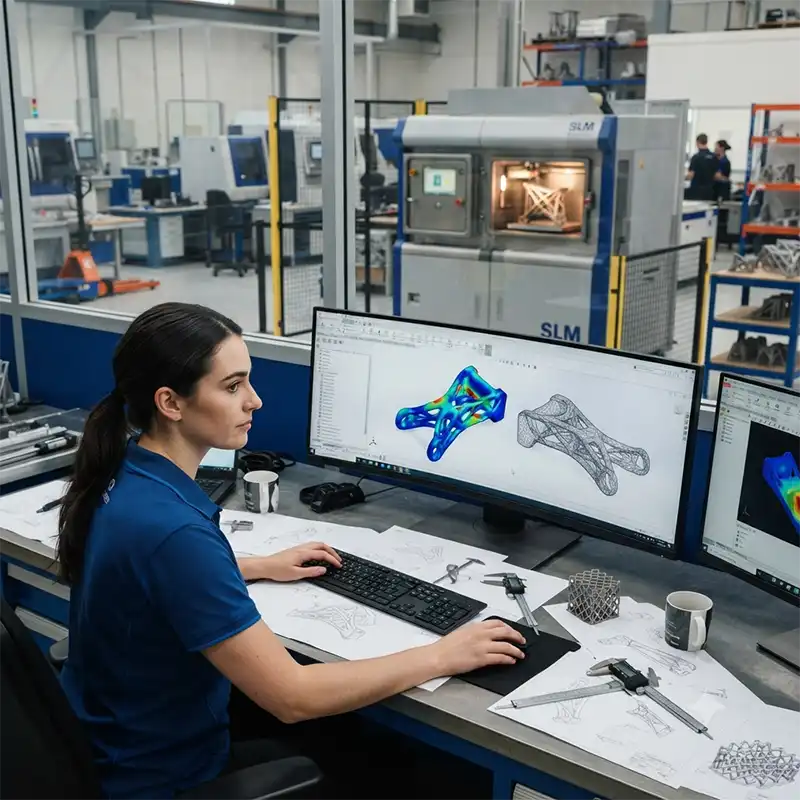
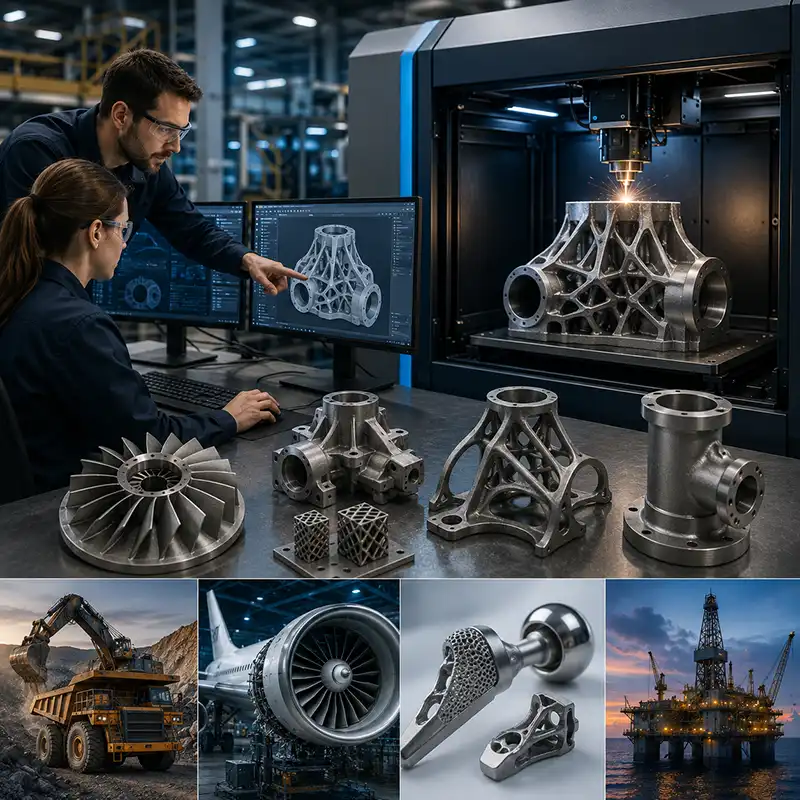
Topology optimization uses simulation to remove unnecessary material while maintaining or improving structural integrity.
Benefits:
-
Weight reduction (up to 60%)
-
Better stress distribution
-
Enhanced stiffness-to-weight ratio
-
Reduced print time and cost
Industries Using It:
-
Aerospace brackets
-
Automotive lightweight structures
-
High-performance robotics components
Our team at E-Metal3D uses FEA-driven topology optimization to redesign parts for maximum strength and minimum weight.
2.2 Lattice Structures & Cellular Design
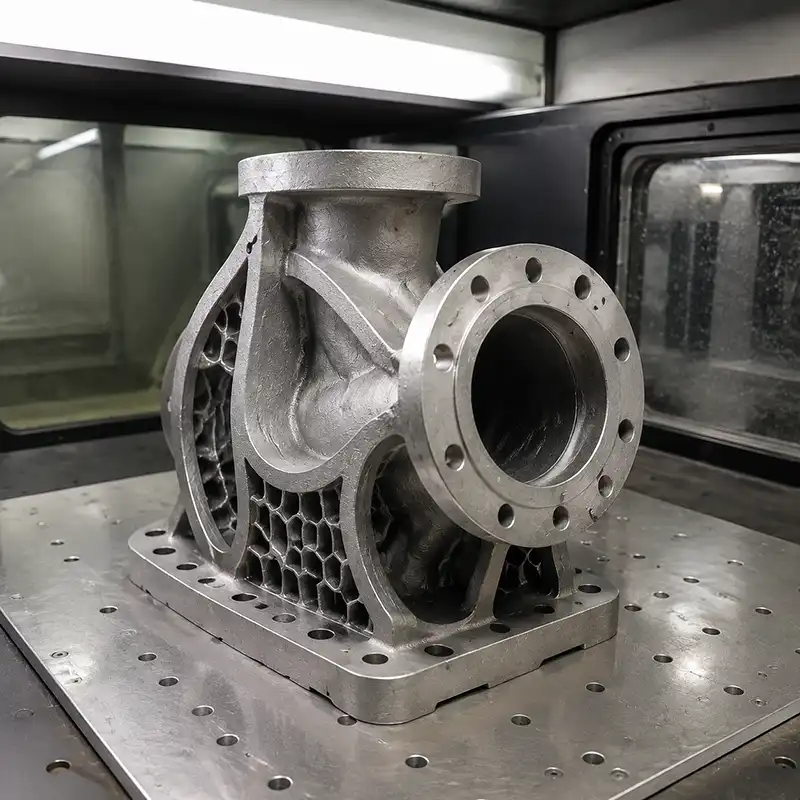
AM allows engineers to replace solid volumes with lattice structures that maintain strength while dramatically reducing weight.
Types of lattices used:
-
Gyroid
-
Diamond
-
Octet truss
-
TPMS structures
Advantages:
-
Superior lightweighting
-
Energy absorption
-
Controlled flexibility
-
Improved thermal performance
Applications:
-
Medical implants (bone ingrowth)
-
Aerospace thermal dissipation
-
Lightweight industrial components
2.3 Part Consolidation
One of the biggest advantages of AM is merging multiple components into a single part.
Advantages:
-
Elimination of welding, brazing, and fasteners
-
Fewer failure points
-
Stronger, unibody structures
-
Simplified supply chains
-
Significant time and cost reduction
For example, an assembly of 7 machined parts can become one 3D printed component—faster, stronger, and cheaper.
2.4 Designing Internal Channels
Metal AM enables internal channels impossible with machining.
Applications:
-
Conformal cooling channels
-
Internal airflow pathways
-
Lightweight hollow structures
Benefits:
-
Better thermal management
-
Enhanced fluid flow
-
Reduced cycle times in molds
-
Improved performance and energy efficiency
Conformal cooling is especially valuable for mold manufacturers and high-temperature applications.
2.5 Support Optimization
Support structures affect:
-
Surface finish
-
Post-processing time
-
Total printing cost
DFAM identifies support-free angles, optimal overhangs, and self-supporting geometries.
Techniques include:
-
Reducing overhangs <45°
-
Orienting parts to minimize supports
-
Designing chamfers instead of horizontal faces
-
Adding transitional structures
2.6 Thermal & Distortion Simulation
Metal AM involves rapid heating and cooling, which can cause warping or internal stress.
Using simulation tools (Ansys, Simufact, Autodesk Netfabb), E-Metal3D engineers predict:
-
Residual stress
-
Distortion
-
Heat accumulation
-
Optimal support placement
This allows correction before printing, reducing costly trial-and-error.
3. Engineering Workflow for DFAM at E-Metal3D
Our workflow ensures optimal performance and manufacturability:
Step 1 — Requirement Analysis
-
Mechanical loads
-
Environmental conditions
-
Regulatory standards
-
Target weight & performance goals
Step 2 — DFAM Assessment
We study:
-
Print orientation
-
Material selection
-
Support strategy
-
Internal features
-
Part consolidation opportunities
Step 3 — Simulation & Optimization
Using FEA, CFD, and topology optimization, we improve performance, reduce weight, and ensure reliability.
Step 4 — Prototype Printing
A functional prototype is produced within days, allowing fast iteration.
Step 5 — Testing & Validation
We check:
-
Surface finish
-
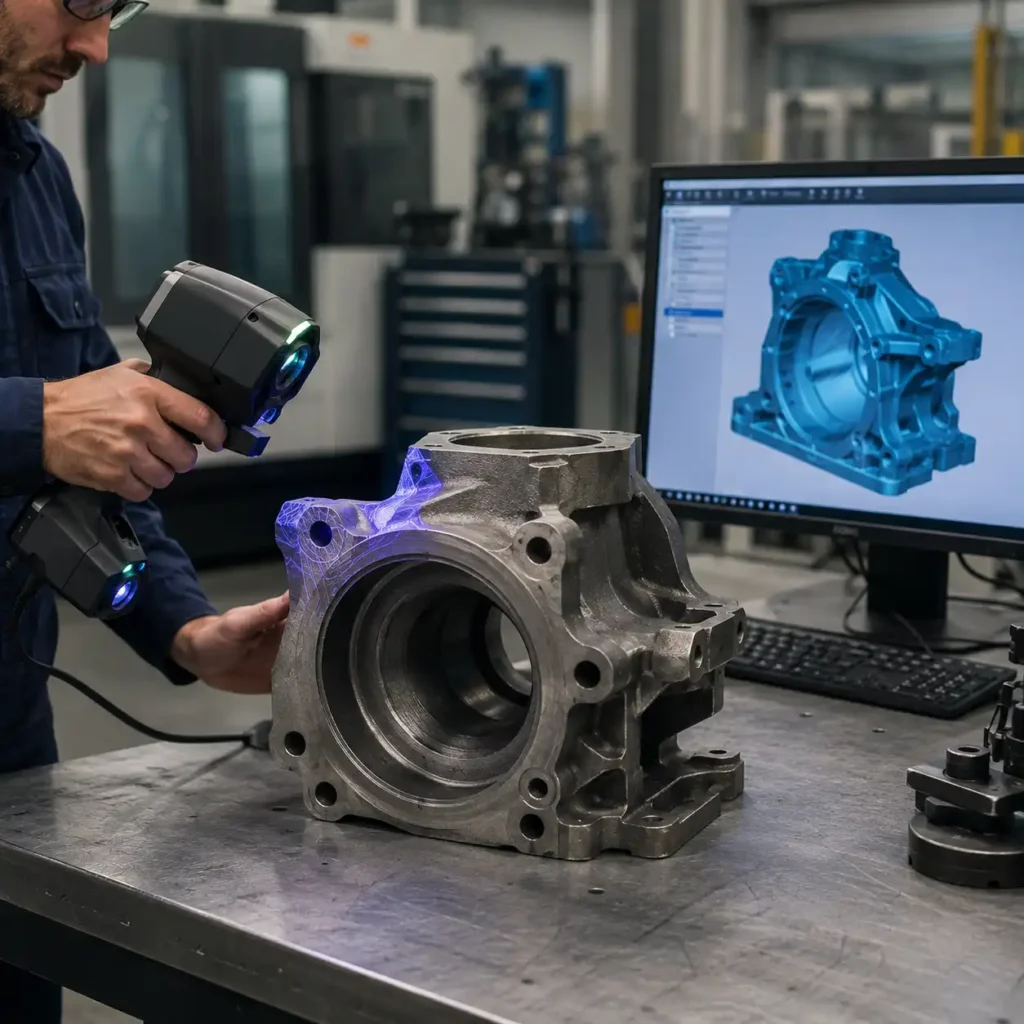
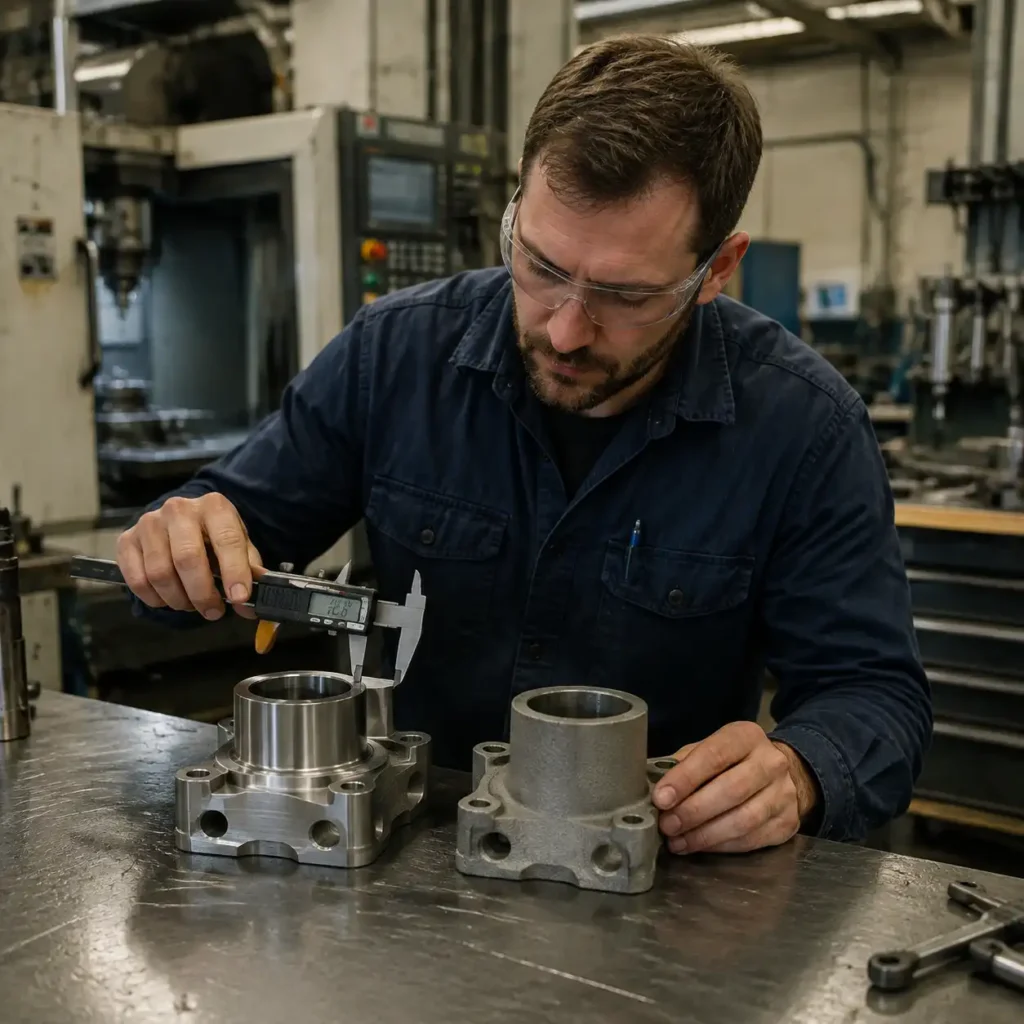
Dimensional accuracy
-
Mechanical properties
-
Fatigue performance
Step 6 — Production & Post-Processing
Full-scale production using:
-
Heat treatment
-
CNC machining
-
Polishing or blasting
-
Inspection & certification
4. Real Industrial Benefits of DFAM
4.1 Reduced Production Time
Complex parts printed in a single build
→ no tooling, no molds, no assembly.
4.2 Improved Performance
Parts designed for strength, efficiency, and geometry—not traditional constraints.
4.3 Lower Material Waste
AM builds only what is needed
→ up to 90% less waste compared to machining.
4.4 Lighter Components
Critical for aerospace, motorsport, and defense.
4.5 Increased Innovation Speed
Rapid prototyping enables faster testing and market entry.
5. DFAM Use Cases Across Industries
Aerospace
-
Lightweight brackets
-
Thermal control structures
-
Engine components
Medical
-
Patient-specific implants
-
Porous structures for bone integration
Automotive & Motorsport
-
Heat-resistant manifolds
-
Lightweight performance parts
Energy & Mining
-
High-strength turbine components
-
Flow-optimized industrial tools
6. DFAM + Metal AM = The Future of Manufacturing
DFAM is not just a method—it’s a mindset. It transforms the way engineers think about part design and performance. When combined with LPBF, it enables:
-
Geometry freedom
-
Lightweighting
-
High-value engineering innovation
-
Production efficiency
-
Faster iteration and deployment
E-Metal3D’s engineering team works closely with manufacturers to redesign their components for maximum value—whether for prototypes or full-scale production.
Conclusion
Design Optimization for Additive Manufacturing is the foundation of high-performance, cost-efficient metal AM. Through DFAM techniques such as topology optimization, lattice structures, part consolidation, support minimization, and thermal simulation, manufacturers can achieve improvements that are impossible with traditional methods.
With over 20 years of engineering expertise, E-Metal3D helps companies across aerospace, mining, medical, automotive, and manufacturing adopt DFAM best practices and bring new ideas to reality—stronger, lighter, faster, and more efficient.