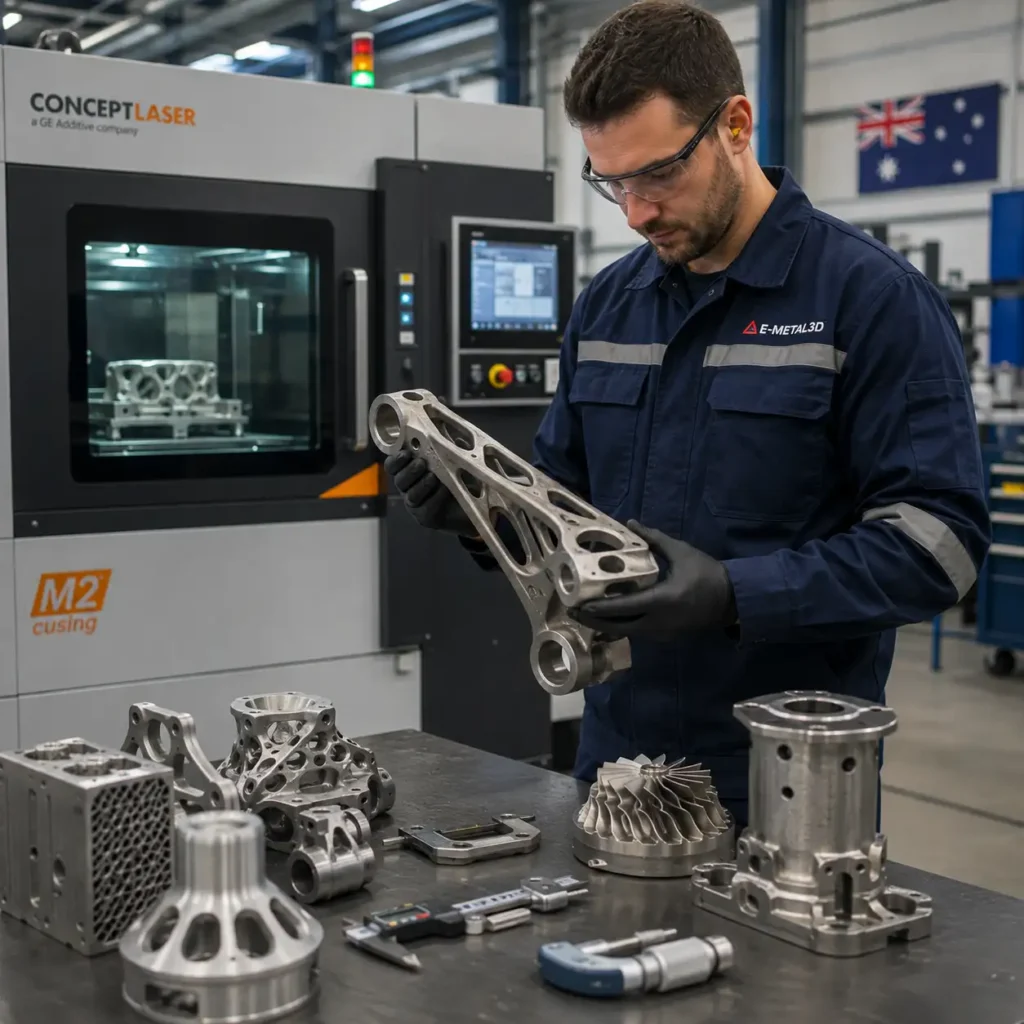
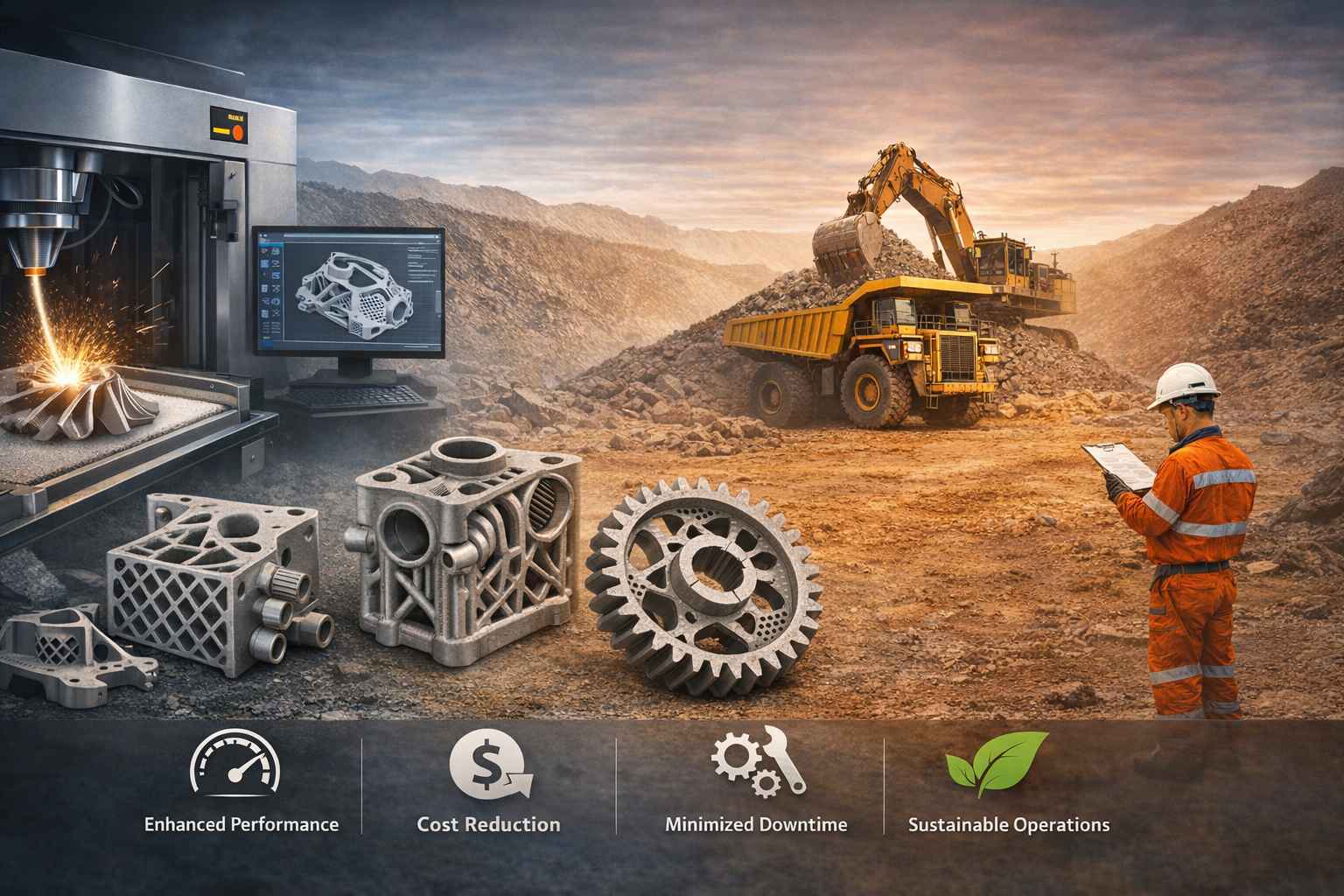
Mining components used in Australian operations have to survive abrasion, vibration, heavy mechanical loads, corrosion and demanding duty cycles. Metal 3D printing gives engineers an opportunity to redesign selected components around these operating requirements rather than simply reproducing geometries originally created for casting, machining or fabrication.
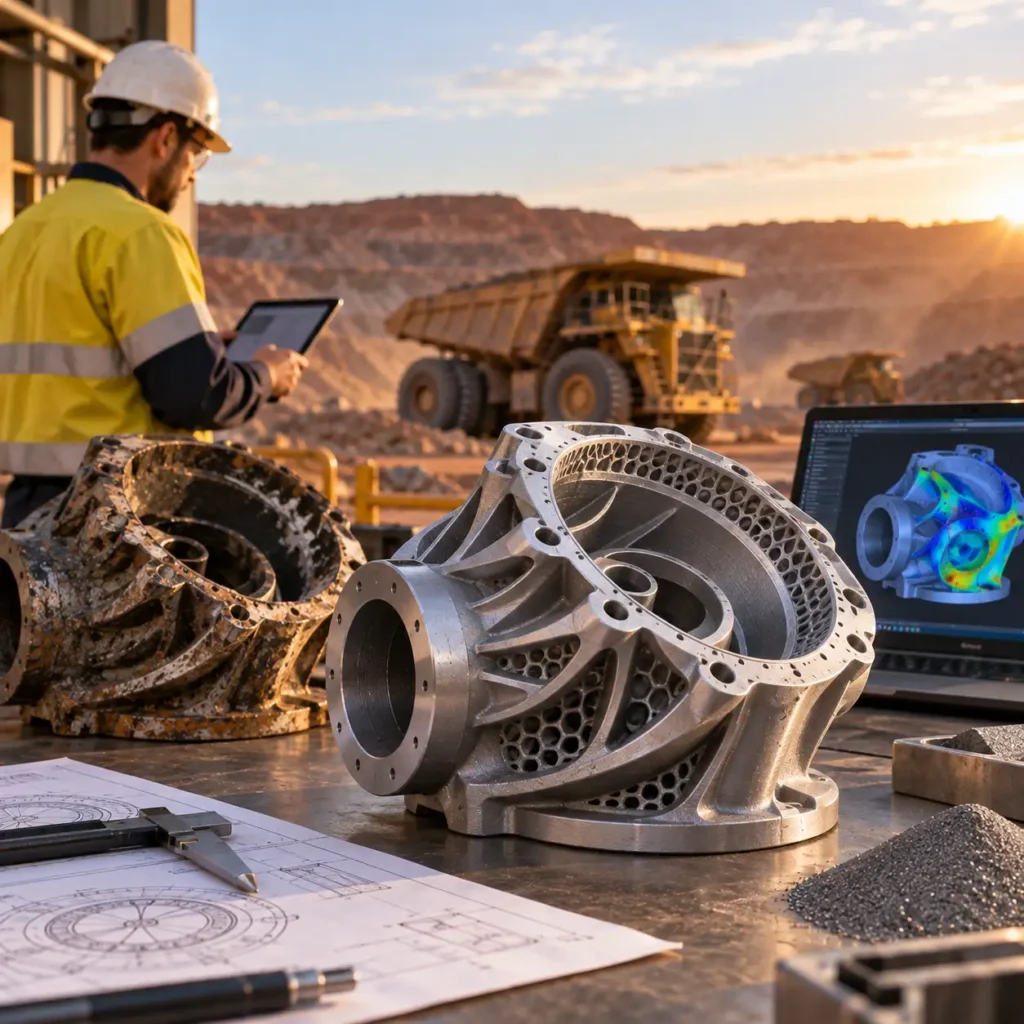
For suitable mining components, design optimization can reduce unnecessary mass, improve load paths, consolidate assemblies and introduce internal features that would be difficult or impossible to manufacture conventionally. Techniques such as topology optimization, lattice structures, Finite Element Analysis (FEA) and Computational Fluid Dynamics (CFD) allow engineers to evaluate how a component should perform before committing to production.
The real advantage is therefore not simply the ability to 3D print a mining part. It is the ability to reconsider how that part should be designed in the first place.
Why Mining Components Need a Different Design Approach
Mining equipment operates in an environment where seemingly small design weaknesses can become expensive maintenance problems. Pumps, processing equipment, drilling systems and heavy machinery can experience repeated impact, cyclic loading, abrasive media, heat and corrosion over long operating periods.
Conventional manufacturing remains the right choice for many of these components. However, casting, forging and machining each introduce manufacturing constraints that influence the geometry of a part. Machining requires tool access, casting requires consideration of moulds and material flow, while fabricated assemblies may introduce welds, fasteners and additional interfaces.
As a result, an existing component may not necessarily represent its ideal engineering geometry. It may represent the best compromise that could be manufactured economically using the process available when it was designed.
Metal additive manufacturing changes that equation for selected parts.
Instead of asking how a component can be made with conventional tooling, engineers can begin with its functional requirements: Where are the loads? Where does wear occur? Which surfaces are critical? How does fluid need to move through the component? Which material is actually necessary?
That shift is the foundation of design optimization.
How Metal 3D Printing Changes the Design of Mining Components
Metal 3D printing builds geometry layer by layer from a digital model. For suitable applications, this provides considerably more geometric freedom than many conventional processes.
The benefit is not complexity for its own sake. A more complicated component is only useful when that geometry solves an engineering problem.
For example, material can potentially be concentrated around high-load regions while being removed from areas that contribute little to structural performance. Internal passages can follow more efficient paths. Several individual components may sometimes be redesigned as one integrated part.
This is particularly relevant to low-volume or specialised mining components, where performance and availability can matter more than achieving the lowest possible unit cost at mass-production scale.
Topology Optimization: Putting Material Where It Is Needed
Topology optimization is one of the most useful techniques for redesigning components for additive manufacturing.
Rather than beginning with a finished shape, engineers define the design space, loads, constraints, interfaces and performance requirements. Computational tools can then identify areas where material contributes to structural performance and areas where it may be unnecessary.
The resulting geometry can look very different from a conventionally designed component.
For a mining bracket, housing or structural connector, for example, topology optimization may reveal opportunities to reduce mass while maintaining the required load-bearing capability. The objective is not simply to create a lighter component; it is to achieve a more efficient relationship between material, geometry and structural performance.
This becomes especially valuable when reducing component mass can make installation, maintenance or equipment operation easier.
However, an optimized digital shape is only the beginning. Manufacturing orientation, support requirements, material properties, fatigue behaviour, machining allowances and inspection requirements must still be considered before the component becomes production-ready.
Using FEA to Validate Optimized Mining Components
Removing material from a component without understanding its structural behaviour would introduce unnecessary risk. This is why simulation is an important part of engineering-driven design optimization.
Finite Element Analysis can be used to examine how a component responds to defined loading conditions. Engineers can investigate stress distribution, deformation and potential areas of concern before a physical part is manufactured.
For mining applications, the model should reflect the actual operating requirements as closely as practical. A component experiencing cyclic loading, for example, presents a different engineering problem from one primarily subjected to static loading.
FEA can also help compare design iterations.
Instead of manufacturing several physical prototypes simply to discover which geometry performs best, engineers can use simulation to eliminate weaker concepts and refine promising designs earlier in the development process.
For Australian mining operations dealing with specialised or difficult-to-source components, this can make the redesign process more systematic and defensible.
Lattice Structures: Useful When They Solve a Real Problem
Lattice structures are often associated with additive manufacturing because they can create lightweight internal architectures that are extremely difficult to manufacture conventionally.
For mining components, however, lattice structures should not be added simply because a metal 3D printer can produce them.
Their value depends on the application.
A carefully designed lattice may help reduce mass, manage energy absorption, alter stiffness or support thermal behaviour. In other situations, a solid or conventionally manufactured geometry may remain the better engineering solution.
This distinction matters because good Design for Additive Manufacturing is not about making every component geometrically complex. It is about using additive manufacturing capabilities only where they create measurable functional value.
Part Consolidation Can Remove Potential Failure Points
Many industrial components are not single parts at all. They are assemblies consisting of multiple pieces joined through welding, bolting, fittings or other connections.
Those interfaces can increase manufacturing effort and create additional inspection and maintenance requirements.
Metal additive manufacturing can sometimes allow several functions to be incorporated into a single component.
A hydraulic or fluid-handling component, for example, may be redesigned with internal passages integrated directly into its body. A fabricated assembly may potentially become a single manufactured geometry.
The benefits can extend beyond reducing the number of individual parts. Consolidation may simplify assembly, reduce inventory requirements and remove certain joints or connections.
For mining equipment exposed to continuous vibration and demanding operating conditions, eliminating unnecessary interfaces can be particularly attractive.
That does not mean every assembly should become one printed component. Maintainability, replacement strategy, inspection and repairability must also form part of the engineering decision.
Optimising Internal Flow Paths with CFD
Not all design optimization is structural.
Mining operations use pumps, hydraulic systems, manifolds and other components where fluid behaviour directly affects performance. Conventional drilling and machining often result in relatively simple internal passages because cutting tools need physical access.
Additive manufacturing can provide much greater freedom inside a component.
Curved passages, transitions and integrated channels can potentially be produced directly within the geometry. But again, the objective should be functional improvement rather than visual complexity.
Computational Fluid Dynamics can help engineers evaluate flow behaviour before production. CFD can be used to examine parameters such as pressure distribution, flow characteristics and areas where the geometry may create undesirable behaviour.
This combination of simulation and additive manufacturing is particularly interesting because engineers can modify internal geometry that would otherwise be inaccessible after manufacture.
Reverse Engineering Existing Mining Components
Design optimization does not always begin with a new component.
Australian mining operations often rely on equipment that has remained in service for many years. In some cases, an original CAD model may no longer be readily available, or replacement components may have become difficult to source.
An existing physical part can provide the starting point.
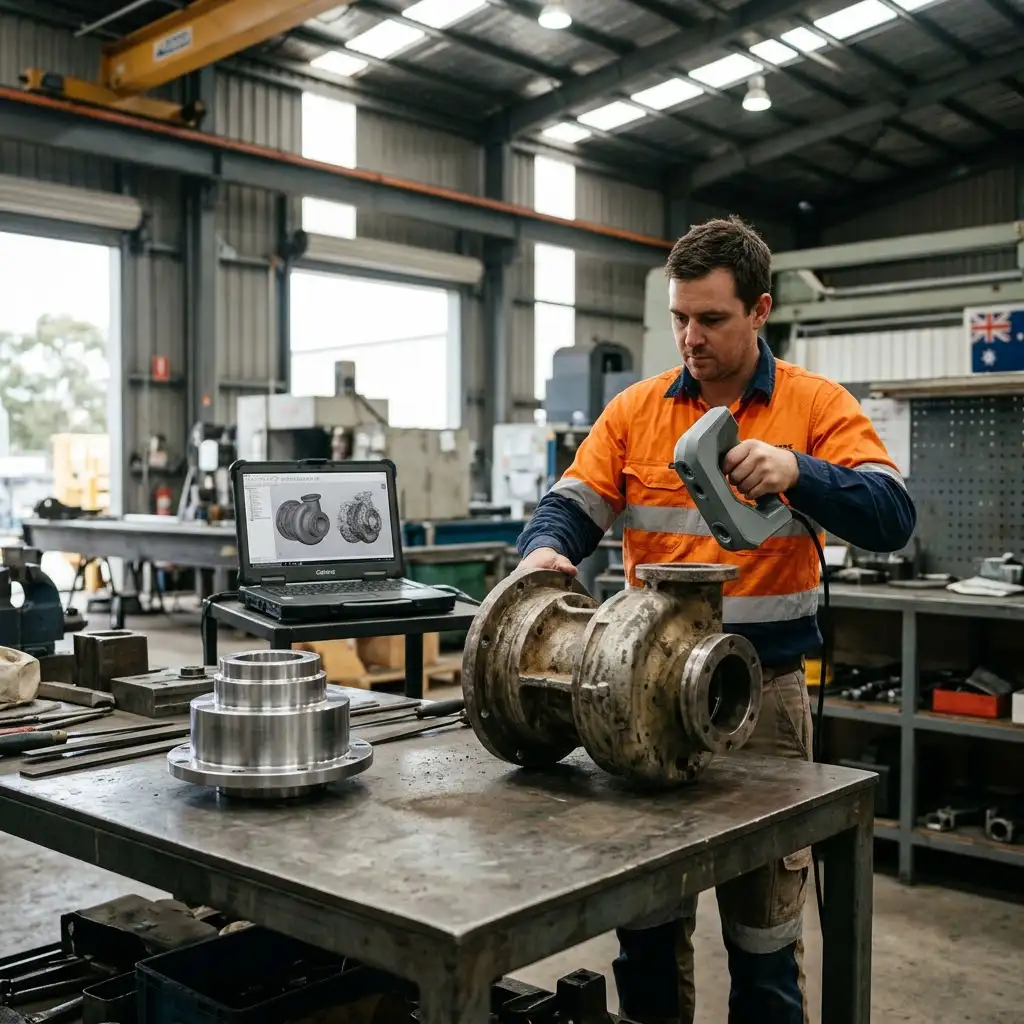
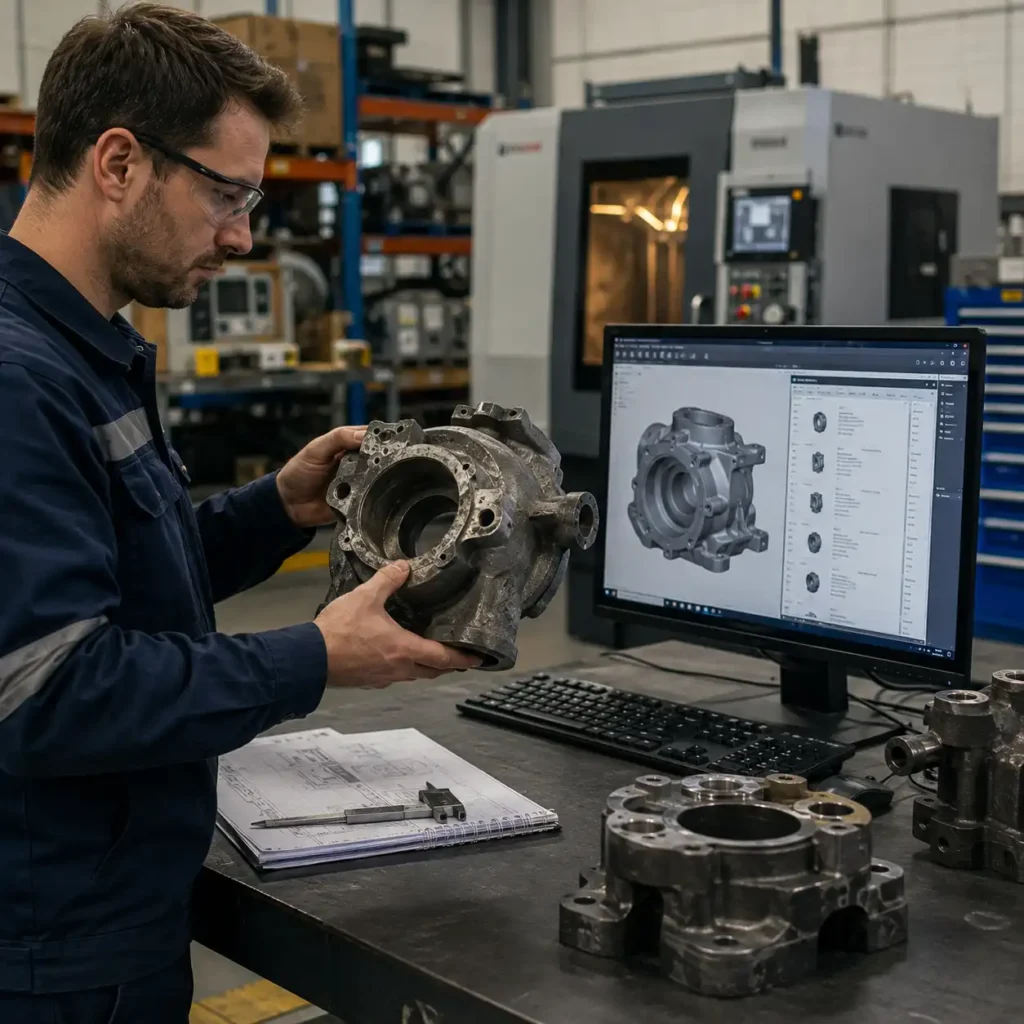
Through 3D scanning and reverse engineering, engineers can capture the component’s geometry and reconstruct it as an editable CAD model.
But there is an important distinction between scanning a component and reproducing it.
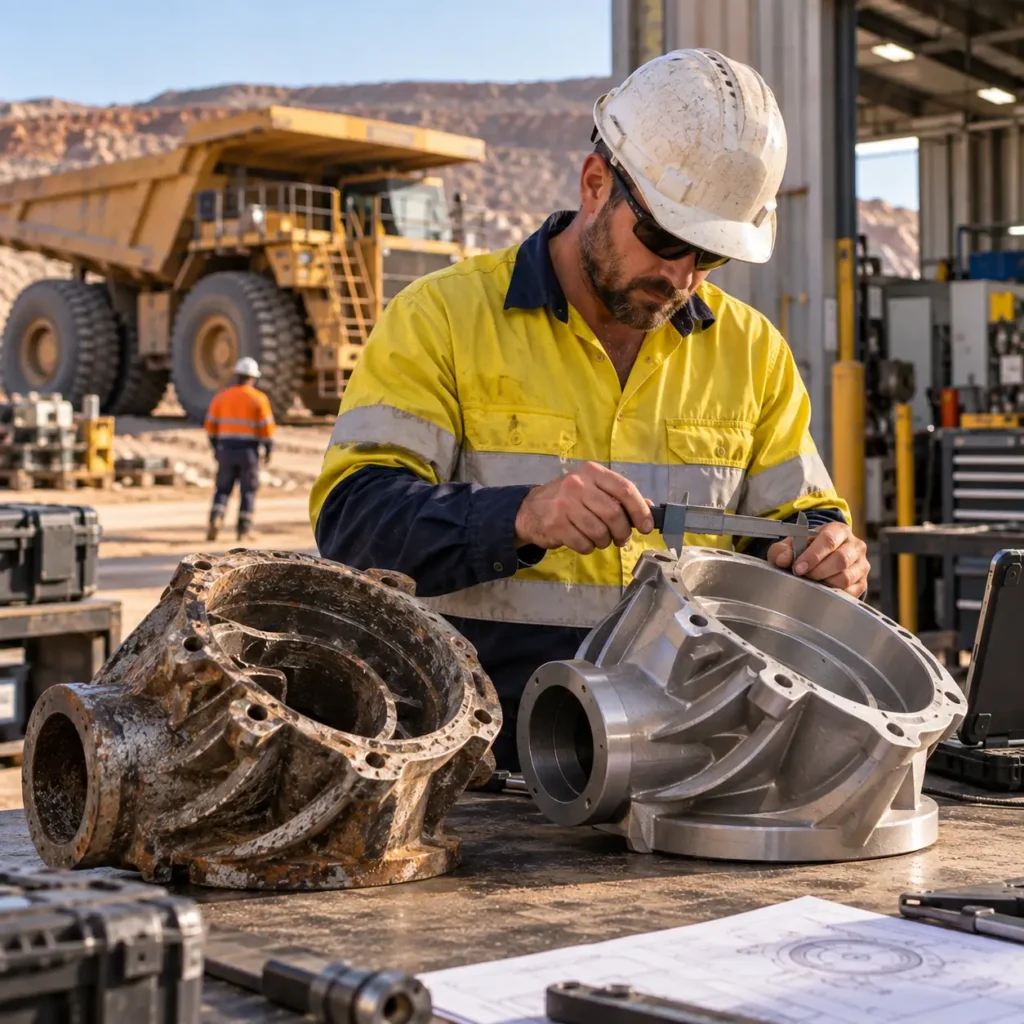
A component removed from service may be worn, distorted or damaged. An accurate scan can therefore capture defects as accurately as it captures the original geometry. Reverse engineering requires engineers to interpret the captured data, reconstruct design intent and identify which features should be retained or corrected.
Once that digital model exists, the question becomes more interesting.
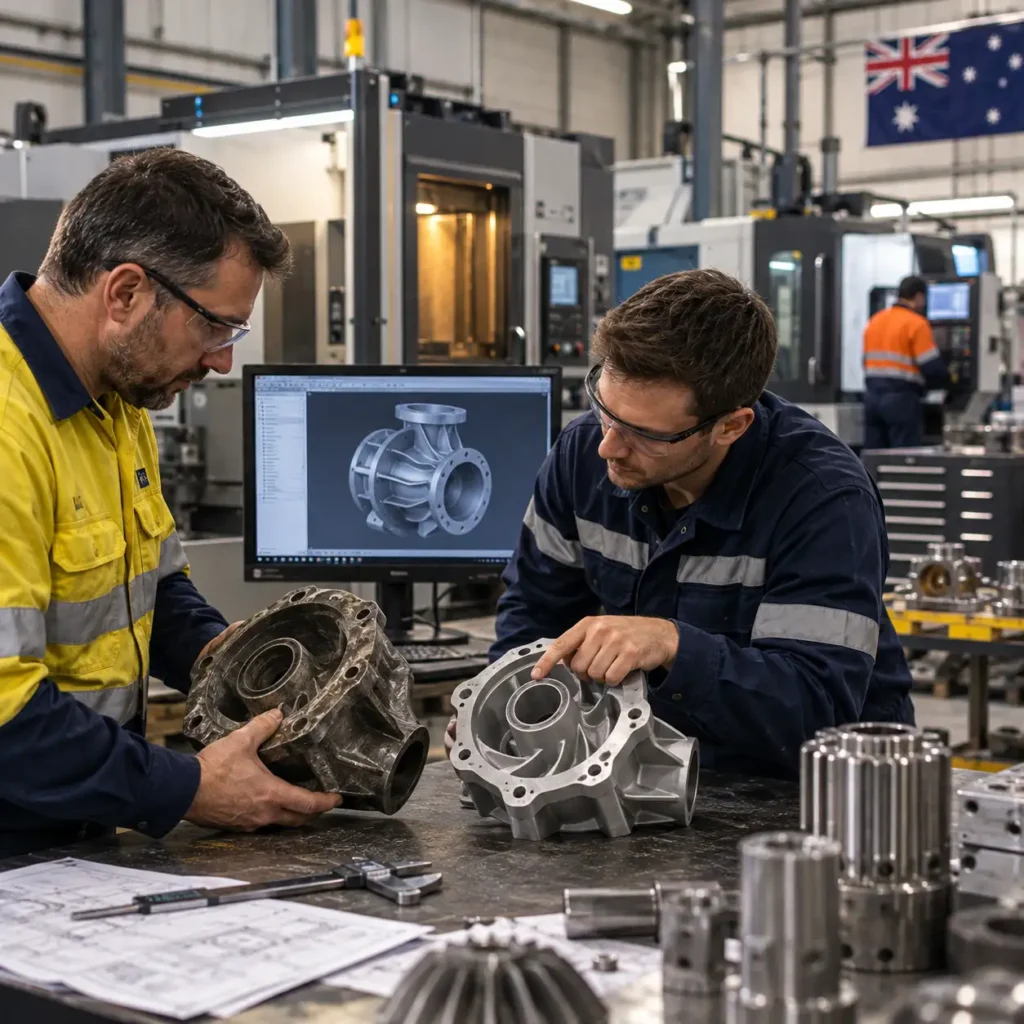
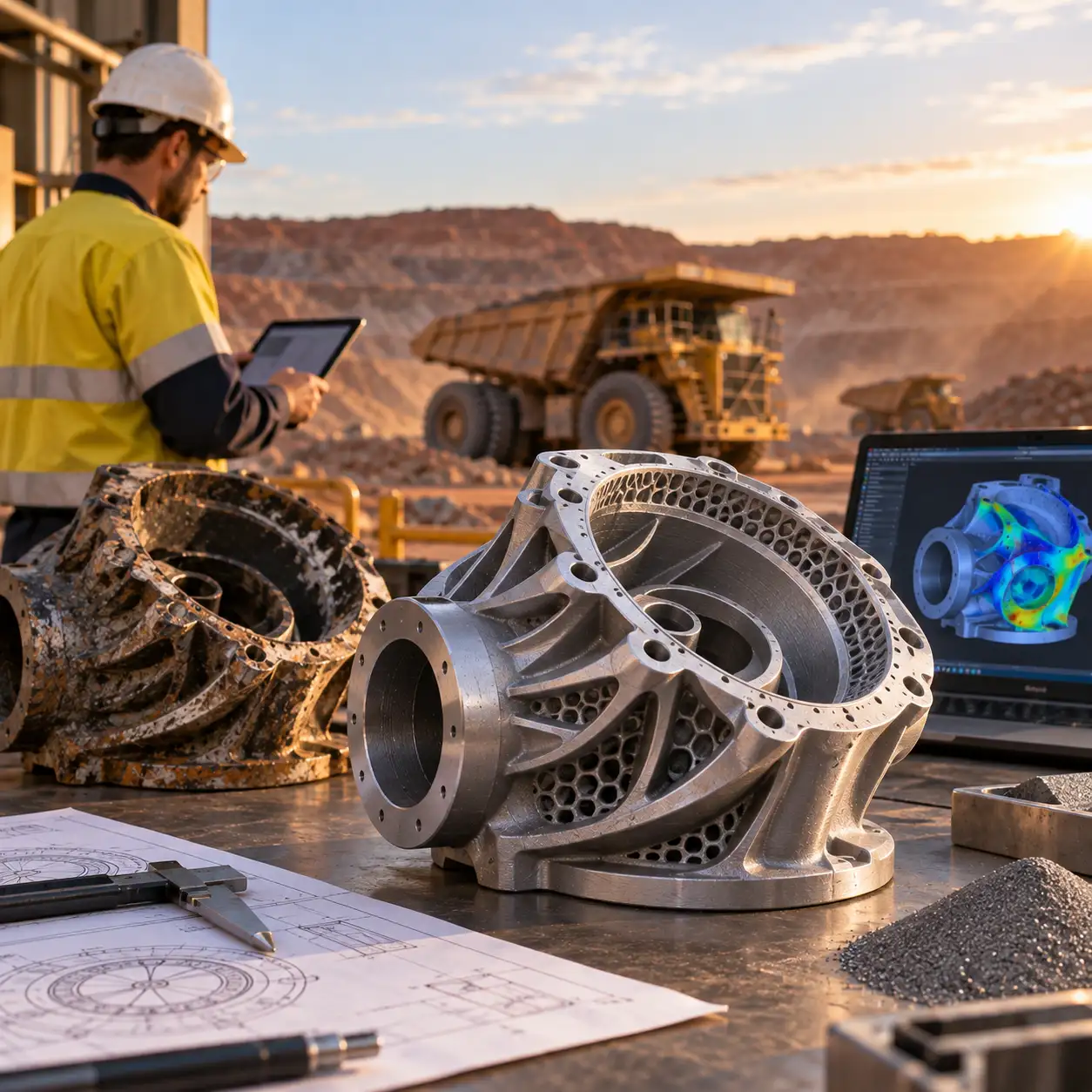
Instead of simply making another copy, engineers can investigate whether the component should be improved before it returns to service.
From Replacement Part to Improved Component
Consider a mining component that repeatedly fails around the same region.
Producing an exact replica may solve the immediate spare-parts problem, but it may also reproduce the same failure mechanism.
A digital engineering workflow provides an opportunity to investigate the component before manufacturing the replacement.
The original part can be scanned, reconstructed and analysed. Loading conditions can be considered using engineering simulation. Geometry can then be modified where justified before the new design is prepared for manufacture.
Depending on the application, this could involve changing material distribution, modifying a transition, addressing a stress concentration or reconsidering an internal passage.
The replacement then becomes more than a copy of an obsolete component. It becomes an engineered iteration.
This is where Engineering Solutions, reverse engineering and metal additive manufacturing begin to work as one process rather than as separate services.
Material Selection Still Determines Performance
An optimized geometry cannot compensate for an inappropriate material.
Material selection for mining components must consider the actual service environment, including mechanical loading, wear, corrosion, operating temperature and other relevant conditions.
Metal additive manufacturing supports a range of engineering alloys, but suitability depends on both the material and the manufacturing process.
Post-processing also matters.
Depending on the alloy, process and application, a printed component may require heat treatment, support removal, machining, surface finishing and dimensional inspection before it is ready for service.
Critical interfaces may still be CNC machined even when most of the component is produced additively.
For this reason, design optimization should consider the entire manufacturing chain rather than treating printing as an isolated step.
Design Optimization and Mining Spare Parts in Australia
The business case becomes particularly interesting when design optimization is combined with digital spare-parts strategies.
Mining operations in Australia can be geographically remote, while some specialised components may depend on interstate or international supply chains. For older equipment, OEM availability can create an additional challenge.
Suitable components can potentially be digitised before an emergency occurs.
An existing part can be captured through 3D scanning, reconstructed as engineering data and assessed for an appropriate manufacturing route. If additive manufacturing is suitable, the component can also be redesigned and validated for that process.
The resulting digital information can then support future manufacturing rather than forcing the engineering process to begin again after every failure.
This does not eliminate the need for physical spare-parts inventory. Frequently consumed and highly critical components may still need to be held on site.
Instead, digital manufacturing creates another option for selected obsolete, low-volume, specialised or difficult-to-source mining components in Australia.
When Metal 3D Printing Makes Sense for a Mining Component
Not every mining part should be redesigned for additive manufacturing.
A simple component that is inexpensive and readily available through conventional manufacturing may have little reason to change. High-volume components may also remain better suited to established production processes.
Metal additive manufacturing becomes more interesting when several factors occur together.
The component may be difficult to source, required in low quantities, geometrically complex or expensive to manufacture using conventional tooling. There may be an opportunity for meaningful weight reduction, internal channel optimization or part consolidation. Long procurement lead times may also strengthen the case.
The correct decision therefore starts with engineering and economics—not with the printer.
The question is not:
“Can this mining component be 3D printed?”
A better question is:
“What manufacturing and design strategy gives this component the required performance, availability and lifecycle value?”
What Design Optimization Means for Australian Mining
Metal 3D printing offers Australian mining companies something more valuable than another way to manufacture metal.
It creates an opportunity to reconsider selected components from the engineering level upward.
Topology optimization can improve material distribution. FEA can help engineers understand structural behaviour. CFD can support the redesign of internal flow paths. Reverse engineering can recover digital geometry from existing equipment, while additive manufacturing can make previously impractical geometries manufacturable.
None of these technologies removes the need for sound engineering judgement.
Their value comes from using them together.
For mining operations, the strongest applications are likely to be components where availability, performance, complexity or repeated failure justify a deeper engineering approach.
Rather than asking how closely a replacement can reproduce the old part, the more useful question may be whether the next component can be better than the one it replaces.
What is design optimization for mining components?
Design optimization is the engineering process of modifying a component’s geometry, material distribution or functional features to better satisfy its operating requirements. For mining components, this may involve reducing unnecessary mass, improving load paths, modifying internal flow passages or addressing known failure areas.
How is metal 3D printing used to optimize mining components?
Metal 3D printing allows engineers to manufacture complex geometries that may be difficult to produce through conventional machining, casting or fabrication. This can support topology-optimized structures, integrated channels, part consolidation and other application-specific design improvements.
What is topology optimization in metal 3D printing?
Potentially, yes. 3D scanning and reverse engineering can be used to capture an existing component and reconstruct an editable CAD model. Engineers can then assess the geometry and make justified design changes before manufacturing.
Can FEA be used before metal 3D printing a mining component?
Yes. Finite Element Analysis can help engineers evaluate structural behaviour under defined loading conditions before manufacturing. The usefulness of the analysis depends on the quality of the model, assumptions, material data and loading conditions.
Is every mining component suitable for metal 3D printing?
No. Component size, geometry, material, production volume, tolerances, operating conditions, certification requirements and economics all affect suitability. Conventional manufacturing remains the better option for many mining parts.
Why is design optimization relevant to mining in Australia?
Australian mining operations often combine demanding equipment requirements with remote locations and complex supply chains. For selected low-volume, obsolete or specialised components, combining digital engineering with local manufacturing can provide an additional option for managing component availability and performance.