The medical industry demands unparalleled precision in manufacturing components that interface directly with the human body. Surgical instruments, orthopedic implants, and dental devices require micron-level accuracy, strict adherence to biocompatibility standards, and long-term mechanical stability.
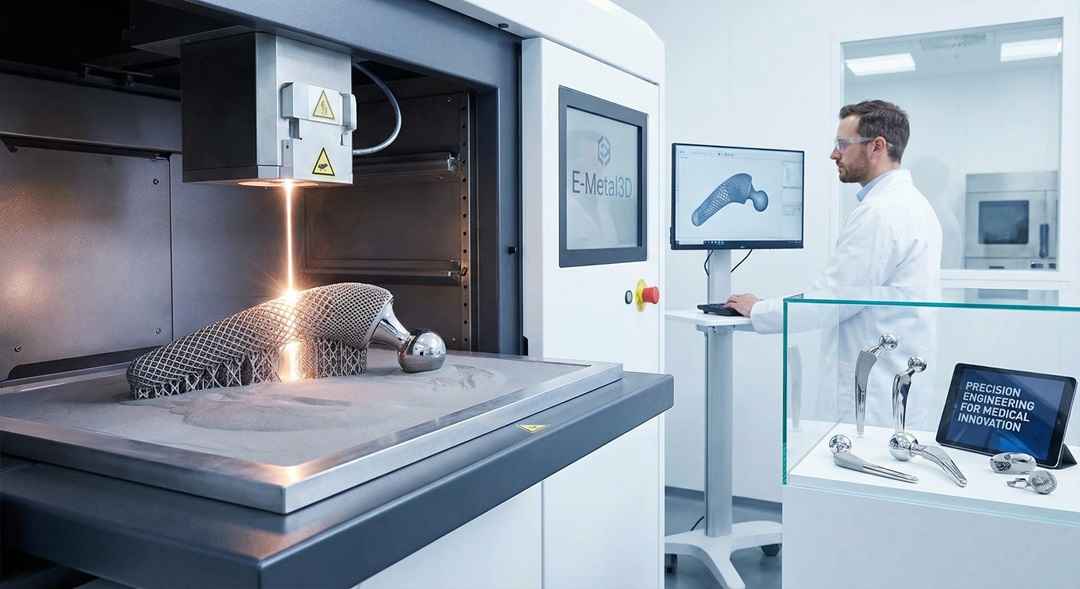
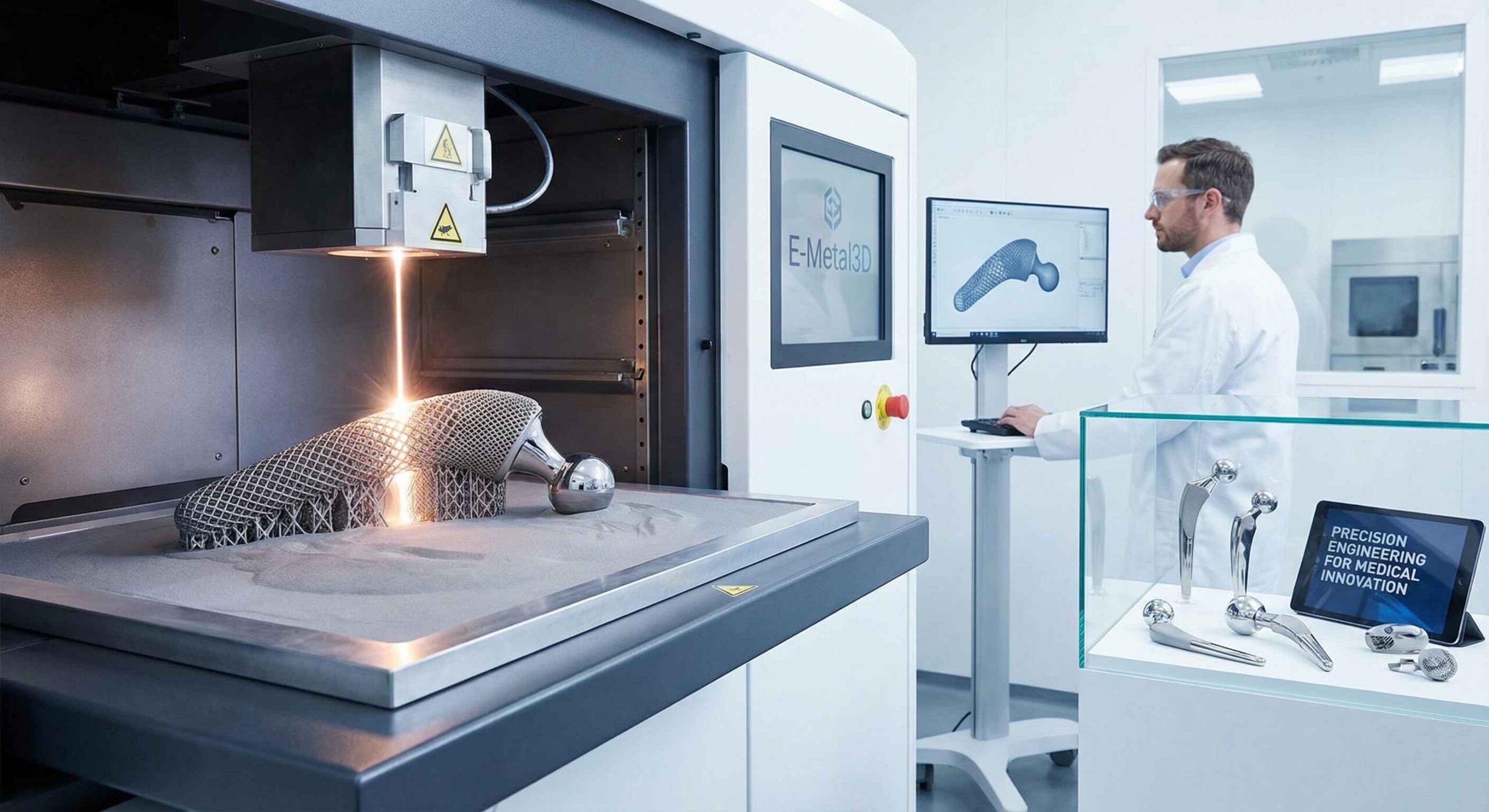
Metal additive manufacturing (AM), especially Laser Powder Bed Fusion (LPBF), has transformed the production of medical devices by allowing complex geometries, patient-specific customization, and rapid prototyping. However, these capabilities rely heavily on precision engineering to ensure every part performs safely and effectively.
At E-Metal3D, precision engineering forms the backbone of our medical AM solutions, combining decades of expertise with cutting-edge technology to deliver components that meet the most rigorous medical standards.
The Role of Precision Engineering in Medical AM
Ensuring Dimensional Accuracy
Medical components must meet tight tolerances, often within microns. Deviations can compromise implant fit, instrument functionality, or patient safety.
Precision engineering ensures:
-
Accurate 3D printing parameters
-
Optimal part orientation
-
Controlled thermal conditions to reduce distortion
-
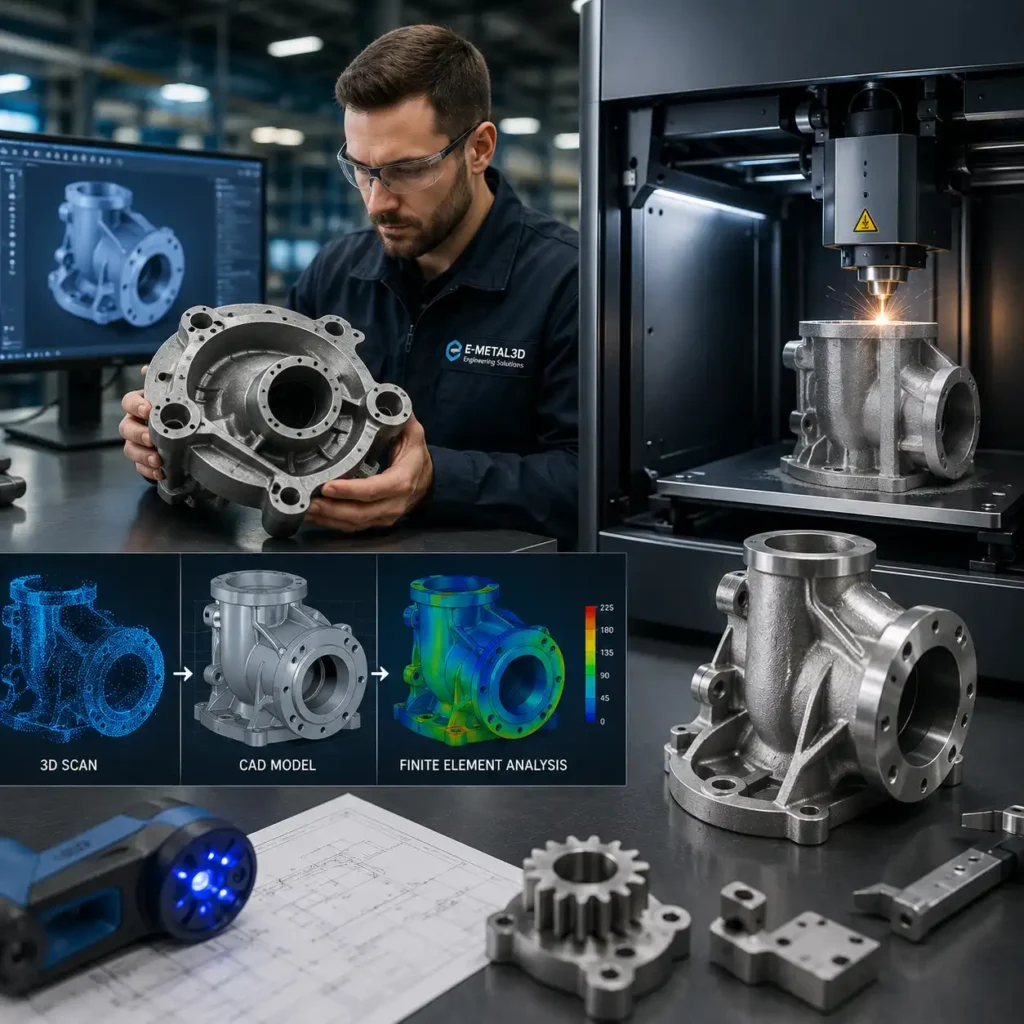
Verification against CAD models using high-resolution inspection
LPBF machines, when combined with engineering expertise, can reliably produce highly detailed components that adhere to design specifications.
Controlling Mechanical Properties
Medical implants and devices must withstand complex forces while maintaining biocompatibility. Precision engineering allows for:
-
Optimization of lattice structures to balance strength and weight
-
Tailoring of wall thickness, infill density, and support structures
-
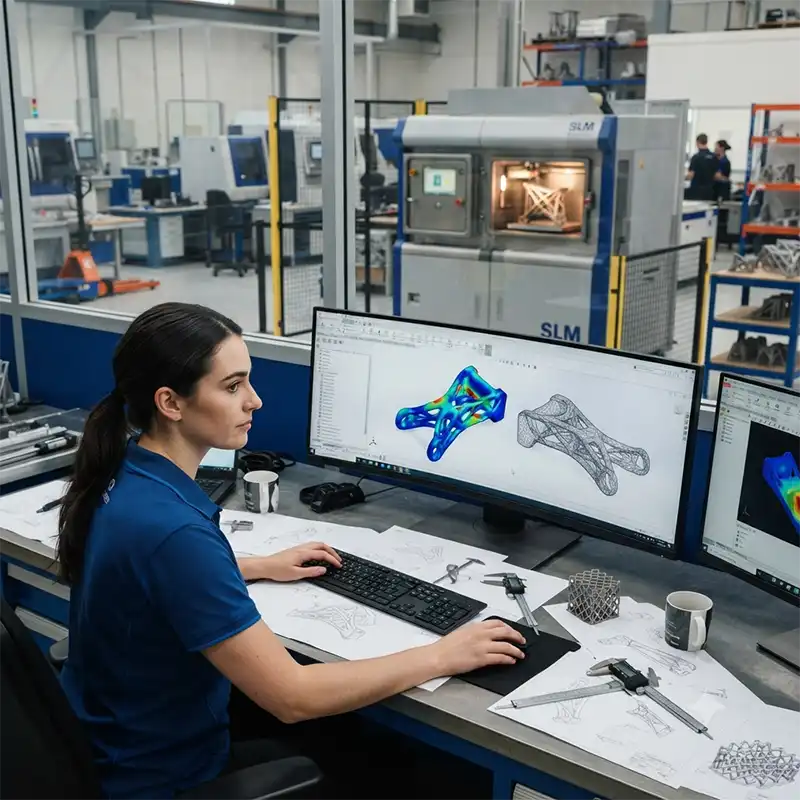
Prediction of stress distribution using Finite Element Analysis (FEA)
By simulating performance under physiological loads before printing, engineers can minimize risk and enhance implant longevity.
Material-Specific Process Optimization
Different medical-grade metals behave differently under the LPBF process. Titanium (Ti6Al4V), Stainless Steel 316L, and Cobalt-Chrome (CoCr) each have unique melting points, thermal expansion coefficients, and flow characteristics.
Precision engineering addresses these variables by:
-
Adjusting laser power and scan speed
-
Optimizing layer thickness and powder deposition
-
Monitoring in-situ thermal conditions to prevent defects
These adjustments ensure consistent material properties and reliable part performance.
Design for Additive Manufacturing (DFAM) in Healthcare
Precision engineering also involves design optimization. Traditional implant designs are often constrained by machining limitations. Metal AM allows engineers to rethink geometries entirely.
Key DFAM considerations include:
-
Topology Optimization: Removing unnecessary material while maintaining strength
-
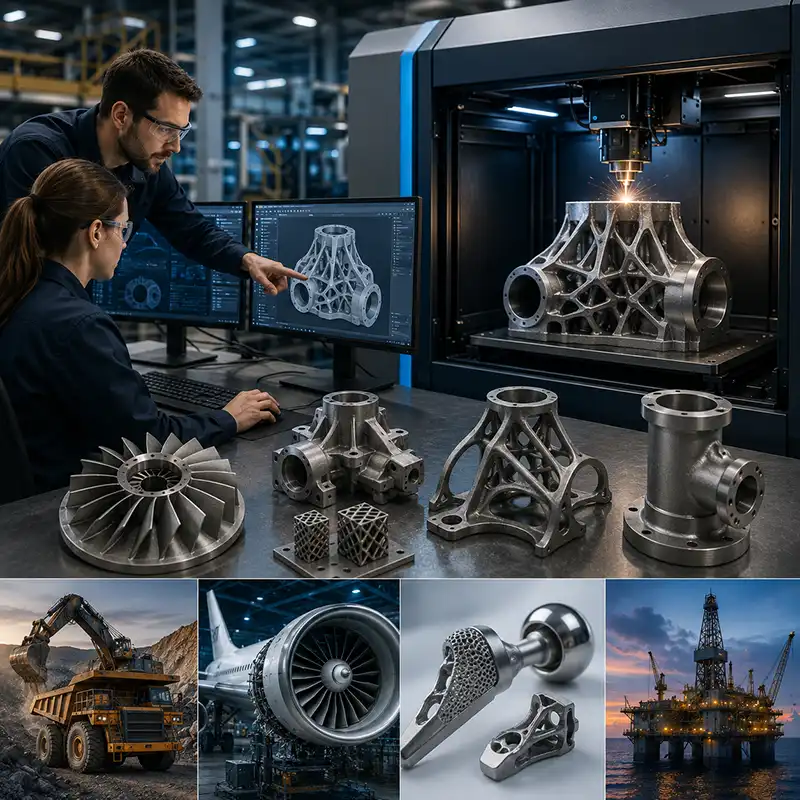
Internal Lattices: Encouraging osseointegration and reducing weight
-
Support Minimization: Reducing post-processing and material waste
E-Metal3D leverages advanced DFAM techniques to create implants that are lighter, stronger, and biologically compatible.
Metrology and Quality Control
No precision engineering workflow is complete without comprehensive measurement and verification.
Techniques include:
-
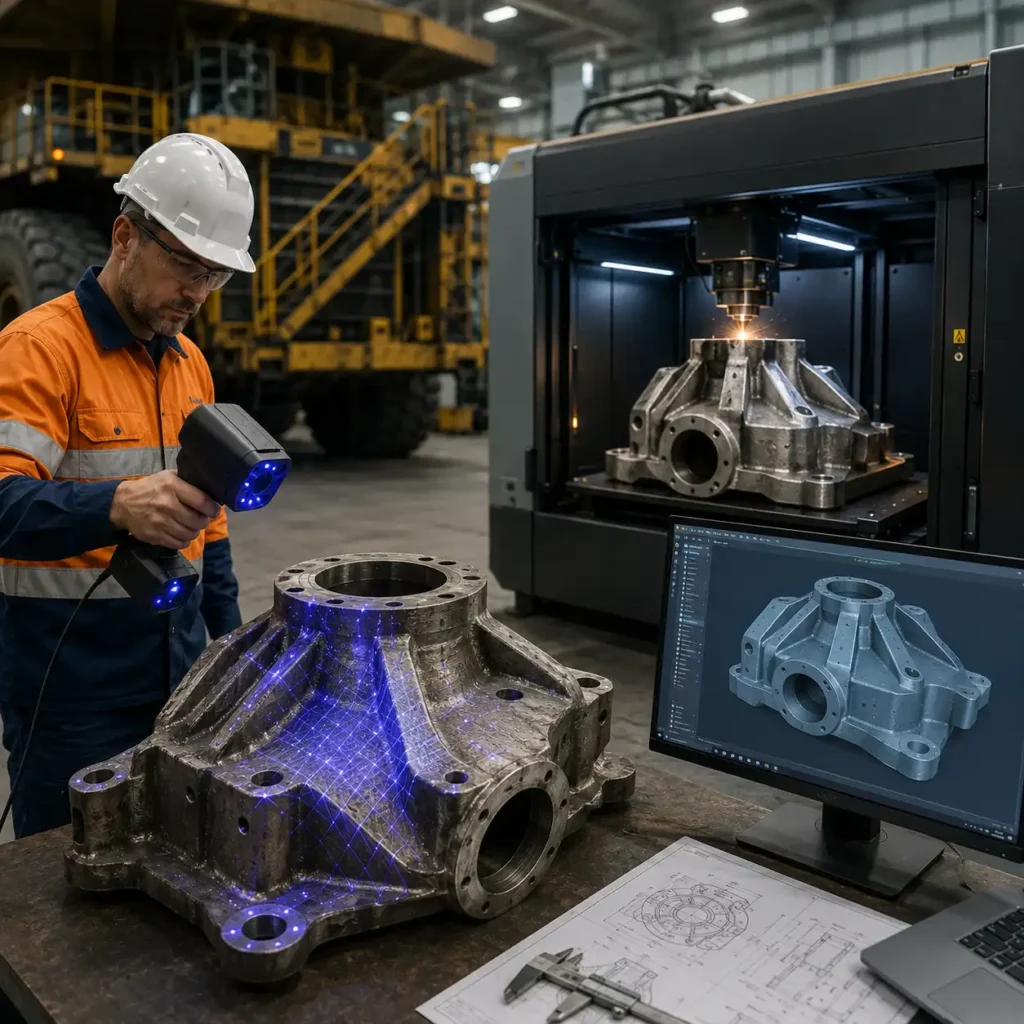
3D scanning and optical metrology: To detect dimensional deviations
-
X-ray computed tomography (CT): For internal defect detection
-
Mechanical testing: To ensure compliance with ASTM and ISO standards
These methods guarantee that every printed component meets exacting medical requirements before leaving the production facility.
Post-Processing Integration
Precision engineering extends beyond printing. Post-processing is essential for ensuring both functional and aesthetic quality.
Critical post-processing steps:
-
Heat treatment to relieve internal stresses and optimize mechanical properties
-
Surface finishing such as electropolishing or bead blasting to achieve required roughness
-
Sterilization readiness
By integrating precision engineering with post-processing workflows, E-Metal3D ensures implants are ready for safe, clinical use.
Patient-Specific Implants and Surgical Tools
Precision engineering enables customization at an unprecedented level. Using imaging data such as CT or MRI scans, engineers can design implants that perfectly match a patient’s anatomy.
Advantages include:
-
Reduced surgery time
-
Improved patient recovery
-
Optimized load distribution for long-term implant success
Additionally, patient-specific surgical guides and instruments can be produced to match these custom implants, ensuring exact surgical accuracy.
Regulatory Compliance and Documentation
Medical device manufacturing is heavily regulated. Precision engineering ensures that every step of the additive manufacturing process is documented, traceable, and auditable.
E-Metal3D follows:
-
ISO 13485 for medical devices
-
ASTM F2924 for Ti6Al4V and other alloys
-
FDA guidelines for additive manufacturing
This meticulous attention to process control helps clients achieve regulatory approval efficiently.
Sustainability and Cost Efficiency
Precision engineering not only improves performance but also optimizes material usage. Additive manufacturing minimizes waste by building parts layer by layer, using only the necessary metal powder.
Benefits include:
-
Up to 90% reduction in material waste compared to subtractive manufacturing
-
Cost savings in high-value metals like titanium and cobalt-chrome
-
Environmentally sustainable production with lower energy consumption
These efficiencies make patient-specific medical components more accessible and scalable.
Partnering with E-Metal3D for Precision Medical AM
E-Metal3D combines advanced LPBF technology, medical-grade materials, and precision engineering expertise to deliver high-performance components for the healthcare sector. From initial concept and DFAM design to post-processing, quality assurance, and regulatory compliance, we offer a complete end-to-end solution.
By integrating precision engineering into every stage, we ensure that implants, surgical instruments, and medical devices are safe, effective, and reliable — enhancing patient outcomes and supporting medical innovation.