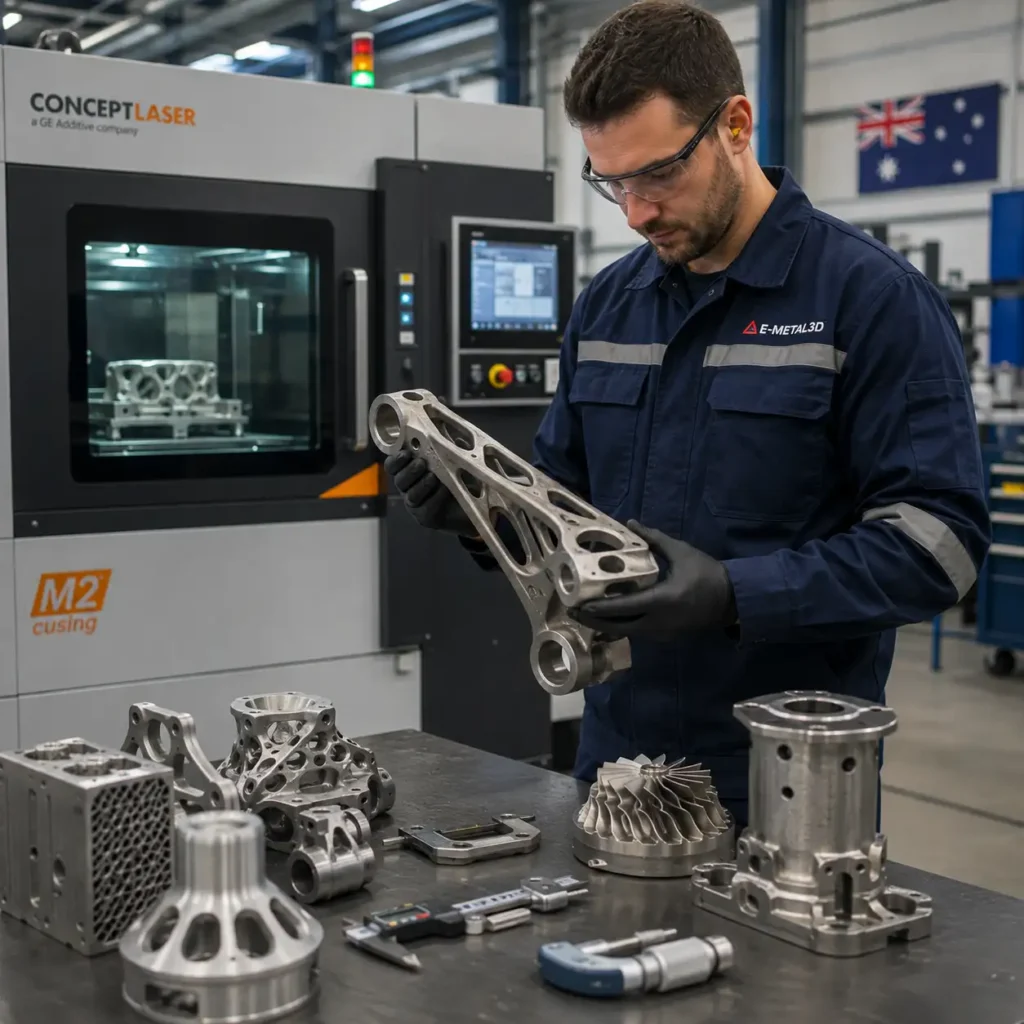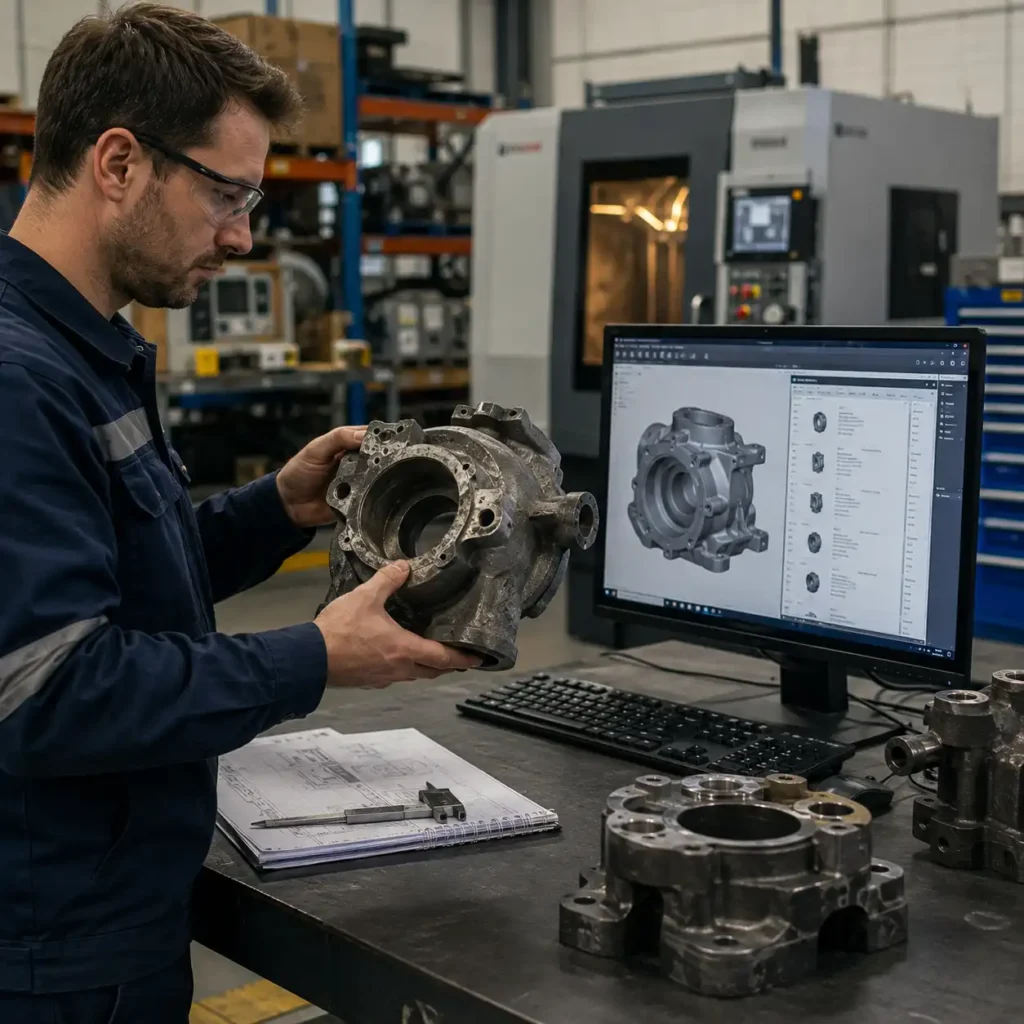
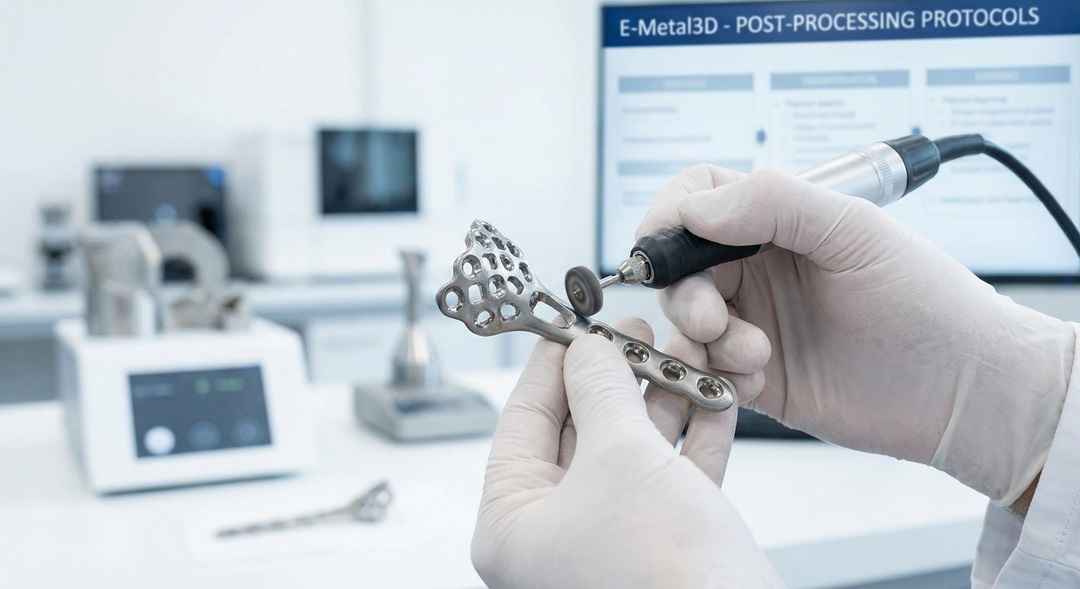
In the medical industry, precision and quality are non-negotiable. Metal additive manufacturing (AM), particularly Laser Powder Bed Fusion (LPBF), allows for intricate geometries and patient-specific designs. However, the as-printed parts often require surface finishing and post-processing to meet the rigorous standards of healthcare applications.
Surface finishing and post-processing play a critical role in:
-
Biocompatibility: Ensuring the metal surface does not induce adverse biological reactions
-
Mechanical Performance: Removing micro-defects to improve fatigue resistance and strength
-
Dimensional Accuracy: Correcting distortions from the printing process
-
Aesthetic and Functional Quality: Achieving smoothness for implants, surgical instruments, and medical devices
At E-Metal3D, we integrate advanced post-processing techniques into our workflow, delivering parts that are safe, precise, and fully compliant with medical regulations.
Understanding As-Printed Surface Characteristics
Metal 3D printed parts typically exhibit surface roughness, layer lines, and residual stress. These are a result of:
-
Powder particle size
-
Layer thickness and scan strategy
-
Thermal gradients during printing
Without proper finishing, these imperfections can compromise:
-
Patient safety (e.g., increased risk of bacterial adhesion on rough surfaces)
-
Implant longevity due to stress concentrators
-
Fit and function of precision medical devices
Surface finishing and post-processing remove these imperfections while preserving the part’s geometry and performance.
Key Surface Finishing Techniques
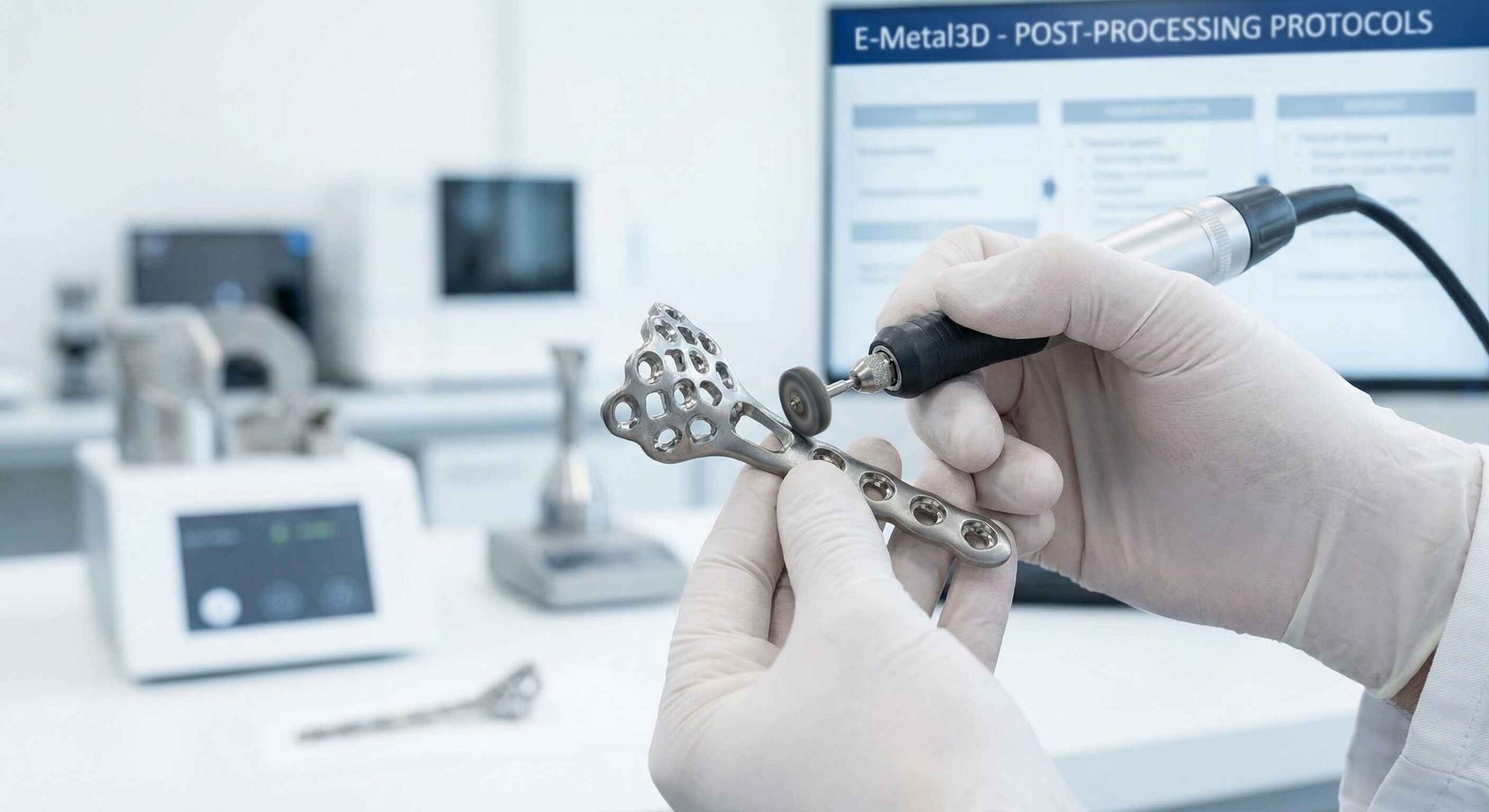
1. Mechanical Polishing
Mechanical polishing involves manual or automated abrasion to smooth the surface. Benefits include:
-
Improved fatigue resistance
-
Reduced risk of bacterial colonization
-
Enhanced aesthetic appearance
Mechanical polishing is particularly effective for surgical instruments and exposed implant surfaces.
2. Bead Blasting / Glass Bead Blasting
Bead blasting uses high-velocity beads to refine surface texture. Advantages include:
-
Uniform surface finish
-
Removal of residual powder particles
-
Preparation for coatings or further post-processing
For orthopedic implants, bead blasting creates a slightly rough surface that promotes osseointegration, encouraging bone growth.
3. Electrochemical Polishing (Electropolishing)
Electropolishing uses chemical solutions and electrical current to remove surface irregularities. Key benefits:
-
Produces a mirror-like, smooth surface
-
Enhances corrosion resistance
-
Improves biocompatibility
Electropolishing is widely used for medical implants in contact with biological tissues or bodily fluids.
4. Heat Treatment
Post-print heat treatment relieves residual stresses, improves mechanical properties, and stabilizes the microstructure. Common treatments include:
-
Annealing
-
Solution treatment and aging (for alloys like Ti6Al4V or Inconel)
Heat treatment ensures that implants can withstand repetitive mechanical loads without failure.
5. Machining and CNC Finishing
Some components require tight tolerances or precise mating features. CNC machining post-print allows:
-
Accurate dimensioning
-
Threading, holes, and surface flatness corrections
-
Seamless integration with other components
Machining is often combined with additive manufacturing to produce hybrid parts that leverage the advantages of both techniques.
Customization and Patient-Specific Requirements
Metal AM enables patient-specific implants with complex geometries. Post-processing ensures:
-
Accurate anatomical fit
-
Proper surface texture for bone or tissue integration
-
Compliance with individualized specifications
For example, cranial plates, spinal cages, and hip implants often undergo multi-step finishing to meet both functional and aesthetic needs.
Quality Assurance and Regulatory Compliance
Surface finishing and post-processing are crucial for meeting medical regulations:
-
ISO 13485 for medical device manufacturing
-
ASTM standards for implantable metals
-
FDA guidelines for 3D printed medical devices
At E-Metal3D, every part undergoes rigorous inspection using:
-
3D scanning and optical metrology
-
Surface roughness measurement
-
Mechanical testing for fatigue and load-bearing performance
These steps ensure traceability and consistent compliance with regulatory standards.
Integration of Post-Processing into the AM Workflow
A well-designed post-processing workflow integrates:
-
Support removal: Eliminating temporary structures used during printing
-
Debinding and cleaning: Removing residual powders or binders
-
Surface finishing: Polishing, bead blasting, or electropolishing
-
Heat treatment: Relieving stress and optimizing mechanical properties
-
Final inspection: Dimensional, mechanical, and surface quality verification
This structured approach ensures predictable, high-quality results for medical applications.
Advantages of Advanced Post-Processing in Medical AM
1. Enhanced Biocompatibility
Post-processing reduces surface roughness and contaminant particles, minimizing the risk of adverse reactions in patients.
2. Improved Mechanical Performance
Smoothing surfaces and stress relief improves fatigue resistance, ensuring long-term reliability of implants and instruments.
3. Regulatory Confidence
Comprehensive post-processing and documentation support regulatory approvals and faster market entry.
4. Cost and Time Efficiency
Optimized workflows reduce rework, scrap rates, and ensure faster production cycles without compromising quality.
Future Trends in Post-Processing
Innovations in post-processing continue to expand the capabilities of metal AM for medical applications:
-
Automated polishing systems for consistent surface quality
-
Hybrid finishing combining mechanical and chemical techniques
-
AI-driven process monitoring to predict optimal finishing parameters
-
Integration with digital twins to simulate post-processing effects
E-Metal3D is at the forefront of implementing these technologies, ensuring that medical components are not only precise but also produced efficiently.
Conclusion: E-Metal3D’s Expertise in Medical Post-Processing
Surface finishing and post-processing are critical to unlocking the full potential of metal 3D printing in healthcare. At E-Metal3D, our end-to-end approach—from design and printing to post-processing and quality assurance—ensures:
-
Patient-specific implants and devices with optimal fit
-
Superior mechanical performance and durability
-
Compliance with international medical standards
-
Sustainable and cost-effective production
By combining advanced metal AM technology with expert post-processing workflows, E-Metal3D helps medical manufacturers deliver safer, higher-performing, and customized products for patients worldwide.