When Every Minute of Downtime Matters
Unexpected equipment failures can bring an entire operation to a standstill. Whether it’s a mining site waiting for a replacement pump housing or a manufacturing facility dealing with a worn machine component, the inability to source critical spare parts often results in lost productivity, delayed projects, and increased operational costs.
For many businesses, traditional supply chains are no longer fast enough. Long lead times, discontinued components, overseas suppliers, and high inventory costs make spare parts management increasingly difficult.
Modern Spare Parts Manufacturing offers a smarter alternative.
Instead of relying solely on stocked inventory or waiting months for replacement parts, businesses can manufacture high-quality components on demand using advanced engineering, reverse engineering, and Metal 3D Printing technologies.
Why Traditional Spare Parts Strategies No Longer Work
For decades, companies relied on large warehouses filled with spare components to minimise operational risk. While this approach provided security, it also tied up significant capital and required businesses to store thousands of parts that might never be used.
Today’s industries face different challenges.
Equipment is becoming more specialised, product lifecycles are changing faster, and global supply chains remain vulnerable to disruptions.
Many companies are now asking a different question:
“Do we really need to store every spare part, or can we manufacture it when it’s needed?”
This shift is transforming how industries manage maintenance and asset reliability.
Manufacturing Spare Parts on Demand
On-demand manufacturing allows businesses to produce replacement components only when required.
Instead of maintaining expensive inventories, digital engineering files become the new spare parts catalogue.
When a component fails, engineers can manufacture the required part using the most appropriate production method, significantly reducing storage costs while improving flexibility.
For many industrial applications, this approach delivers:
- Reduced inventory costs
- Faster replacement of critical components
- Improved supply chain resilience
- Shorter lead times
- Greater manufacturing flexibility
- Better lifecycle management
For Australian industries operating in remote locations, these advantages can dramatically improve operational efficiency.
Reverse Engineering Makes Replacement Possible
One of the biggest obstacles in spare parts manufacturing is the lack of engineering documentation.
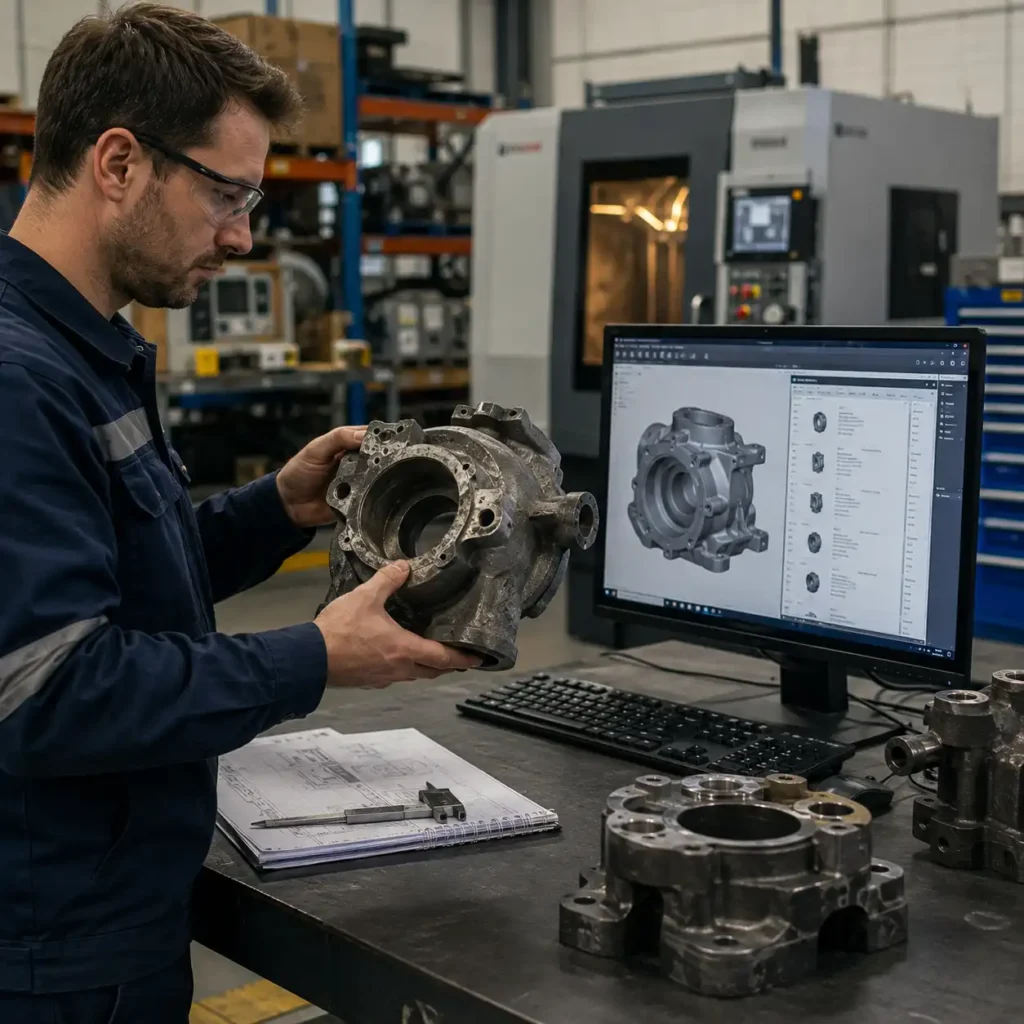
Many older machines no longer have original CAD files or technical drawings. In some cases, manufacturers have discontinued support entirely.
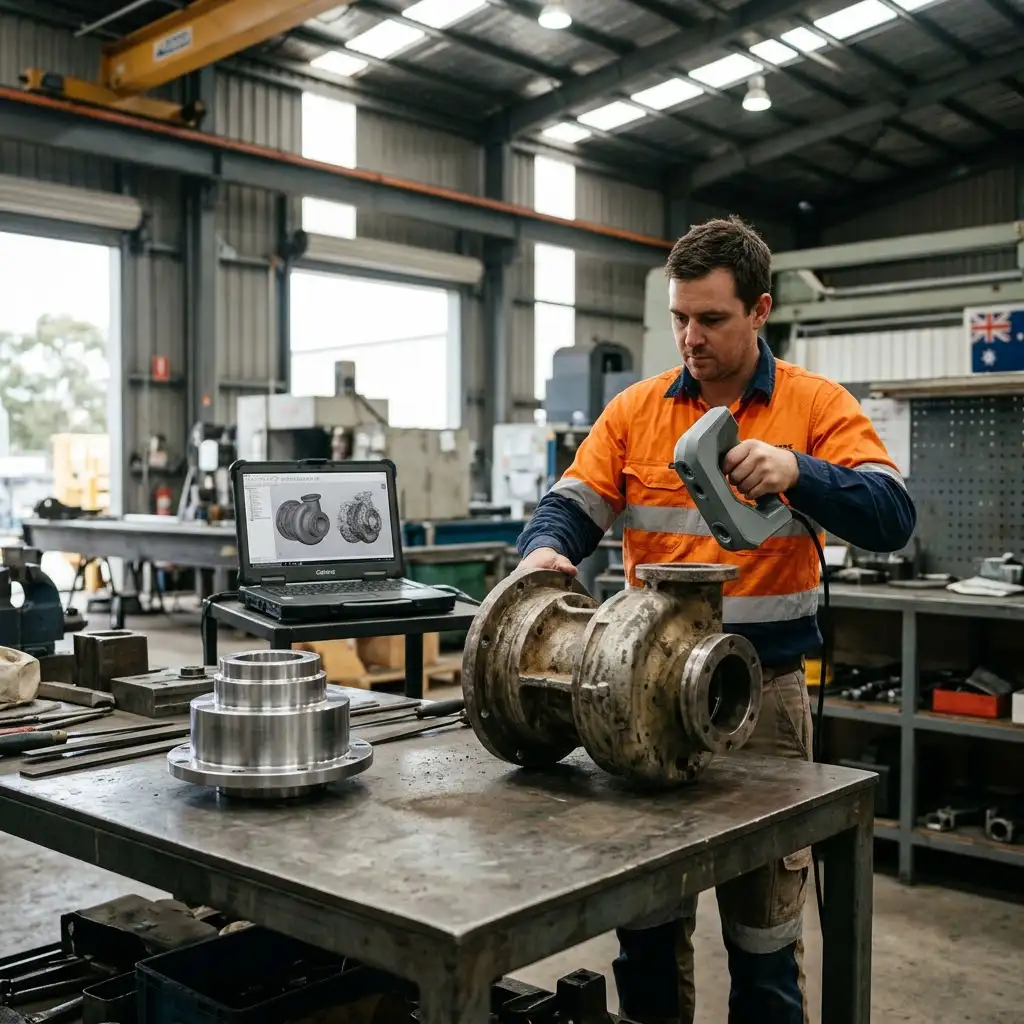
This is where Engineering Solutions combined with 3D Scanning Services become essential.
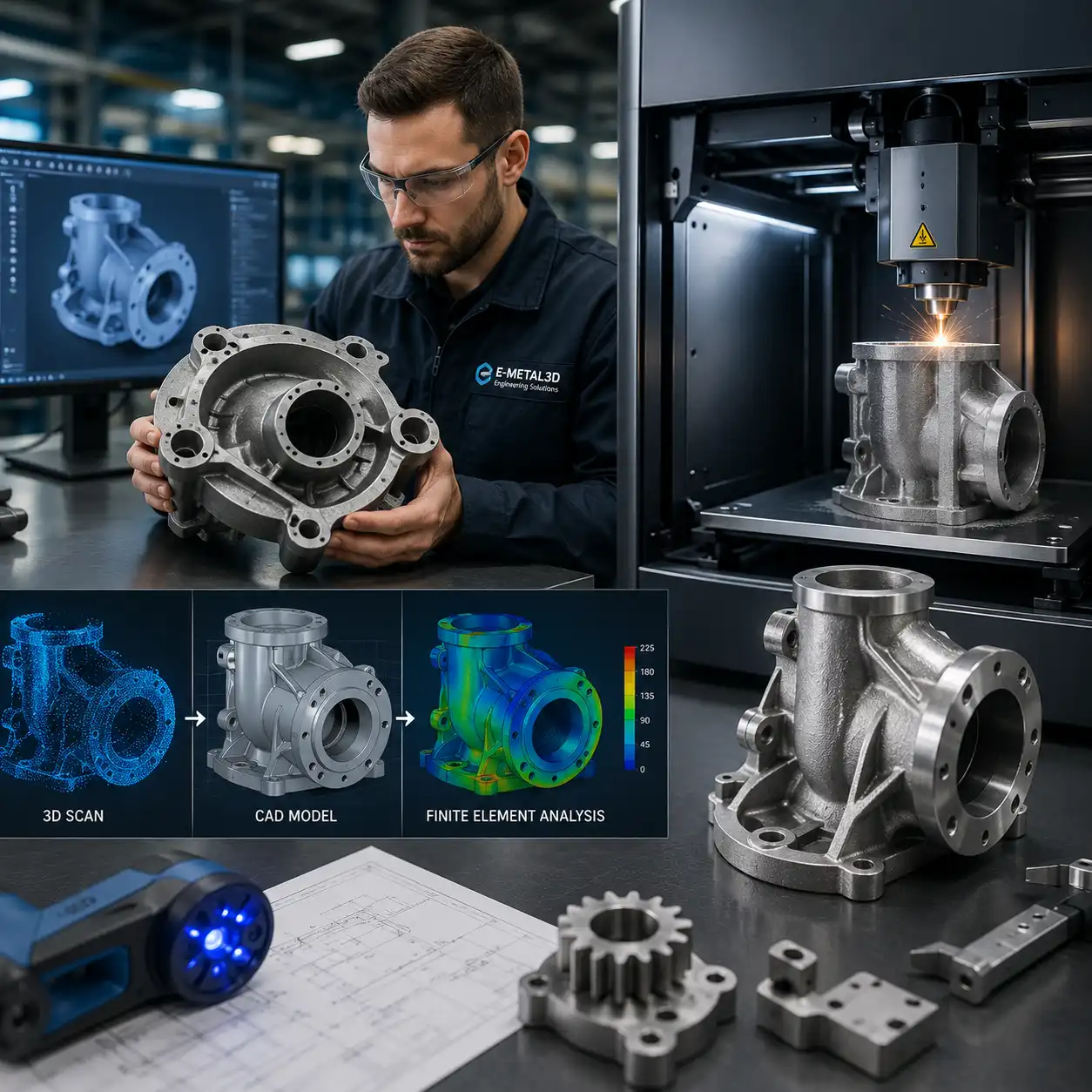
Using high-precision 3D scanning, engineers capture the exact geometry of an existing component before rebuilding it as a fully editable CAD model through reverse engineering.
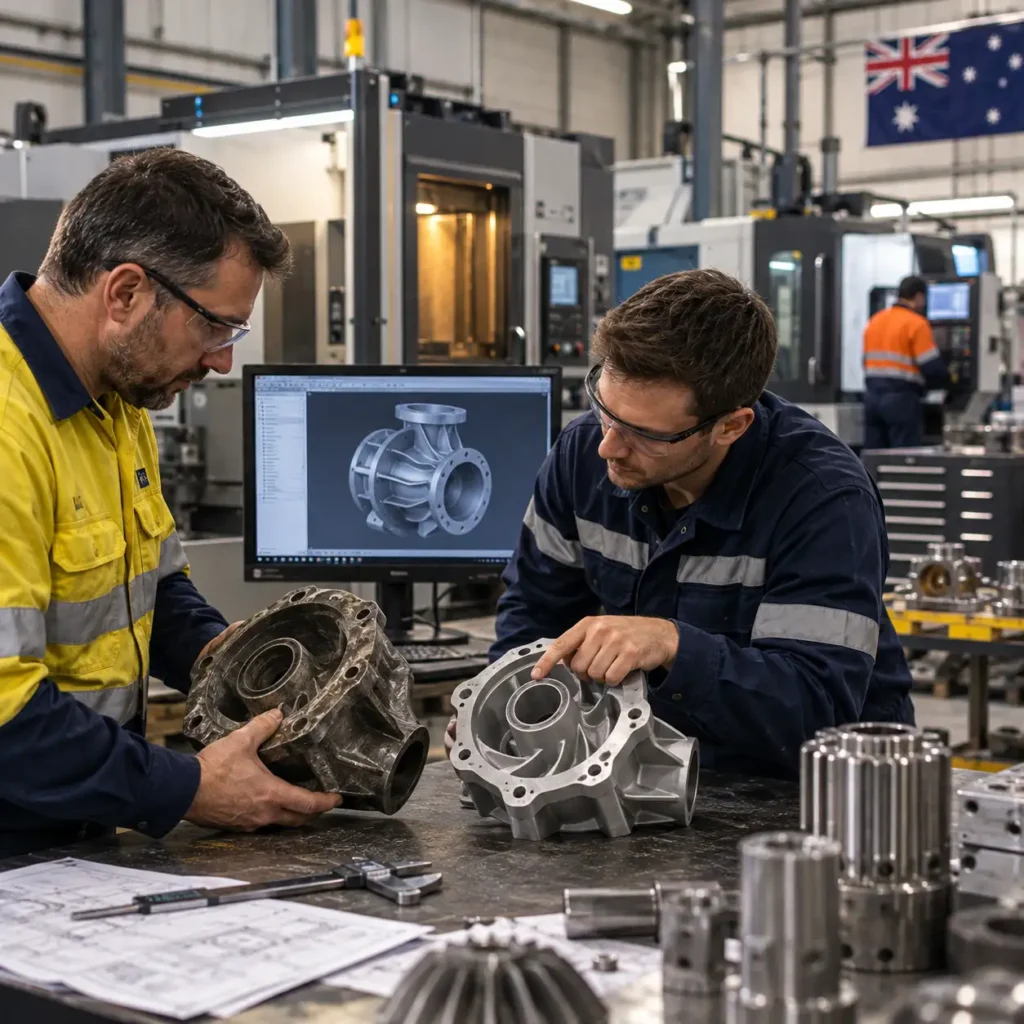
Once the digital model has been created, the component can be reproduced, modified, or optimised for modern manufacturing processes.
Rather than simply copying an existing design, engineers can improve material selection, strengthen critical areas, or redesign the part for greater performance.
Choosing the Right Manufacturing Process
Not every spare part should be manufactured using the same technology.
The most suitable production method depends on the component’s geometry, material requirements, operating environment, tolerances, and production quantity.
For simple geometries, CNC machining may remain the best option.
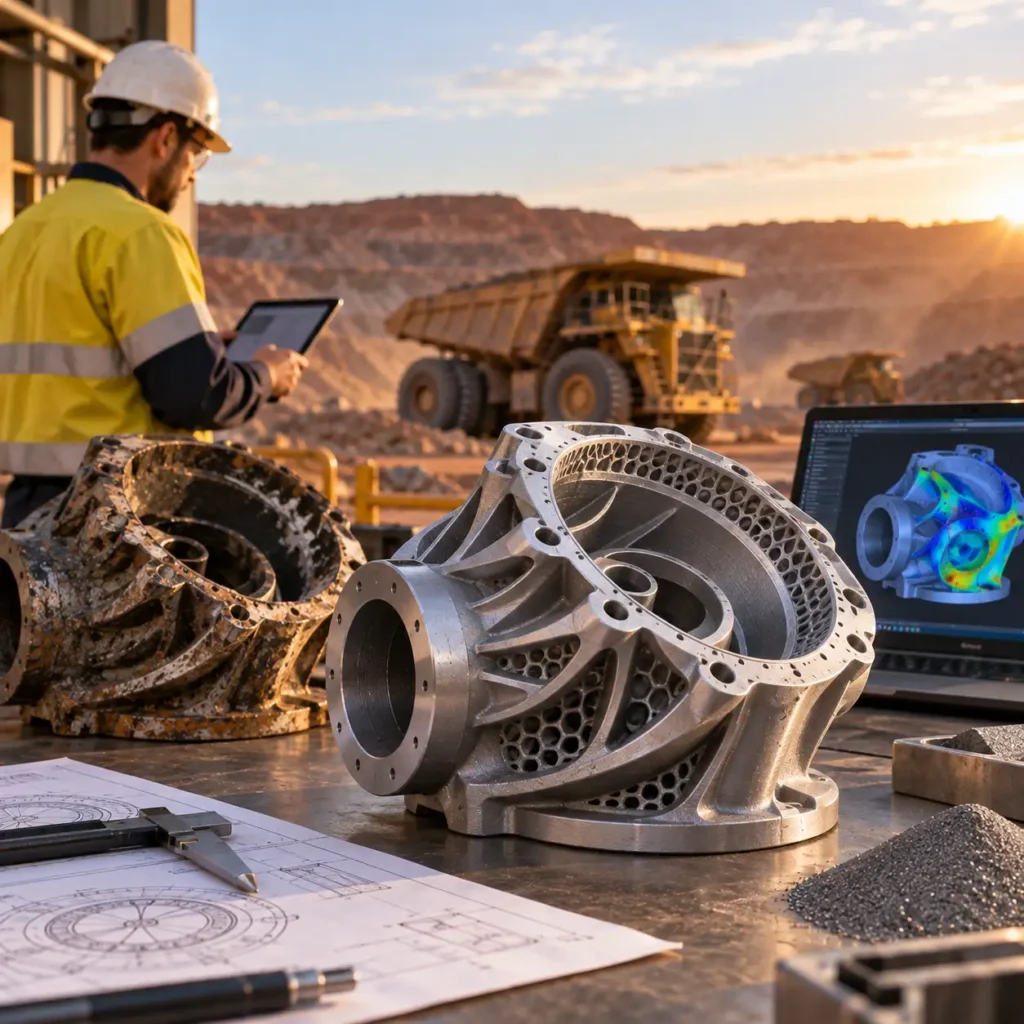
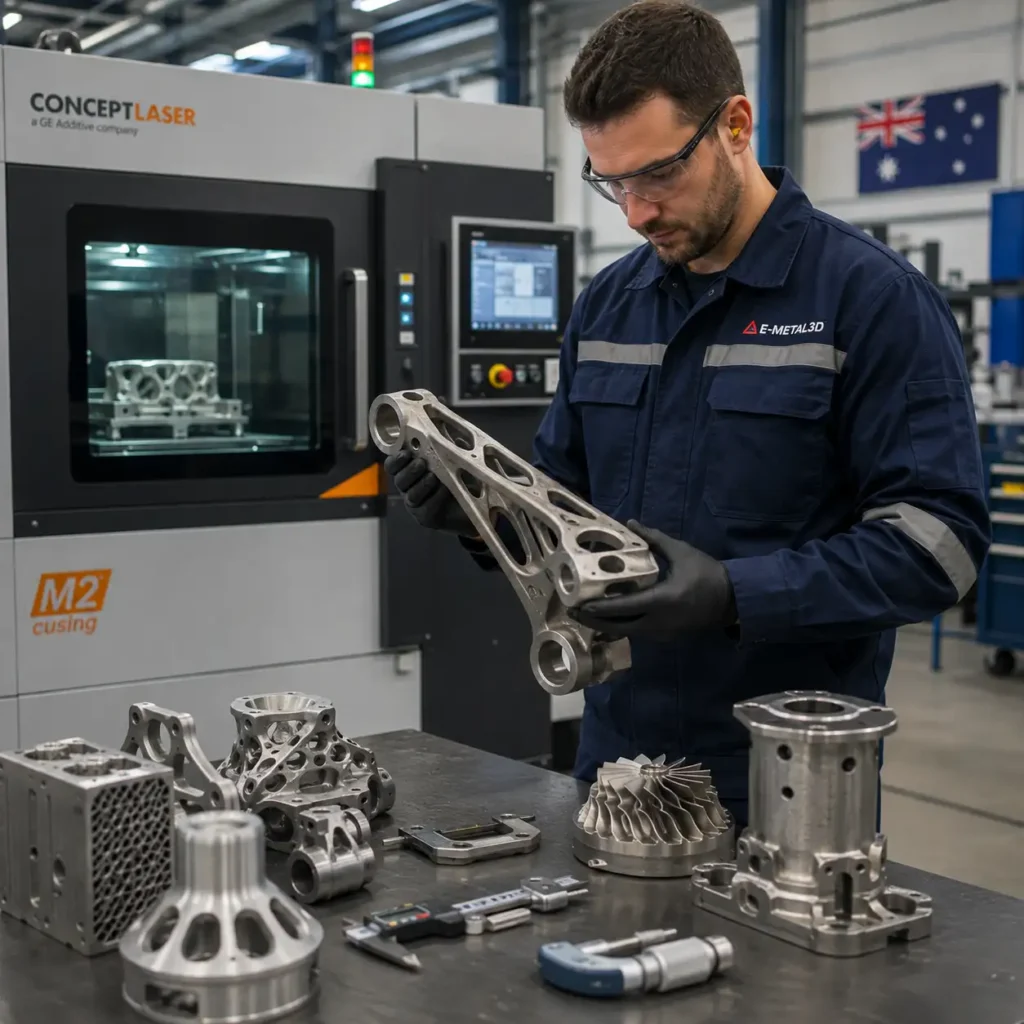
For highly complex components, lightweight structures, or low-volume production, Metal 3D Printing often provides significant advantages.
By selecting the most appropriate manufacturing method, businesses achieve better performance while avoiding unnecessary production costs.
An engineering-first approach ensures every spare component is produced efficiently and reliably.
Metal 3D Printing Is Reshaping Spare Parts Manufacturing
Traditional manufacturing often requires moulds, casting tools, or lengthy machining processes before production can even begin.
Metal additive manufacturing changes that completely.
Using industrial Metal 3D Printing, components are produced directly from digital CAD files without expensive tooling.
This enables manufacturers to produce complex replacement parts with shorter lead times and greater design freedom.
Additional benefits include:
- Reduced material waste
- Lightweight component optimisation
- Internal cooling channels
- Consolidated assemblies
- Faster design revisions
- Low-volume production without tooling investment
These capabilities are particularly valuable when producing obsolete or difficult-to-source spare parts.
Digital Spare Parts Libraries
Increasingly, companies are replacing physical warehouses with digital inventories.
Instead of storing hundreds of components, businesses maintain secure digital engineering files that can be manufactured whenever required.
Combined with Digital Twin technology, these digital libraries provide a complete engineering record for every asset, making future repairs faster and more predictable.
Digital spare parts management also simplifies engineering updates, design improvements, and version control across multiple production sites.
For organisations managing large industrial assets, this represents a significant step toward smarter maintenance strategies.
Industries That Benefit Most
Mining
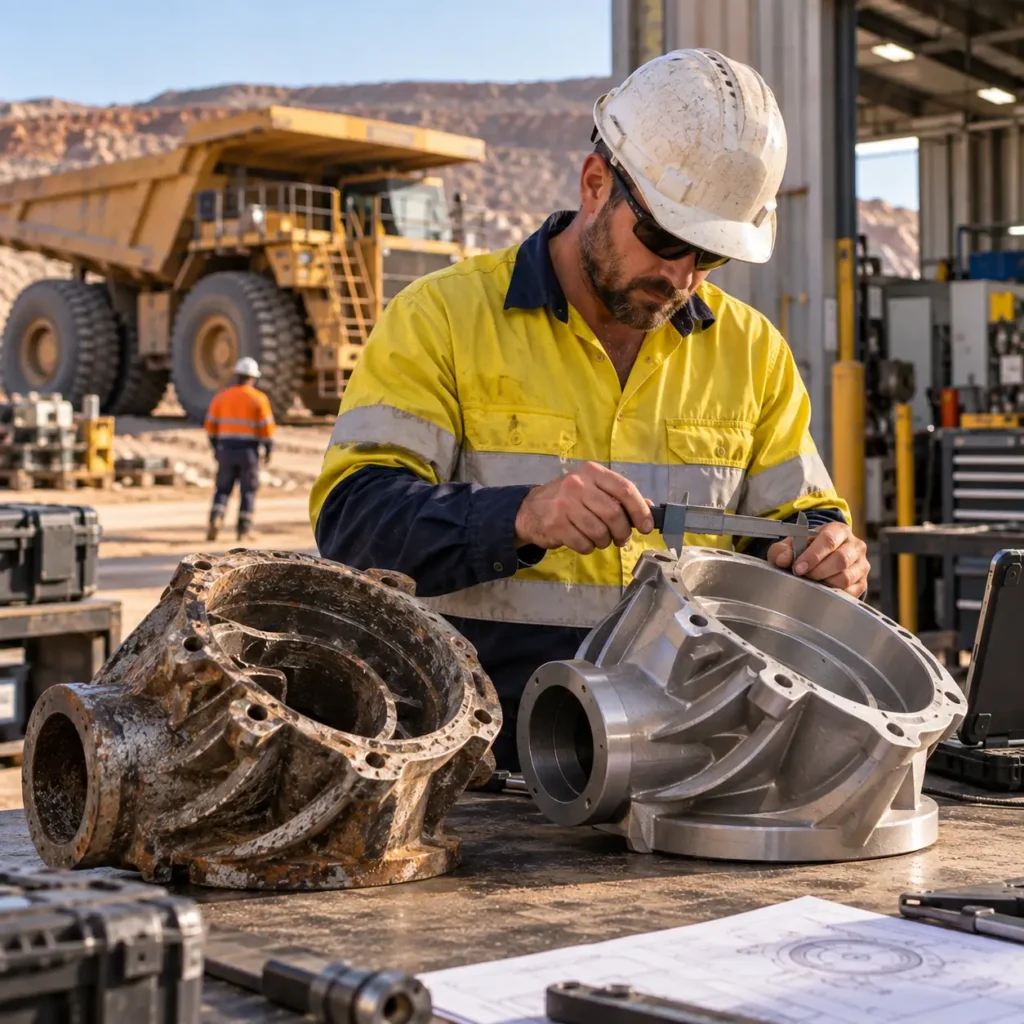
The Mining Industry depends heavily on reliable spare parts to keep crushers, pumps, conveyors, drilling systems, and processing equipment operating efficiently.
Manufacturing replacement parts locally reduces downtime and minimises disruptions caused by international supply chains.
Manufacturing
The Manufacturing Industry frequently requires replacement machine components, tooling, fixtures, and production equipment parts.
On-demand manufacturing enables production facilities to restore operations quickly while reducing inventory costs.
Oil & Gas
The Oil & Gas Industry operates in demanding environments where equipment reliability is critical.
Producing high-performance replacement components using advanced engineering techniques helps maintain safe and continuous operations.
More Than Simply Replacing a Part
Modern spare parts manufacturing is about continuous improvement.
Instead of reproducing outdated designs exactly as they were, engineers evaluate opportunities to improve strength, reduce weight, enhance wear resistance, or simplify manufacturing.
Modern materials, simulation software, and additive manufacturing technologies allow replacement components to outperform the originals.
As a result, businesses not only restore equipment but often improve long-term reliability.
Why Choose E-Metal3D?
At E-Metal3D, spare parts manufacturing combines engineering expertise with advanced digital manufacturing technologies.
Our workflow integrates Engineering Solutions, 3D Scanning Services, Reverse Engineering, and Metal 3D Printing to help Australian industries reduce downtime and improve equipment performance.
Whether the requirement is a single replacement component, a discontinued industrial part, or a complete digital spare parts strategy, our engineering team delivers practical manufacturing solutions designed for real industrial environments.
What is spare parts manufacturing?
Spare parts manufacturing is the process of producing replacement components for industrial equipment using technologies such as reverse engineering, CNC machining, and Metal 3D Printing.
Can spare parts be manufactured without original drawings?
Yes. High-precision 3D scanning and reverse engineering allow engineers to recreate accurate CAD models even when original documentation is unavailable.
Is Metal 3D Printing suitable for industrial spare parts?
Absolutely. Metal 3D Printing is ideal for low-volume production, complex geometries, obsolete components, and applications where traditional tooling would be expensive or time-consuming.
Which industries benefit from on-demand spare parts manufacturing?
Mining, manufacturing, oil & gas, aerospace, defence, transportation, and heavy engineering all benefit from faster replacement parts and reduced equipment downtime.