When Critical Mining Equipment Fails
Mining operations depend on heavy equipment working reliably in some of the world’s most demanding environments. When a critical component fails, every hour of downtime can impact production schedules, maintenance budgets, and operational efficiency.
Unfortunately, replacing damaged components is not always straightforward. Many mining assets remain in service for decades, while original manufacturers discontinue spare parts, update product lines, or stop supporting legacy equipment altogether.
This is where Reverse Engineering for Mining Equipment provides a practical solution.
Instead of replacing expensive machinery or waiting months for imported parts, reverse engineering enables mining companies to recreate existing components, improve their design where necessary, and manufacture reliable replacements using modern engineering and advanced manufacturing technologies.
What Is Reverse Engineering?
Reverse engineering is the process of recreating an accurate digital model from an existing physical component.
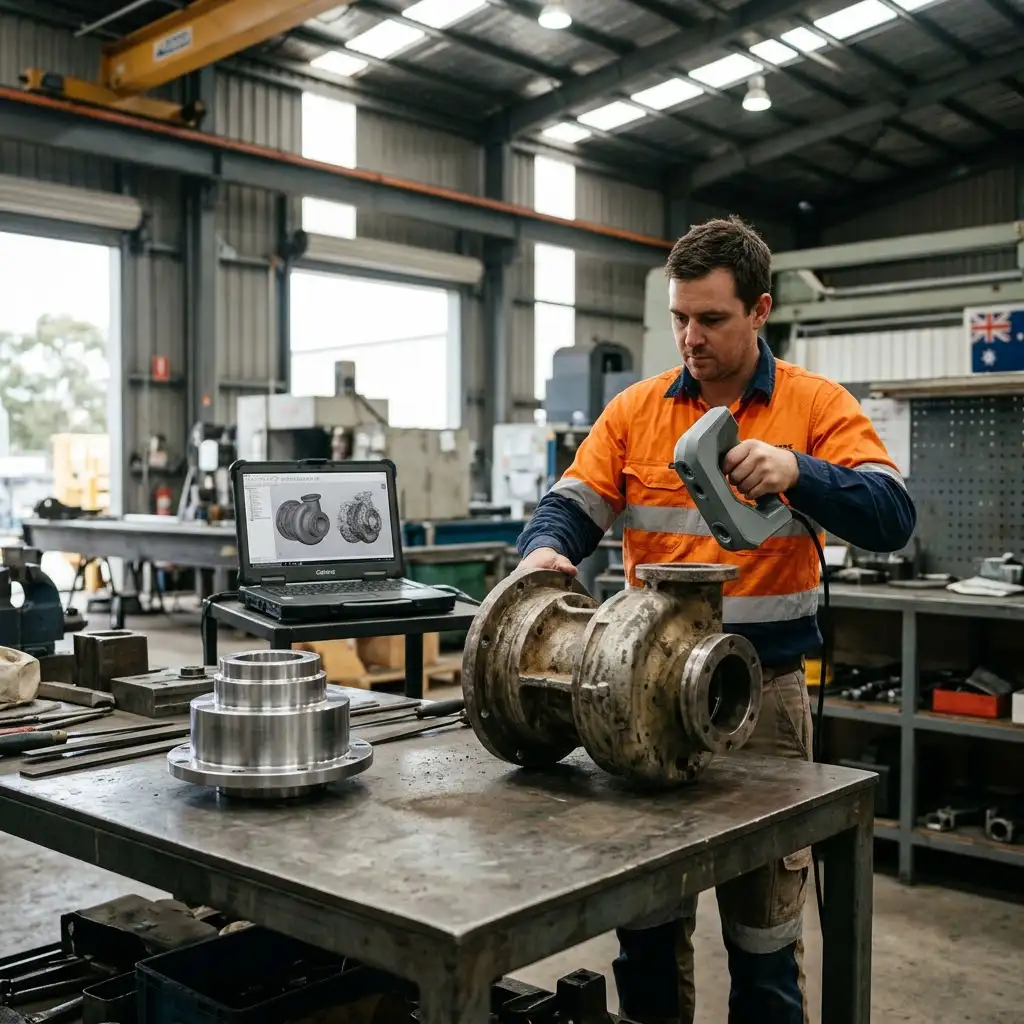
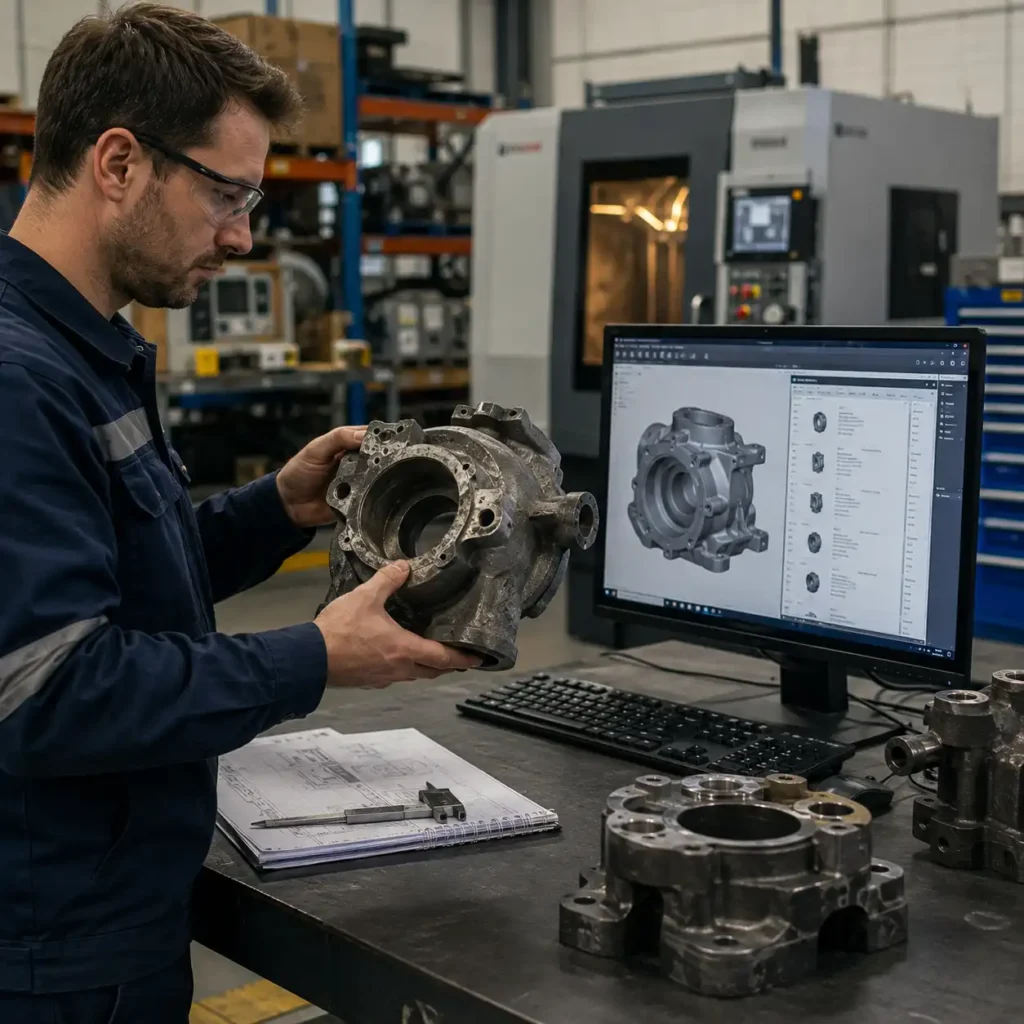
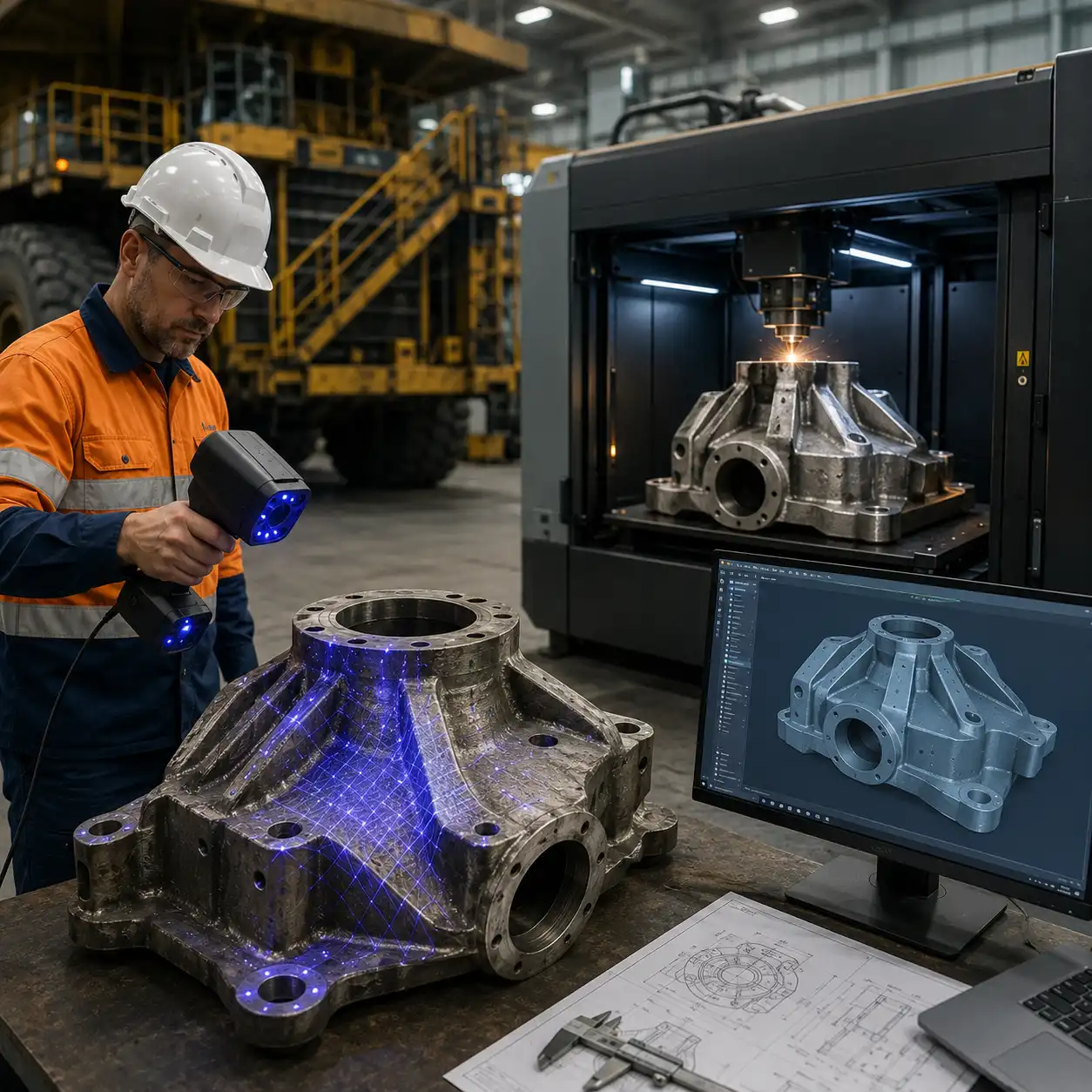
Rather than relying on original engineering drawings, the process begins with capturing the geometry of the part using 3D Scanning Services. Engineers then convert the scan into a fully editable CAD model that can be analysed, modified, and prepared for manufacturing.
For mining companies, this approach makes it possible to reproduce discontinued, worn, or damaged components while maintaining dimensional accuracy and functional performance.
More importantly, reverse engineering creates a digital record that can be reused whenever replacement parts are required in the future.
Why Reverse Engineering Is Essential in Mining
Mining equipment operates under extreme conditions including abrasion, impact loading, corrosion, vibration, and continuous operation.
These harsh environments naturally accelerate component wear.
The challenge becomes even greater when replacement parts are no longer available or require lengthy international procurement.
Reverse engineering helps mining operators overcome these challenges by providing:
- Faster replacement of critical components
- Reduced dependence on overseas suppliers
- Improved equipment availability
- Digital records for future manufacturing
- Opportunities to improve original designs
- Better lifecycle management of mining assets
Instead of treating obsolete equipment as a liability, companies can continue operating valuable assets with confidence.
From Physical Component to Digital Asset
Every reverse engineering project follows a structured engineering workflow.
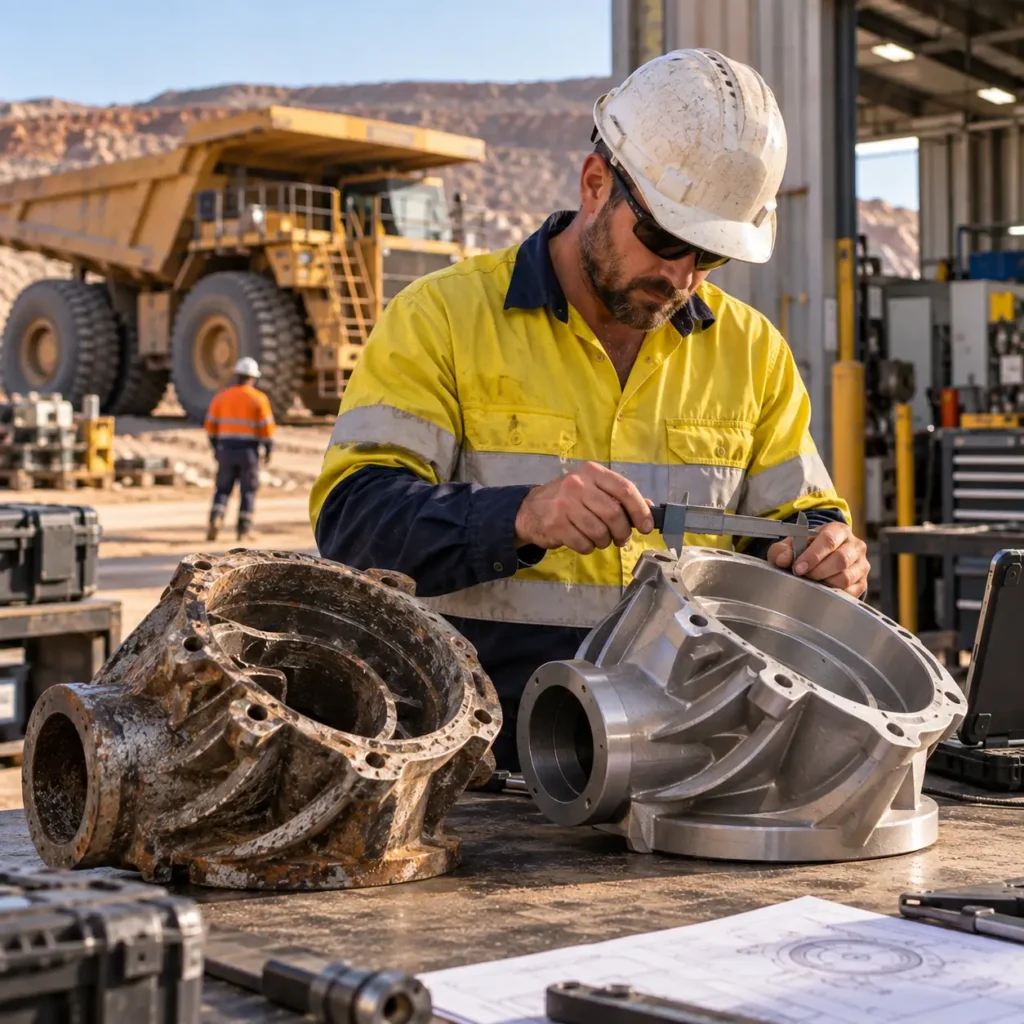
The process begins by carefully inspecting the existing component to assess wear, damage, and manufacturing feasibility.
Next, high-resolution 3D Scanning Services capture millions of measurement points across the entire surface of the component. This scan data is processed and transformed into a precise CAD model using advanced engineering software.
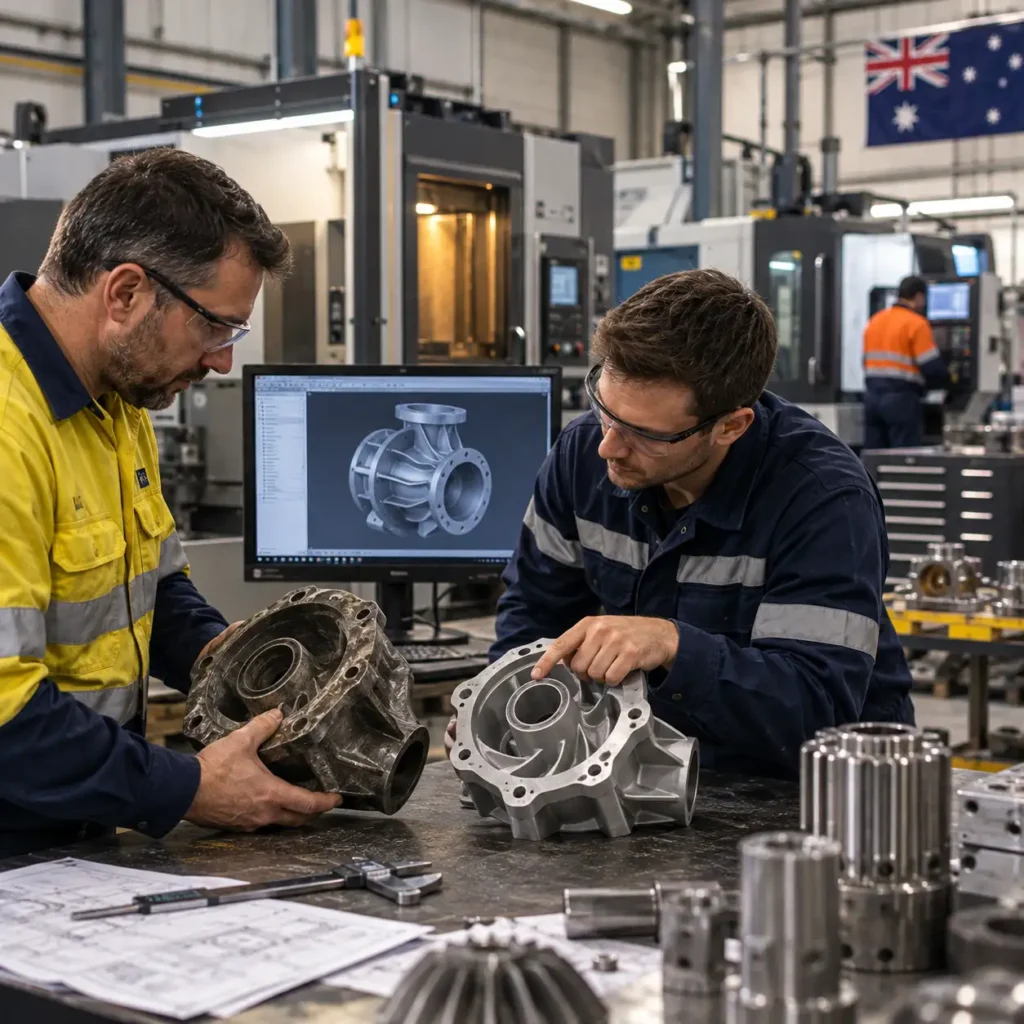
Engineers then validate critical dimensions, restore worn features where necessary, and optimise the design for modern manufacturing methods.
The result is a complete digital engineering file that becomes a valuable long-term asset for future maintenance and production.
Improving the Original Design
Reverse engineering is not simply about copying an existing component.
In many cases, mining companies take the opportunity to improve the original design based on years of operational experience.
Common improvements include:
- Increasing wear resistance
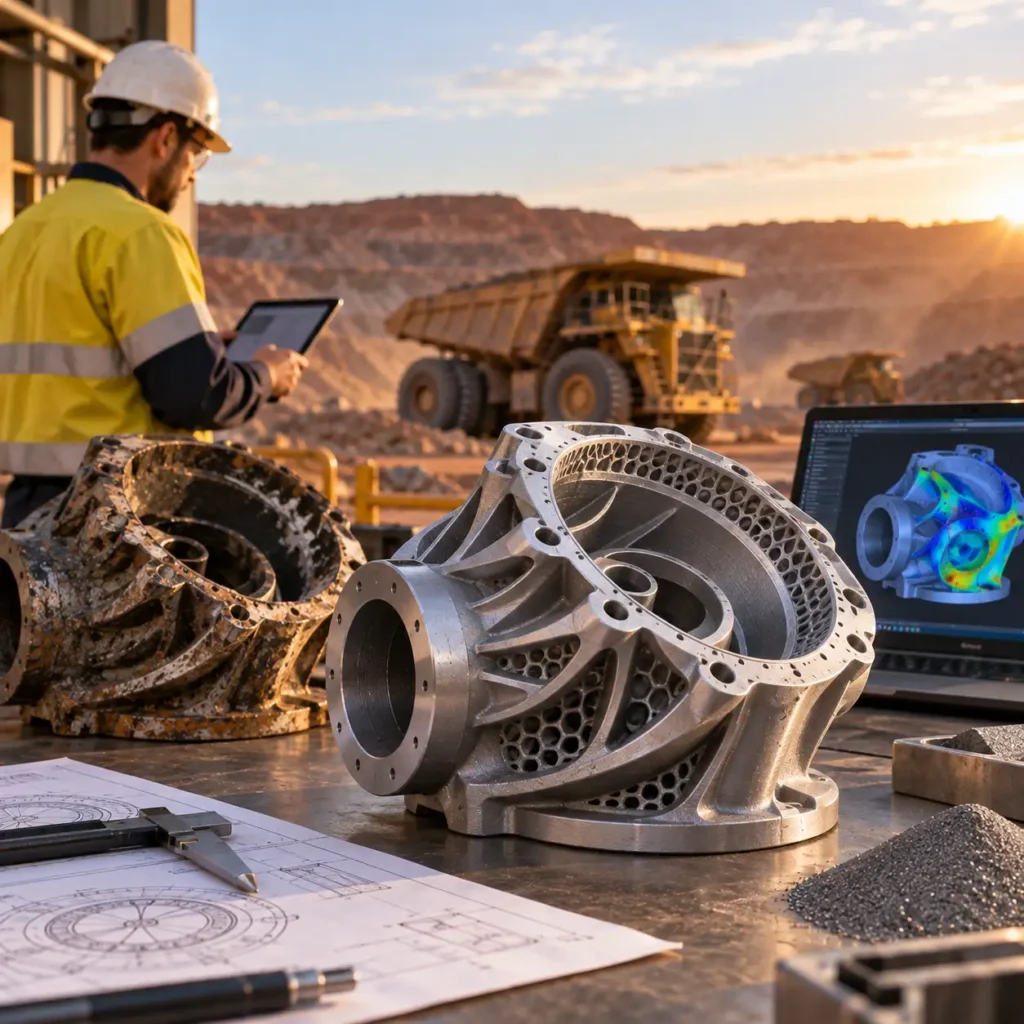
- Reducing unnecessary weight
- Improving structural strength
- Optimising cooling or fluid flow
- Simplifying complex assemblies
- Selecting more suitable materials
These engineering improvements often produce replacement components that outperform the original design while extending service life.
Manufacturing Replacement Components
Once the digital model has been completed, engineers determine the most suitable manufacturing method.
For simple geometries or high-volume production, CNC machining may provide the most efficient solution.
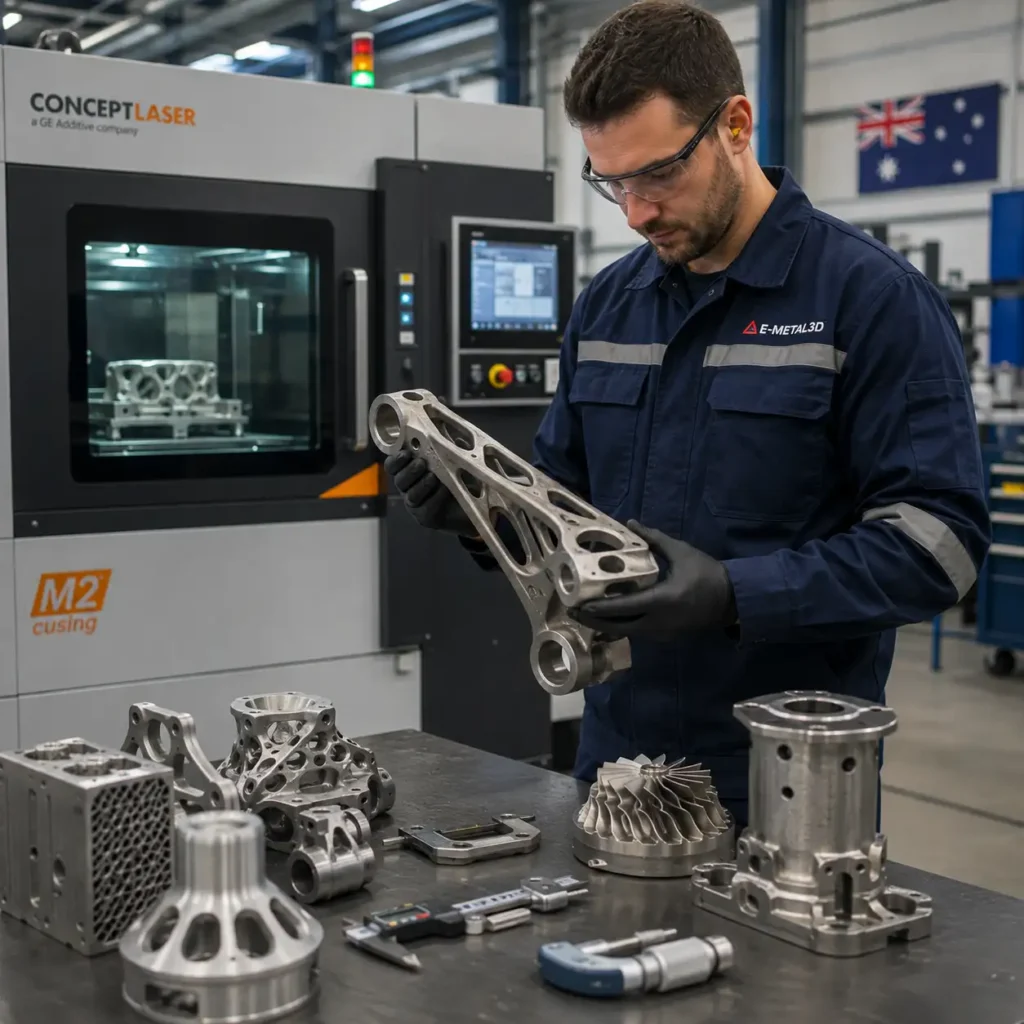
For complex parts, low-volume production, or lightweight optimisation, Metal 3D Printing offers significant advantages.
By manufacturing directly from digital files, businesses reduce lead times, eliminate tooling costs for many applications, and gain greater design flexibility.
Selecting the right production method ensures every replacement component meets operational requirements while remaining commercially practical.
Digital Engineering Supports Smarter Maintenance
One of the greatest long-term advantages of reverse engineering is the creation of digital engineering libraries.
Instead of repeatedly measuring the same components after every failure, mining companies can securely store validated CAD models for future manufacturing.
When combined with Digital Twin strategies, these digital assets provide valuable engineering information that supports predictive maintenance, lifecycle planning, and equipment optimisation.
This digital-first approach reduces future engineering costs while improving maintenance responsiveness across multiple sites.
Applications Across Mining Operations
Reverse engineering supports a wide range of mining equipment and critical infrastructure.
Typical applications include:
- Pump housings
- Crusher components
- Wear liners
- Conveyor assemblies
- Drill components
- Hydraulic manifolds
- Gear housings
- Impellers
- Structural brackets
- Custom machine components
Similar reverse engineering workflows are also used throughout the Oil & Gas Industry to reproduce high-value components operating in harsh environments.
Whether the component is damaged, worn, or no longer commercially available, reverse engineering provides a practical path toward reliable replacement.
Why Mining Companies Choose E-Metal3D
At E-Metal3D, reverse engineering combines practical engineering expertise with advanced digital manufacturing technologies.
Our integrated workflow includes Engineering Solutions, 3D Scanning Services, CAD modelling, engineering analysis, and Metal 3D Printing to help mining companies reduce downtime and improve equipment reliability.
Rather than simply reproducing components, we focus on delivering engineering solutions that improve manufacturability, extend asset life, and support long-term maintenance strategies.
From a single replacement component to complete equipment digitisation, E-Metal3D helps mining businesses modernise maintenance through precision engineering and advanced manufacturing.
What is reverse engineering for mining equipment?
Reverse engineering is the process of recreating accurate CAD models from existing mining components using 3D scanning and engineering software. These models can then be used to manufacture replacement parts or improve original designs.
Can damaged mining components be reverse engineered?
Yes. Even worn or damaged components can often be scanned and reconstructed. Engineers restore missing features digitally before preparing the component for manufacturing.
Why is reverse engineering useful for obsolete mining equipment?
Many mining assets remain in operation long after manufacturers discontinue spare parts. Reverse engineering allows these components to be recreated without original drawings or CAD files.
Can reverse engineered parts be produced using Metal 3D Printing?
Absolutely. Once the CAD model has been completed, components can be optimised and manufactured using Metal 3D Printing, CNC machining, or other suitable production methods.