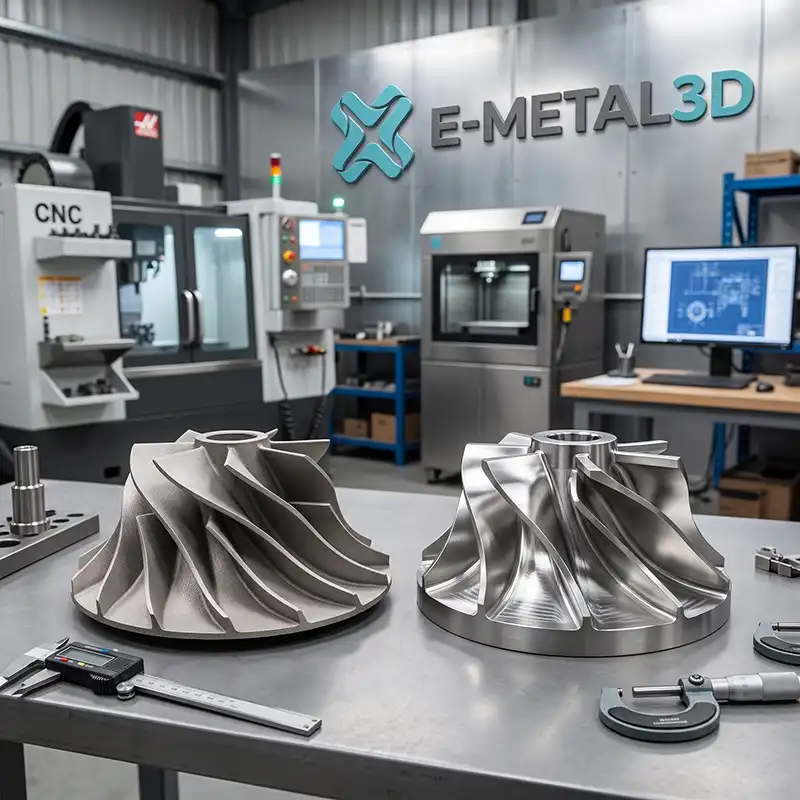
Choosing between metal 3D printing and CNC machining is an important engineering decision for manufacturers developing new products, replacing industrial components or managing spare parts. Both processes can produce high-quality metal components, but they work in fundamentally different ways and offer different advantages.
Metal 3D printing vs CNC machining is not simply a comparison between a newer technology and a traditional manufacturing method. The right choice depends on component geometry, material requirements, dimensional tolerances, production volume, finishing needs and the cost of the complete manufacturing workflow.
For some components, metal additive manufacturing offers greater design freedom and reduces the need for complex tooling. For others, CNC machining remains the more practical choice because it can achieve precise features efficiently using established production methods.
This guide compares the two processes and explains how to select the most appropriate manufacturing route for industrial applications.
1. How Metal 3D Printing and CNC Machining Work
Metal 3D printing
Metal 3D printing is an additive manufacturing process that builds a component by adding material layer by layer. One industrial method is Laser Powder Bed Fusion (LPBF), which uses a laser to selectively fuse regions of metal powder according to digital design data.
LPBF can produce complex geometries, lightweight structures and internal passages that may be difficult or impractical to manufacture using conventional methods.
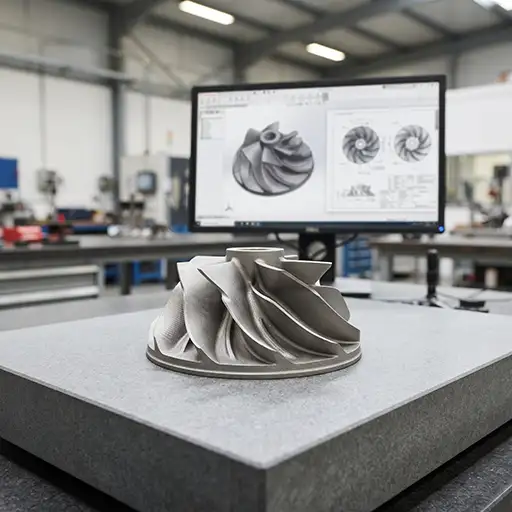
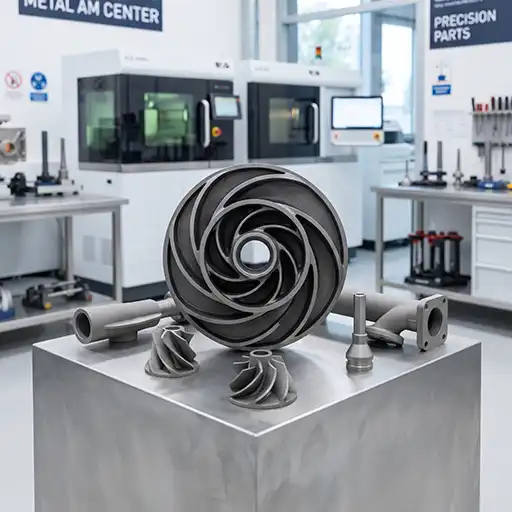
Potential applications include complex brackets, manifolds, impellers, specialised housings and selected low-volume industrial components. The suitability of each part depends on its material, dimensions, operating requirements and manufacturing constraints.
However, printing is only one stage of production. Support removal, heat treatment, machining, surface finishing and inspection may be necessary before a component is ready for use.
CNC machining
Computer Numerical Control (CNC) machining produces components by removing material from a solid workpiece using programmed cutting tools. Common operations include milling, turning, drilling and boring.
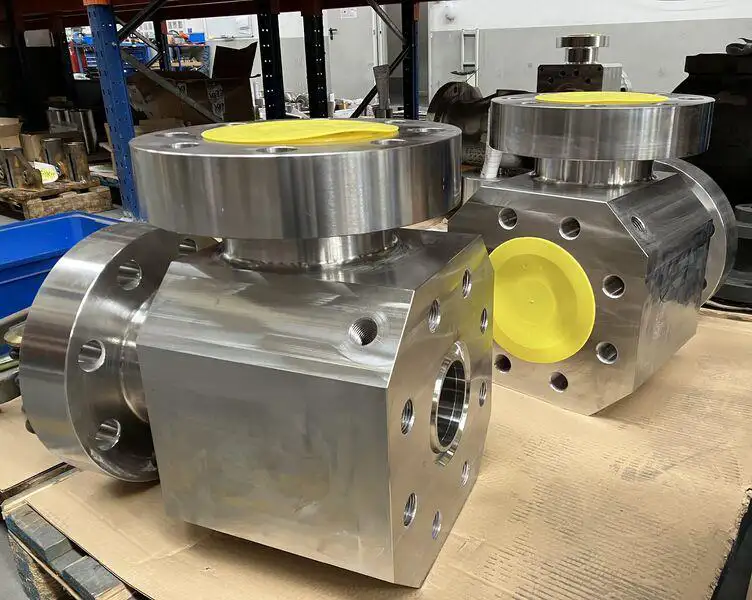
CNC machining is widely used for components that require accurate dimensions, controlled surface finishes and reliable interfaces with other parts. It is particularly suitable for shafts, plates, brackets, housings and many components with accessible external and internal features.
The process can also be used to finish selected surfaces on metal 3D printed components.
Its limitations depend on tool access, workholding, machine configuration and geometry. Deep internal passages, intricate enclosed structures and some complex forms may require multiple setups, specialised tooling or alternative manufacturing methods.
2. Metal 3D Printing vs CNC Machining: Key Differences
The following table summarises the main engineering considerations. These are general tendencies rather than universal rules; actual performance depends on the component and the selected manufacturing process.
| Factor | Metal 3D printing | CNC machining |
|---|---|---|
| Manufacturing method | Adds material layer by layer | Removes material from a workpiece |
| Geometric complexity | Suitable for many complex and integrated geometries | Depends on tool access, workholding and setup |
| Internal channels | Can produce certain complex enclosed passages | Often requires accessible drilling, multiple operations or specialised methods |
| Dimensional tolerances | Critical features may require finishing | Can achieve tight tolerances with suitable equipment and process control |
| Surface finish | Often requires post-processing for demanding surfaces | Can produce controlled finishes through appropriate cutting operations |
| Material utilisation | Uses material to build the part, with additional process and support considerations | Removes material, potentially creating substantial chips from solid stock |
| Tooling | Does not generally require dedicated moulds for each geometry | Usually relies on cutting tools, fixtures and suitable workholding |
| Production quantity | Often attractive for complex, low-volume or customised parts | Often attractive for conventional geometries and repeat production |
| Finishing | May require support removal, heat treatment and machining | May require deburring, finishing or additional operations |
| Design changes | Digital geometry can be revised without changing dedicated mould tooling | Toolpaths, fixtures or setups may need revision |
The best process is the one that meets the component’s functional and commercial requirements with an appropriate level of manufacturing risk.
3. Geometry: When Metal 3D Printing Has an Advantage
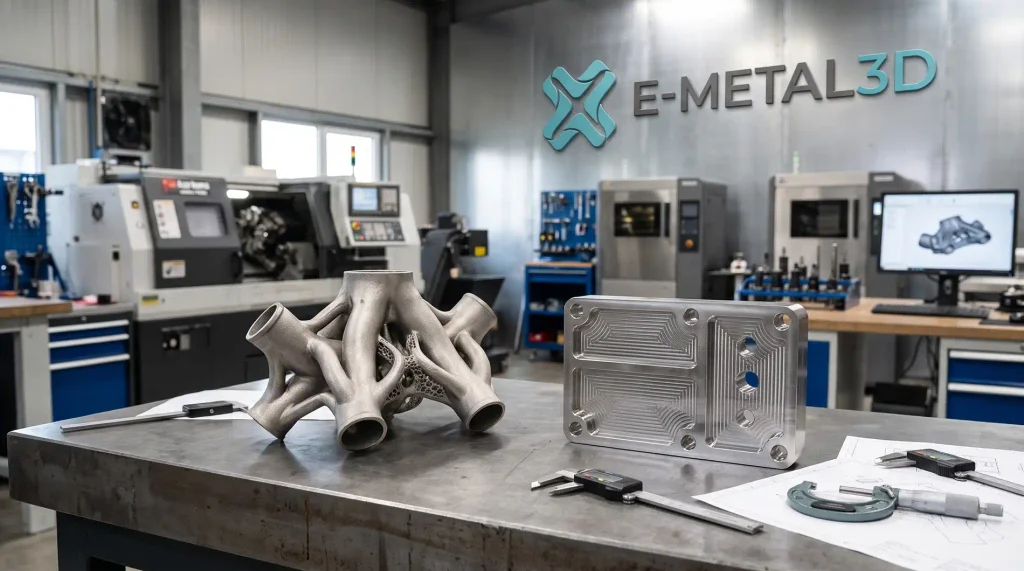
Geometry is one of the clearest reasons to consider metal additive manufacturing.
Conventional machining requires a cutting tool to reach the surfaces being manufactured. This can make certain enclosed passages, intricate cavities and complex intersecting features difficult to produce. A design may require multiple components, additional drilling operations or assembly to achieve the intended function.
Metal 3D printing can create many of these geometries directly from a digital model, subject to process limitations and appropriate design preparation.
Potential benefits include:
- Integrating several components into a single manufactured part.
- Designing complex internal flow passages.
- Reducing the number of separate assemblies and connections.
- Creating lightweight structures where supported by engineering analysis.
- Developing customised components without dedicated mould tooling.
These advantages can be relevant to fluid-handling equipment, specialised industrial housings and components where geometry strongly influences performance.
Nevertheless, geometric freedom does not mean unrestricted design. Minimum feature sizes, support requirements, powder removal, distortion, finishing access and inspection must all be considered.
CNC machining remains highly effective when features are accessible and the geometry is compatible with the available machine configuration. For many conventional parts, redesigning specifically for additive manufacturing may add complexity without providing a meaningful benefit.
4. Dimensional Accuracy and Surface Finish
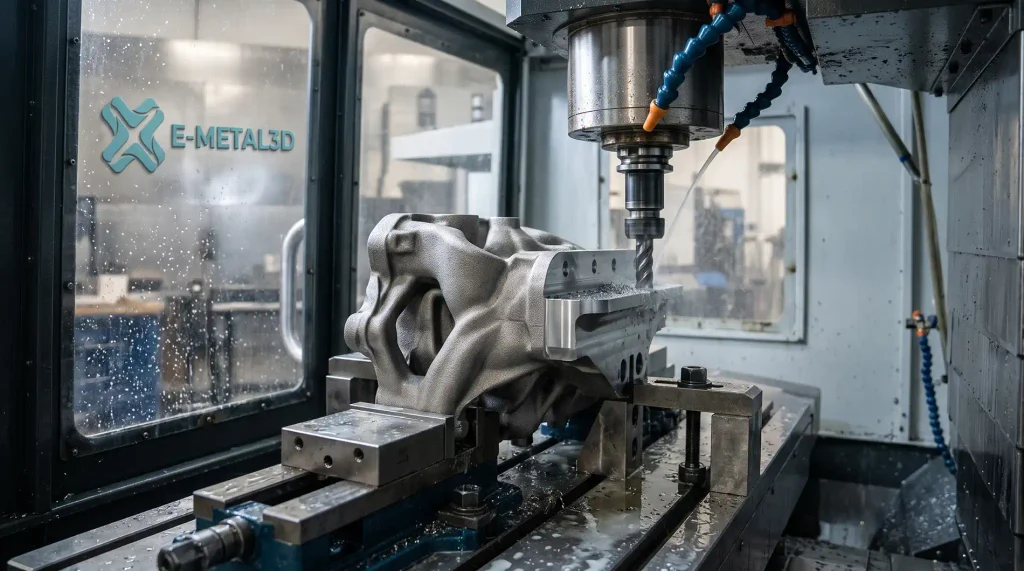
Dimensional accuracy is often a decisive factor when selecting a manufacturing process.
CNC machining can produce accurate interfaces, bores, threads, bearing seats and sealing surfaces when the machine, tooling, workholding and process are appropriate for the requirements. It is therefore frequently used for components with demanding dimensional specifications.
Metal 3D printing can also produce dimensionally controlled components, but the as-built condition may differ from the nominal CAD model because of process behaviour, thermal effects, orientation and geometry. Some features may require machining or other finishing to meet their final specifications.
The important distinction is between the part as manufactured by the primary process and the finished component that must satisfy the engineering drawing.
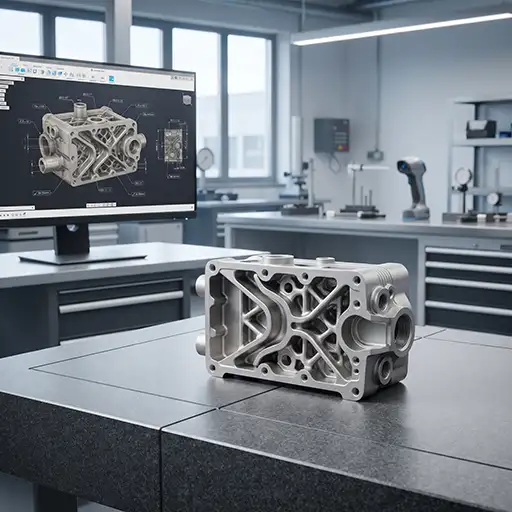
For example, a complex manifold might benefit from additive manufacturing to create its internal passage network, while its connection faces and precision bores may still require CNC machining.
A hybrid workflow can therefore combine the geometric flexibility of additive manufacturing with the dimensional control of machining.
Rather than choosing a process based on a general claim about accuracy, define the critical dimensions, datums, tolerances and surface finishes first. Then assess which manufacturing route can achieve those requirements reliably.
5. Cost: Which Process Is More Economical?
There is no universal rule that metal 3D printing is cheaper than CNC machining, or vice versa.
The cost comparison should include the complete production route, not just the primary manufacturing operation.
For metal 3D printing, relevant cost drivers may include material, build time, support structures, manufacturing preparation, heat treatment, support removal, machining and inspection.
For CNC machining, costs may include raw material, programming, cutting time, tool wear, fixtures, setup time, material waste and finishing.
The geometry of the component can change the balance substantially. A complex part that requires multiple machining setups or separate assembled components may be a suitable candidate for additive manufacturing. A simple part that can be machined efficiently from standard stock may be more economical through CNC.
Production volume also matters. A one-off component has a different cost structure from a repeat order of hundreds or thousands of parts. The availability of existing tooling, the need for design changes and the cost of maintaining inventory may also influence the decision.
A meaningful comparison should therefore ask:
- What manufacturing operations are required?
- What tolerances and surface finishes must be achieved?
- How many components are needed?
- Is dedicated tooling required?
- What inspection and documentation are necessary?
- Are assembly, inventory or supply-chain costs relevant?
For a more detailed breakdown of pricing considerations, see the guide to metal 3D printing cost factors.
6. Lead Time and Production Flexibility
Lead time depends on more than the time spent operating a machine.
CNC machining may require programming, workholding preparation, material procurement, multiple setups and subsequent finishing. For a straightforward part with accessible features, this can be a highly efficient route.
Metal 3D printing can reduce the need for dedicated moulds and can simplify the production of certain complex geometries. It may be useful for prototypes, customised components and selected replacement parts where conventional tooling or manufacturing sequences create delays.
However, additive manufacturing also involves build preparation, machine scheduling, printing, possible heat treatment, support removal, finishing and inspection. Complex parts may require substantial post-processing.
For this reason, neither process is automatically faster in every situation.
The relevant comparison is the time required to deliver a conforming, finished component. For critical spare parts, the availability of suitable equipment, material, engineering data and inspection resources can be just as important as the nominal manufacturing time.
7. Material Selection and Application Requirements
Material selection must follow the component’s operating requirements rather than the manufacturing process alone.
Industrial applications may involve stainless steels, aluminium alloys, titanium alloys, tool steels or nickel-based alloys, depending on the intended function and manufacturing route.
Not every alloy is available or suitable for every additive process, and CNC machining capability also varies with the material, geometry and required finish.
Before selecting a process, establish the relevant mechanical properties, operating temperature, corrosion environment, wear conditions and any applicable material specifications.
For critical applications, the required material condition, heat treatment, testing and traceability should be included in the manufacturing assessment.
A component should not be considered suitable simply because a material can be machined or printed. The complete manufacturing route must be capable of delivering the required properties and final condition.
For a broader discussion of available alloys and their engineering considerations, see metal 3D printing materials in Australia.
8. Production Volume: Prototypes, Spare Parts and Repeat Manufacturing
Production volume is another important factor in selecting a manufacturing route.
Metal 3D printing can be attractive for prototypes, low-volume production, customised designs and components where tooling requirements make conventional production less practical. It can also support design iteration when engineers need to evaluate different geometries.
CNC machining is suitable for a broad range of production quantities, from individual components to repeat batches. Its economics are particularly favourable when the geometry is straightforward, the required material is readily available and the process can be repeated efficiently.
For higher-volume production, casting, forming or other processes may also need to be considered. The most appropriate option depends on geometry, material, tooling investment, quality requirements and expected demand.
Industrial spare parts require an additional consideration: whether the original component is still available and whether reliable manufacturing data exists.
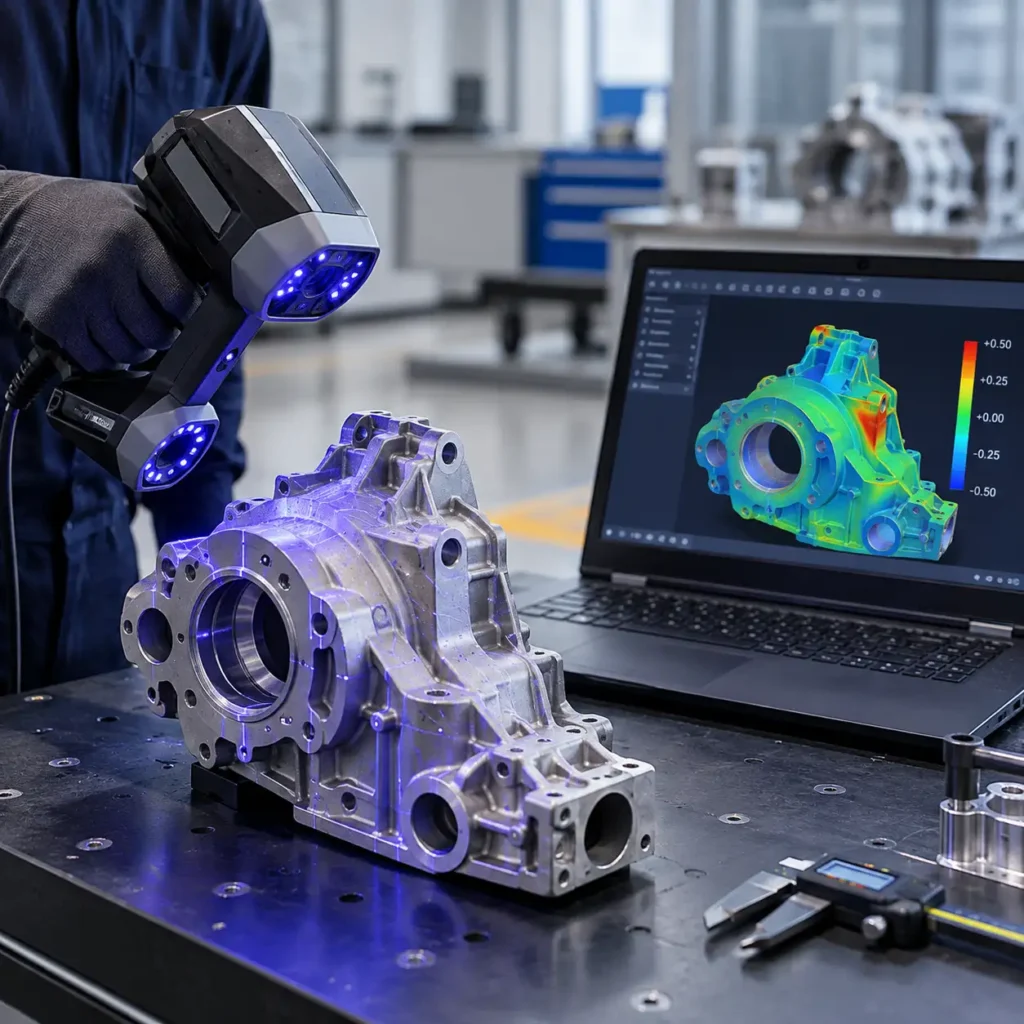
If the original supplier has discontinued a component or the CAD model is unavailable, reverse engineering may help reconstruct the geometry and establish a digital manufacturing record. The resulting model can then be assessed for CNC machining, metal additive manufacturing or another suitable process.
The key is to choose the process based on the actual part and production requirement, rather than assuming that one technology is best for every order.
9. Hybrid Manufacturing: Combining Both Processes
Metal additive manufacturing and CNC machining do not have to be competing alternatives. In many applications, they can be complementary stages of the same workflow.
A component may be printed to create its complex geometry and then machined to achieve the final dimensions and surface finishes required at critical interfaces.
This approach can be useful when the design includes both difficult-to-machine geometry and surfaces that require controlled finishing.
A hybrid workflow may involve:
- Reviewing the component’s functional requirements and CAD geometry.
- Selecting a suitable additive manufacturing process and material.
- Preparing the design and manufacturing strategy.
- Producing the component through metal additive manufacturing.
- Completing any required heat treatment and support removal.
- Machining critical features where necessary.
- Inspecting the finished component against the acceptance requirements.
The sequence and operations depend on the specific part. Some components may be produced entirely by machining, while others may be suitable for additive manufacturing with limited finishing.
The objective is not to use more technology, but to select the combination that meets the design requirements efficiently.
10. A Practical Decision Framework
Before choosing between metal 3D printing and CNC machining, evaluate the component against the following questions.
Is the geometry difficult to machine?
Complex enclosed passages, integrated features and certain lightweight structures may justify an additive manufacturing assessment. Straightforward geometry often remains well suited to machining.
Are there demanding tolerances or surface finishes?
Identify the critical features and determine whether they can be produced directly or require secondary machining. Consider the complete route rather than evaluating the primary process alone.
What quantity is required?
Compare setup, tooling, build preparation, machining and finishing costs across the intended production volume.
Does the component have strict material or inspection requirements?
Confirm that the proposed process and material can meet the applicable requirements, including any necessary testing, traceability and qualification.
What is the total delivery requirement?
Assess material availability, manufacturing capacity, post-processing, inspection and transport rather than relying on machine time alone.
Can the component benefit from redesign?
A DfAM assessment may identify opportunities for part consolidation or geometric improvements. If no meaningful functional or manufacturing advantage exists, retaining the original geometry and machining route may be more appropriate.
The answers provide a structured starting point for selecting the manufacturing method and identifying the information needed for a quotation.
Conclusion
Metal 3D printing vs CNC machining is a decision that should be based on component requirements, geometry, tolerances, material, production volume and the complete cost of manufacturing.
Metal additive manufacturing can offer advantages for complex geometries, selected low-volume components and designs that benefit from integration or greater geometric freedom. CNC machining remains an effective solution for many conventional components and precision features. In some cases, combining the two processes provides the most practical result.
For industrial manufacturers, the best approach is to evaluate the part before committing to a manufacturing route. A process-neutral engineering assessment helps identify the appropriate production method and ensures that finishing, inspection and application requirements are considered from the beginning.
To explore metal additive manufacturing for industrial components, visit E-Metal3D’s metal 3D printing services.
Is metal 3D printing better than CNC machining?
Neither process is universally better. Metal 3D printing can be advantageous for selected complex geometries and low-volume components, while CNC machining is highly effective for many conventional parts and precision features. The right choice depends on the specific application.
Is metal 3D printing cheaper than CNC machining?
Not always. Costs depend on material, geometry, production quantity, setup, build time, machining, finishing and inspection. A complete quotation comparison is more reliable than comparing the primary manufacturing processes alone.
Can metal 3D printed parts be CNC machined?
Yes. Where appropriate, CNC machining can finish critical surfaces, bores, threads and interfaces on a metal 3D printed component. The machining strategy should account for the component’s geometry, material and manufacturing condition.
Which process is better for complex internal channels?
Metal additive manufacturing can produce certain enclosed and complex internal passages that are difficult to create through conventional machining. Feasibility still depends on channel dimensions, powder removal, cleaning, inspection and the requirements of the application.
Which manufacturing process is better for spare parts?
The answer depends on the geometry, quantity, available drawings or CAD data, material and delivery requirements. CNC machining may be suitable for straightforward components, while metal additive manufacturing may be worth assessing for complex or difficult-to-source parts.
Should I redesign a component for metal 3D printing?
Not necessarily. Redesign is most valuable when it improves manufacturability, function, integration or another measurable project objective. A component that is already economical and suitable for CNC machining may not benefit from an additive redesign.