Choosing the Right Metal Powder for Your 3D Printing Projects
Introduction
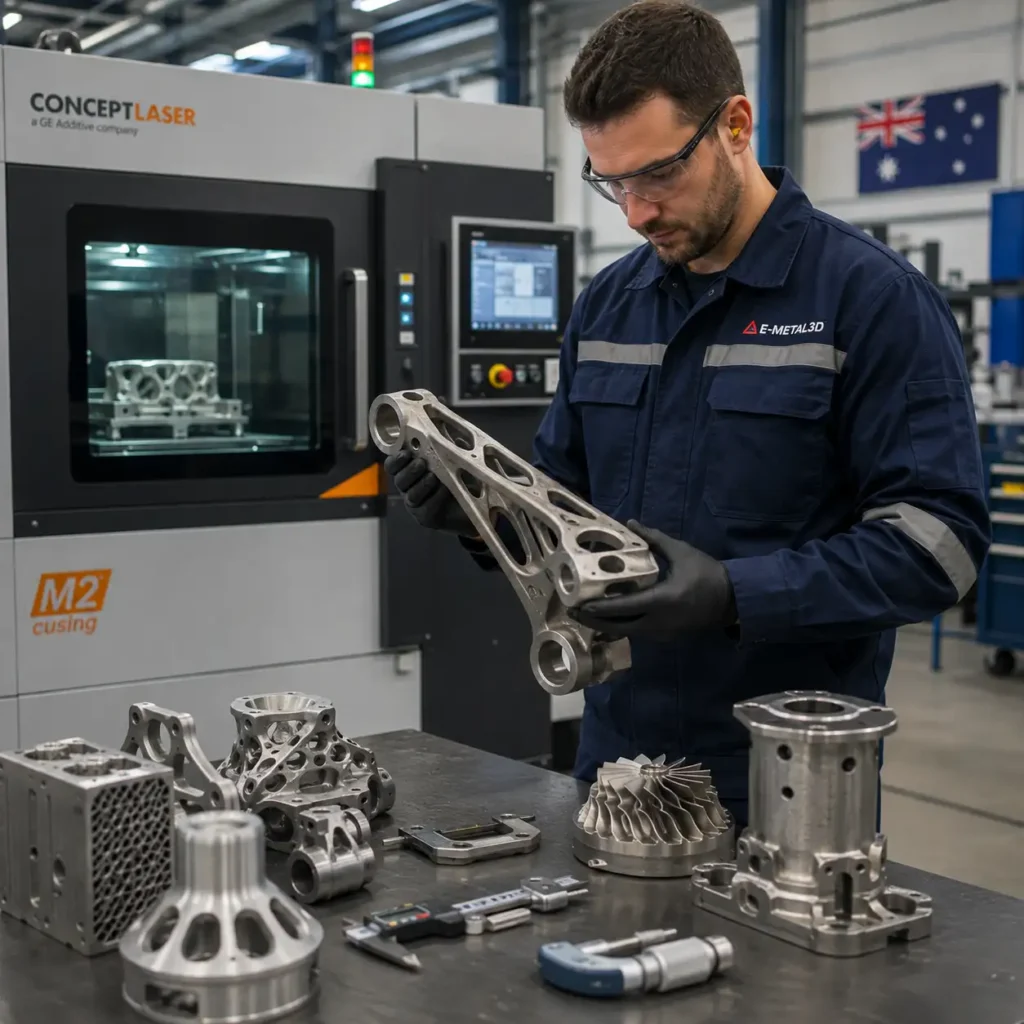
In metal 3D printing and additive manufacturing (AM), the choice of metal powder is critical for achieving high-quality, reliable, and performance-optimized parts. The right powder affects mechanical properties, surface finish, and overall print success. With the increasing adoption of Powder Bed Fusion (PBF) and other metal AM technologies, understanding material properties, particle size, and certification standards is essential for engineers and manufacturers. This article explores the key considerations for selecting the perfect metal powder for your 3D printing projects.
1. Understanding Material Properties
Different metals offer distinct mechanical and thermal properties. Common metal powders include:
-
Stainless Steel: Durable, corrosion-resistant, ideal for industrial and tooling applications.
-
Titanium: Lightweight, strong, and biocompatible, often used in aerospace and medical devices.
-
Aluminum: Lightweight with good thermal conductivity, perfect for automotive and aerospace components.
-
Cobalt-Chrome Alloys: High strength and wear resistance, suitable for medical implants and high-stress applications.
Selecting the right material ensures your parts meet the functional requirements of your project.
2. Particle Size and Distribution
The particle size and uniformity of metal powders significantly impact the print quality in PBF systems. Finer powders can achieve higher resolution and smoother surfaces, while coarser powders may be suitable for faster builds but with lower detail.
Uniform particle distribution ensures consistent layer deposition, reducing defects such as porosity, warping, or incomplete fusion. Always consult the printer manufacturer’s recommendations for optimal powder specifications.
3. Powder Certification and Quality
High-quality, certified powders guarantee consistent chemical composition and mechanical properties. Look for powders that meet international standards, such as ASTM or ISO certifications.
Certified powders reduce risks of printing failures, enhance reproducibility, and ensure compliance with industry regulations—especially crucial in medical, aerospace, and defense applications.
4. Compatibility with Printing Technology
Not all powders are compatible with every metal 3D printing system. Consider the printing method:
-
Powder Bed Fusion (PBF): Requires high-purity, spherical powders for smooth layer deposition.
-
Direct Energy Deposition (DED): Can handle larger particle sizes but demands uniform feedstock for consistent fusion.
Choosing powders compatible with your system avoids downtime, waste, and costly trial-and-error.
5. Storage and Handling Considerations
Metal powders are sensitive to moisture, contamination, and oxidation. Proper storage in sealed containers and controlled environments is essential to maintain powder quality.
Some powders require inert gas atmospheres or temperature-controlled storage to prevent degradation. Training staff on safe handling is also critical, as fine metal powders can be combustible under certain conditions.
6. Cost vs. Performance Trade-offs
While premium powders offer superior mechanical properties and consistency, they come at a higher price. Evaluating the cost-to-performance ratio is key:
-
For prototyping, slightly lower-grade powders may be acceptable.
-
For critical applications, investing in high-quality, certified powders ensures reliability and compliance.
Optimizing powder selection based on project requirements ensures efficient production and reduced post-processing costs.
Conclusion
Choosing the right metal powder is essential for successful metal 3D printing. By considering material properties, particle size, certification, system compatibility, storage, and cost, engineers can maximize the quality, performance, and reliability of printed components.
At E-Metal3D, we provide a wide range of high-quality metal powders for both Powder Bed Fusion and Direct Energy Deposition systems. Our expert guidance helps you select the best powder for your projects, ensuring a seamless and hassle-free printing experience with exceptional results.