Applications of 3D Scanning in Wear Control in the Mining Industry
Introduction: The Mining Industry’s Ongoing Battle With Wear
Wear is one of the most persistent and costly challenges in the mining industry. From crushers and chutes to conveyor systems and mill liners, mining equipment is constantly exposed to extreme abrasion, impact, heat and corrosion. Even small deviations in surface geometry can lead to performance inefficiencies, reduced throughput, unexpected downtime, and increased operational costs.
Traditional wear monitoring methods—such as manual measurements, visual inspections, or shutdown-based checks—are slow, labour-intensive, and prone to human error. They also fail to capture accurate geometry, making predictive maintenance and data-driven decisions difficult.
This is where 3D scanning has emerged as a transformative technology.
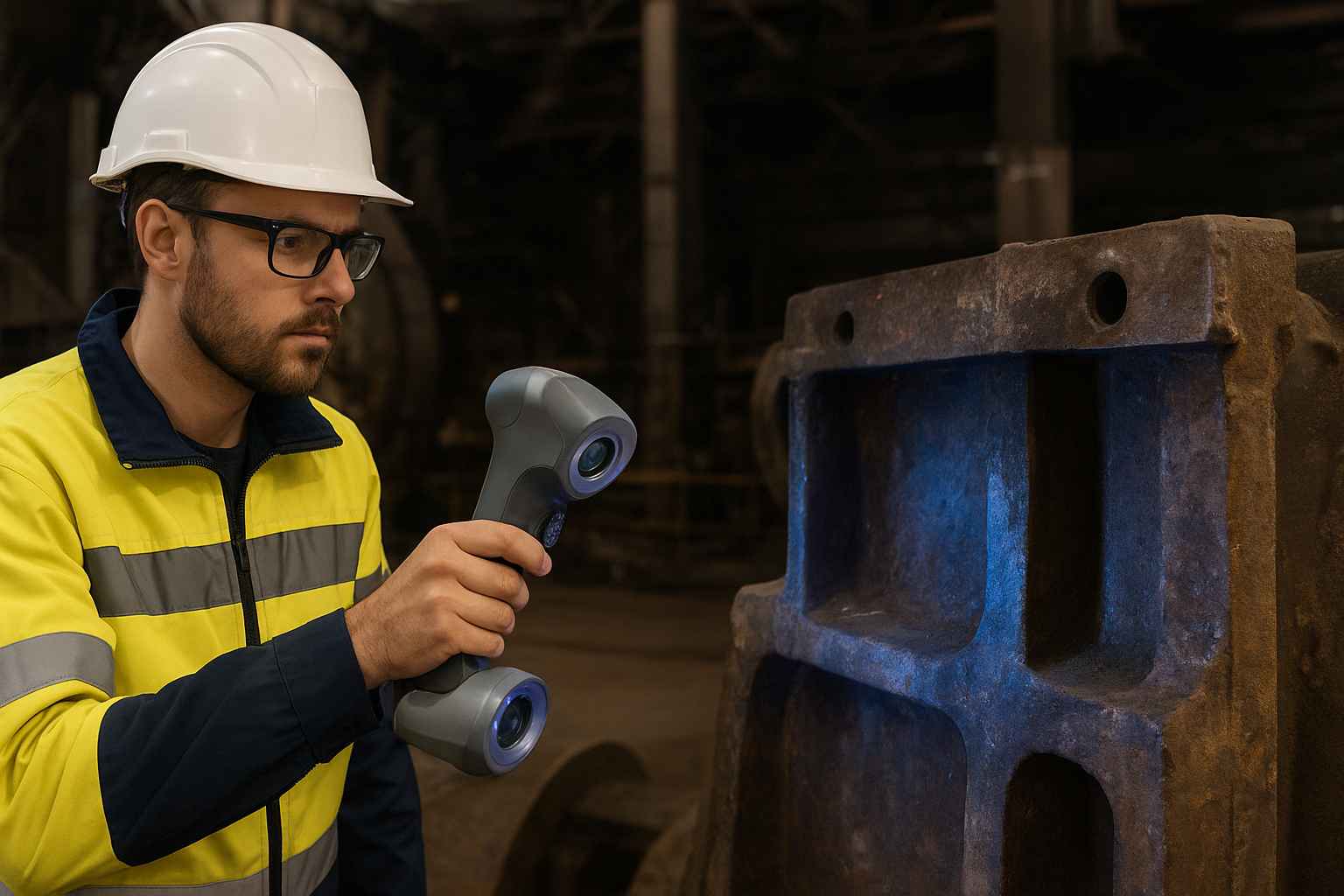
High-resolution 3D scanning enables mining operators to capture accurate, repeatable, and real-time data of equipment wear—without extensive downtime or risky manual inspections.
This article explores how mining companies are implementing 3D scanning for wear monitoring, predictive maintenance, safety improvements, and cost optimisation, and why it has become a critical tool in modern mining operations.
1. What Is 3D Scanning and Why It Matters in Mining?
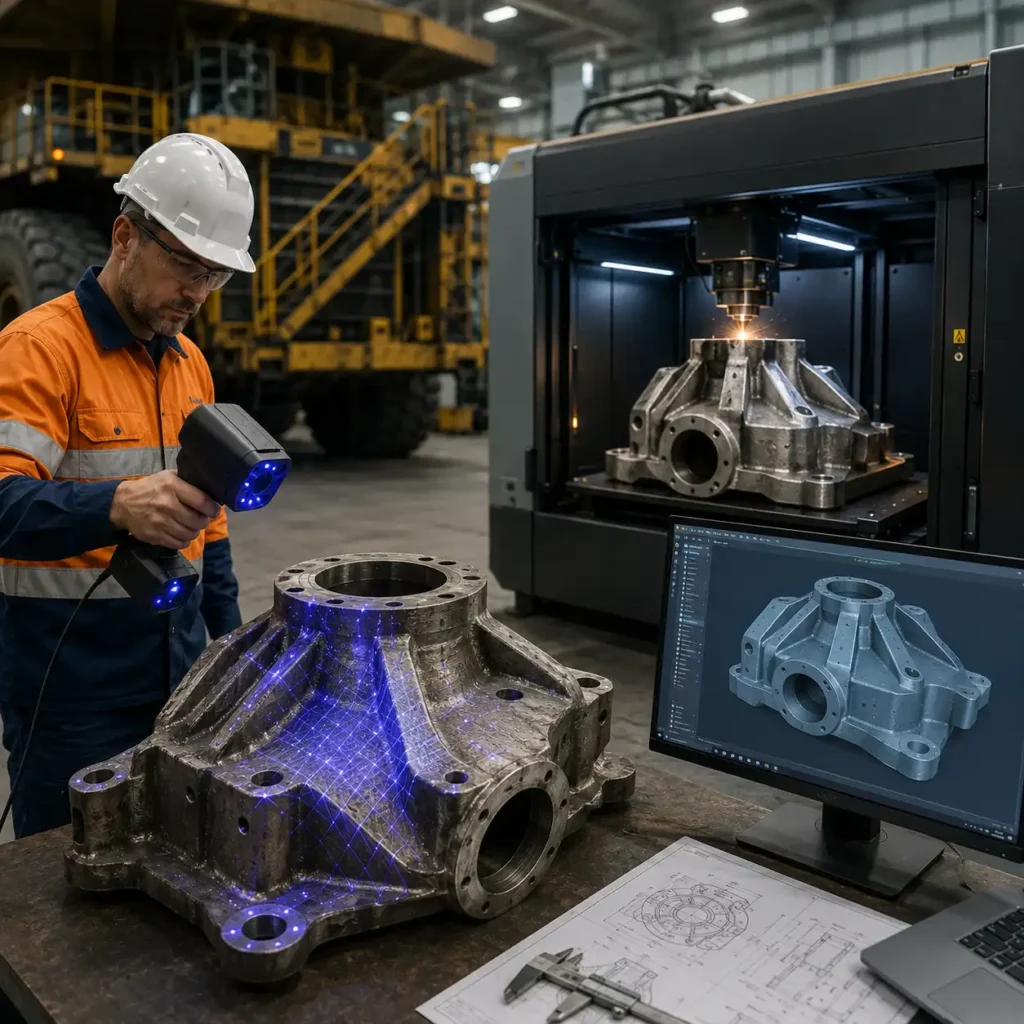
3D scanning is a digital measurement technique that captures the exact spatial geometry of physical objects and converts them into accurate 3D models.
Mining environments are uniquely suited to benefit from this technology due to:
-
Large-scale equipment
-
High-abrasion operations
-
Difficult-to-access components
-
Rapid wear cycles
-
Safety risks during manual inspections
Why 3D Scanning Works So Well in Mining:
✔ Captures millions of data points within seconds
✔ Provides micron-level accuracy depending on the scanner type
✔ Enables remote and non-contact inspections
✔ Reduces downtime by scanning equipment in situ
✔ Generates comparison reports for wear progression
✔ Helps engineering teams plan repairs and predict failures
2. Types of Wear Commonly Monitored Using 3D Scanning
Mining operations face multiple forms of equipment wear. 3D scanning helps detect and quantify:
Abrasive Wear
• Caused by continuous contact with rocks, ore and minerals.
• Common in chutes, bins, hoppers, mill liners and conveyor components.
Impact Wear
• Resulting from high-speed collisions with material chunks.
• Seen in crushers, hammers, and transfer points.
Corrosive Wear
• Occurs when chemicals react with metal surfaces.
• Found in slurry systems, wet mills, and pipelines.
Erosive Wear
• Generated by slurry movement and high-pressure flow.
• Affects pipe elbows, cyclones, pumps and hydrocyclones.
3D scanning allows mining engineers to map how wear progresses over time, enabling precision-based maintenance strategies.
3. Key Applications of 3D Scanning in Wear Control
A) Precise Wear Measurement and Mapping
One of the most important applications is generating 3D wear maps.
Engineers use scanned data to compare current equipment geometry to:
-
Original CAD models
-
A “baseline” scan
-
Past inspection scans
This reveals material loss in millimetres, showing exactly:
-
Where the wear is concentrated
-
How fast it is progressing
-
Whether the equipment is operating below tolerance
Benefits:
✔ Accurate prediction of part replacement
✔ Data-driven budgeting
✔ Reduced unexpected failures
B) Optimising Mill Liner Performance
Grinding mills are among the most expensive assets in mining.
3D scanning enables:
-
High-accuracy measurement of liner thickness
-
Monitoring of wear patterns over time
-
Predictive scheduling of relining
-
Designing improved liner geometries based on real wear data
This results in:
✔ Increased mill availability
✔ Higher throughput
✔ Lower energy consumption
✔ Longer liner lifespan
C) Wear Monitoring of Crushers and High-Impact Equipment
Jaw crushers, cone crushers and impact crushers experience aggressive wear.
3D scanning helps mining companies:
-
Benchmark wear rates
-
Adjust feed sizes
-
Improve protective coatings
-
Reduce downtime due to sudden failures
This helps ensure safe and continuous operation.
D) Conveyor and Chute Wear Analysis
Chutes, transfer points and conveyor structures suffer from both abrasive and impact wear.
3D scanning allows:
-
Inspection without halting production
-
Identification of geometry changes
-
Optimisation of flow behaviour
-
Adjustment of liners and blocking plates
Better flow equals reduced spillage, less blockages and improved safety.
E) Enhancing Predictive Maintenance
Mining companies increasingly rely on data analytics and digital models.
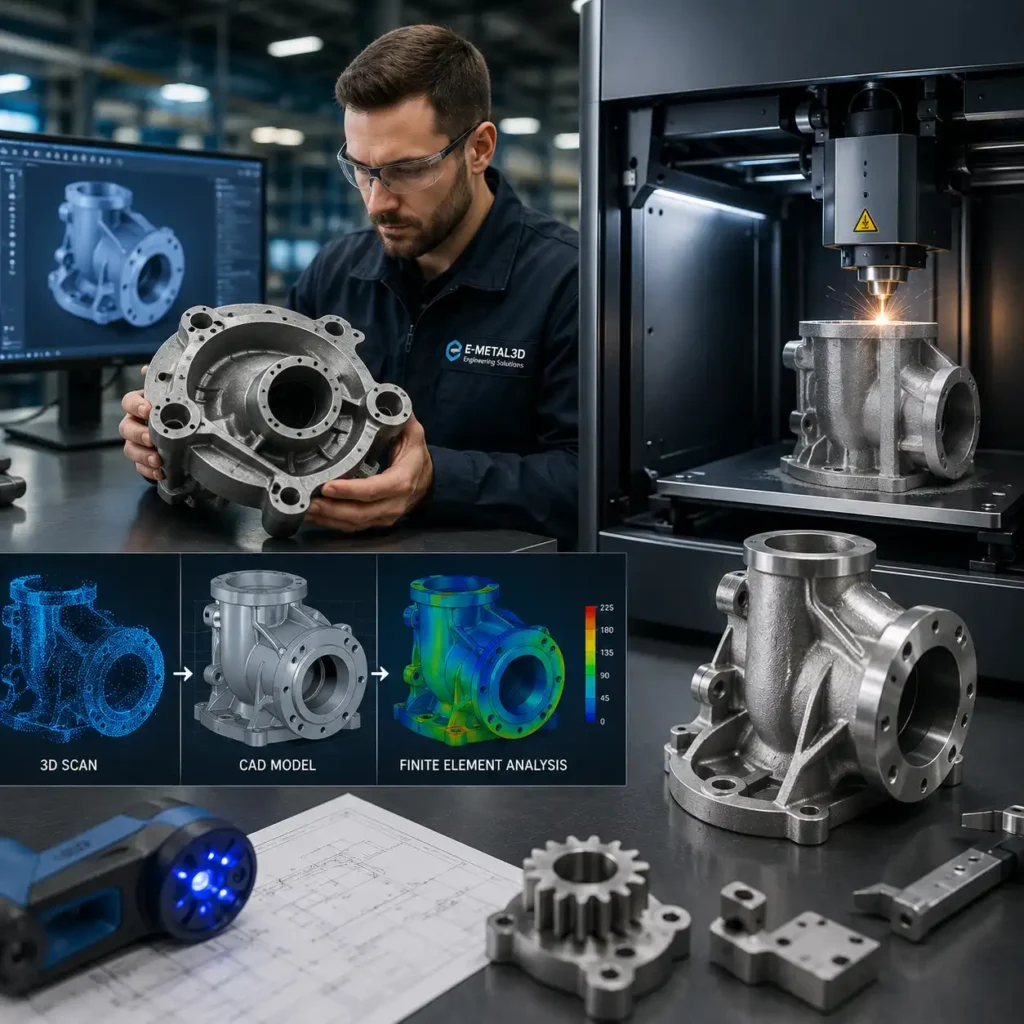
3D scans integrate seamlessly with:
-
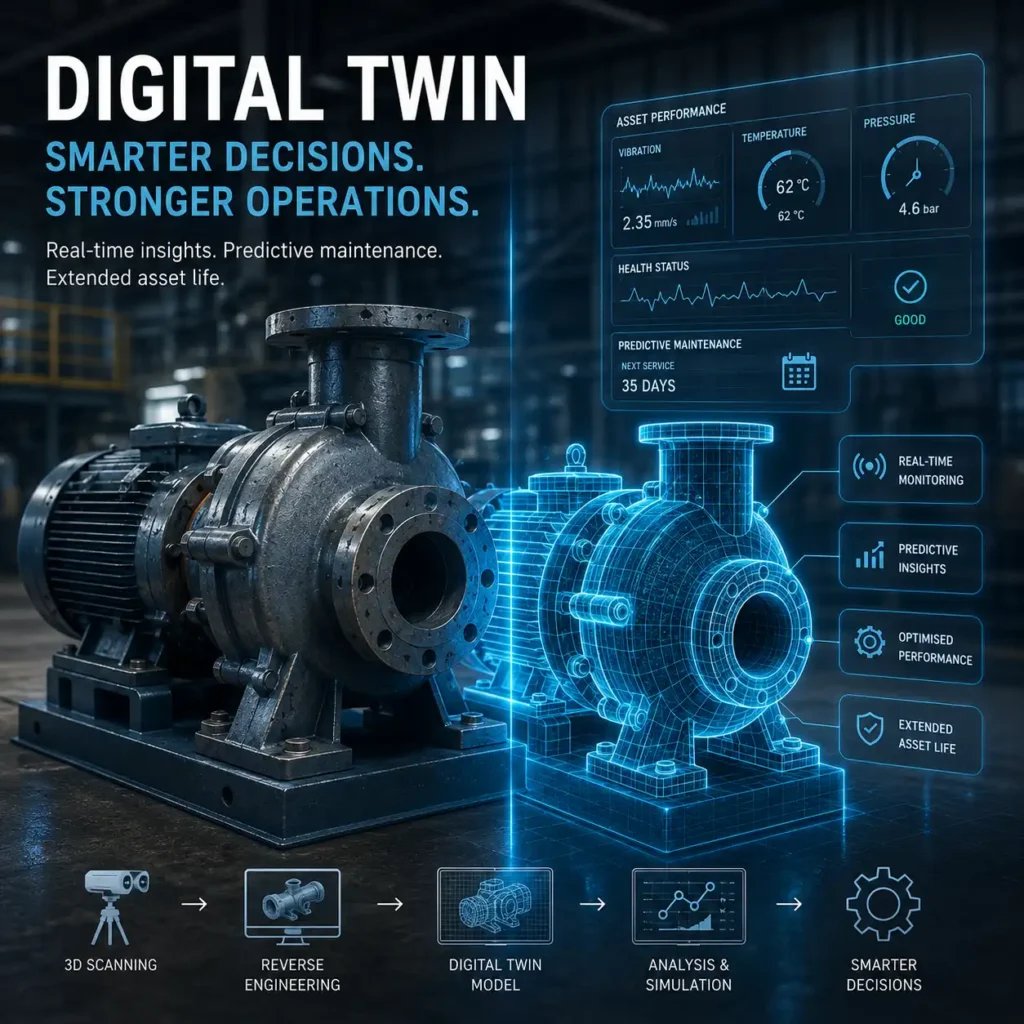
Digital twins
-
FEA simulations
-
CFD modelling
-
Maintenance scheduling software
This leads to a fully predictive maintenance workflow instead of reactive ad-hoc repairs.
F) Safety Improvements
Mining inspections are dangerous.
3D scanning reduces risks by:
-
Minimising human entry into confined spaces
-
Reducing working at heights
-
Eliminating the need to open major equipment unnecessarily
-
Enabling remote analysis by engineering teams
The result is a safer, more efficient monitoring process.
4. How 3D Scanning Supports Engineering & Redesign in Mining
Beyond wear control, 3D scanning strengthens engineering improvements:
Reverse Engineering
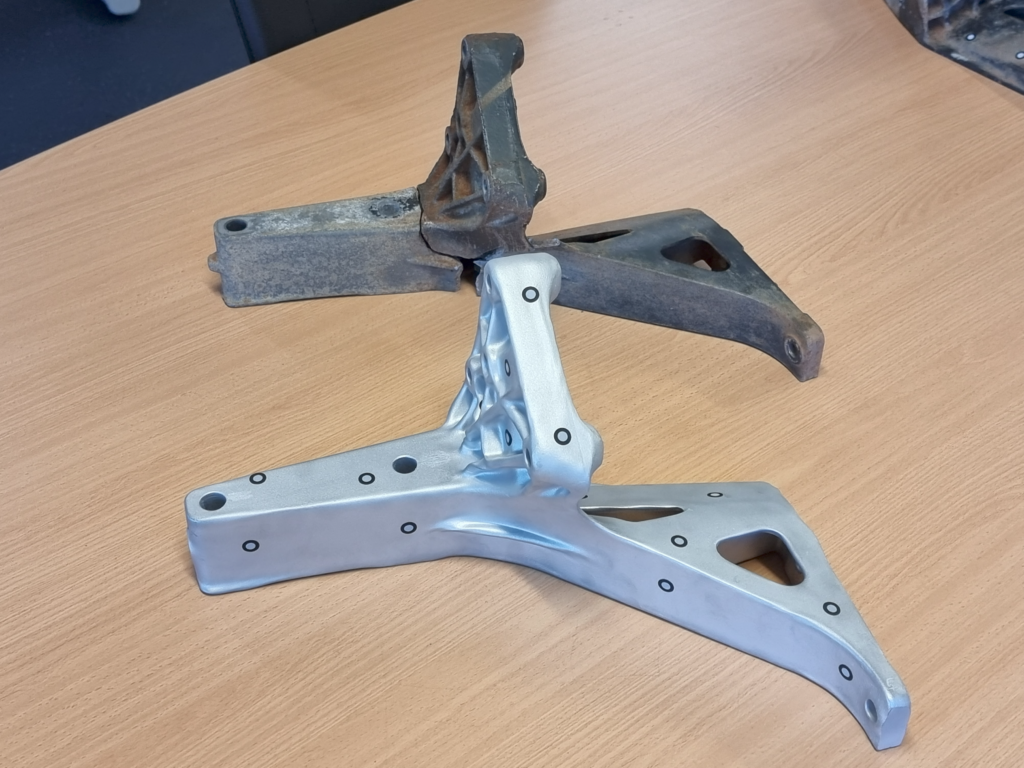
Create accurate CAD models of old or undocumented parts.
Flow Optimisation
CFD simulations analyse material movement to reduce wear.
Design Iteration
Modify equipment geometry to improve wear resistance.
Prototyping
3D printing + 3D scanning help test new mining components quickly.
Material Redesign
Engineers choose stronger alloys based on wear performance.
This leads to better, longer-lasting mining assets.
5. Real-World Example: Improving Chute Performance Through 3D Scanning
A mining company experiencing excessive wear in a high-tonnage transfer chute used 3D scanning to:
-
Capture the full geometry
-
Identify uneven wear patterns
-
Detect flow asymmetry
-
Simulate material trajectory
-
Redesign the chute profile
-
Add wear-resistant liners
Result:
✔ 37% increase in component lifespan
✔ Reduced unscheduled shutdowns
✔ Improved material flow
✔ Lower maintenance cost
6. Why Leading Mining Companies in Australia Are Adopting 3D Scanning
Mining operations across Western Australia, Queensland and NSW are integrating 3D scanning due to:
-
Harsh operational environments
-
High labour costs
-
Large, complex equipment
-
Strong focus on safety compliance
-
Push toward digital transformation
Australia’s mining sector is rapidly moving toward data-driven maintenance, and 3D scanning is a core enabler of that shift.
7. Final Thoughts: 3D Scanning Is Becoming a Standard in Wear Control
The mining industry is evolving, and so must its maintenance strategies.
3D scanning provides unmatched accuracy, speed, and safety—allowing mining companies to:
-
Predict wear
-
Reduce downtime
-
Increase asset availability
-
Improve performance
-
Enhance worker safety
As digital engineering continues to grow, 3D scanning will become a mandatory tool for mining operators seeking efficiency and operational excellence.