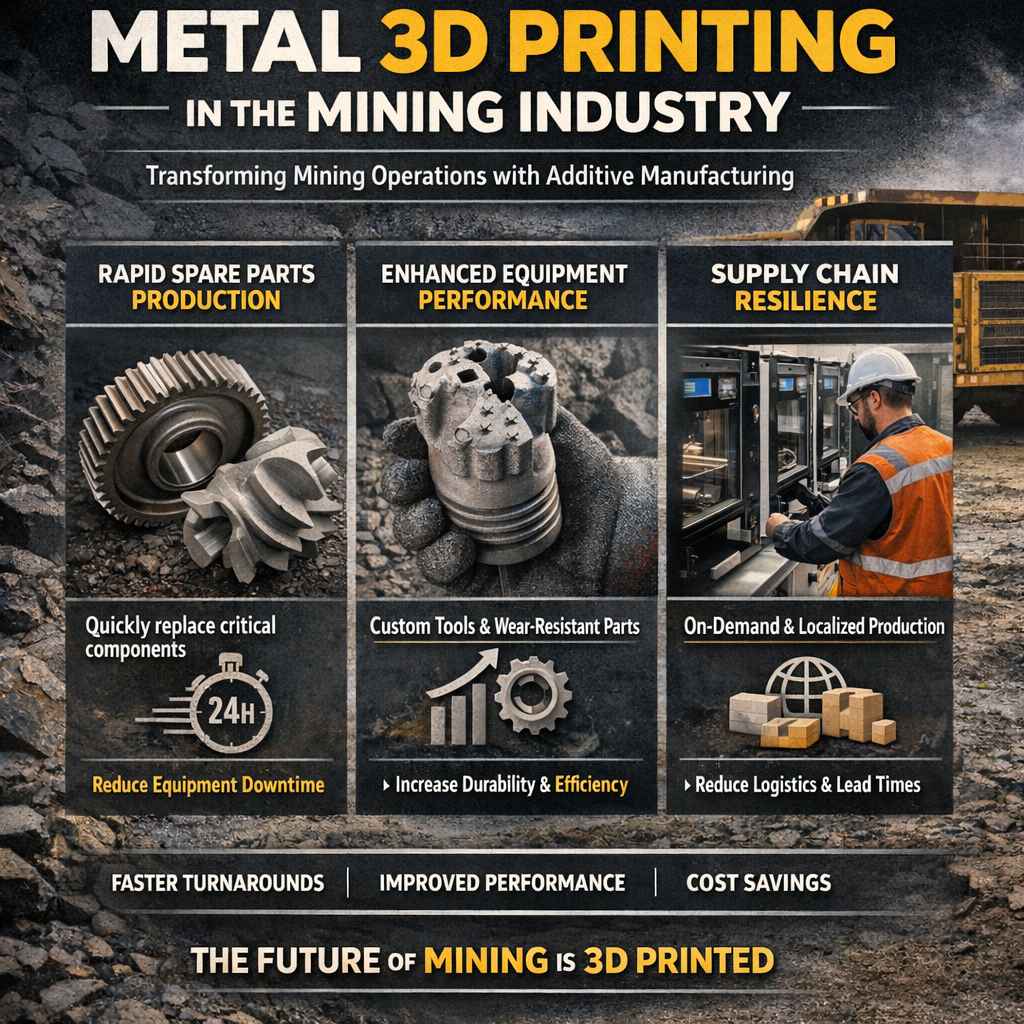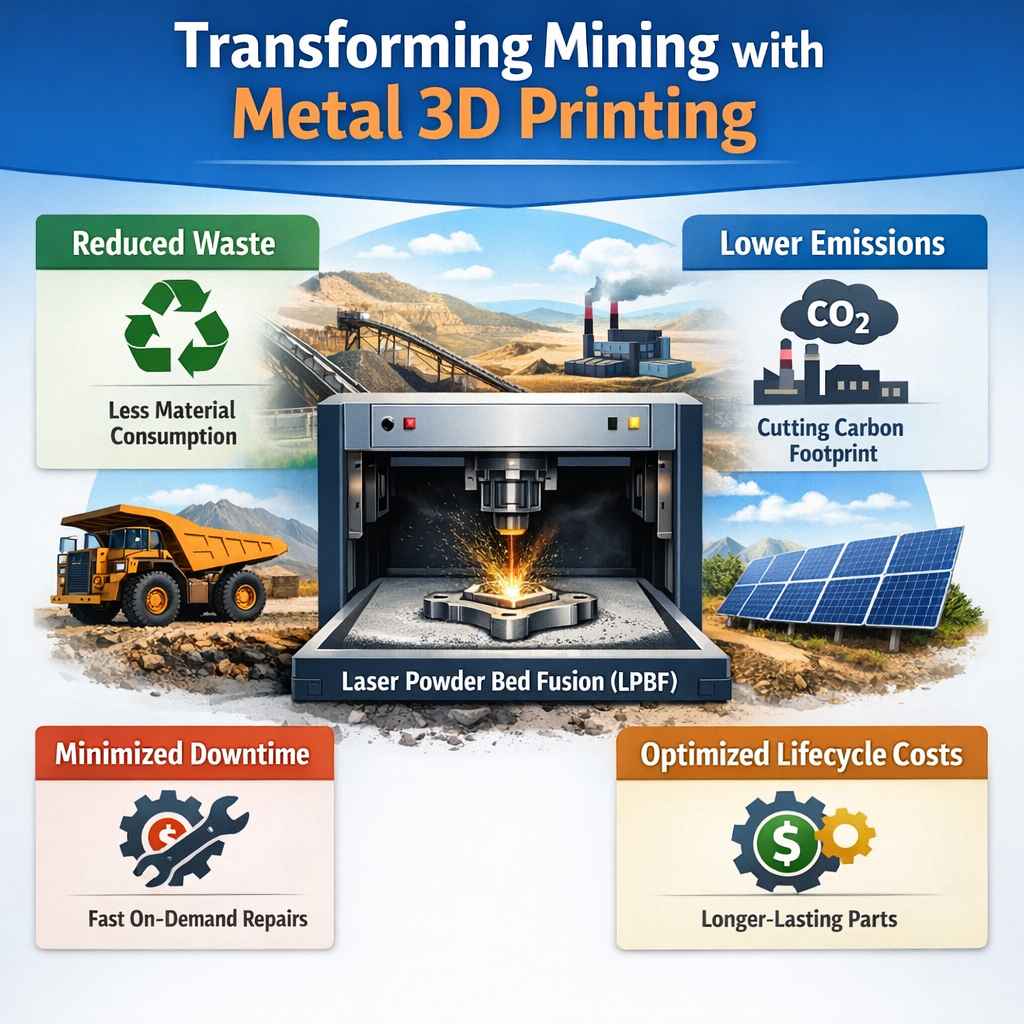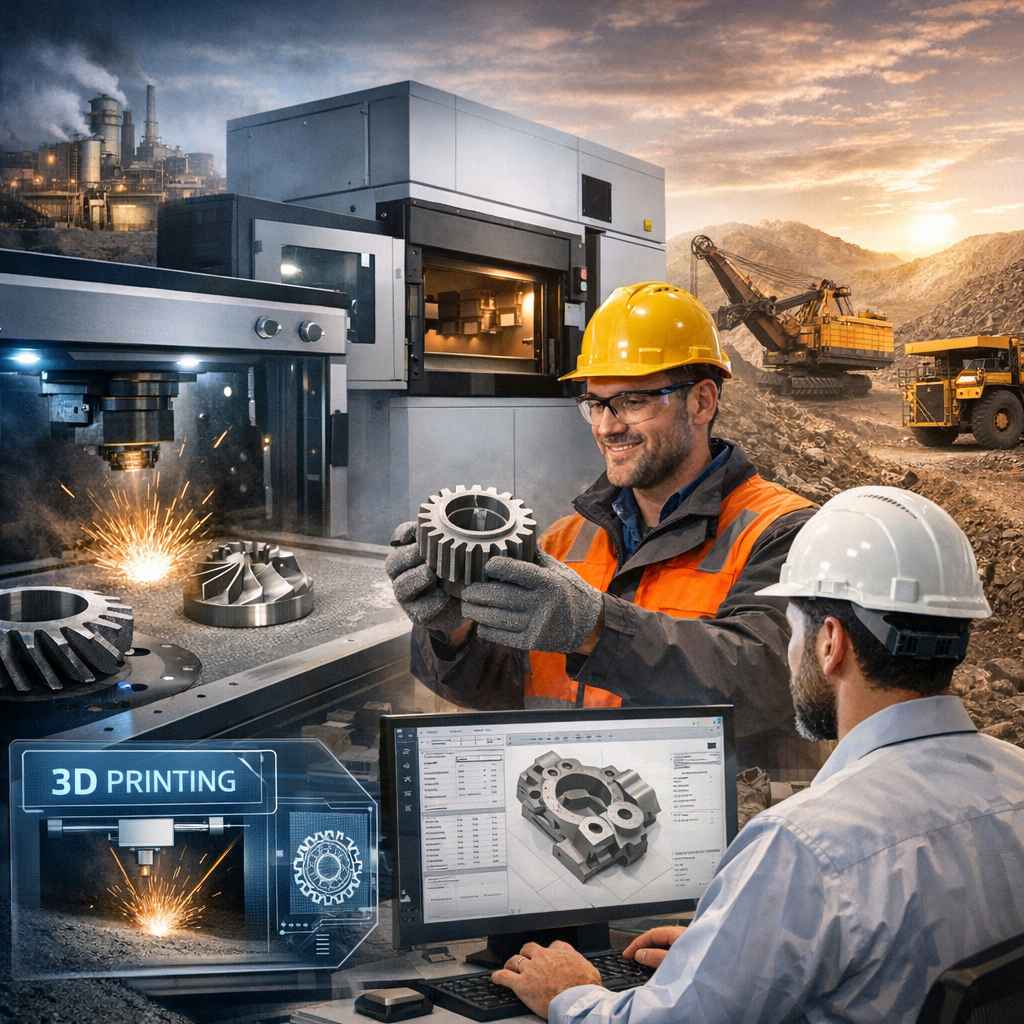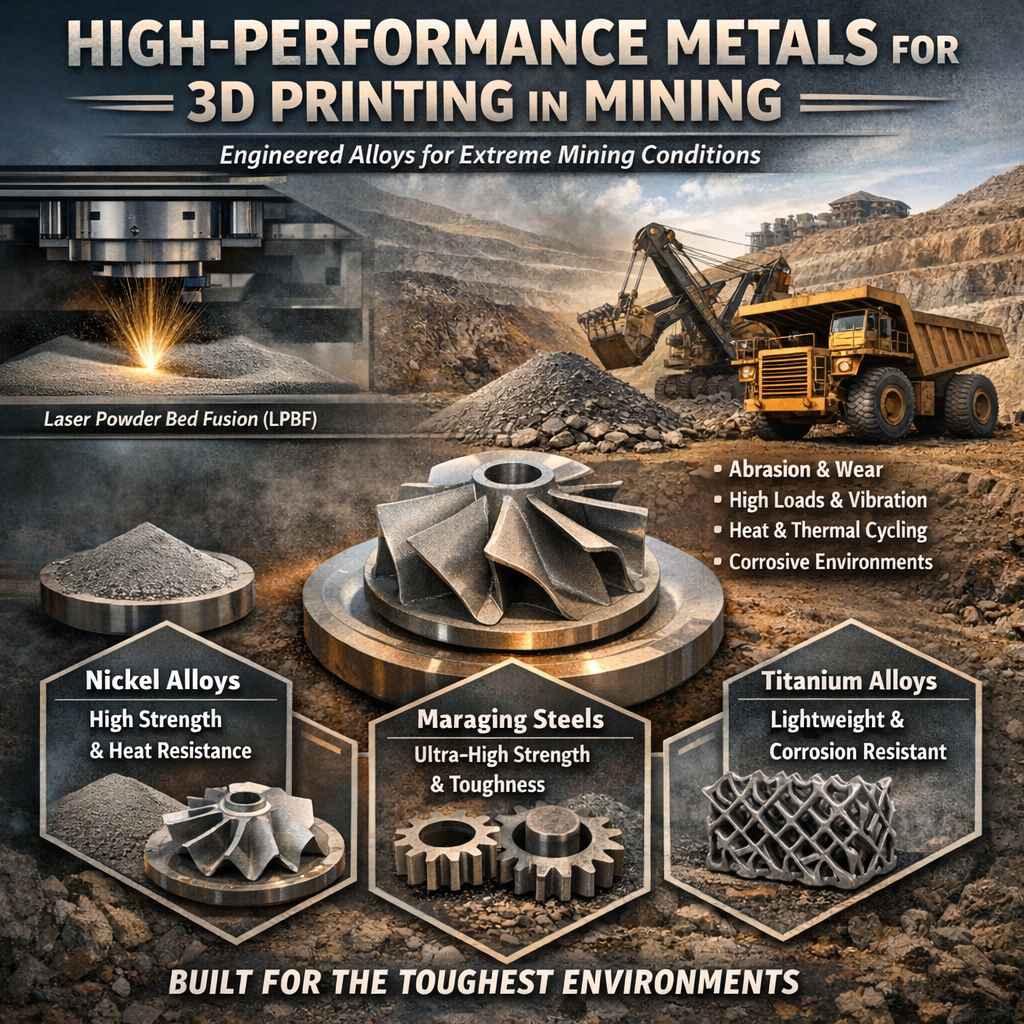
Introduction: A Manufacturing Shift Already Underway
For more than a century, traditional manufacturing methods such as machining, casting, forging, and fabrication have shaped the backbone of global production. These processes are reliable, scalable, and widely adopted across industries—from automotive to heavy mining equipment and aerospace.
However, as industries face unprecedented pressure for faster delivery, lower costs, improved part performance, and reduced waste, traditional methods are struggling to keep up. This has opened the door for Metal Additive Manufacturing (Metal AM)—a technology that enables manufacturers to rethink how parts are designed, produced, and optimized.
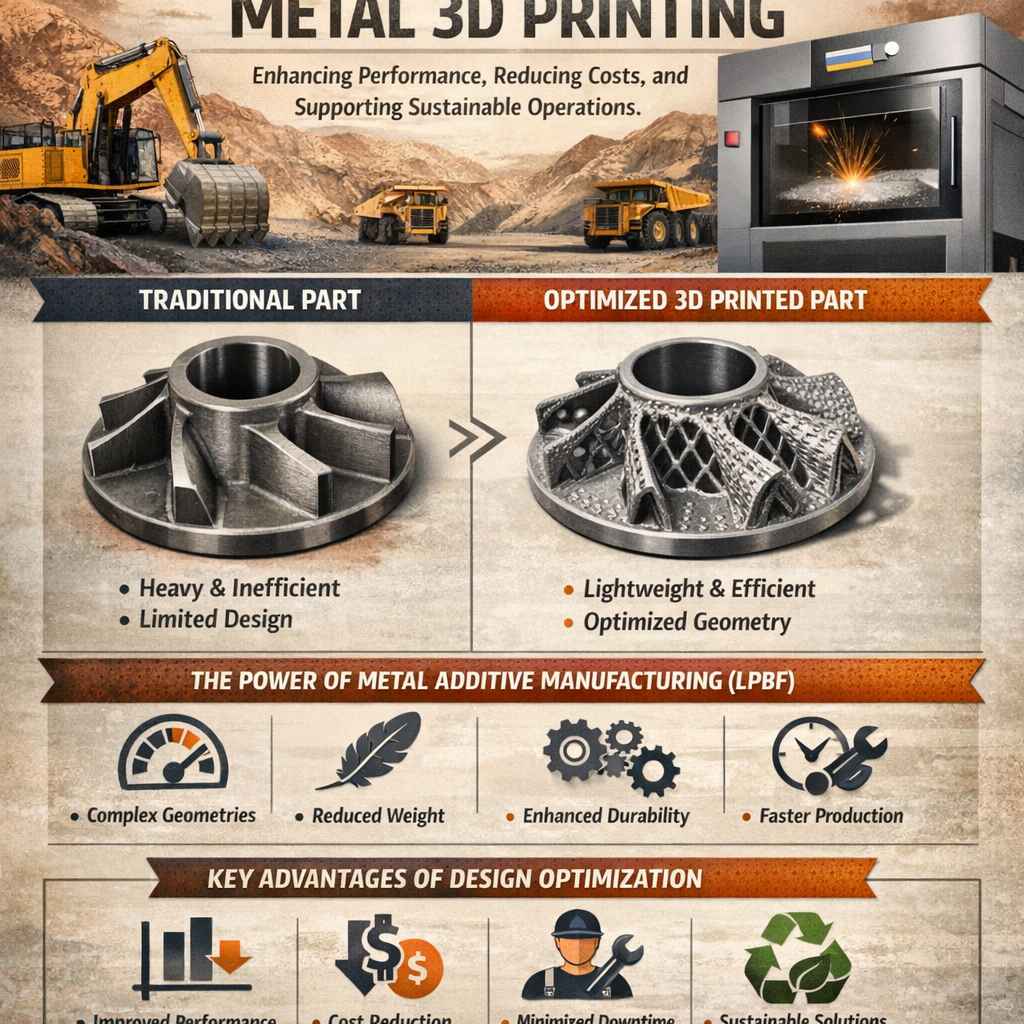
Metal AM, especially Laser Powder Bed Fusion (LPBF), is shifting production from “design for manufacturability” to design for performance, unleashing new possibilities for complex geometries, lightweight structures, and supply-chain agility.
This article provides a deep comparison between traditional manufacturing and metal AM, examining strengths, limitations, costs, lead times, quality, materials, sustainability, and how companies like E-Metal3D are accelerating industrial adoption.
1. Design Freedom and Geometry Complexity
Traditional Manufacturing
Traditional processes require compromise. Engineers must design parts that can be machined, cast, or forged—which limits shapes, internal features, and overall complexity.
Common constraints include:
-
Limitations in machining tool access
-
Restrictions in mold/cavity design
-
High cost for complex geometries
-
Need for multiple components and assemblies
Many high-performance geometries are simply not possible or not economical with traditional methods.
Metal Additive Manufacturing (LPBF)
Metal AM removes nearly all geometric barriers. With LPBF, parts are built layer by layer, allowing:
-
Internal channels for cooling, lubrication, or fluid flow
-
Lightweight lattice structures
-
Topology-optimized components with organic shapes
-
Part consolidation into single components
-
Complex freeform surfaces
-
Graded thicknesses and textures
This design freedom is one of the strongest reasons industries adopt AM.
✔ Result: AM enables high-performance engineering designs that were previously impossible.
2. Lead Time Comparison
Traditional Manufacturing
Lead time is often long due to:
-
Tooling and mold production
-
CNC programming
-
Multi-step manufacturing (e.g., machining + welding + finishing)
-
Outsourcing delays
-
Large batch requirements to justify tooling costs
Typical lead times: 4–12 weeks, sometimes even longer.
Metal Additive Manufacturing
AM eliminates tooling completely. A digital file can go directly to production.
LPBF lead times: 2–5 days for prototypes, 1–3 weeks for production parts.
AM is ideal for:
-
Rapid prototyping
-
Bridge manufacturing
-
On-demand spare parts
-
Small to medium batch production
✔ Result: AM offers dramatically shorter turnaround times.
3. Cost Efficiency and Production Economics
Traditional Manufacturing
Costs mainly come from:
-
Tooling (especially expensive for casting, forging, injection molds)
-
Material waste during machining
-
Long production cycles
-
Assembly and labour
-
Warehousing and inventory
Traditional methods are economical for high-volume mass production, but less efficient for small batches or complex geometries.
Metal AM
AM eliminates tooling and material waste is significantly lower.
Cost advantages include:
-
No tooling required
-
Only using the material needed
-
Lower labour cost
-
Part consolidation → fewer assemblies
-
On-demand manufacturing → no inventory
-
Optimized material usage through topology optimization
Metal AM is most cost-effective for:
-
Complex geometries
-
Low to medium production volumes
-
Lightweighting applications
-
Custom or personalised components
-
High-performance industries (aerospace, medical, energy)
✔ Result: AM reduces total cost for many high-value applications, especially when part complexity is high.
4. Mechanical Properties and Part Performance
Traditional Manufacturing
Traditional methods deliver strong, consistent mechanical properties and are well understood by industry.
However:
-
Casting may introduce porosity
-
Machining removes material but can weaken certain areas
-
Welding and fabrication create heat-affected zones
-
Forging is extremely strong, but limited in shape
Metal AM
Modern LPBF machines (like those represented by E-Metal3D) achieve:
-
High density (>99.9%)
-
Excellent fatigue strength
-
Uniform microstructure
-
Superior strength-to-weight ratios
-
Directional mechanical properties that can be engineered
Post-processing such as heat treatment, HIP, and machining ensures parts meet or exceed industrial standards.
✔ Result: AM can match—and often surpass—traditional mechanical performance.
5. Materials and Industrial Compatibility
Traditional
Large selection of metals, but some high-performance alloys are difficult to machine or cast.
Metal AM Materials (E-Metal3D)
-
Titanium alloys (Ti6Al4V)
-
Stainless Steel 316L
-
Inconel 718 / 625
-
Maraging Steel
-
Co-Cr alloys
-
Tool Steels
-
Aluminium alloys (AlSi10Mg)
These powders are certified, consistent, and optimized for LPBF systems.
✔ Result: AM is fully compatible with industrial-grade metals.
6. Sustainability and Waste Reduction
Traditional Manufacturing
Subtractive processes generate 60–90% material waste.
Casting/forging requires significant energy and raw materials.
Inventory storage also increases the carbon footprint.
Metal Additive Manufacturing
AM supports modern sustainability goals:
-
Up to 90% reduction in waste
-
Energy-efficient production
-
Reusable powder in most cases
-
Digital inventories reduce overproduction
-
Lighter parts improve fuel efficiency (aerospace, EVs)
✔ Result: AM is a major enabler of sustainable manufacturing.
7. Supply Chain Flexibility
Traditional
Dependent on global suppliers, tooling manufacturers, logistics delays.
Metal AM
-
On-demand manufacturing
-
Local production
-
Digital part libraries
-
Faster response to market changes
✔ Result: AM strengthens supply chain resilience.
8. Where Each Method Works Best
Traditional Manufacturing Wins When:
-
Very high production volumes
-
Simple geometries
-
Very large parts
-
Well-established supply chains
-
Tight cost margins for mass-production
Metal AM Wins When:
-
Complex geometries are required
-
Lightweighting is mission-critical
-
Performance is more important than volume
-
Rapid prototyping or iteration is needed
-
Small to medium batches
-
High-value industries: aerospace, medical, defence, mining
Conclusion: Complementary, Not Competitive
Traditional manufacturing is not going away—it remains the backbone of global production.
However, metal additive manufacturing is reshaping what is possible by enabling:
-
Faster development
-
Greater design flexibility
-
Better performance
-
On-demand production
-
Reduced waste and cost
-
Stronger supply chains
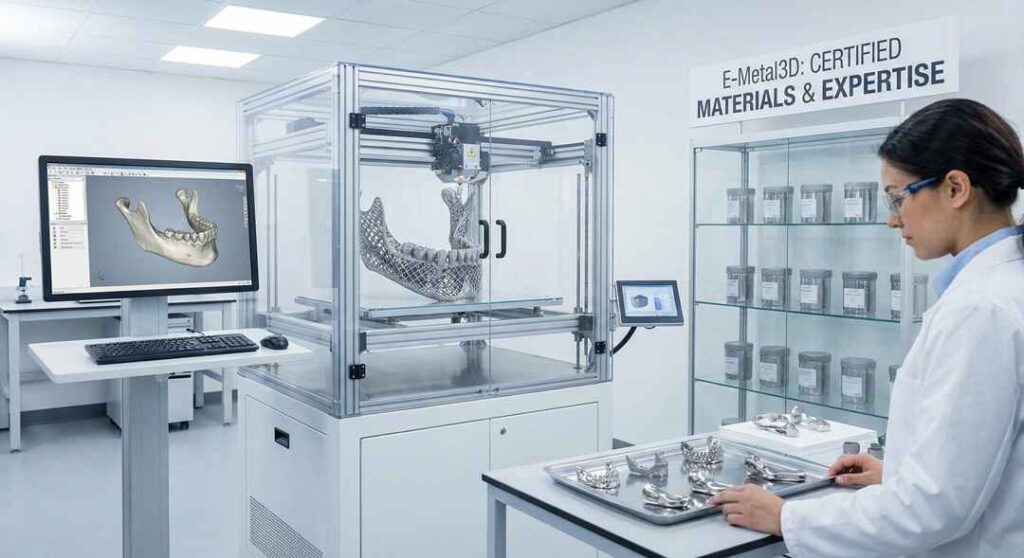
E-Metal3D provides end-to-end engineering, certified powders, and advanced LPBF technology to help industries adopt AM with confidence.
Together, AM and traditional manufacturing form a hybrid, future-ready production ecosystem.