Design Optimization of Mining Components Using Metal 3D Printing
Introduction
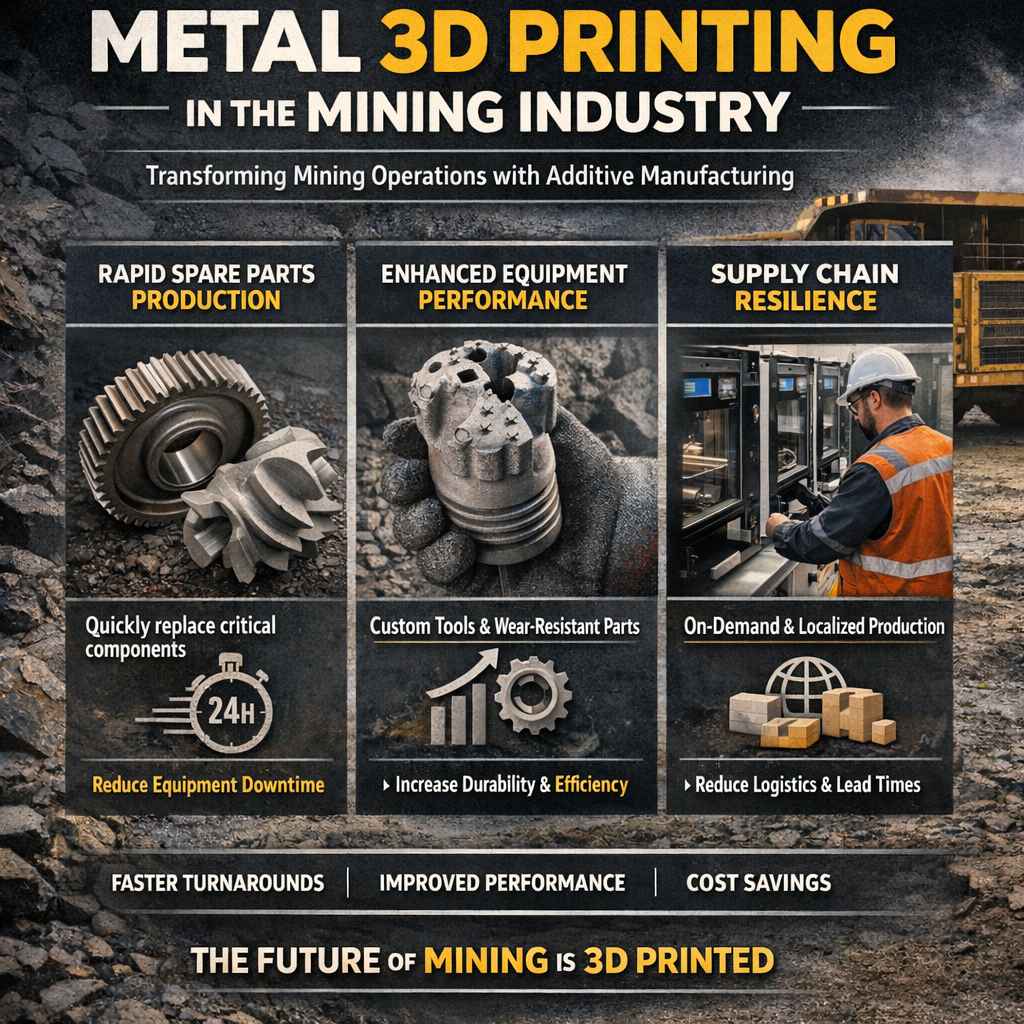
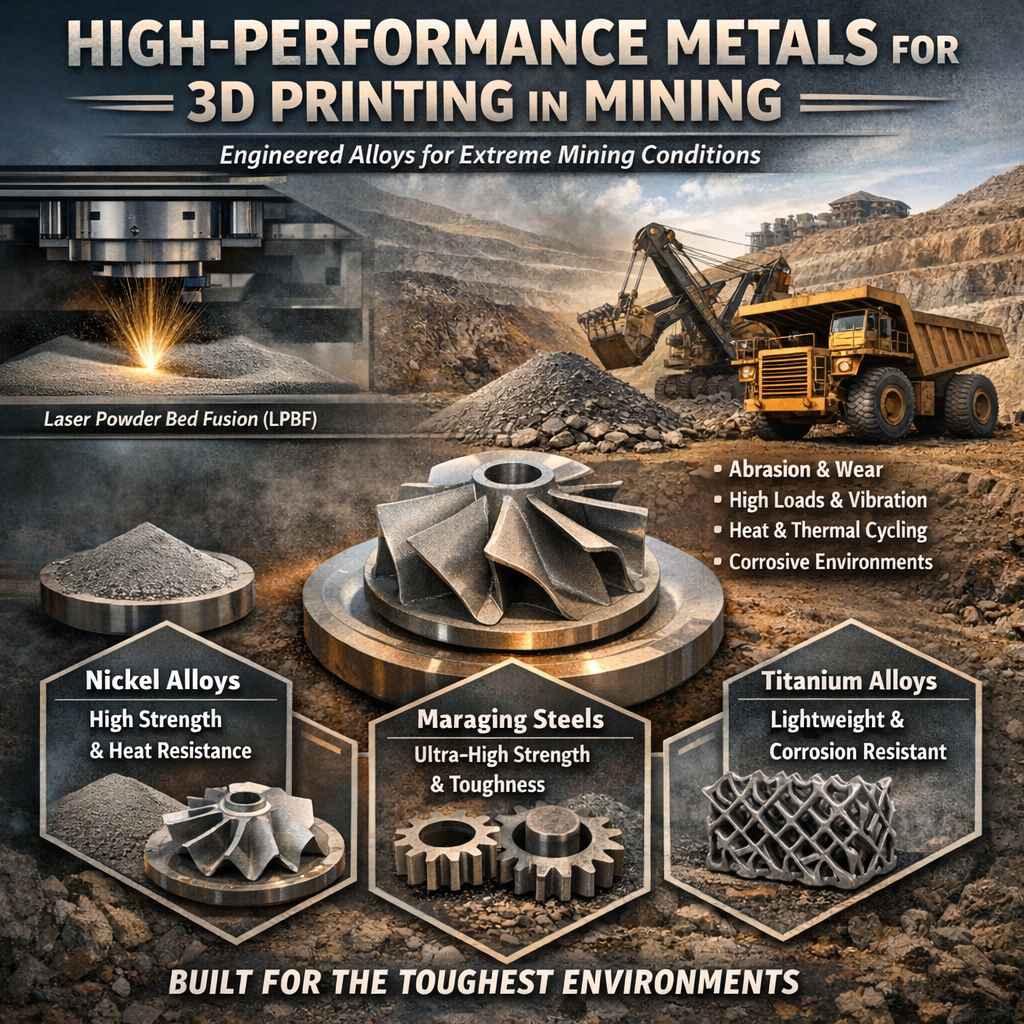
The mining industry operates under extreme conditions where equipment reliability, durability, and performance are mission-critical. Components are continuously exposed to abrasive materials, high mechanical loads, vibration, corrosion, and extreme temperatures. Traditional manufacturing methods such as casting, forging, and machining have long been used to produce mining parts, but they often impose design limitations that compromise performance, efficiency, and lead time.
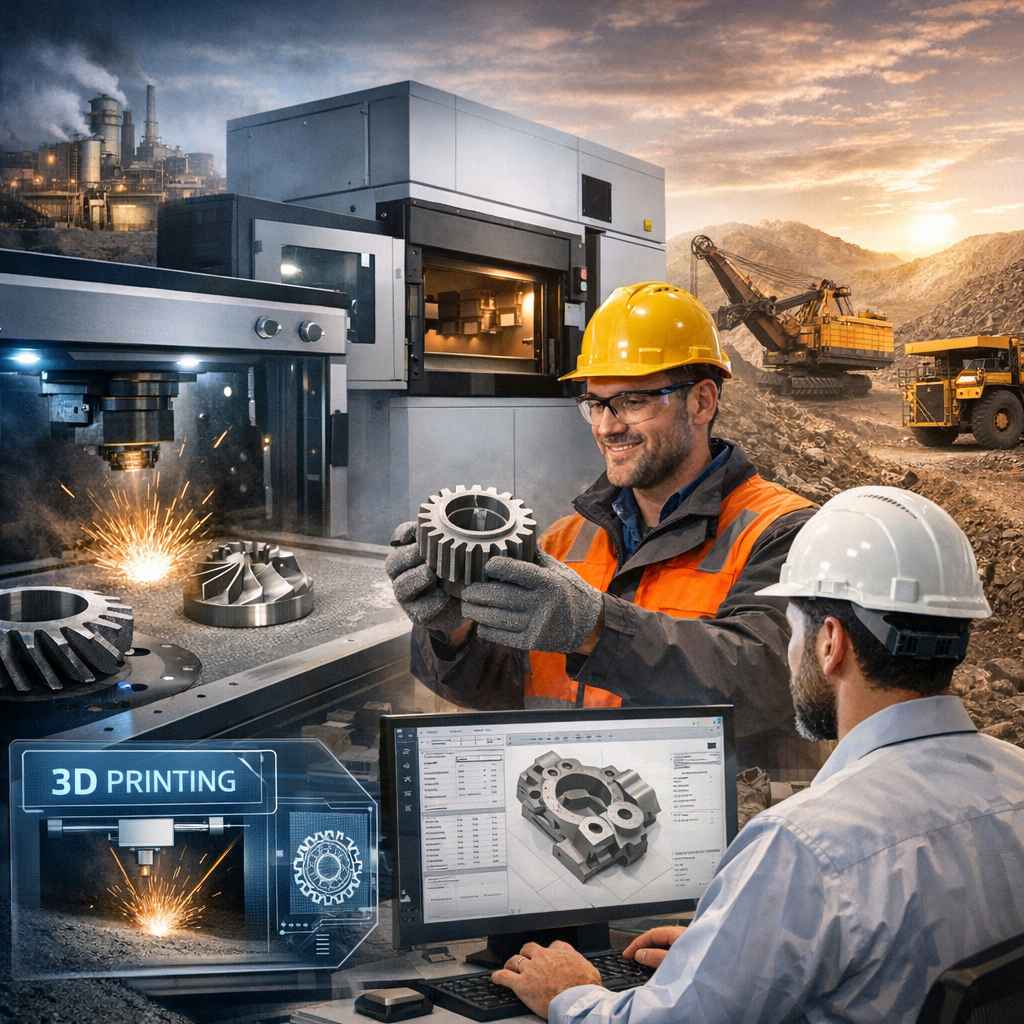
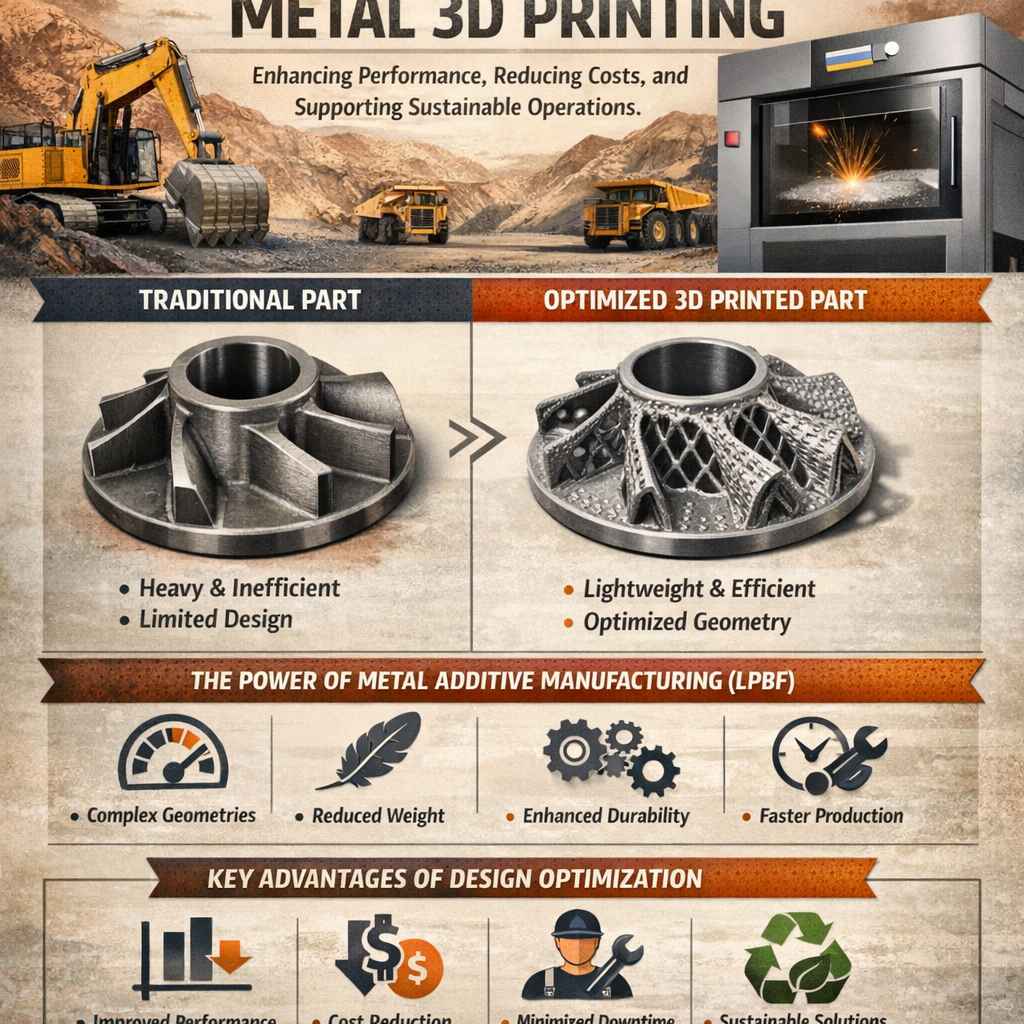
Metal additive manufacturing (AM), particularly Laser Powder Bed Fusion (LPBF), is transforming how mining components are designed and produced. By enabling unprecedented design freedom, metal 3D printing allows engineers to optimize parts for performance rather than manufacturability. At the core of this transformation lies design optimization—a systematic approach to rethinking mining components to fully leverage the advantages of additive manufacturing.
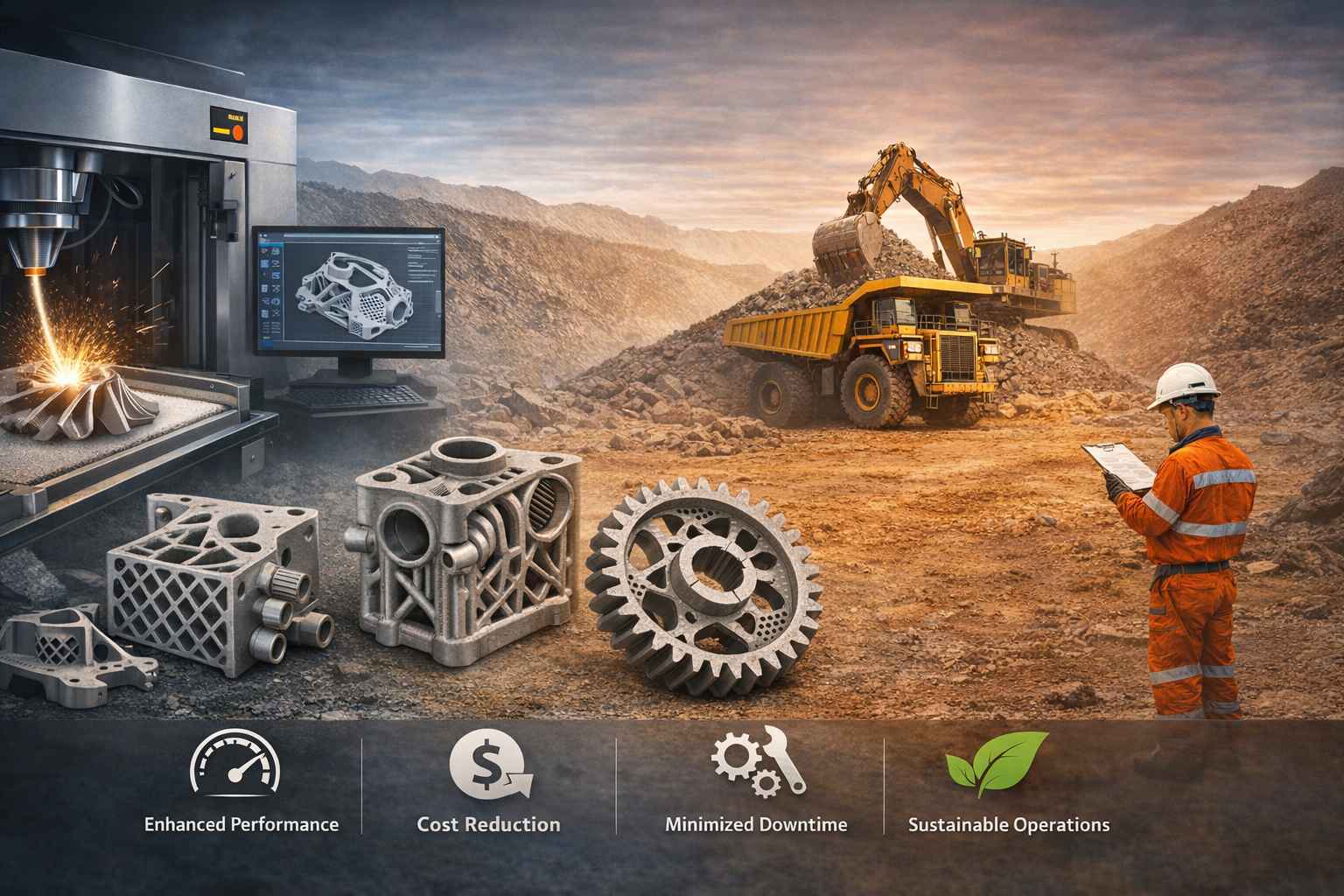
This article explores how design optimization using metal 3D printing enhances mining component performance, reduces costs, minimizes downtime, and supports sustainable operations.
Limitations of Traditional Design Approaches in Mining
Traditional mining equipment design is constrained by the capabilities of subtractive and formative manufacturing processes. Machining requires tool access, limiting internal geometries, while casting and forging introduce constraints related to mold design, draft angles, and material flow.
As a result, many mining components are:
-
Over-engineered with excess material
-
Assembled from multiple welded or bolted parts
-
Heavy, inefficient, and prone to fatigue failure
-
Time-consuming and costly to manufacture
These limitations directly impact operational efficiency, maintenance frequency, and total cost of ownership. Design optimization with metal AM removes these constraints, allowing engineers to redesign parts from the ground up.
Design Freedom Enabled by Metal 3D Printing
Metal 3D printing allows engineers to create geometries that are impossible or impractical with traditional methods. Components are built layer by layer, eliminating the need for tooling and enabling full control over internal and external features.
Key design freedoms include:
-
Complex internal channels
-
Organic, load-optimized geometries
-
Integrated functional features
-
Part consolidation into single-piece components
For mining applications, this translates into stronger, lighter, and more reliable parts that perform better under extreme operating conditions.
Topology Optimization for Mining Components
Topology optimization is one of the most powerful design optimization techniques enabled by metal additive manufacturing. Using computational algorithms, engineers define load cases, constraints, and performance targets. The software then removes unnecessary material while maintaining structural integrity.
In mining equipment, topology optimization helps to:
-
Reduce component weight without sacrificing strength
-
Improve fatigue resistance under cyclic loads
-
Optimize stress distribution in high-load areas
-
Lower material consumption and production costs
Examples include optimized rock drill housings, lightweight hydraulic connectors, and structurally efficient pump components.
Lattice Structures for Strength and Weight Reduction
Lattice structures are periodic or organic internal frameworks that provide exceptional strength-to-weight ratios. With metal 3D printing, lattice structures can be integrated inside mining components without additional manufacturing complexity.
Benefits of lattice structures in mining parts include:
-
Significant weight reduction
-
Improved vibration damping
-
Enhanced energy absorption
-
Better thermal management
Applications range from tool holders and cutting heads to impellers and protective housings, where reduced weight improves performance and extends service life.
Part Consolidation and Assembly Reduction
Mining components are often assemblies made up of multiple parts welded or fastened together. These joints are common failure points, especially under vibration and mechanical stress.
Metal 3D printing enables part consolidation, allowing multiple components to be printed as a single, monolithic structure. This approach:
-
Eliminates welds and fasteners
-
Reduces assembly time and labor costs
-
Improves structural integrity
-
Simplifies maintenance and inventory management
For example, valve bodies, pump housings, and hydraulic manifolds can be redesigned into single-piece components with integrated channels and mounting features.
Internal Channel Optimization for Thermal and Fluid Performance
Many mining components rely on fluid flow or thermal management to operate efficiently. Traditional manufacturing limits the complexity of internal channels, often resulting in suboptimal performance.
With metal additive manufacturing, engineers can design optimized internal channels that:
-
Improve coolant or lubricant flow
-
Reduce pressure losses
-
Enhance heat dissipation
-
Prevent clogging and wear
This is particularly valuable for components such as heat exchangers, hydraulic systems, and high-wear tools used in continuous mining operations.
Engineering-Driven Design with FEA and CFD
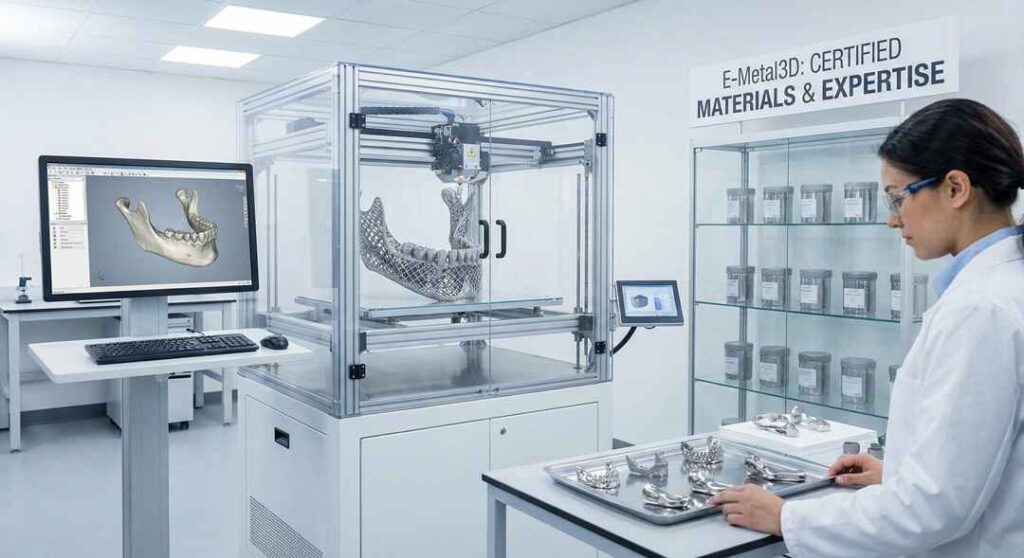
Design optimization for mining components is not guesswork—it is driven by advanced engineering simulations. At E-Metal3D, design optimization is supported by tools such as Finite Element Analysis (FEA) and Computational Fluid Dynamics (CFD).
These tools allow engineers to:
-
Identify stress concentrations and fatigue risks
-
Simulate real-world loading conditions
-
Optimize material distribution
-
Validate designs before printing
By integrating simulation-driven design with metal 3D printing, mining companies achieve higher reliability and faster design validation cycles.
Material Efficiency and Cost Optimization
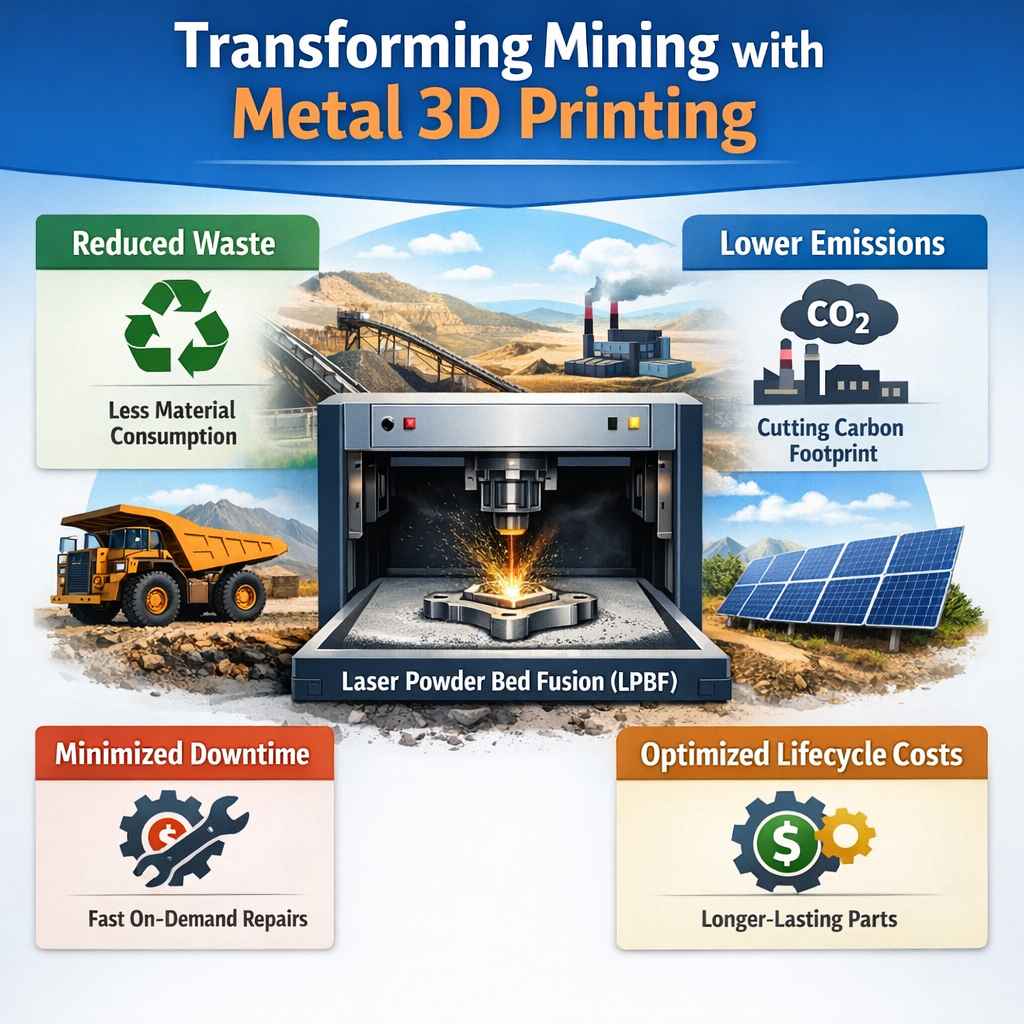
Optimized designs use material only where it is needed. Unlike machining, which can waste up to 80% of raw material, metal additive manufacturing builds components using only the required amount of powder.
Design optimization further enhances this efficiency by:
-
Reducing part volume
-
Eliminating unnecessary mass
-
Lowering powder consumption
-
Shortening build times
For mining companies, this translates into reduced production costs, improved sustainability, and faster return on investment.
Improving Equipment Reliability and Lifespan
Optimized mining components perform better under harsh operating conditions. Reduced stress concentrations, improved load paths, and enhanced material performance lead to:
-
Longer component lifespan
-
Fewer unexpected failures
-
Lower maintenance frequency
-
Reduced downtime
This reliability is critical in mining operations, where equipment failure can halt production and result in significant financial losses.
Sustainable Design for the Mining Industry
Sustainability is becoming increasingly important in the mining sector. Design optimization using metal AM supports sustainable practices by:
-
Minimizing material waste
-
Reducing energy-intensive machining processes
-
Enabling local, on-demand production
-
Lowering transportation-related emissions
Optimized designs not only improve performance but also align with environmental and regulatory goals.
Real-World Applications in Mining Equipment
Design-optimized, metal 3D printed components are already being used successfully in mining operations, including:
-
Cutting tools with enhanced wear resistance
-
Lightweight impellers for improved efficiency
-
Optimized pump casings with internal flow channels
-
High-strength brackets and connectors for heavy machinery
These applications demonstrate how design optimization unlocks new levels of performance and reliability in real-world mining environments.
Conclusion
Design optimization is the key to unlocking the full potential of metal 3D printing in the mining industry. By leveraging topology optimization, lattice structures, part consolidation, and simulation-driven engineering, mining companies can produce components that are stronger, lighter, more efficient, and more reliable than ever before.
Metal additive manufacturing is not just a new production method—it is a new design philosophy. For mining operations seeking to reduce downtime, lower costs, and improve sustainability, optimized design with metal 3D printing offers a powerful competitive advantage.