Introduction
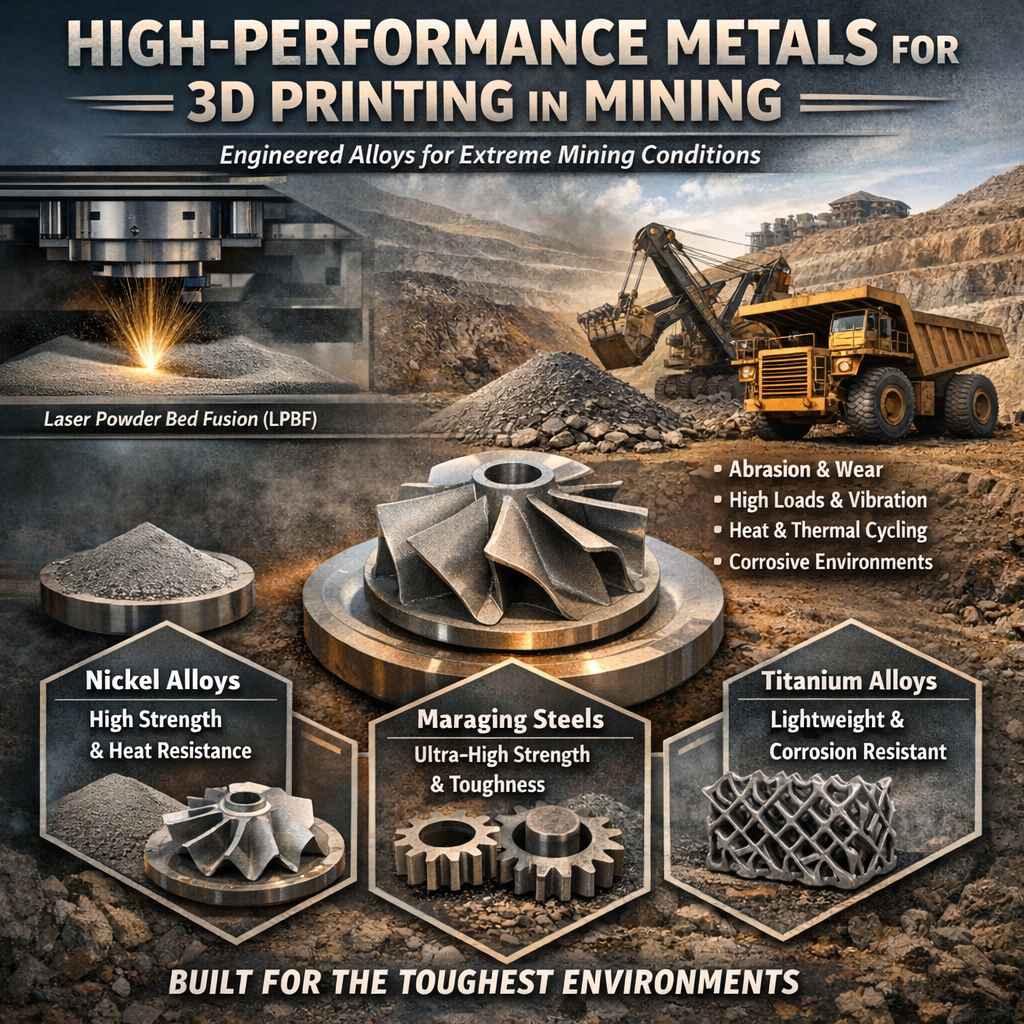
The mining industry operates under some of the most extreme and unforgiving conditions in modern manufacturing. Equipment and components must withstand constant abrasion, high mechanical loads, vibration, temperature fluctuations, and corrosive environments. In such conditions, material selection is not just a design decision—it is a critical factor that directly impacts operational efficiency, safety, and equipment lifespan.
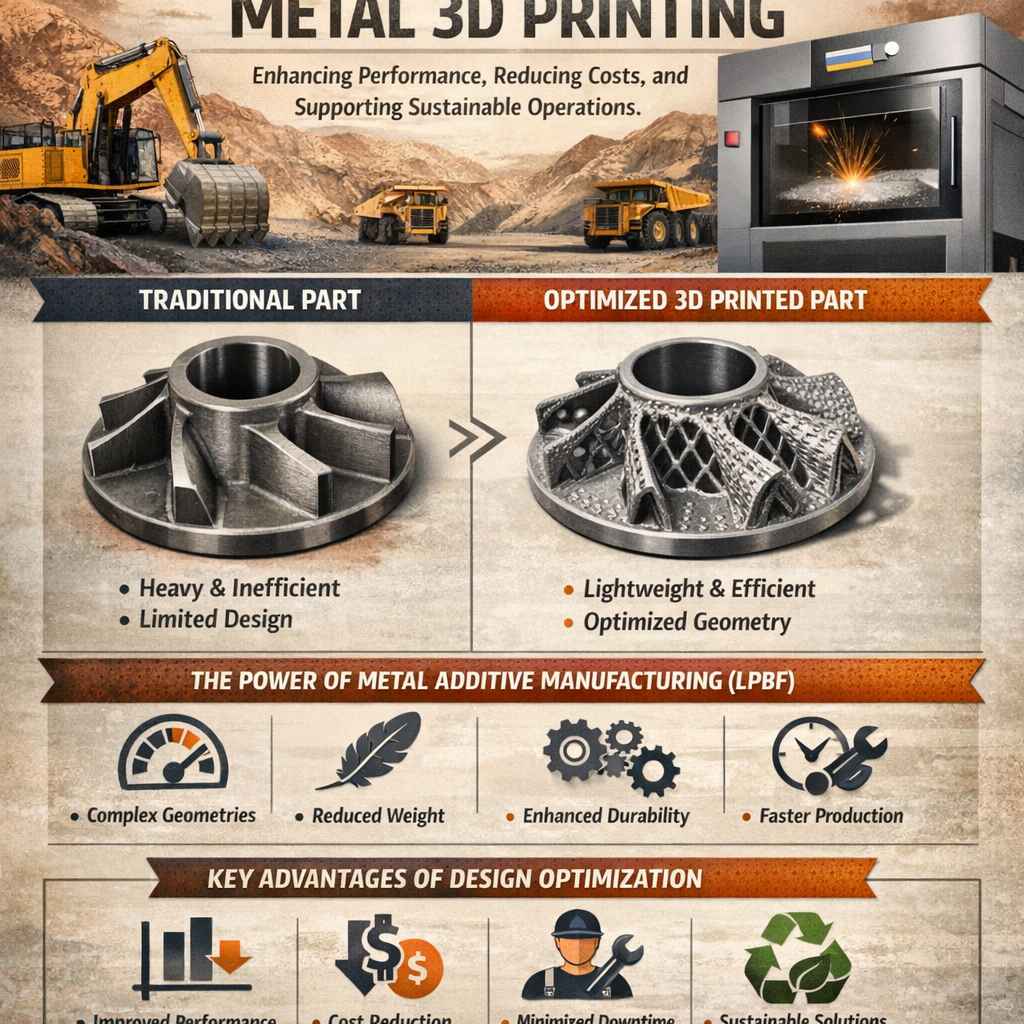
Metal additive manufacturing (AM), particularly Laser Powder Bed Fusion (LPBF), has emerged as a powerful solution for producing mining components with superior performance and reliability. However, the success of metal 3D printing in mining depends heavily on the use of high-performance metals specifically engineered to endure harsh operating environments.
This article explores the most commonly used high-performance metals for additive manufacturing in mining, their properties, applications, and why they are transforming the way mining equipment is designed, produced, and maintained.
Why Material Performance Matters in Mining Applications
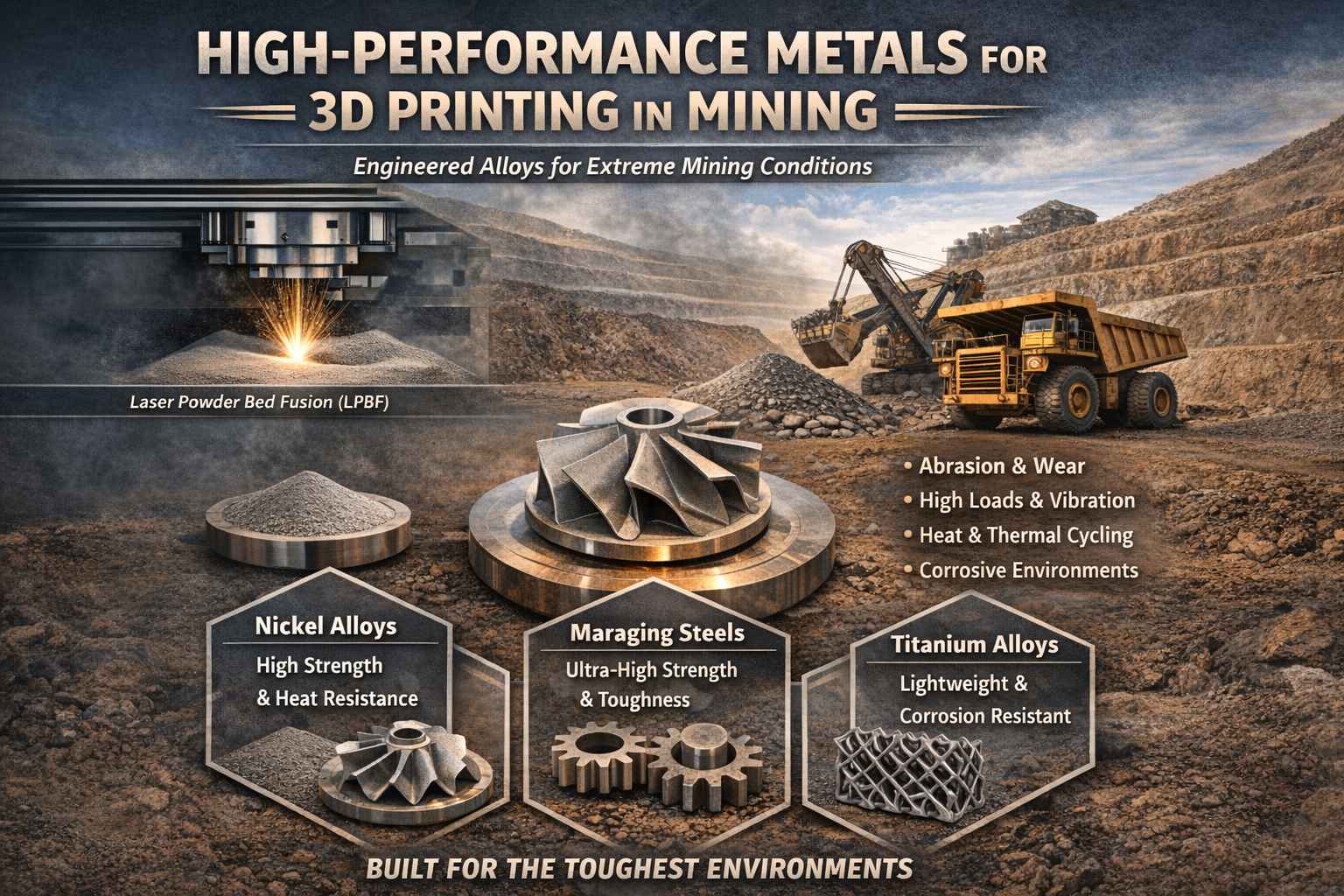
Mining components are exposed to a unique combination of challenges that few other industries face simultaneously. These include:
-
Severe abrasive wear from rock and ore
-
High impact and cyclic mechanical loads
-
Exposure to moisture, chemicals, and corrosive agents
-
Continuous operation with minimal downtime tolerance
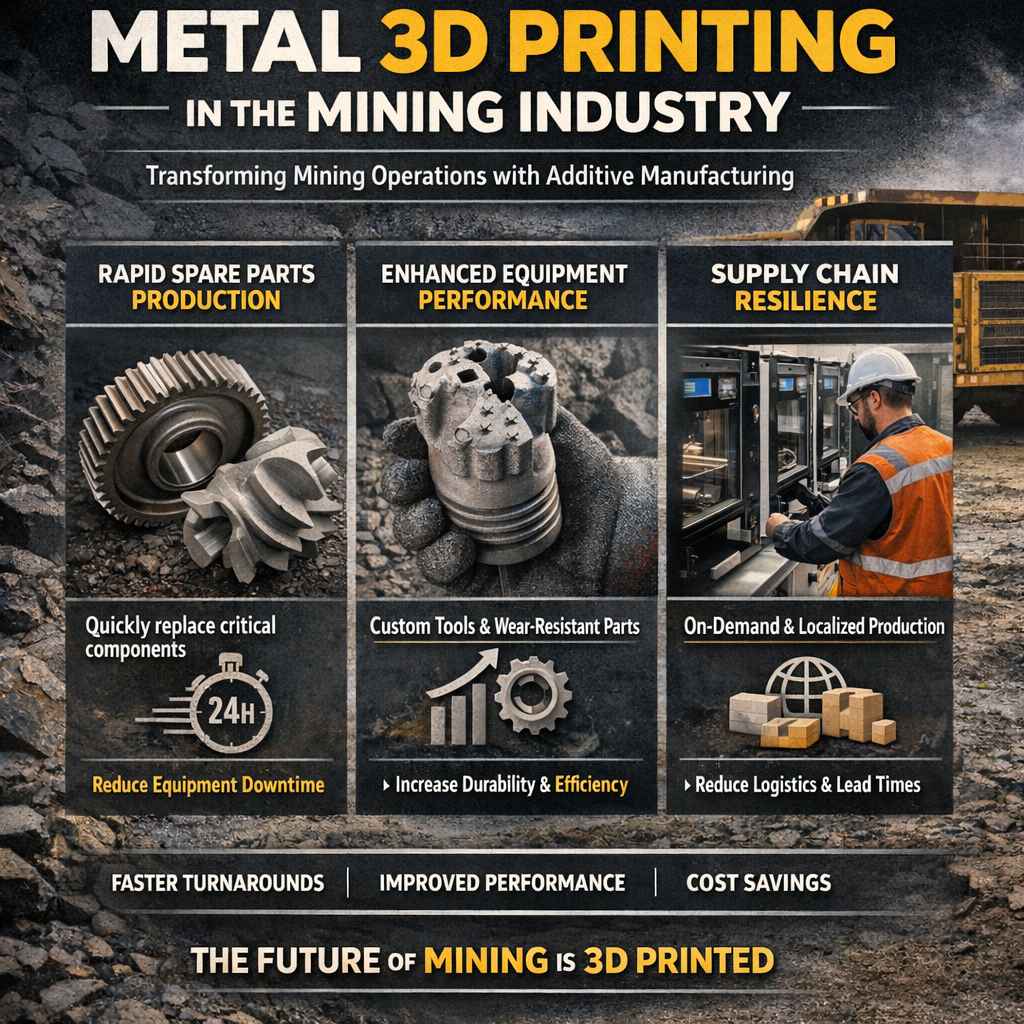
Traditional manufacturing materials often struggle to balance strength, wear resistance, corrosion resistance, and manufacturability. Metal additive manufacturing allows engineers to pair advanced materials with optimized designs, resulting in components that outperform conventionally manufactured parts.
Stainless Steel 316L: Corrosion Resistance and Reliability
Stainless Steel 316L is one of the most widely used materials in metal additive manufacturing for mining applications. Its excellent corrosion resistance, combined with good mechanical strength and printability, makes it a reliable choice for many mining components.
Key Properties:
-
High resistance to corrosion and oxidation
-
Good ductility and toughness
-
Excellent weldability and print stability
-
Suitable for harsh, wet, and chemically aggressive environments
Common Mining Applications:
-
Pump housings and casings
-
Valve bodies and connectors
-
Fluid handling components
-
Structural brackets and supports
316L stainless steel performs exceptionally well in mining environments where moisture, chemicals, and corrosion are major concerns, making it ideal for long-term reliability.
Inconel 718: Extreme Strength at High Temperatures
Inconel 718 is a nickel-based superalloy known for its outstanding strength, fatigue resistance, and stability at elevated temperatures. While traditionally used in aerospace and energy sectors, Inconel has become increasingly valuable in mining applications where components are subjected to high thermal and mechanical stress.
Key Properties:
-
Exceptional tensile and fatigue strength
-
Resistance to oxidation and corrosion
-
Excellent performance at high temperatures
-
Strong resistance to creep and thermal fatigue
Common Mining Applications:
-
High-stress pump components
-
Heat-exposed parts near engines or turbines
-
Heavy-duty connectors and housings
-
Wear-resistant components in extreme environments
Inconel 718 enables mining operators to extend component lifespan and reduce failures in critical systems.
Titanium Alloys: Strength-to-Weight Optimization
Titanium alloys, particularly Ti-6Al-4V, offer an exceptional combination of high strength, low weight, and corrosion resistance. In mining, reducing component weight without sacrificing durability can significantly improve equipment efficiency and handling.
Key Properties:
-
High strength-to-weight ratio
-
Excellent corrosion resistance
-
Good fatigue performance
-
Compatibility with complex AM geometries
Common Mining Applications:
-
Cutting tools and drilling components
-
Lightweight structural parts
-
High-performance brackets and connectors
-
Components requiring reduced inertia
Titanium alloys are particularly valuable in applications where weight reduction improves machine responsiveness and energy efficiency.
Maraging Steel: Superior Toughness and Wear Resistance
Maraging steels are high-strength alloys known for their exceptional toughness, hardness, and dimensional stability after heat treatment. These properties make them highly suitable for mining components subjected to repeated impact and wear.
Key Properties:
-
Extremely high strength after aging
-
Excellent toughness and fatigue resistance
-
Good dimensional accuracy
-
Suitable for complex geometries
Common Mining Applications:
-
Cutting and crushing tools
-
Wear plates and impact-resistant components
-
Structural supports in high-load systems
-
Precision mechanical parts
Maraging steel components printed with LPBF can outperform traditionally manufactured equivalents in both strength and durability.
Cobalt-Chrome Alloys: Wear and Abrasion Resistance
Cobalt-Chrome (CoCr) alloys are known for their exceptional hardness, wear resistance, and corrosion performance. While commonly used in medical and aerospace industries, CoCr alloys are increasingly applied in mining where abrasive wear is a dominant failure mode.
Key Properties:
-
Outstanding wear and abrasion resistance
-
High hardness and strength
-
Excellent corrosion resistance
-
Stable performance under stress
Common Mining Applications:
-
Wear-prone tools and inserts
-
Valve seats and seals
-
Components exposed to abrasive slurry
-
High-durability mechanical parts
Cobalt-Chrome alloys significantly extend service life in applications where wear resistance is critical.
Material Certification and Powder Quality
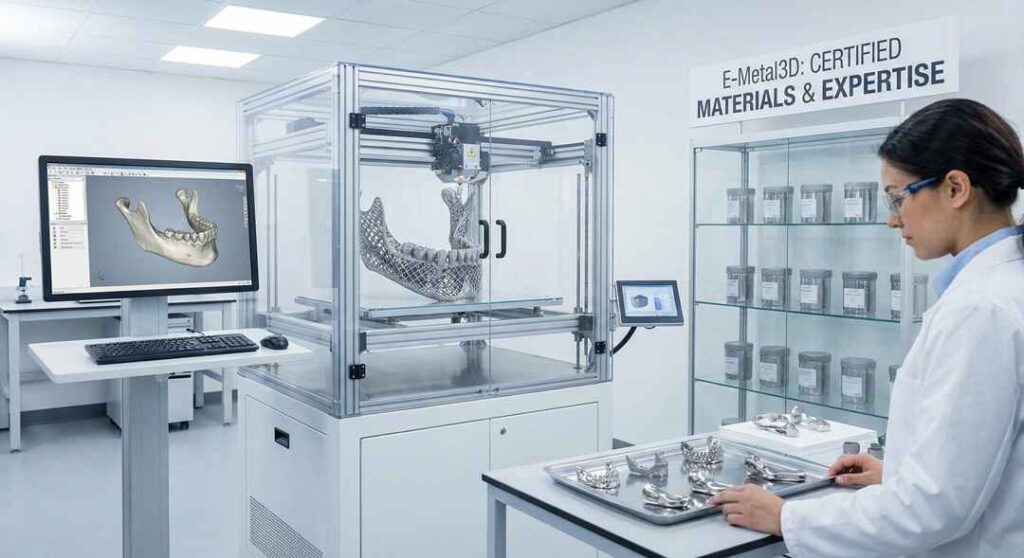
In metal additive manufacturing, material performance begins with powder quality. Certified metal powders ensure consistent particle size distribution, chemical composition, and flowability—critical factors for reliable LPBF printing.
High-quality powders provide:
-
Consistent mechanical properties
-
Reduced defect rates
-
Improved surface quality
-
Predictable print performance
For mining applications, certified and traceable powders are essential to guarantee part reliability and compliance with industrial standards.
Material Selection Based on Application Requirements
Choosing the right metal for mining AM applications depends on several factors, including:
-
Mechanical load and fatigue requirements
-
Exposure to heat, corrosion, or abrasion
-
Weight and performance targets
-
Cost and production volume considerations
By matching material properties with application-specific demands, mining companies can maximize performance while optimizing cost and production efficiency.
Performance Benefits Over Traditional Manufacturing
High-performance metals combined with additive manufacturing provide several advantages over conventional production methods:
-
Improved material utilization
-
Enhanced mechanical performance
-
Reduced lead times
-
Greater design freedom
-
Longer component lifespan
These benefits are particularly valuable in mining operations where downtime and equipment failure carry significant financial consequences.
Sustainability and Resource Efficiency
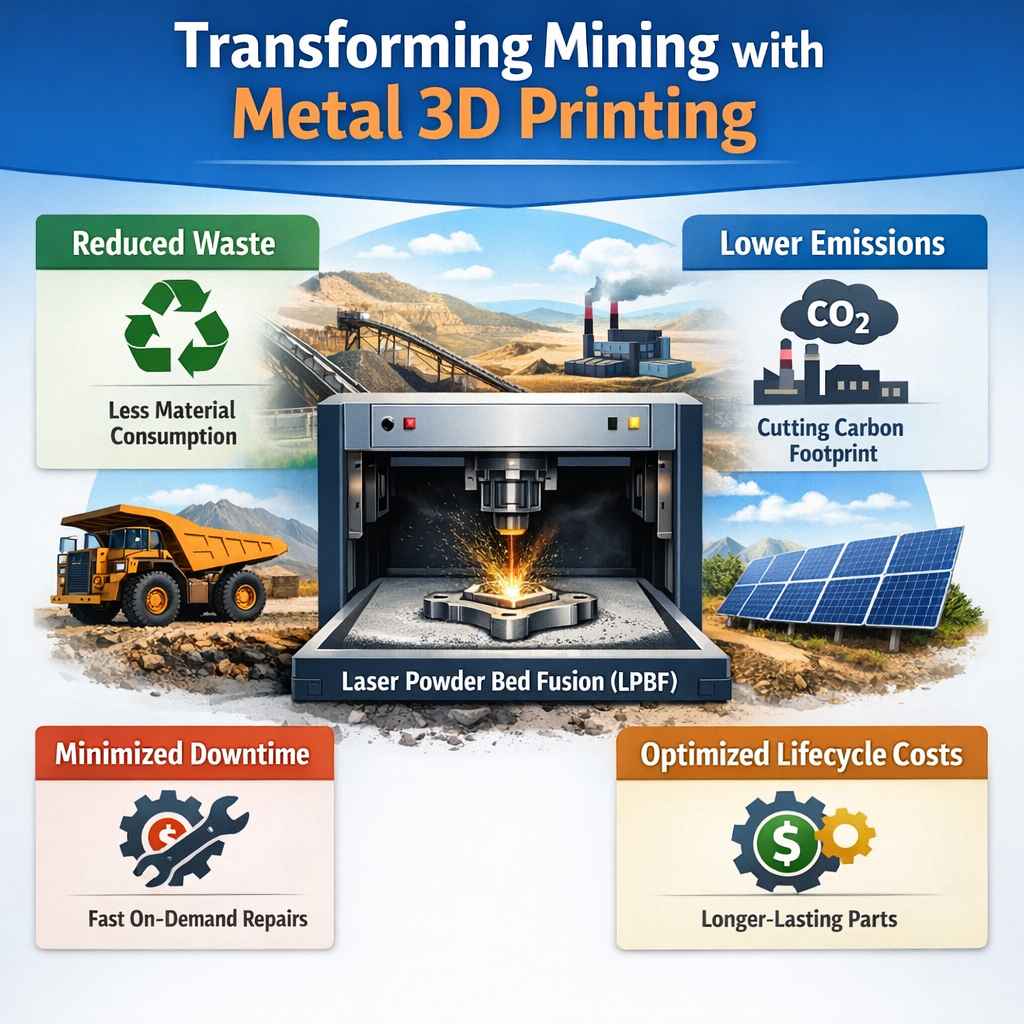
Metal additive manufacturing supports sustainable mining practices by minimizing material waste and enabling local, on-demand production. High-performance metals used in AM reduce the need for frequent part replacement, lowering resource consumption over time.
Additionally, optimized designs reduce material usage while maintaining or improving performance, contributing to more environmentally responsible mining operations.
Real-World Mining Applications
Mining companies worldwide are adopting high-performance metal AM solutions for:
-
Rapid replacement of critical spare parts
-
Performance-optimized cutting tools
-
Custom components for legacy equipment
-
Lightweight and durable machine elements
These applications demonstrate the real-world value of combining advanced materials with additive manufacturing technologies.
Conclusion
High-performance metals are the foundation of successful additive manufacturing in the mining industry. Materials such as Stainless Steel 316L, Inconel 718, Titanium alloys, Maraging Steel, and Cobalt-Chrome enable mining companies to produce components that are stronger, more durable, and better suited to extreme operating conditions.
When paired with metal 3D printing and engineering-driven design optimization, these materials redefine what is possible in mining equipment manufacturing—delivering improved reliability, reduced downtime, and long-term cost savings.