Why Design Matters More Than the Printer
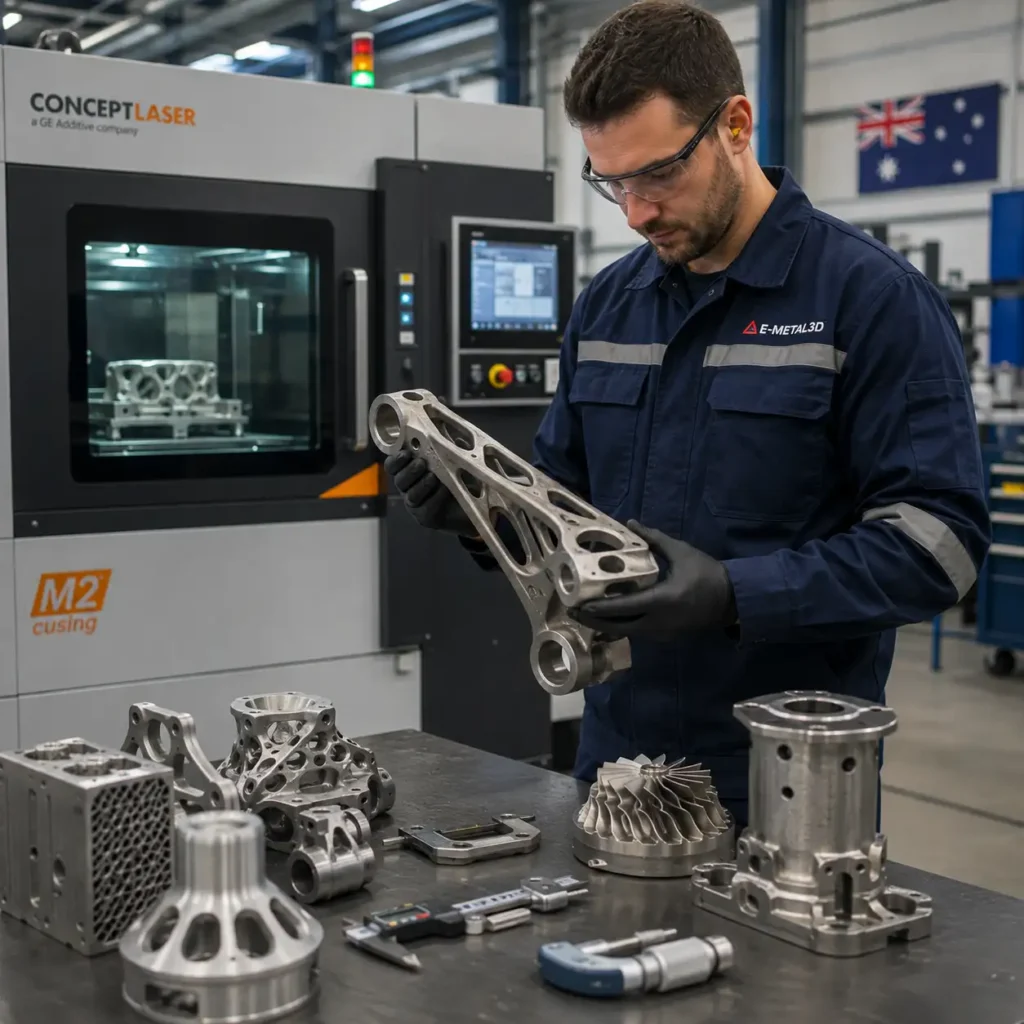
Many companies invest in Metal 3D Printing expecting immediate improvements in cost, speed, and performance. However, one of the biggest misconceptions about additive manufacturing is that an existing CAD model can simply be sent to a metal printer and produce the best possible result. In reality, the greatest advantages of additive manufacturing come long before production begins—they start during the design stage.
Design for Additive Manufacturing (DfAM) is an engineering approach that optimises components specifically for additive manufacturing rather than adapting designs created for machining, casting, or fabrication. By redesigning a component around the capabilities of Metal 3D Printing, engineers can reduce weight, improve mechanical performance, simplify assemblies, and lower manufacturing costs while maintaining the required strength and reliability.
As more Australian manufacturers adopt Metal 3D Printing, DfAM has become a key part of developing products that fully benefit from modern manufacturing technologies.
Designing Without Traditional Manufacturing Constraints
Every conventional manufacturing process comes with limitations.
Machined parts require cutting tool access. Cast components need draft angles and moulds. Fabricated assemblies often involve welding multiple individual parts together. Because of these restrictions, engineers have traditionally designed products around the manufacturing process rather than around the ideal engineering solution.
Metal Additive Manufacturing changes that relationship.
Instead of removing material or forming it inside a mould, Metal 3D Printing builds components layer by layer. This allows engineers to create complex internal features, lightweight structures, organic shapes, and integrated assemblies that would be difficult—or impossible—to manufacture using conventional methods.
The result is greater design freedom, allowing engineering performance to become the priority instead of manufacturing limitations.
Better Design Often Delivers Better Performance
One of the primary goals of DfAM is improving the performance of a component rather than simply reproducing an existing design.
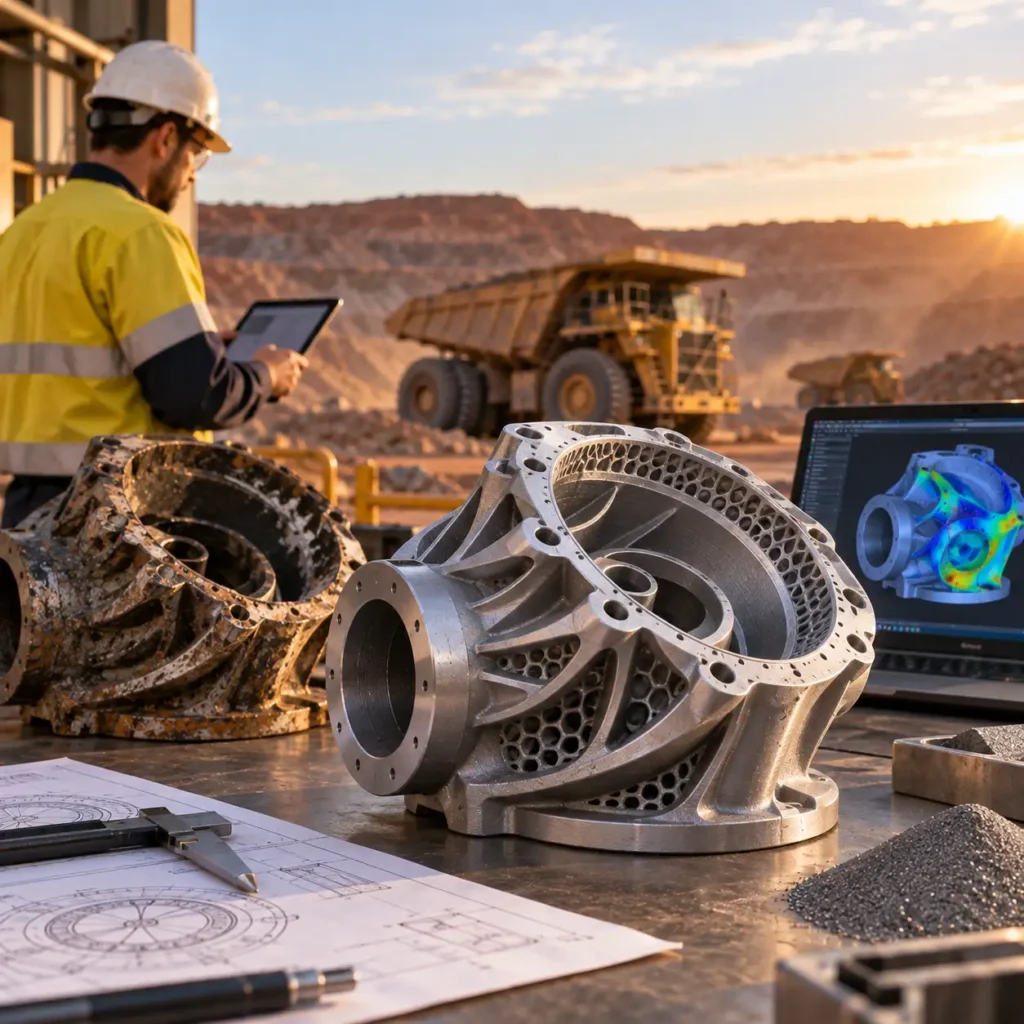
For example, engineers can introduce internal lattice structures that significantly reduce weight while maintaining structural integrity. Cooling channels can be positioned closer to heat sources to improve thermal efficiency. Multiple components can be combined into a single printed part, reducing assembly time and eliminating potential failure points.
These improvements often deliver benefits throughout the product’s lifecycle. Lighter parts can reduce energy consumption, simplified assemblies require less maintenance, and optimised geometries frequently improve durability under demanding operating conditions.
Rather than asking how a component can be manufactured, DfAM asks how the component can perform better.
DfAM Supports Smarter Engineering Decisions
Successful additive manufacturing is built on engineering, not just printing.
Before production begins, engineers evaluate how a component will behave under real operating conditions. Material selection, loading conditions, thermal performance, build orientation, support structures, and manufacturing feasibility all influence the final design.
This engineering-led process helps identify opportunities to improve the component before any material is printed. It also reduces the risk of costly design revisions later in the project.
At E-Metal3D, DfAM is integrated into broader Engineering Solutions, allowing every project to be assessed from both an engineering and manufacturing perspective.
Reverse Engineering Creates New Opportunities for DfAM
Many industrial businesses continue to operate equipment that was designed decades ago. Original CAD models may no longer exist, and replacement components are often discontinued or difficult to source.
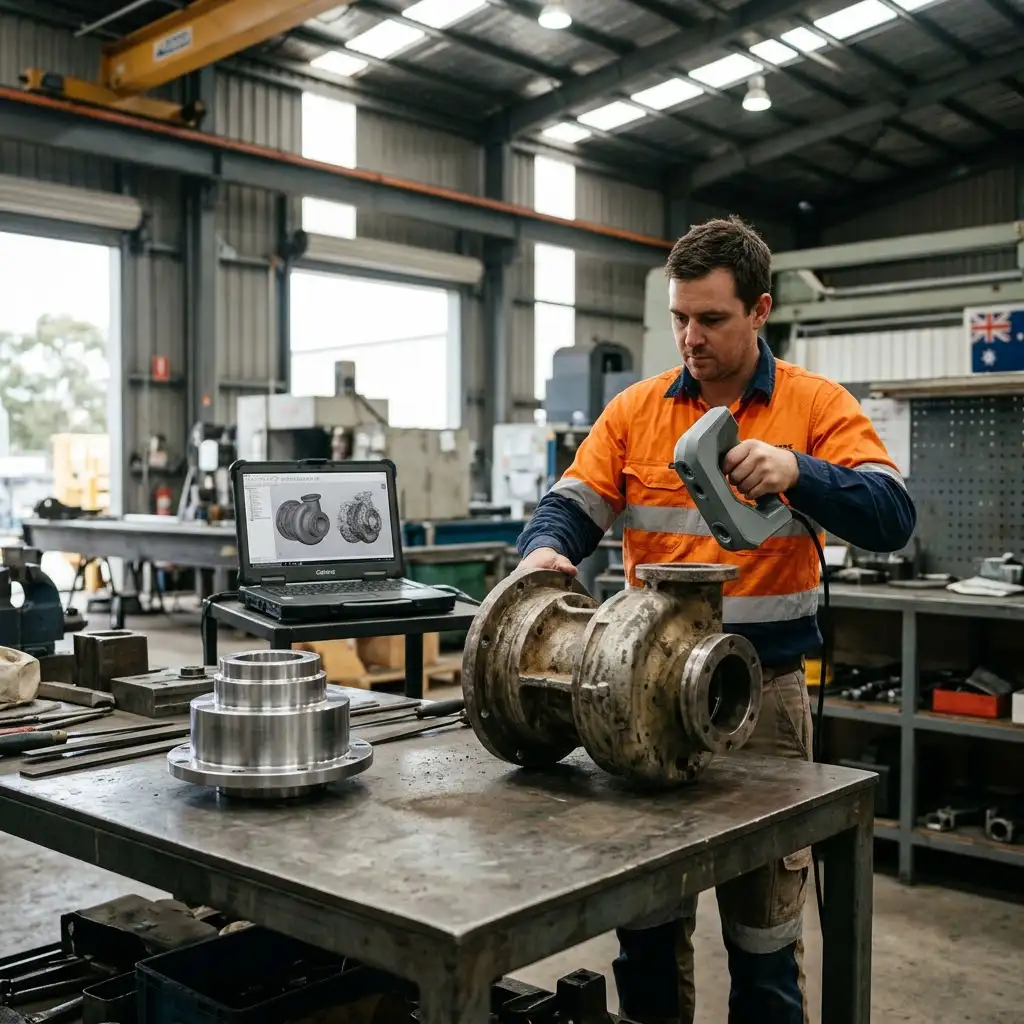
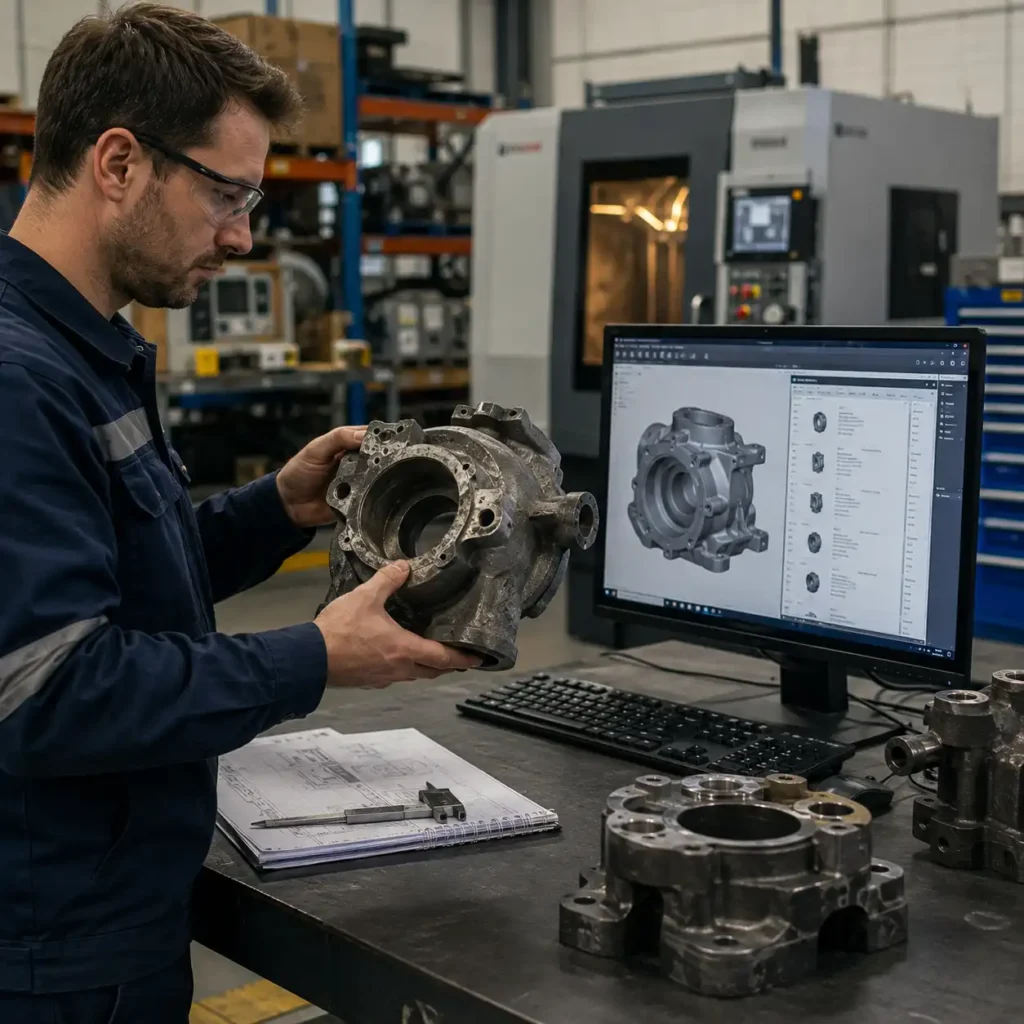
Using 3D Scanning Services, existing components can be captured with high precision and converted into accurate CAD models through reverse engineering. Once the digital model has been created, engineers are no longer limited to reproducing the original design.
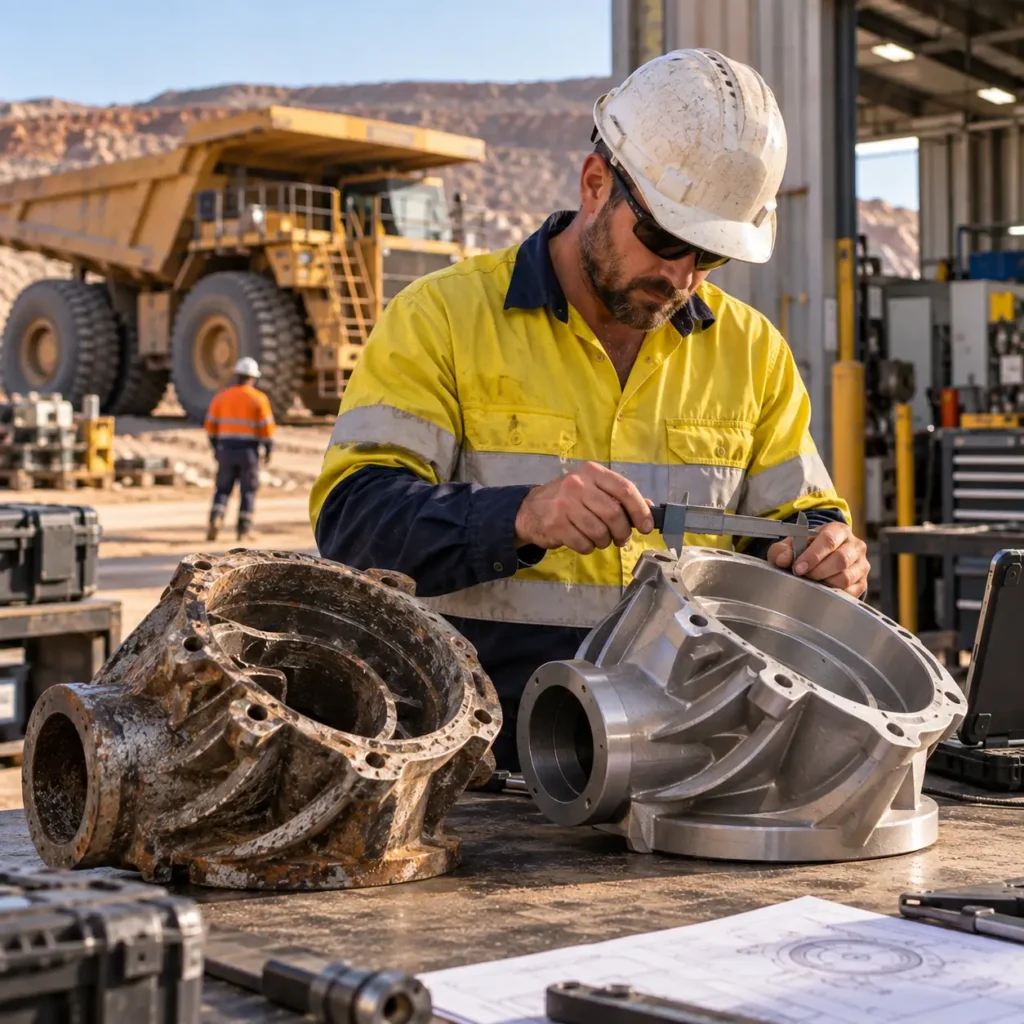
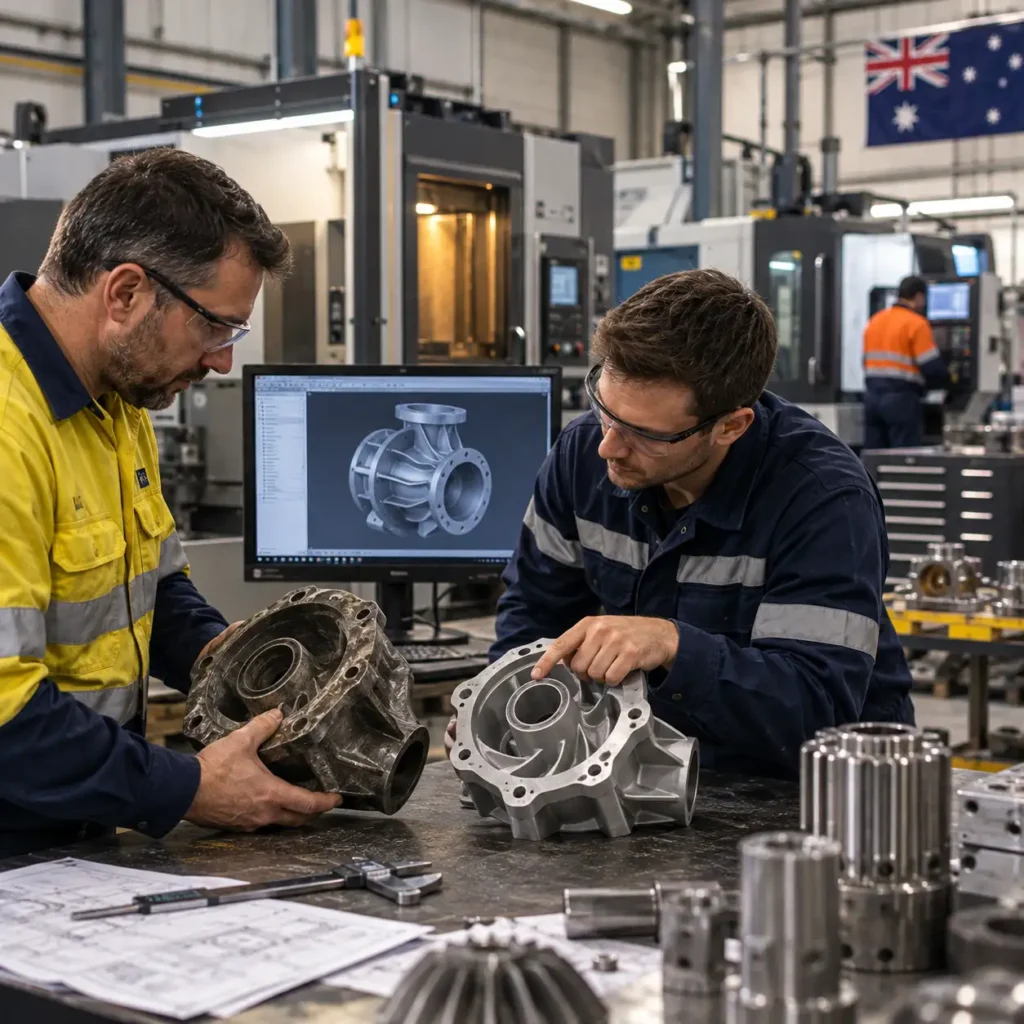
Instead, DfAM makes it possible to redesign the component for modern manufacturing methods. Areas prone to wear can be reinforced, unnecessary material can be removed, and complex assemblies can be simplified before production begins.
In many cases, the new component performs better than the original while remaining fully compatible with the existing equipment.
Why Weight Reduction Matters
Reducing weight is one of the most recognised benefits of Design for Additive Manufacturing, but its value extends far beyond using less material.
Lighter components can improve machine efficiency, reduce energy consumption, lower transportation costs, and minimise loads on surrounding assemblies. In industries such as mining, aerospace, and automotive manufacturing, even small reductions in weight can produce measurable improvements in overall system performance.
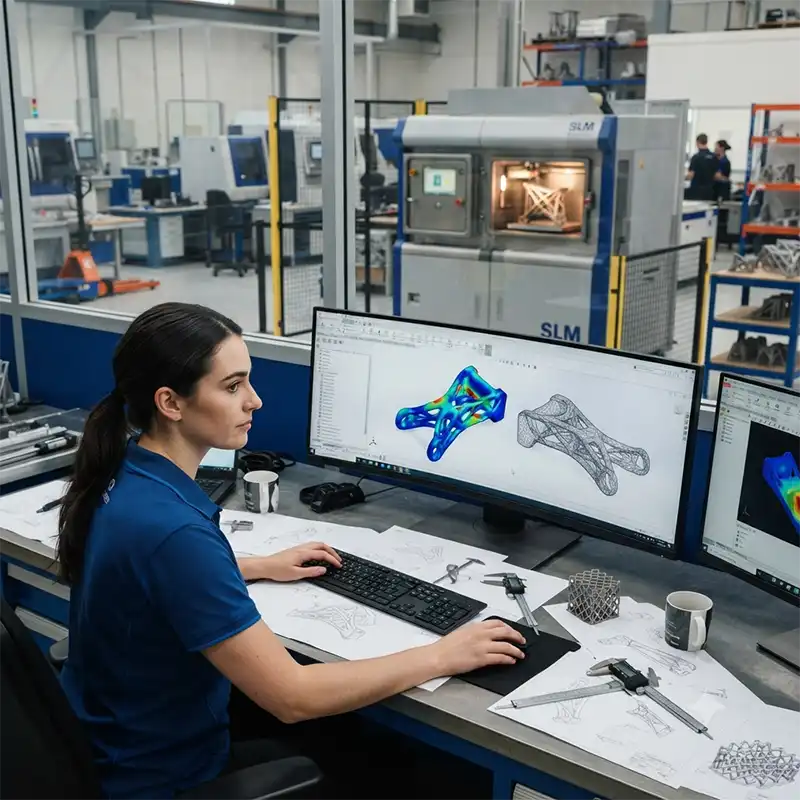
Rather than removing material randomly, engineers use simulation and topology optimisation to determine where material contributes to strength and where it can safely be eliminated.
The result is a component that remains structurally reliable while using material more efficiently.
Part Consolidation Reduces Complexity
Many industrial assemblies contain numerous brackets, fasteners, welds, and connecting components that exist only because of manufacturing limitations.
Metal 3D Printing allows these individual parts to be combined into a single manufactured component.
Reducing the number of individual parts simplifies assembly, shortens production time, decreases inventory requirements, and removes potential points of failure. Maintenance also becomes easier because there are fewer components to inspect, replace, or align during servicing.
For manufacturers seeking greater reliability, part consolidation is often one of the most valuable outcomes of DfAM.
Industries Already Benefiting from DfAM
Design for Additive Manufacturing is being adopted across a wide range of industries where performance, reliability, and efficiency are critical.
The Mining Industry uses DfAM to redesign wear components, improve equipment reliability, and reduce maintenance downtime.
Across the Manufacturing Industry, engineers optimise production tooling, fixtures, and machine components to improve productivity while reducing manufacturing complexity.
Within the Oil & Gas Industry, DfAM supports the development of lightweight, corrosion-resistant components capable of operating in demanding environments.
Medical manufacturers also rely on DfAM to produce customised implants and surgical devices designed around individual patient requirements.
As additive manufacturing technologies continue to mature, DfAM is becoming a standard engineering practice across almost every advanced manufacturing sector.
Design Is the Real Competitive Advantage
Metal 3D Printing has transformed what manufacturers are capable of producing, but the printer itself is only part of the solution.
The greatest competitive advantage comes from designing components specifically for additive manufacturing.
Businesses that continue printing components originally designed for machining often achieve only modest improvements. Those that embrace Design for Additive Manufacturing unlock entirely new possibilities in performance, efficiency, and product innovation.
By combining engineering expertise, simulation, reverse engineering, and advanced manufacturing technologies, companies can produce components that are lighter, stronger, more reliable, and better suited to modern industrial requirements.
What is Design for Additive Manufacturing (DfAM)?
Design for Additive Manufacturing (DfAM) is an engineering methodology that optimises components specifically for additive manufacturing processes such as Metal 3D Printing, improving performance, reducing weight, and simplifying production.
Why is DfAM important for Metal 3D Printing?
DfAM enables engineers to fully utilise the design freedom offered by Metal 3D Printing, creating components that would be difficult or impossible to manufacture using traditional methods.
Can existing components be redesigned using DfAM?
Yes. Existing parts can first be captured using 3D scanning and reverse engineered into CAD models before being redesigned using DfAM principles.