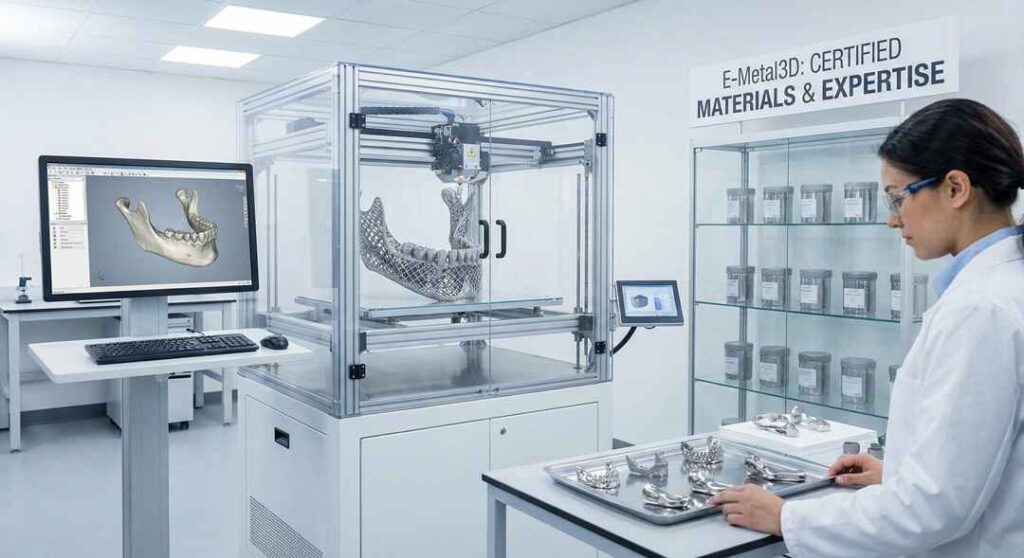
In the medical industry, material choice is not just a technical decision—it is a matter of safety, performance, and regulatory compliance. Medical devices and implants must meet strict requirements for biocompatibility, mechanical strength, corrosion resistance, and long-term reliability inside the human body.
Metal additive manufacturing (AM), especially Laser Powder Bed Fusion (LPBF), has enabled unprecedented design freedom for medical components. However, the success of these advanced designs depends heavily on the quality and suitability of the metal powders used.
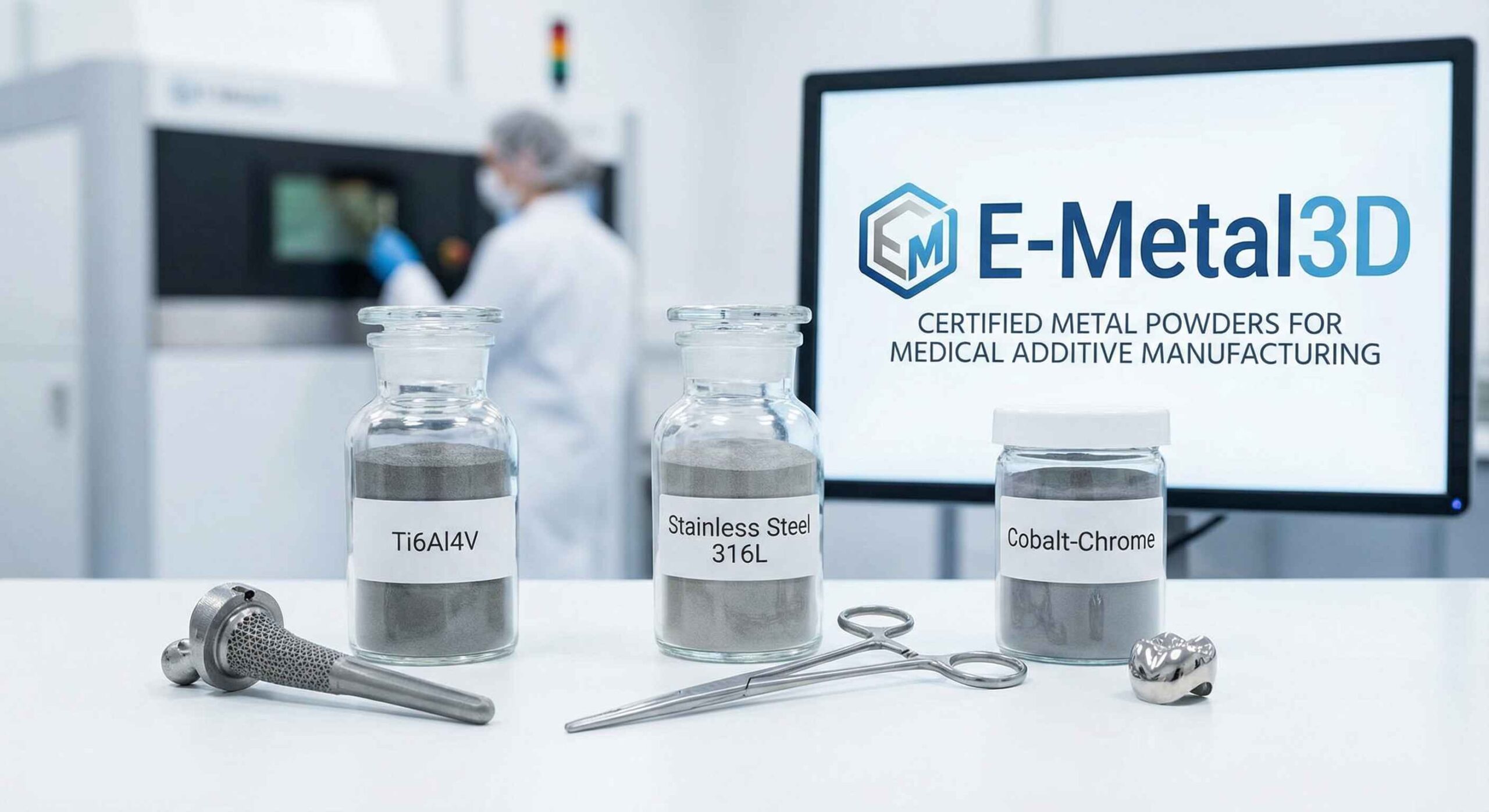
At E-Metal3D, we work with certified, medical-grade metal powders to ensure that every printed component meets the highest standards required for healthcare applications.
What Defines a Medical-Grade Metal?
A medical-grade metal is a material that has been proven safe and effective for use in medical devices or implants through extensive testing and certification.
Key requirements include:
-
Proven biocompatibility
-
Mechanical stability under physiological loads
-
Resistance to corrosion and bodily fluids
-
Sterilizability
-
Full material traceability and certification
Not all industrial metals qualify for medical use. In additive manufacturing, powder quality, chemistry control, and consistency are especially critical.
The Role of Metal Powders in Medical Additive Manufacturing
In LPBF technology, metal powder characteristics directly affect part quality, surface finish, and mechanical properties.
Critical powder parameters include:
-
Particle size distribution
-
Powder sphericity and flowability
-
Chemical purity
-
Oxygen and moisture levels
Medical applications demand tighter tolerances and stricter quality control than most industrial sectors. E-Metal3D ensures all medical-grade powders are fully certified and suitable for repeatable, high-quality printing.
Titanium Ti6Al4V (Grade 23): The Gold Standard for Implants
Why Titanium Dominates Medical AM
Titanium alloy Ti6Al4V (commonly referred to as Ti64) is the most widely used metal in medical additive manufacturing—and for good reason.
Key advantages:
-
Exceptional biocompatibility
-
High strength-to-weight ratio
-
Excellent corrosion resistance
-
Elastic modulus closer to human bone
These properties make Ti64 ideal for long-term implantable devices.
Typical Medical Applications
-
Orthopedic implants (hip, knee, spinal cages)
-
Dental implants and abutments
-
Cranial and maxillofacial plates
LPBF allows Ti64 implants to incorporate porous lattice structures that promote osseointegration, improving implant stability and patient outcomes.
Stainless Steel 316L: Reliable and Cost-Effective
A Versatile Medical Material
Stainless Steel 316L is widely used in medical applications where high strength and corrosion resistance are required, but full implant-grade titanium may not be necessary.
Key properties:
-
Good biocompatibility
-
Excellent corrosion resistance
-
High ductility
-
Cost-effective compared to titanium
Typical Medical Applications
-
Surgical instruments
-
Temporary implants
-
Medical tooling and fixtures
316L is particularly suitable for high-volume medical components and devices that require frequent sterilization.
Cobalt-Chrome (CoCr): Superior Wear Resistance
Designed for High-Load Medical Applications
Cobalt-Chrome alloys are known for their exceptional hardness, wear resistance, and fatigue strength, making them ideal for demanding medical applications.
Key benefits:
-
Outstanding wear resistance
-
High mechanical strength
-
Excellent corrosion resistance in bodily fluids
Typical Medical Applications
-
Hip and knee joint replacements
-
Dental prosthetics
-
Load-bearing orthopedic components
In additive manufacturing, CoCr enables complex geometries and improved implant longevity compared to traditionally manufactured parts.
Emerging Medical Metals in Additive Manufacturing
While Ti64, 316L, and CoCr dominate the market, research and innovation continue to expand the range of medical-grade metals suitable for AM.
Examples include:
-
Tantalum for enhanced bone integration
-
Titanium alloys with tailored elastic modulus
-
Nickel-free stainless steels for sensitive patients
E-Metal3D closely follows material innovation to support next-generation medical solutions.
Powder Certification and Traceability
In medical manufacturing, traceability is non-negotiable. Every batch of medical-grade powder must be fully documented and traceable from supplier to finished part.
E-Metal3D ensures:
-
Certified powder batches
-
Chemical composition verification
-
Consistent particle morphology
-
Compliance with ASTM and ISO standards
This level of control is essential for regulatory approval and long-term product reliability.
How Material Choice Impacts Implant Performance
Selecting the right medical-grade metal directly influences:
-
Implant lifespan
-
Mechanical compatibility with bone
-
Risk of corrosion or adverse reactions
-
Patient comfort and recovery time
Additive manufacturing allows engineers to match material properties with advanced geometries, creating implants optimized for both biological and mechanical performance.
Compatibility with Post-Processing and Finishing
Medical implants often require extensive post-processing to meet surface and mechanical requirements.
Medical-grade metals used in AM must be compatible with:
-
Heat treatment
-
Surface polishing
-
Electropolishing
-
Sterilization processes
E-Metal3D provides integrated post-processing solutions to ensure printed parts meet final medical specifications.
Regulatory Considerations in Medical Metal AM
Medical devices manufactured using additive processes must comply with strict regulatory frameworks.
Key considerations include:
-
Material certification
-
Process validation
-
Mechanical testing
-
Documentation and traceability
Using proven medical-grade metals significantly simplifies the regulatory approval process for device manufacturers.
Sustainability and Material Efficiency
Metal additive manufacturing reduces material waste compared to traditional machining, especially when working with high-value medical alloys such as titanium and cobalt-chrome.
Benefits include:
-
Lower scrap rates
-
Efficient use of expensive materials
-
Reduced environmental impact
This efficiency supports both cost optimization and sustainable medical manufacturing.
Partnering with E-Metal3D for Medical-Grade Materials
With decades of engineering experience and deep expertise in metal additive manufacturing, E-Metal3D supports medical manufacturers at every stage of production.
From certified powder supply to printing, finishing, and quality assurance, we provide reliable, compliant, and high-performance solutions for medical AM applications.