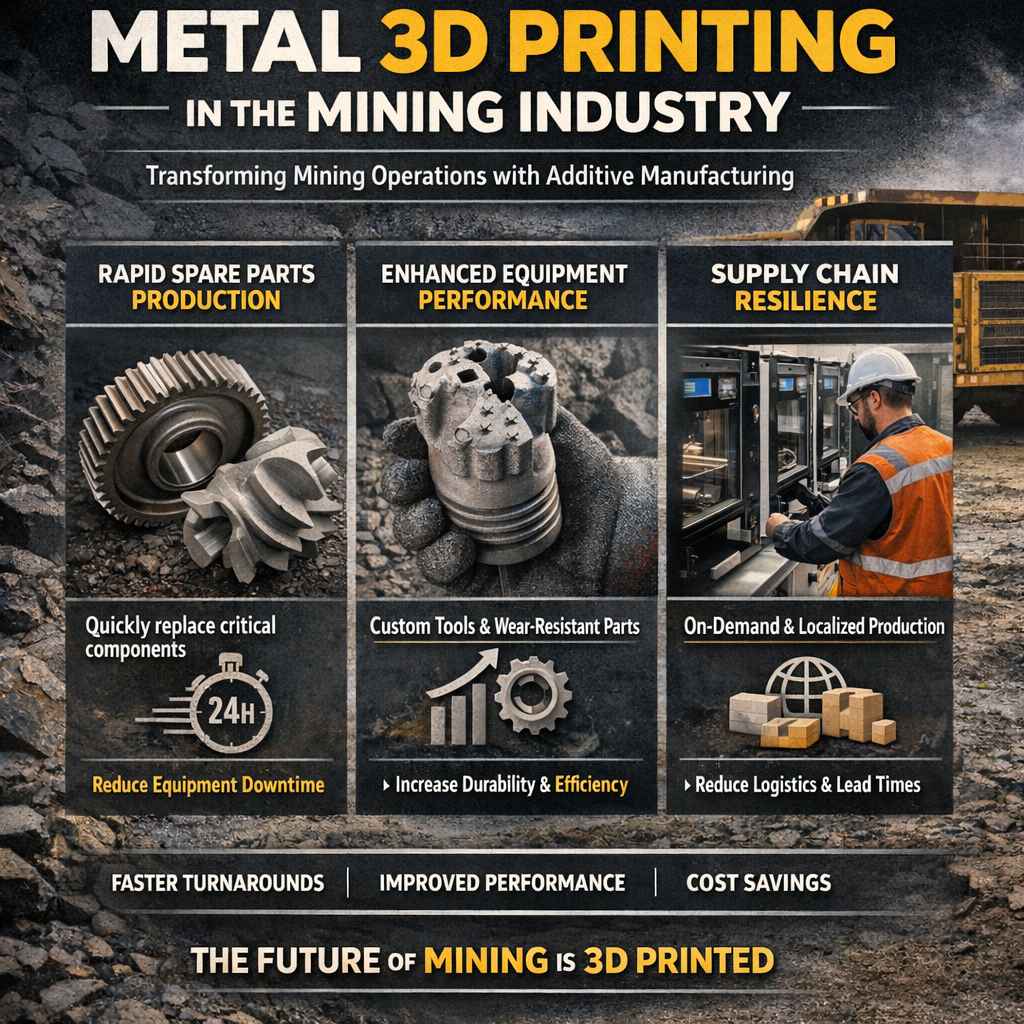

In the mining industry, downtime is one of the most expensive operational risks. A single equipment failure can halt production, disrupt supply chains, and result in losses worth thousands—or even millions—of dollars per day. Traditional spare part manufacturing and procurement methods often involve long lead times, complex logistics, and reliance on overseas suppliers, making rapid response nearly impossible.
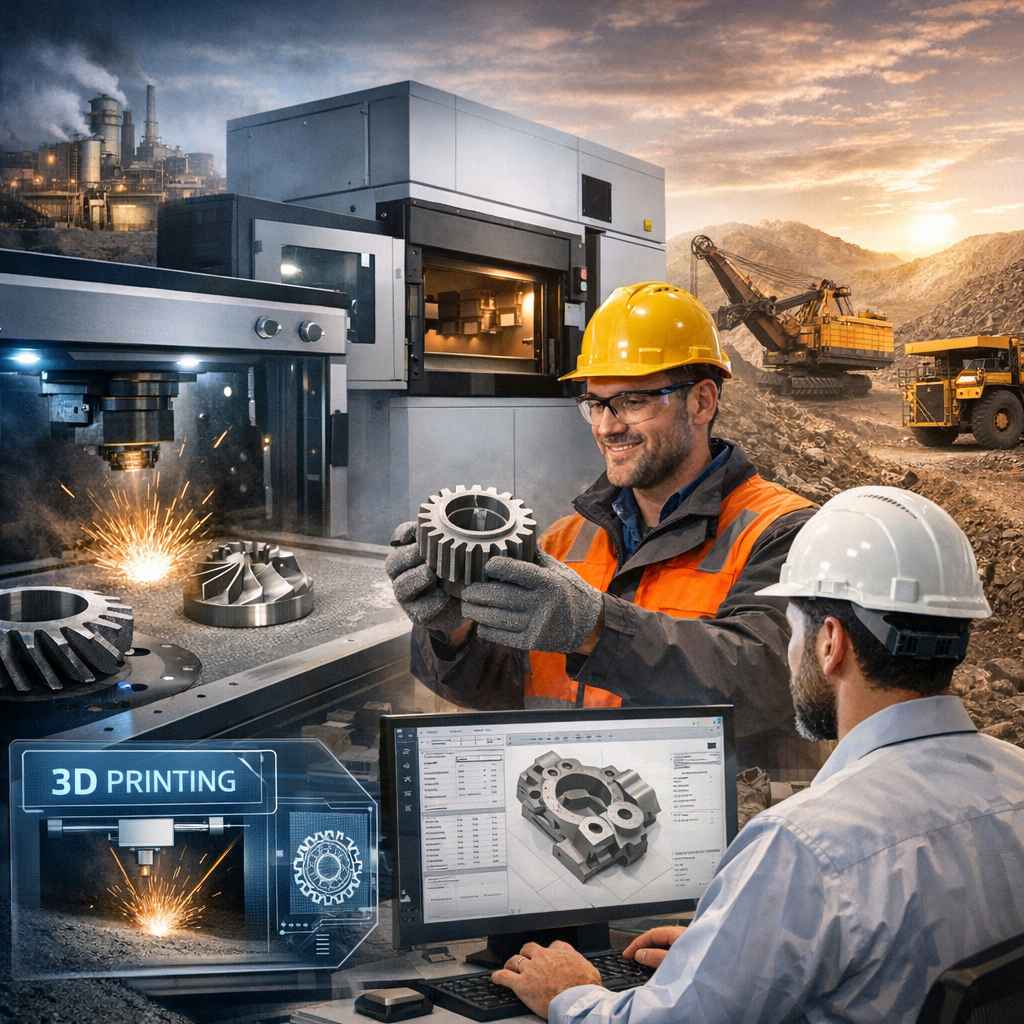
Rapid prototyping and on-demand manufacturing using metal additive manufacturing (AM) are transforming how mining companies approach spare parts production. By leveraging advanced technologies such as Laser Powder Bed Fusion (LPBF), mining operators can design, produce, and deploy critical components within days rather than weeks or months.
This article explores how rapid prototyping and on-demand manufacturing are redefining spare parts management in the mining industry—reducing downtime, lowering costs, and increasing operational resilience.
The Spare Parts Challenge in Mining Operations
Mining equipment operates continuously under extreme conditions, leading to inevitable wear, fatigue, and failure of critical components. Common challenges include:
-
Long lead times for replacement parts
-
Obsolete or discontinued components for legacy equipment
-
High inventory and warehousing costs
-
Dependency on global supply chains
-
Unplanned downtime due to unexpected failures
Traditional manufacturing methods require tooling, molds, and complex machining processes, all of which increase production time and cost—especially for low-volume or customized parts.
What Is Rapid Prototyping in Metal Additive Manufacturing?
Rapid prototyping refers to the ability to quickly design and produce physical components directly from digital CAD models. In metal additive manufacturing, this process enables engineers to:
-
Design parts digitally
-
Print functional prototypes within days
-
Test fit, form, and performance
-
Iterate designs rapidly before final production
Unlike traditional prototyping, which can take weeks and require expensive tooling, metal AM allows for fast, cost-effective iteration with minimal material waste.
On-Demand Manufacturing: A Digital Spare Parts Strategy
On-demand manufacturing eliminates the need to store large physical inventories of spare parts. Instead, components are produced only when required, using digital inventories and localized manufacturing.
Key Advantages:
-
Reduced inventory and storage costs
-
Instant access to spare part designs
-
Faster response to equipment failure
-
Elimination of obsolete stock
-
Improved supply chain resilience
For mining companies operating in remote locations, on-demand manufacturing is a game-changing solution that ensures parts are available when and where they are needed.
How Metal 3D Printing Enables Rapid Spare Parts Production
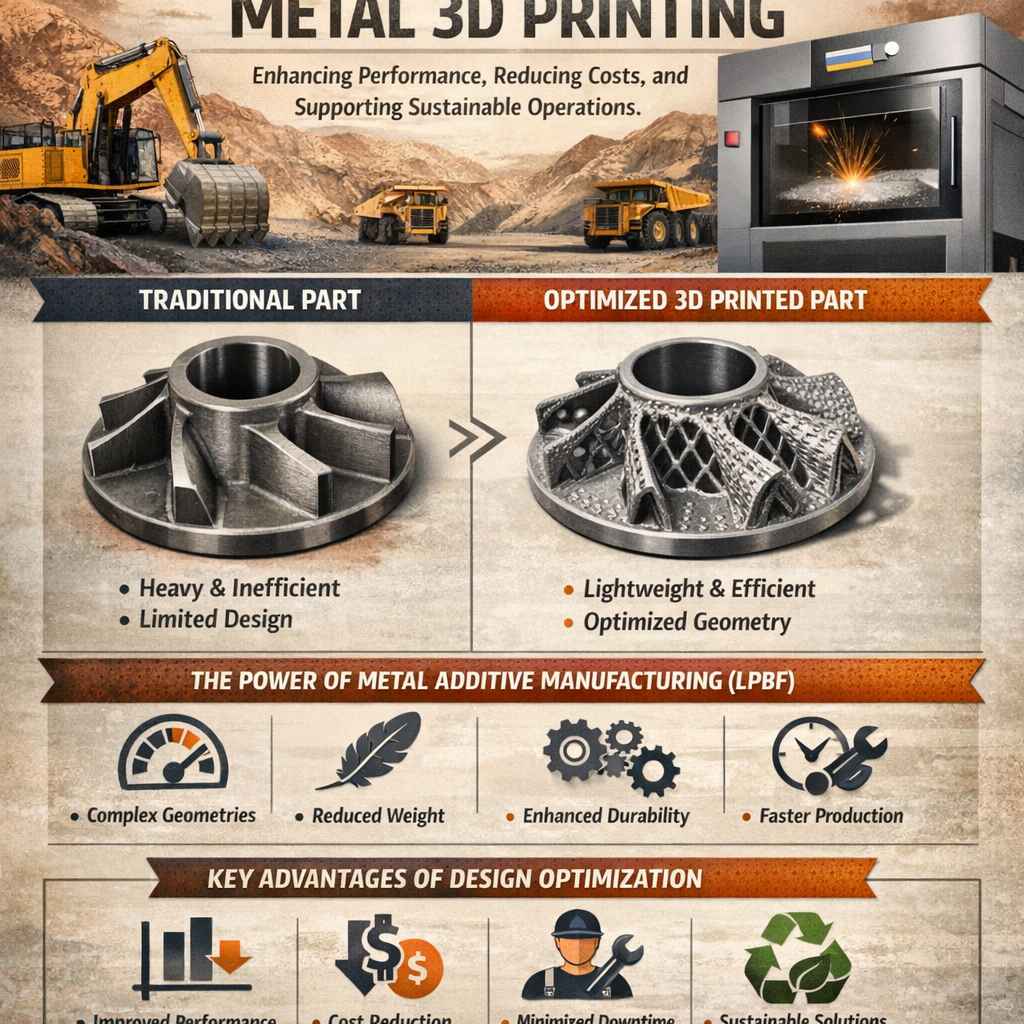
Metal additive manufacturing, particularly LPBF, enables spare parts production by building components layer by layer directly from metal powder. This approach offers several advantages:
-
No need for molds or tooling
-
Ability to produce complex geometries
-
High mechanical strength and durability
-
Consistent part quality
-
Compatibility with certified industrial metals
Mining spare parts such as pump housings, brackets, impellers, cutting tools, and connectors can be printed as single-piece components, reducing assembly and failure points.
Reducing Downtime with Local Manufacturing
One of the greatest benefits of rapid prototyping and on-demand manufacturing is downtime reduction. Instead of waiting weeks for parts to be shipped from overseas suppliers, mining companies can:
-
Scan or reverse-engineer damaged components
-
Optimize the design for additive manufacturing
-
Print and post-process parts locally
-
Install components within days
This capability dramatically reduces production interruptions and allows operations to resume faster.
Reverse Engineering and Legacy Equipment Support
Many mining operations rely on legacy equipment for which original spare parts are no longer available. Metal AM combined with 3D scanning enables reverse engineering of worn or damaged components.
The process typically involves:
-
3D scanning the existing part
-
Creating a digital CAD model
-
Optimizing the design for AM
-
Printing and validating the new component
This approach not only restores functionality but often improves performance and durability compared to the original part.
Material Selection for Mining Spare Parts
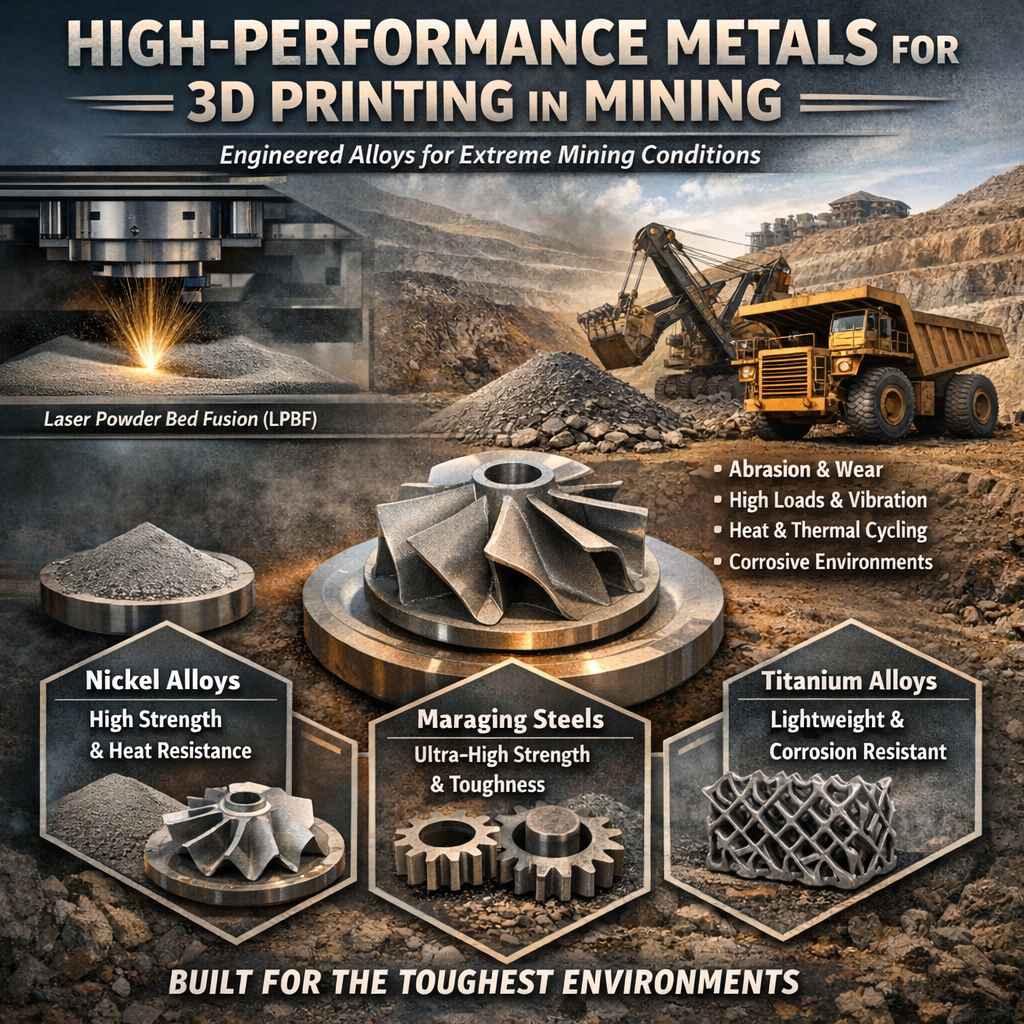
Material performance is critical for spare parts used in mining environments. Common materials used in metal AM include:
-
Stainless Steel 316L for corrosion resistance
-
Inconel 718 for high-temperature and high-stress components
-
Titanium alloys for lightweight, high-strength applications
-
Maraging steel for wear resistance and toughness
Certified metal powders ensure consistent quality, repeatability, and compliance with industrial standards.
Engineering Optimization for Functional Prototypes
Rapid prototyping is not just about speed—it’s about performance. Engineering teams use advanced simulation tools such as Finite Element Analysis (FEA) and Computational Fluid Dynamics (CFD) to optimize parts before printing.
This enables:
-
Identification of stress concentrations
-
Reduction of unnecessary material
-
Improved strength-to-weight ratios
-
Enhanced wear and fatigue resistance
As a result, spare parts produced via AM often outperform traditionally manufactured equivalents.
Cost Efficiency and Waste Reduction
Traditional spare parts manufacturing often results in high material waste due to subtractive machining processes. Metal AM, by contrast, uses only the material required for each build.
Key cost benefits include:
-
Reduced material waste
-
Lower tooling and setup costs
-
Minimal inventory holding expenses
-
Reduced transportation and logistics costs
For mining companies, these savings directly impact operational profitability.
Sustainability and Supply Chain Resilience
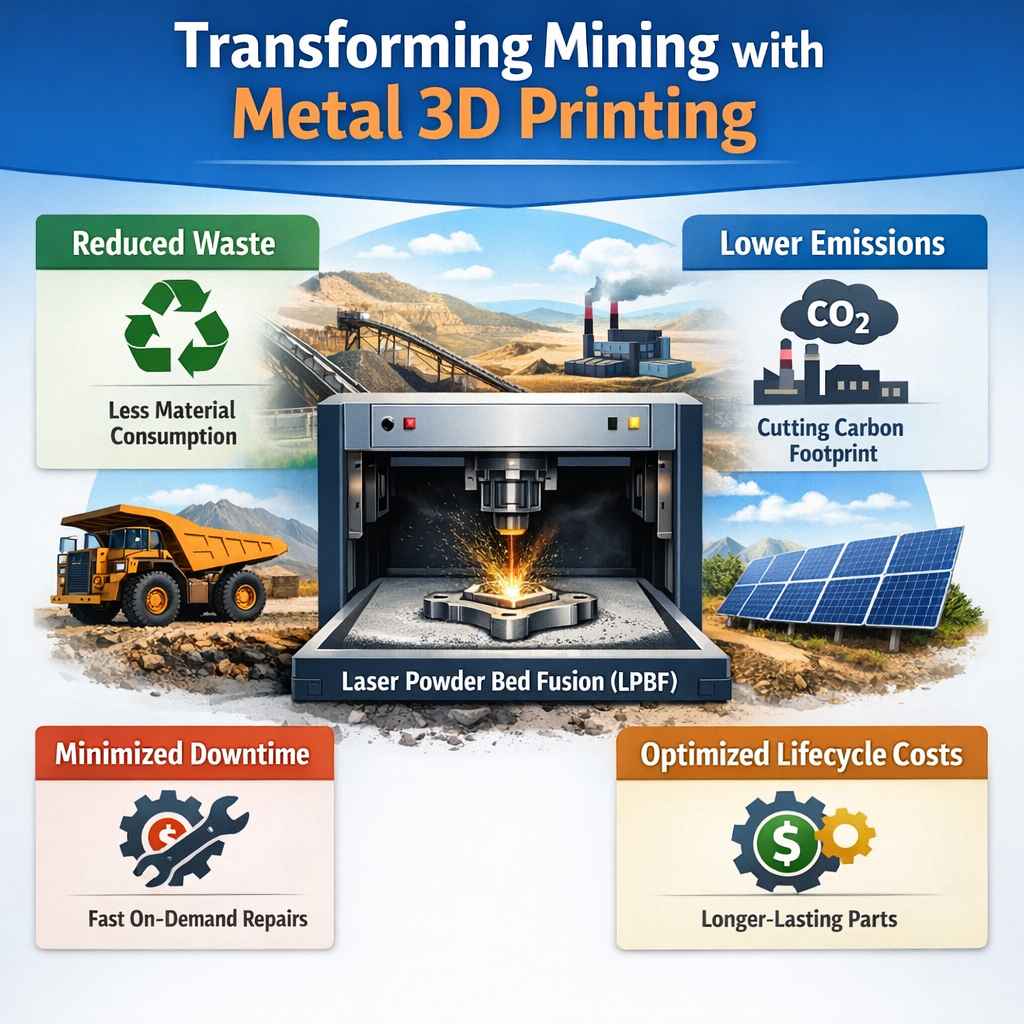
On-demand manufacturing supports more sustainable mining operations by reducing waste, emissions, and transportation needs. Localized production minimizes the carbon footprint associated with global supply chains.
Additionally, digital inventories and distributed manufacturing networks increase resilience against supply disruptions—an increasingly important factor in today’s global market.
Real-World Mining Applications
Mining companies are already using rapid prototyping and on-demand manufacturing for:
-
Emergency replacement parts
-
Custom tooling and fixtures
-
Pump and valve components
-
Wear-resistant inserts and housings
In multiple cases, spare parts that traditionally took months to source were delivered within a week—preventing costly downtime and operational delays.
The Future of Spare Parts Manufacturing in Mining
As metal additive manufacturing continues to mature, rapid prototyping and on-demand production will become standard practice in the mining industry. Advances in materials, process control, and digital workflows will further enhance reliability, speed, and scalability.
Mining companies that adopt these technologies early gain a significant competitive advantage through improved efficiency, reduced downtime, and increased operational flexibility.
Conclusion
Rapid prototyping and on-demand manufacturing using metal additive manufacturing are transforming spare parts production in the mining industry. By enabling faster response times, reduced inventory costs, and improved part performance, these technologies address some of the most critical challenges faced by mining operations.
For companies seeking to improve reliability, sustainability, and cost efficiency, metal AM offers a powerful solution—turning spare parts management into a strategic advantage.