Real-World Success: Metal 3D Printing in the Aerospace Industry
Introduction
The aerospace industry demands high-performance, lightweight, and complex components that can withstand extreme conditions. Traditional manufacturing methods often struggle to meet these requirements efficiently. Metal 3D printing, particularly Powder Bed Fusion (PBF), has emerged as a game-changing technology, enabling aerospace companies to innovate while reducing cost, weight, and production time. This article explores real-world applications and success stories of metal additive manufacturing in aerospace.
1. Reducing Weight Without Compromising Strength
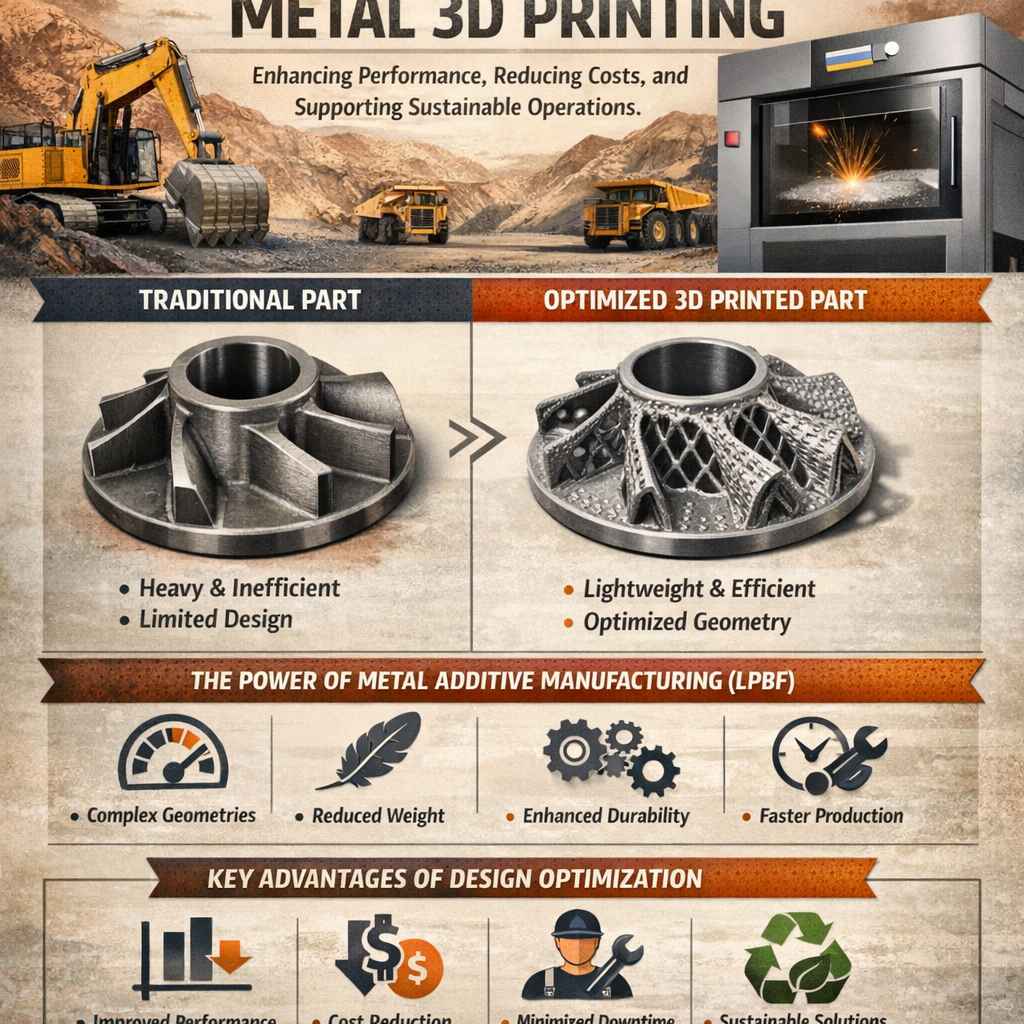
Weight reduction is critical in aerospace to improve fuel efficiency and performance. Powder Bed Fusion allows engineers to create lightweight lattice structures and hollow components that maintain mechanical strength.
For example, turbine blades, brackets, and structural components can be redesigned with topology optimization to minimize weight while keeping the required durability and fatigue resistance. This capability is a significant advantage over traditional machining or casting methods.
2. Rapid Prototyping and Accelerated Development
Metal 3D printing enables rapid prototyping, allowing aerospace engineers to test multiple iterations of a part quickly. In the past, creating prototypes could take weeks or months due to tooling and machining. With PBF, prototypes can be printed in days, significantly speeding up the design validation and certification process.
Companies like GE Aviation and Airbus have leveraged this to reduce development cycles and accelerate the launch of new engines and aircraft components.
3. Complex Geometries for Optimal Performance
Aerospace components often require intricate internal channels, cooling pathways, and optimized airflow designs. Traditional manufacturing limits these possibilities, but metal 3D printing enables engineers to fabricate geometries that were previously impossible.
For instance, fuel nozzles and heat exchangers produced using PBF offer superior efficiency due to precise control over internal structures. These parts often outperform conventionally manufactured counterparts in both weight and functionality.
4. Cost Savings in Low-Volume Production
Many aerospace components are produced in low volumes, where conventional tooling costs are prohibitively high. Metal 3D printing eliminates the need for molds and tooling, making small-batch production cost-effective.
This allows aerospace companies to manufacture custom or specialized parts without significant upfront investment, enabling more innovation and flexibility in design.
5. Material Performance and Certification
Aerospace components must meet strict material and performance standards. Metal powders used in PBF are carefully selected and certified to ensure consistent mechanical properties, including tensile strength, hardness, and thermal resistance.
Through precise control of the printing process and post-processing treatments, metal 3D printed parts can meet or exceed industry certification standards, ensuring reliability and safety.
6. Real-World Case Studies
-
GE Aviation: Using metal 3D printing, GE reduced the number of parts in a fuel nozzle from 20 to 1, cutting weight by 25% and improving performance.
-
Airbus: Metal additive manufacturing enables the production of lightweight brackets and structural components for the A350 aircraft, reducing assembly complexity and weight.
-
NASA: Metal 3D printing is used for critical engine components and experimental spacecraft parts, showcasing reliability in extreme conditions.
Conclusion
Metal 3D printing has transformed the aerospace industry by enabling the production of lightweight, high-performance, and complex components efficiently. Powder Bed Fusion allows aerospace engineers to innovate, reduce costs, and accelerate development cycles while meeting stringent certification requirements.
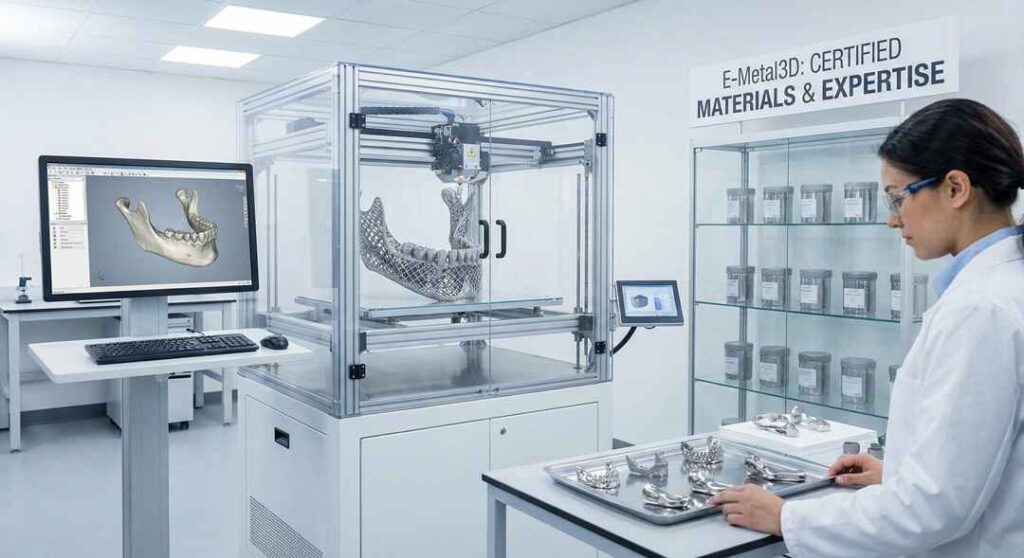
At E-Metal3D, we provide expert metal additive manufacturing solutions, supporting aerospace companies with high-quality Powder Bed Fusion systems, certified metal powders, and engineering guidance. Our experience helps clients achieve real-world success in aerospace projects and harness the full potential of metal 3D printing technology.