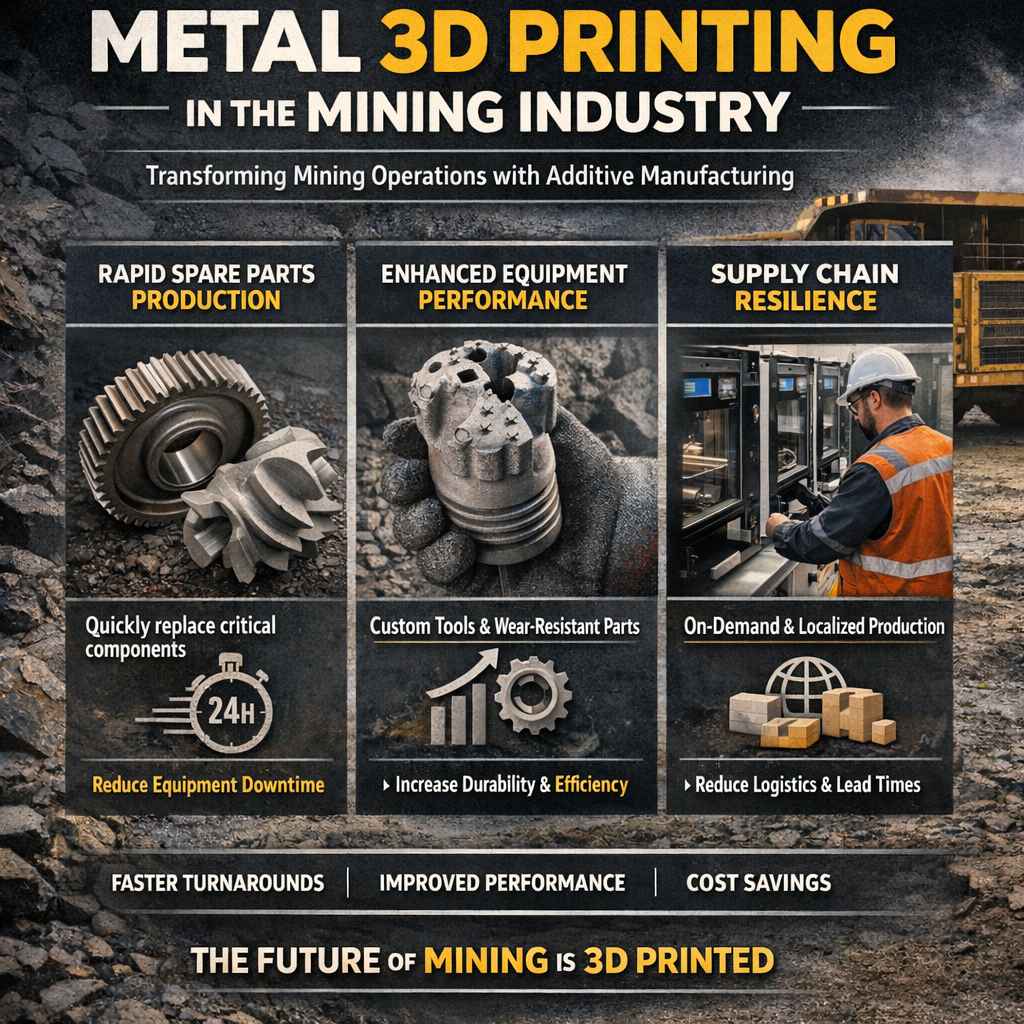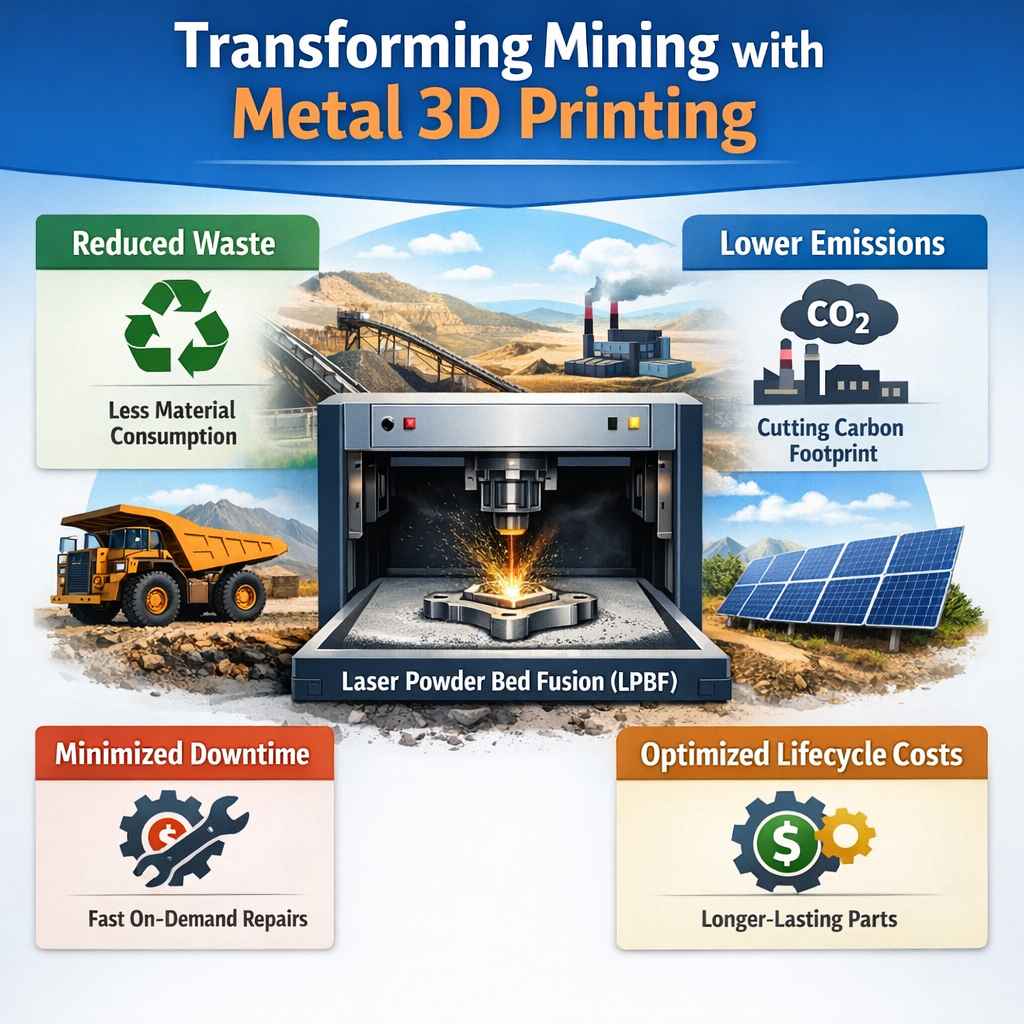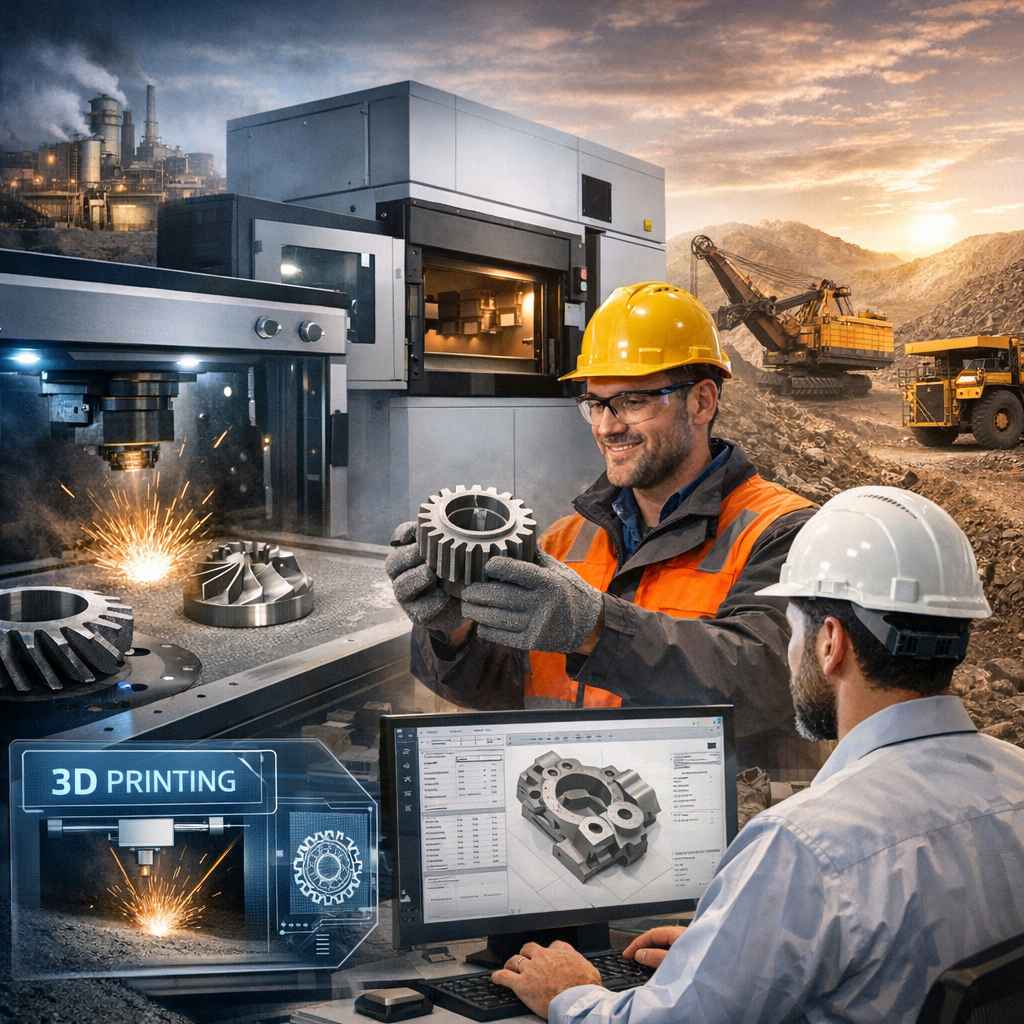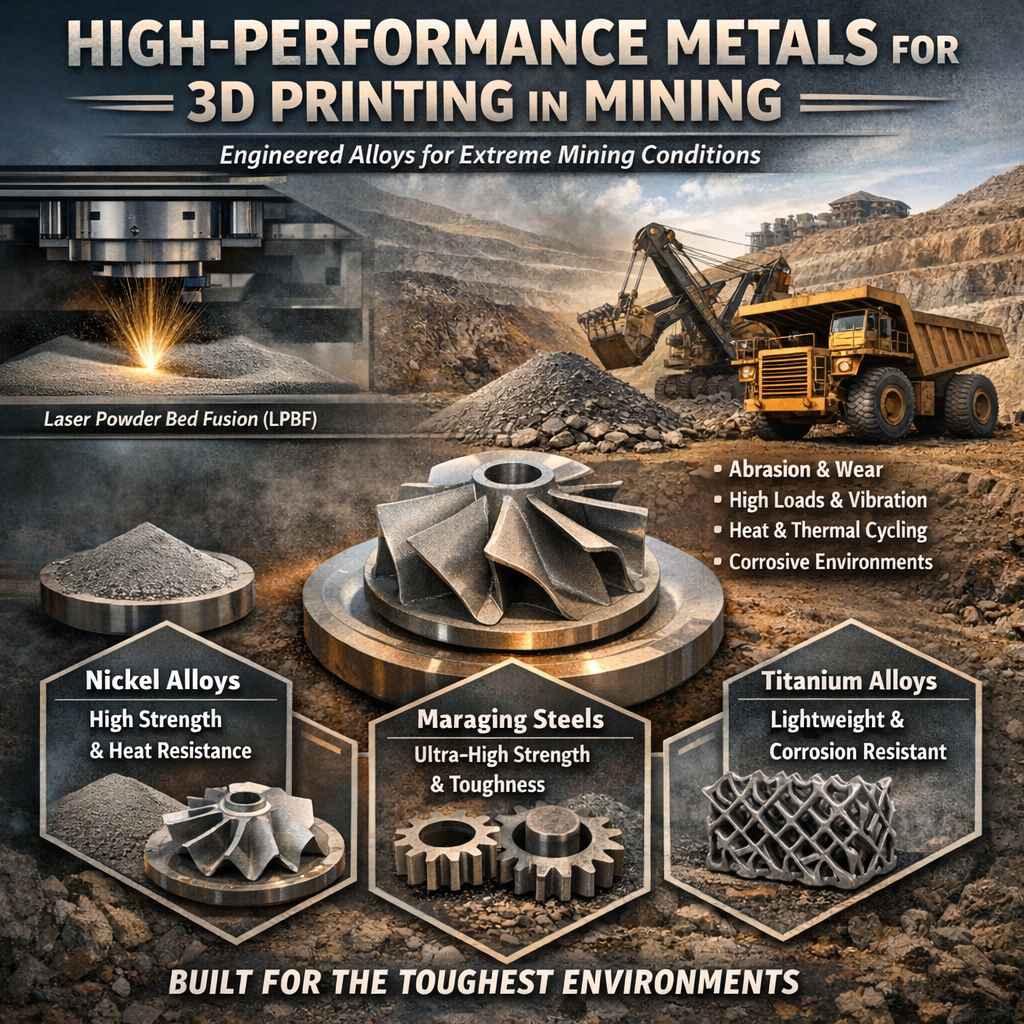
Introduction
Metal additive manufacturing (AM), especially Laser Powder Bed Fusion (LPBF), has reshaped the way industries design and produce high-performance components. At the heart of every successful AM application lies one critical element: the material. The right metal powder determines mechanical performance, durability, corrosion resistance, and overall suitability for industrial environments.
At E-Metal3D, we supply certified, high-purity metal powders engineered specifically for advanced manufacturing. Among the most widely used materials in modern AM—across aerospace, medical, automotive, mining, and energy—are:
-
Ti6Al4V (Titanium Alloy – Grade 5 / Ti64)
-
316L Stainless Steel
-
Inconel Superalloys (625 & 718)
This article breaks down each material, its properties, use-cases, advantages, and why AM manufacturers across Australia rely on these alloys for performance-critical applications.
1. Ti6Al4V (Ti64) – The Titanium Alloy That Dominates AM
Overview
Ti6Al4V, often referred to as Ti64, is one of the most popular materials in metal 3D printing. Known for its exceptional strength-to-weight ratio, biocompatibility, and corrosion resistance, it has become essential in aerospace and medical device manufacturing.
Key Material Properties
-
High strength-to-weight ratio
-
Natural corrosion resistance
-
Excellent biocompatibility (ISO 10993 compliant)
-
Good fatigue performance
-
High temperature resistance (up to ~400°C)
Why Ti64 Is Ideal for Additive Manufacturing
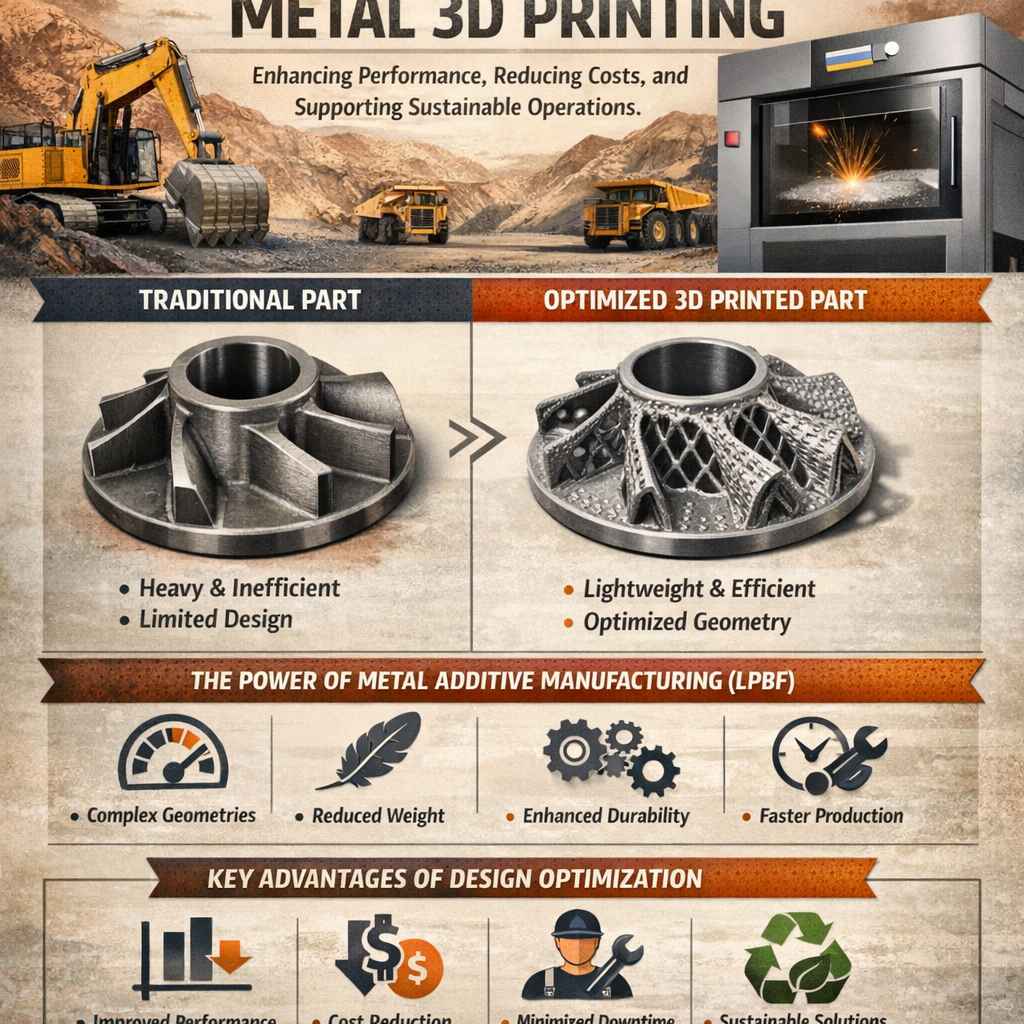
LPBF allows complex titanium components to be printed with thin walls, internal channels, and lattice structures. These lightweight geometries are impossible or costly with machining.
Industrial Applications
Aerospace
-
Airframes
-
Fuel system components
-
Engine brackets
-
Satellite parts
Medical
-
Orthopaedic implants
-
Dental implants
-
Patient-specific surgical tools
Automotive & Motorsports
-
Lightweight brackets
-
Heat-resistant components
Why Manufacturers Choose Ti64 from E-Metal3D
-
Certified powder with controlled particle size distribution
-
High flowability and consistent melting behaviour
-
Suitable for both prototyping and serial production
2. Stainless Steel 316L – The Workhorse of Industrial Metal AM
Overview
316L is a versatile stainless steel known for its ductility, corrosion resistance, and excellent weldability. Its mechanical reliability and affordability make it one of the most frequently used alloys in AM.
Key Material Properties
-
High corrosion resistance, including saltwater and chemicals
-
High ductility and toughness
-
Excellent weldability and post-processing compatibility
-
Non-magnetic properties
Why 316L Works Perfectly with LPBF
316L prints with excellent density and minimal defects. The alloy has a wide processing window, meaning it prints consistently across different part sizes and geometries.
Industrial Applications
Food & Pharmaceutical Manufacturing
-
Valves
-
Nozzles
-
Custom machinery parts
Mining & Industrial Equipment
-
Wear-resistant tools
-
Hydraulic components
Energy Sector
-
Custom manifolds
-
Pump impellers
General Manufacturing
-
Jigs & fixtures
-
Prototypes & functional parts
Why Manufacturers Choose 316L from E-Metal3D
-
Exceptional part density >99.5%
-
Smooth surface finish after post-processing
-
Cost-effective for small and medium batch production
3. Inconel (625 & 718) – High-Temperature Superalloys for Extreme Environments
Overview
Inconel, a nickel-based superalloy, is engineered for extreme heat, pressure, and corrosive environments. It retains strength even at temperatures exceeding 700°C, making it indispensable for energy, aerospace, and oil & gas.
Key Material Properties
-
Outstanding high-temperature strength
-
Creep resistance
-
Oxidation and corrosion resistance
-
Superior fatigue performance
-
High dimensional stability
Why Inconel is Perfect for AM
Traditional machining of Inconel is time-consuming and tool-intensive. LPBF solves this by producing complex geometries with reduced waste and faster turnaround.
Industrial Applications
Aerospace
-
Turbine blades
-
Exhaust systems
-
Heat shields
Oil & Gas
-
Downhole tools
-
High-pressure valves
-
Corrosion-resistant components
Power Generation
-
Heat exchangers
-
Combustion system parts
Why Manufacturers Choose Inconel from E-Metal3D
-
Premium powder handled under controlled atmospheres
-
Consistent mechanical properties across builds
-
Ideal for high-stress, high-temperature applications
4. How to Select the Right Metal for Your AM Application
Choosing the right alloy depends on performance, environment, and production goals. Here’s a simplified breakdown:
| Requirement | Best Material |
|---|---|
| Lightweight + high strength | Ti6Al4V |
| Corrosion resistance + cost efficiency | 316L |
| Extreme heat & pressure | Inconel |
| Biocompatibility | Ti64 |
| General industrial usage | 316L |
| High fatigue performance | Ti64 or Inconel |
At E-Metal3D, our engineering team uses FEA, CFD, and DFAM optimization to help companies choose and design parts around the ideal metal powder.
5. Why Certified Metal Powders Matter
Metal AM performance strongly depends on powder quality. Low-grade powders cause defects, cracking, porosity, and inconsistent strength.
E-Metal3D provides:
-
Certified powders with full traceability
-
Controlled particle size distribution (PSD)
-
Low oxygen content
-
Recyclable & cost-efficient powder handling
-
Compatibility with all major LPBF systems
This ensures repeatability, reliability, and industrial performance for every build.
Conclusion
Ti64, 316L, and Inconel are considered the core industrial metals used in additive manufacturing today. Their unique characteristics—lightweight strength, corrosion resistance, and high-temperature durability—make them suitable for demanding applications across aerospace, manufacturing, energy, medical, and mining.
With over two decades of engineering expertise, E-Metal3D supports Australian manufacturers by supplying high-quality certified metal powders, along with engineering guidance and production support. Whether you’re improving performance, reducing lead time, or enabling new product innovations, metal AM materials are the foundation of modern manufacturing.