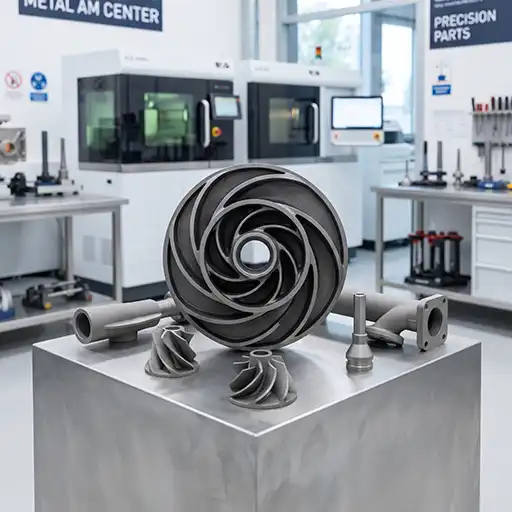
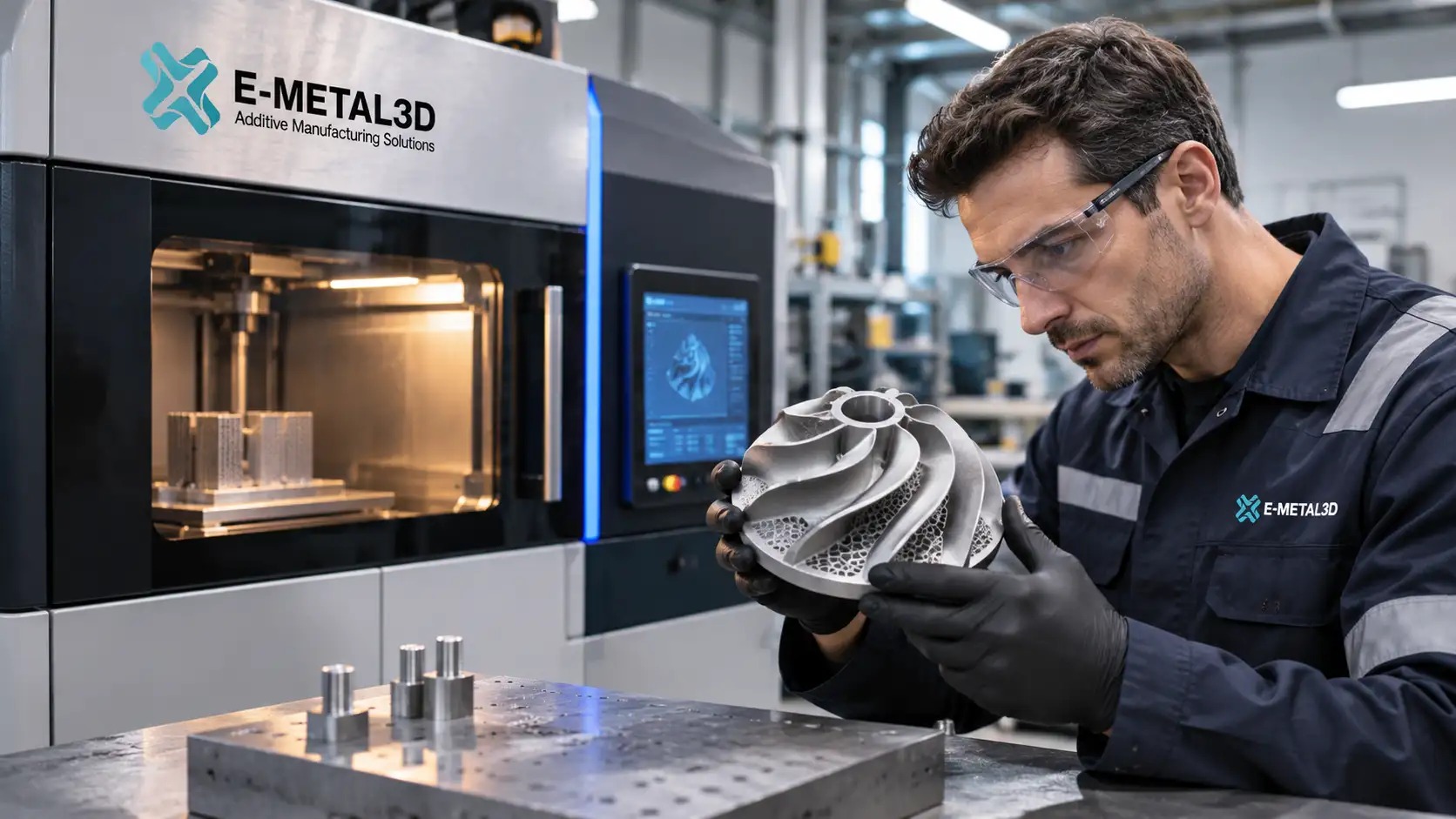
Choosing the right stainless steel for metal additive manufacturing is not simply a question of selecting the strongest or most corrosion-resistant alloy. For industrial components, the decision affects manufacturing feasibility, mechanical performance, post-processing, inspection requirements and long-term reliability.
Two important materials used in stainless steel 3D printing in Australia are 316L and 17-4PH. Both can be manufactured using Laser Powder Bed Fusion (LPBF), but their metallurgical behaviour and engineering applications are significantly different.
316L is an austenitic stainless steel commonly selected for corrosion resistance and ductility. In contrast, 17-4PH is a precipitation-hardening stainless steel that can achieve substantially higher strength through appropriate thermal processing.
For Australian manufacturers, mining operators and engineering companies, understanding these differences is essential when evaluating complex metal components, specialised tooling, replacement parts and low-volume production.
This guide compares 316L and 17-4PH from an engineering perspective, focusing on the properties and manufacturing decisions that matter for real industrial applications.
316L vs 17-4PH: Quick Comparison
| Engineering Factor | Stainless Steel 316L | Stainless Steel 17-4PH |
|---|---|---|
| Metallurgical family | Austenitic stainless steel | Precipitation-hardening stainless steel |
| Primary advantage | Corrosion resistance and ductility | High strength and hardness after suitable heat treatment |
| Strengthening mechanism | Primarily cold work; LPBF microstructure also affects properties | Precipitation hardening through ageing |
| Corrosion behaviour | Generally preferable for many chloride-containing environments, subject to conditions | Good corrosion resistance, but not equivalent to 316L in all environments |
| Heat treatment | Stress relief or other treatments as specified; not precipitation hardened | Solution treatment and ageing may be required to obtain the specified condition |
| Typical applications | Fluid-handling parts, manifolds, fittings and corrosion-resistant components | High-strength brackets, mechanical components, tooling and selected wear-loaded parts |
| LPBF considerations | Process parameters, residual stress, surface condition and porosity | Process parameters, phase balance, heat-treatment response and dimensional change |
| Best selection criterion | Environmental resistance and ductility | Strength and hardness requirements |
Important: This comparison is qualitative. Final properties depend on the LPBF machine, powder, processing parameters, build orientation, heat treatment and testing conditions.
What Is Stainless Steel 316L in Metal 3D Printing?
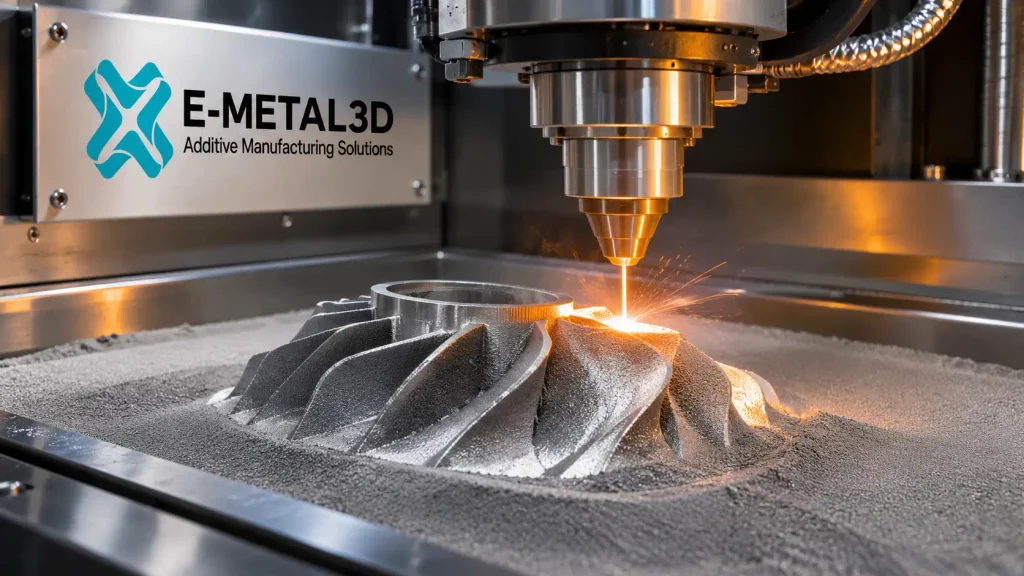
Stainless Steel 316L is a low-carbon, molybdenum-containing austenitic stainless steel.
Its chemistry and microstructure make it an established material for applications requiring a useful combination of corrosion resistance, ductility and general-purpose engineering performance.
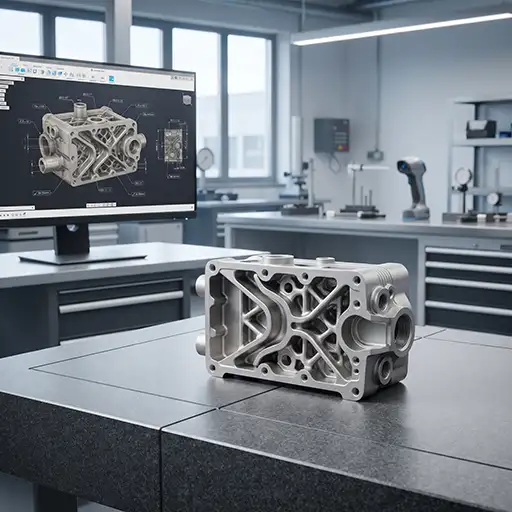
In metal additive manufacturing, 316L is frequently used for complex components where conventional machining would require multiple operations or where internal geometry creates manufacturing challenges.
Typical applications include:
- Pump and valve components
- Fluid distribution manifolds
- Industrial fittings and connectors
- Corrosion-resistant brackets
- Functional prototypes
- Specialised replacement parts
- Low-volume industrial components
Why 316L Is Popular for LPBF
316L is a well-established LPBF material with extensive industrial experience and published process data.
It is particularly relevant when engineers want to combine stainless steel’s corrosion resistance with additive manufacturing’s geometric flexibility.
For example, a conventional manifold assembled from several machined components may be redesigned as a more integrated structure.
This can potentially reduce assembly operations and create internal passages that would otherwise require drilling, joining or multiple manufacturing steps.
However, complex geometry does not automatically improve performance.
Internal channels must still be evaluated for powder removal, surface condition, fluid-flow requirements and inspection accessibility.
Manufacturers should therefore assess both the material and the design using appropriate Design for Metal Additive Manufacturing principles.
What Is 17-4PH Stainless Steel?
17-4PH is a precipitation-hardening stainless steel, commonly associated with UNS S17400.
Its name reflects its approximate chromium and nickel content, while copper-containing precipitates play an important role in strengthening the alloy during ageing.
Unlike 316L, which is primarily selected for its corrosion resistance and ductility, 17-4PH is often considered when high strength and hardness are important engineering requirements.
Potential applications include:
- High-strength mechanical brackets
- Specialised industrial tooling
- Actuator and equipment components
- Selected pump and valve components
- Mechanical fixtures
- Precision engineering parts
- Low-volume replacement components
Why Heat Treatment Matters for 17-4PH
The final properties of 17-4PH depend strongly on its microstructure and thermal history.
Appropriate solution treatment and ageing can produce substantial increases in strength through precipitation hardening.
However, a conventional heat-treatment recipe cannot always be transferred directly from wrought material to LPBF components without validation.
The additive manufacturing process may produce different phase distributions and microstructures.
Research from the National Institute of Standards and Technology (NIST) demonstrates why post-build thermal processing is important for achieving more uniform and reproducible microstructures in additively manufactured 17-4PH.
This means engineers should specify the required final material condition rather than simply requesting a component manufactured from 17-4PH powder.
316L vs 17-4PH: Mechanical Strength and Ductility
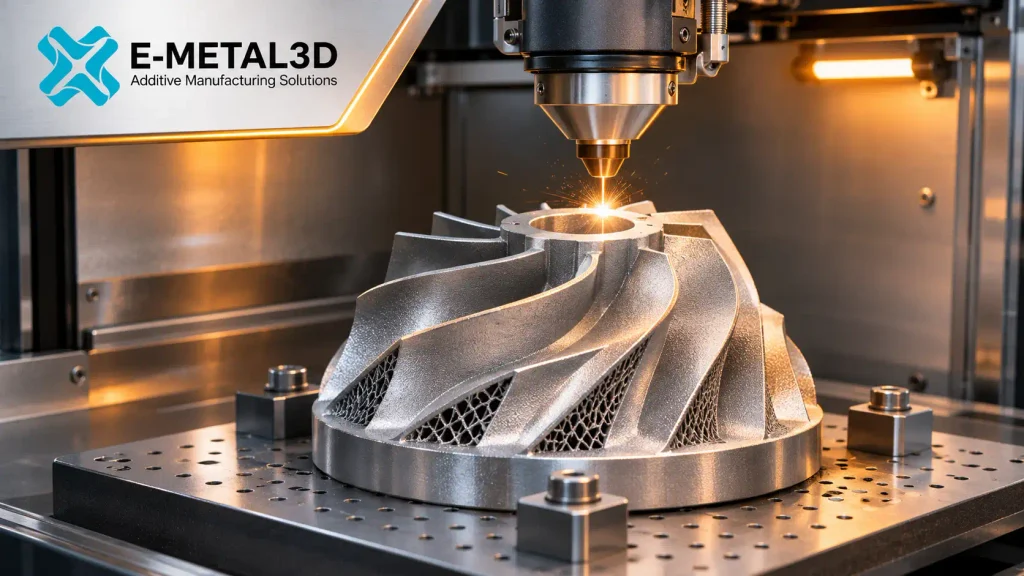
Mechanical performance is one of the clearest differences between these alloys.
17-4PH can achieve substantially higher yield and tensile strength after suitable heat treatment.
316L, meanwhile, is commonly valued for its ductility and toughness.
However, material strength should not be reduced to a single number.
A useful engineering assessment considers:
- Yield strength
- Ultimate tensile strength
- Elongation at failure
- Hardness
- Fatigue performance
- Fracture behaviour
- Operating temperature
- Surface condition
- Manufacturing defects
Why Published Strength Values Can Be Misleading
Metal additive manufacturing data sheets often report mechanical properties measured under specific conditions.
These may include a particular printer, laser parameter set, layer thickness, powder specification, build orientation and heat-treatment schedule.
For example, EOS publishes material and process information for LPBF stainless steels, including 316L and 17-4PH.
Its published 17-4PH process data show how heat-treated material can achieve high strength under defined manufacturing conditions.
These values should not be treated as universal properties of every 17-4PH printed component.
Similarly, LPBF 316L may exhibit properties different from conventional annealed wrought 316L because of its manufacturing-induced microstructure.
Engineering takeaway: Compare the required properties of the finished part, not just nominal alloy names or unrelated data-sheet values.
Corrosion Resistance: Is 316L Better Than 17-4PH?
For many industrial applications, corrosion behaviour is more important than maximum tensile strength.
316L is generally attractive where resistance to corrosive environments is a major design requirement.
Its molybdenum content contributes to improved resistance to certain forms of localised corrosion compared with some other stainless steel grades.
17-4PH also offers useful corrosion resistance, but it should not be assumed to perform identically to 316L.
The correct choice depends on factors such as:
- Chloride concentration
- Temperature
- Fluid chemistry
- pH
- Surface condition
- Crevice geometry
- Mechanical stress
- Exposure duration
Chloride Exposure and Industrial Components
Components operating in marine, chemical-processing or other chloride-containing environments may face pitting and crevice-corrosion risks.
316L is often a more appropriate starting candidate than 17-4PH when corrosion resistance is the primary requirement.
However, neither alloy is immune to chloride-related corrosion.
For severe conditions, alternative materials or additional engineering controls may be required.
Does LPBF Change Corrosion Behaviour?
Yes, potentially.
LPBF processing can influence microstructure, surface condition, porosity and the distribution of relevant phases.
Post-processing can also affect the final corrosion response.
NIST research examining the corrosion resistance of additively manufactured 17-4 stainless steel highlights the importance of post-build microstructure and processing history.
For demanding applications, corrosion performance should be evaluated using relevant material data and, where necessary, application-specific testing.
Heat Treatment: A Critical Difference Between the Two Alloys
Heat treatment is not simply a finishing operation.
It can determine whether the manufactured component achieves the required mechanical and dimensional characteristics.
Heat Treatment of 316L
316L is not strengthened through the same precipitation-hardening mechanism as 17-4PH.
Depending on the application, LPBF 316L components may undergo stress relief or other thermal treatments.
These processes can influence residual stresses, microstructure and mechanical properties.
The selected treatment should be appropriate for the material specification and component requirements.
Heat Treatment of 17-4PH
17-4PH is specifically designed to respond to precipitation-hardening treatments.
Commonly referenced conditions include H900 and other ageing conditions, but the appropriate treatment must be determined from the applicable material and manufacturing specification.
Different treatments can produce different combinations of strength, hardness, toughness and dimensional response.
For LPBF components, heat treatment should be qualified for the actual manufacturing route.
Dimensional Changes After Heat Treatment
Thermal processing can cause dimensional changes.
This is particularly important for components with:
- Precision bores
- Mounting interfaces
- Sealing surfaces
- Thin walls
- Complex internal geometries
- Tight assembly tolerances
Machining allowances and final inspection requirements should therefore be considered before printing.
Our guide to preparing CAD files for metal 3D printing explains how manufacturing constraints should be addressed during design preparation.
How LPBF Affects 316L and 17-4PH
Laser Powder Bed Fusion creates components through repeated melting and solidification of thin metal powder layers.
This manufacturing process differs substantially from casting, forging or conventional machining.
The resulting material properties depend on more than chemical composition.
Important process variables include:
- Laser energy input
- Scan strategy
- Layer thickness
- Powder characteristics
- Build orientation
- Thermal history
- Shielding atmosphere
- Support design
- Post-processing
Build Orientation
Build orientation influences support requirements, thermal distortion, surface condition and potentially mechanical performance.
Critical load paths should be considered when selecting orientation.
For fatigue-sensitive components, surface condition and internal defects may be particularly important.
Porosity and Internal Defects
Both alloys can exhibit manufacturing-related defects if processing conditions are unsuitable.
Potential concerns include porosity, lack-of-fusion regions and surface-connected discontinuities.
The significance of these defects depends on their size, distribution, location and the component’s operating conditions.
For critical applications, inspection and acceptance criteria should be established before production.
Powder Quality
Powder characteristics also influence process consistency.
Particle size distribution, morphology, chemical composition, contamination and powder handling should be controlled according to the manufacturing requirements.
A nominal alloy designation alone does not guarantee that a particular powder batch is suitable for a qualified LPBF process.
Stainless Steel 3D Printing for Australian Mining Applications
Mining equipment often operates under demanding mechanical and environmental conditions.
Components may experience vibration, impact, abrasion, moisture and exposure to corrosive substances.
Both 316L and 17-4PH may be relevant to selected applications, but neither should be presented as the universal solution for mining equipment.
When 316L May Be Suitable
316L may be considered for components where corrosion resistance, fluid handling and ductility are important.
Examples include selected manifolds, fittings and corrosion-resistant equipment components.
When 17-4PH May Be Suitable
17-4PH may be considered for components requiring higher strength or hardness, provided the corrosion environment and other performance requirements are compatible with the alloy.
However, high hardness does not automatically establish adequate abrasion resistance or fatigue life.
Material selection must reflect the actual failure mechanisms.
For more information about industrial applications, explore E-Metal3D’s metal additive manufacturing solutions for mining.
Choosing Stainless Steel for Oil and Gas Components
Oil and gas equipment may involve pressure, corrosive fluids, elevated temperatures and repeated mechanical loading.
These conditions require careful material selection and qualification.
316L may be relevant for selected corrosion-resistant fluid-handling components.
17-4PH may be considered where strength is important and the operating environment permits its use.
However, neither material should be selected solely because it is available for LPBF.
Pressure-containing components, sour-service environments and safety-critical applications may require specific design codes, corrosion assessments, inspection procedures and regulatory approvals.
The final decision must account for the applicable engineering standards.
Explore the broader applications of metal additive manufacturing in oil and gas.
Stainless Steel 3D Printing for Industrial Manufacturing
Australian manufacturers increasingly evaluate additive manufacturing for specialised components that are difficult or uneconomical to produce using conventional methods.
Potential applications include:
- Low-volume tooling
- Custom fixtures
- Complex manifolds
- Replacement parts
- Functional prototypes
- Specialised machine components
316L may be preferred when corrosion resistance and ductility are priorities.
17-4PH may be more appropriate where higher strength or hardness is required.
However, the material choice should be evaluated alongside the manufacturing method.
A simple component produced in high quantities may remain more economical to machine conventionally.
By contrast, a complex, low-volume component may justify LPBF when additive manufacturing reduces assembly complexity or enables otherwise impractical geometry.
Our article on metal 3D printing versus CNC machining provides a broader comparison of manufacturing routes.
For sector-specific applications, visit our industrial manufacturing solutions.
Which Alloy Is More Cost-Effective?
The cost of a stainless steel 3D printed component depends on more than powder price.
Relevant cost drivers include:
- Powder and material requirements
- Build time
- Component volume
- Support structures
- Machine utilisation
- Heat treatment
- Support removal
- CNC finishing
- Inspection and testing
- Production quantity
17-4PH may require additional thermal processing to achieve the specified high-strength condition.
316L may be attractive for applications where its corrosion resistance and ductility meet requirements without an equivalent precipitation-hardening treatment.
However, neither alloy is universally cheaper.
A high-strength component may justify 17-4PH if it meets a functional requirement that 316L cannot satisfy.
Conversely, using 17-4PH where 316L already meets the design requirements may introduce unnecessary manufacturing complexity.
For a more detailed breakdown, see what determines the cost of metal 3D printing.
A Practical Material Selection Checklist
Before specifying 316L or 17-4PH for a metal additive manufacturing project, engineers should answer the following questions.
- What loads will the component experience?
- Is corrosion resistance or mechanical strength the primary design driver?
- Will the part operate in a chloride-containing or chemically aggressive environment?
- Are fatigue, impact or wear important?
- What final heat-treated condition is required?
- Which dimensions and surfaces are critical?
- Will machining or surface finishing be necessary?
- What inspection and testing requirements apply?
- Is LPBF the most appropriate manufacturing process?
- What documentation and traceability are required?
These questions help prevent material selection from becoming disconnected from the actual engineering requirements.
Stainless Steel 3D Printing Services in Australia
Selecting between 316L and 17-4PH is only one part of a successful additive manufacturing project.
The component must also be assessed for manufacturability, build orientation, post-processing, dimensional requirements and operating conditions.
E-Metal3D supports Australian industrial projects through metal additive manufacturing and engineering-led design assessment.
Our metal 3D printing services in Australia identify both Stainless Steel 316L and Stainless Steel 17-4PH among the materials available for project evaluation.
For projects requiring design optimisation, reverse engineering or manufacturing feasibility assessment, explore our engineering solutions.
If your organisation is evaluating a complex stainless steel component, functional prototype or replacement part, contact E-Metal3D with your CAD model, material requirements, operating conditions and expected quantity.
An engineering assessment can help determine whether 316L, 17-4PH or another material is appropriate for the intended application.
Frequently Asked Questions
Is 316L or 17-4PH better for metal 3D printing?
Neither alloy is universally better. 316L is commonly selected for corrosion resistance and ductility, while 17-4PH is attractive when high strength and hardness are required. The correct choice depends on the component’s operating conditions and manufacturing requirements.
Is 17-4PH stronger than 316L?
Properly heat-treated 17-4PH can achieve substantially higher strength than 316L. However, comparisons should use the specified final material conditions and relevant test data rather than unrelated nominal values.
Is 316L more corrosion-resistant than 17-4PH?
316L is generally a stronger starting candidate for many corrosive environments, particularly where chloride exposure is relevant. Actual performance depends on temperature, fluid chemistry, surface condition and other factors.
Can 17-4PH be 3D printed using LPBF?
Yes. 17-4PH is an established LPBF material. However, achieving the required final mechanical properties depends on suitable processing and post-build thermal treatment.
Does 316L require heat treatment after 3D printing?
Not always. Stress relief or other treatments may be specified depending on the process, component geometry and application. Requirements should be determined from the manufacturing specification.
Can stainless steel 3D printed parts be used in mining?
Yes, for suitable applications. Material selection must account for corrosion, mechanical loading, wear, fatigue and the consequences of component failure.
Is 17-4PH suitable for marine environments?
It should not be assumed suitable for all marine conditions. Chloride exposure and the specific corrosion mechanisms must be evaluated. In some environments, 316L or another alloy may be more appropriate.
What files are needed for a stainless steel 3D printing quote?
A 3D CAD model, preferably STEP, is useful. Material requirements, dimensions, quantities, operating conditions, critical tolerances and required delivery time should also be provided where available.