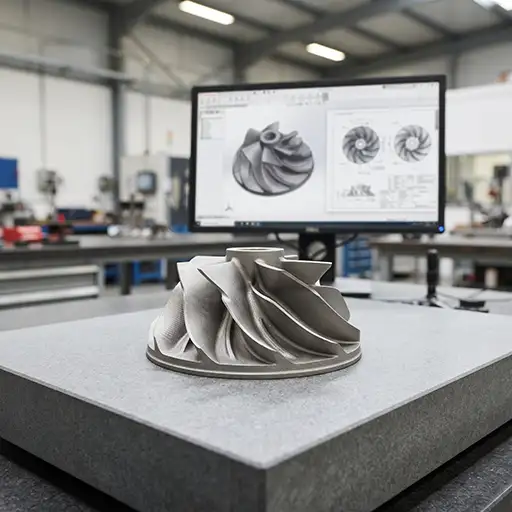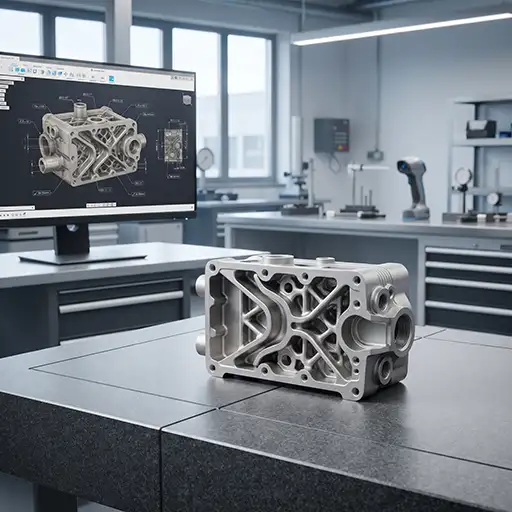
When a critical industrial component fails, the cost of replacement is rarely the only concern. For Australian manufacturers, mining operators and process plants, the more urgent question is often: how quickly can the equipment return to service?
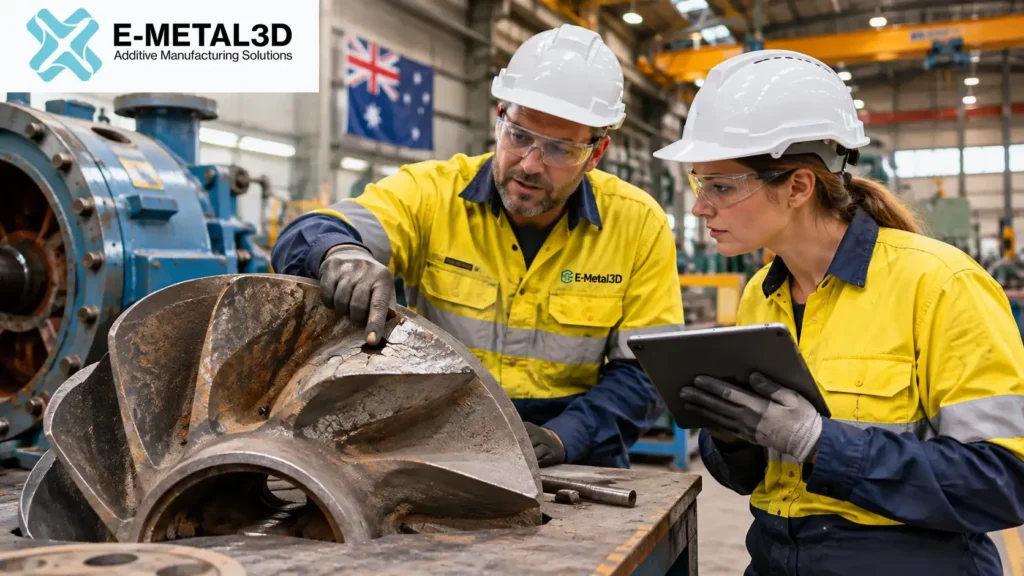
A damaged pump component, discontinued machine bracket or unavailable mechanical fitting can interrupt production while maintenance teams search for a replacement. Sometimes the original equipment manufacturer (OEM) can supply the part. In other cases, long lead times, obsolete designs or missing engineering drawings make conventional procurement difficult.
Reducing industrial equipment downtime in Australia requires more than finding a supplier. It involves selecting a replacement strategy that balances lead time, engineering risk, manufacturing cost and operational requirements.
This guide explains how maintenance and engineering teams can evaluate OEM replacement, reverse engineering, CNC machining and metal additive manufacturing when critical industrial spare parts are unavailable.
Why Industrial Equipment Downtime Becomes a Spare Parts Problem
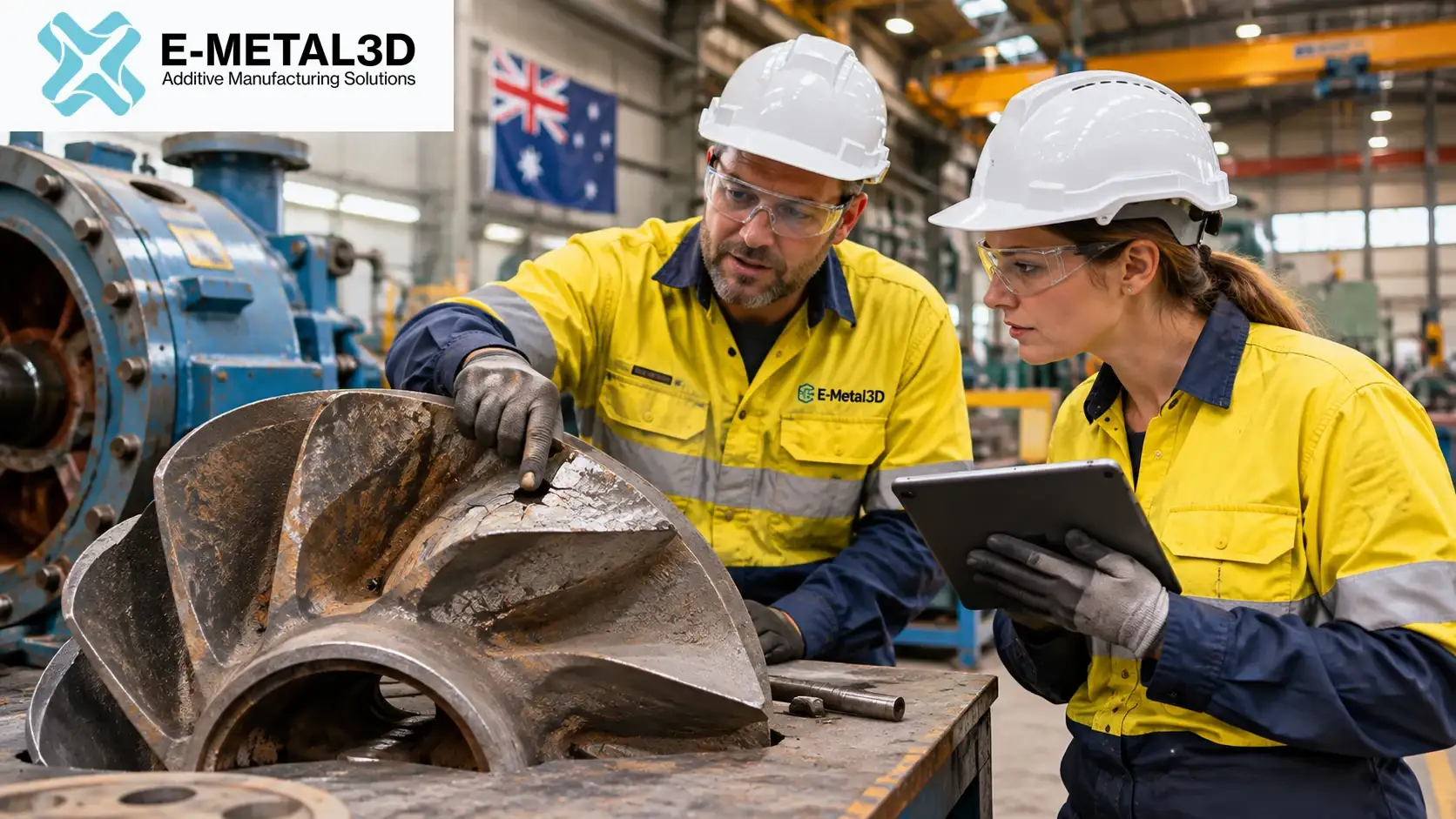
Equipment downtime can result from many factors, including mechanical failure, maintenance delays, operational errors and process interruptions.
However, spare-parts availability becomes particularly important when a failed component cannot be replaced immediately.
Common challenges include:
- Long international procurement lead times
- Discontinued or obsolete OEM components
- Missing CAD models and manufacturing drawings
- Low-volume replacement requirements
- Unusual geometries or customised equipment
- Material and dimensional requirements that need verification
- Limited local manufacturing options
For many operations, the difficulty is not simply producing a replacement component. It is identifying a technically suitable manufacturing route within the available maintenance window.
Australian businesses managing ageing industrial equipment may benefit from combining traditional procurement with local engineering and manufacturing alternatives.
Four Ways to Replace a Critical Industrial Component
There is no single manufacturing process that suits every replacement part. The correct approach depends on the component’s function, geometry, material, loading conditions, tolerances and required delivery date.
1. Order an OEM Replacement
An original replacement is often the preferred starting point when the manufacturer can supply a compatible component within an acceptable timeframe.
OEM procurement may provide established specifications, documented compatibility and an existing supply arrangement.
However, this option becomes less practical when parts are discontinued, subject to long delivery times or available only through expensive minimum-order quantities.
Before choosing an alternative, maintenance teams should confirm whether an approved OEM or equivalent replacement is available.
2. Reverse Engineer the Existing Component
When original engineering data is missing, a physical component can provide a starting point for reconstructing its geometry.
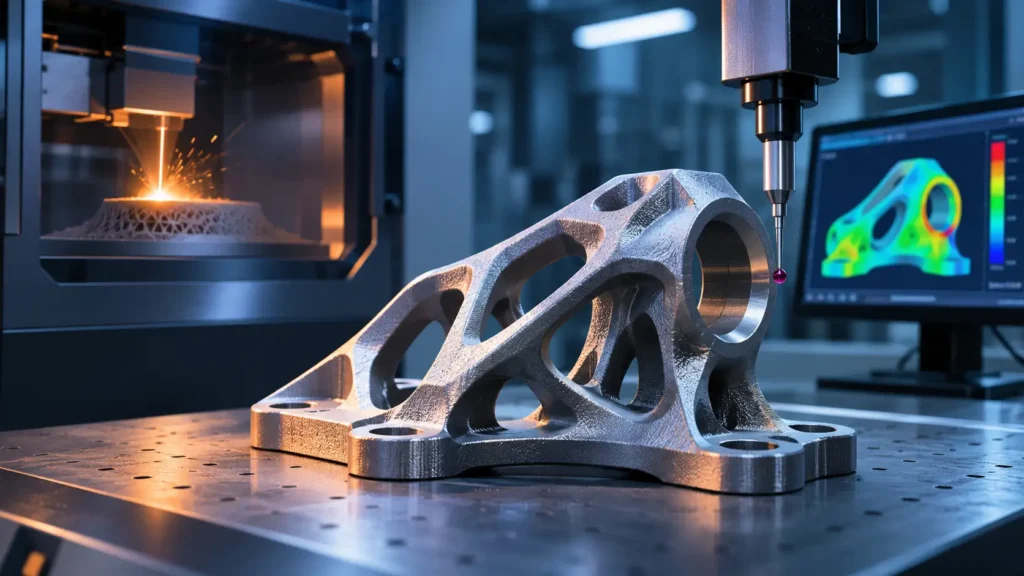
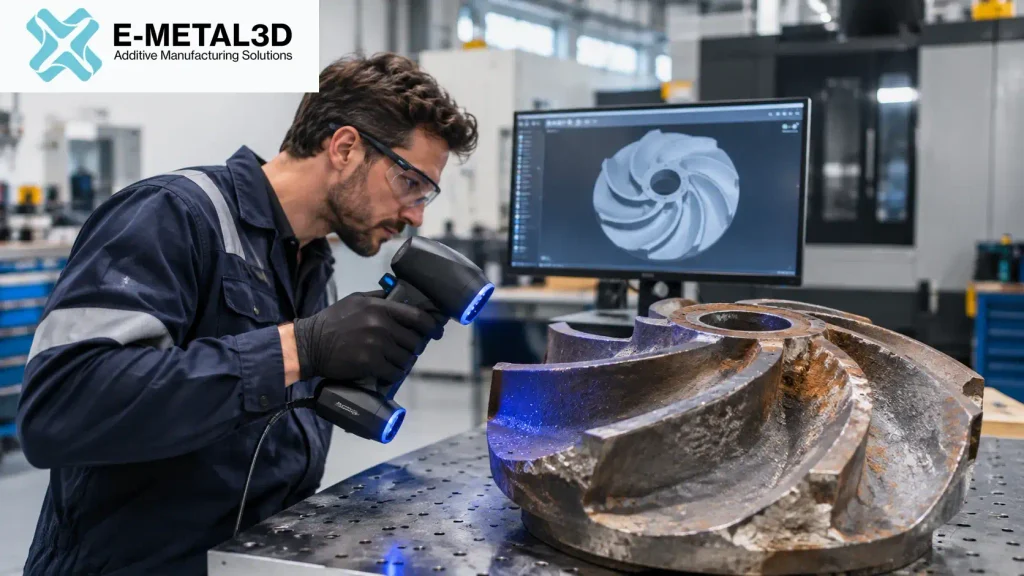
Industrial 3D scanning services can capture accessible surfaces and generate digital measurement data. Engineers can then use the scan results, physical measurements and functional requirements to develop a suitable CAD model.
A typical reverse-engineering workflow involves:
- Assessing the condition and function of the existing part.
- Capturing accessible geometry using 3D scanning and supplementary measurement.
- Reconstructing the required CAD geometry.
- Identifying wear, damage and potentially distorted features.
- Reviewing dimensions, tolerances, material requirements and interfaces.
- Preparing the replacement design for manufacturing and inspection.
A worn component should not automatically be copied exactly. Engineering judgement is required to distinguish original design intent from damage or service-related deformation.
For a more detailed explanation, see Reverse Engineering Services in Australia: From 3D Scanning to Manufacturing.
3. Manufacture the Part Using CNC Machining
CNC machining remains a strong option for many industrial replacement parts, particularly where conventional geometries, tight tolerances and established material specifications are involved.
Machining may be suitable for shafts, bushings, flanges, mounting components and other parts that can be produced efficiently from standard stock.
Its suitability depends on material availability, machine access, tooling requirements and geometric complexity.
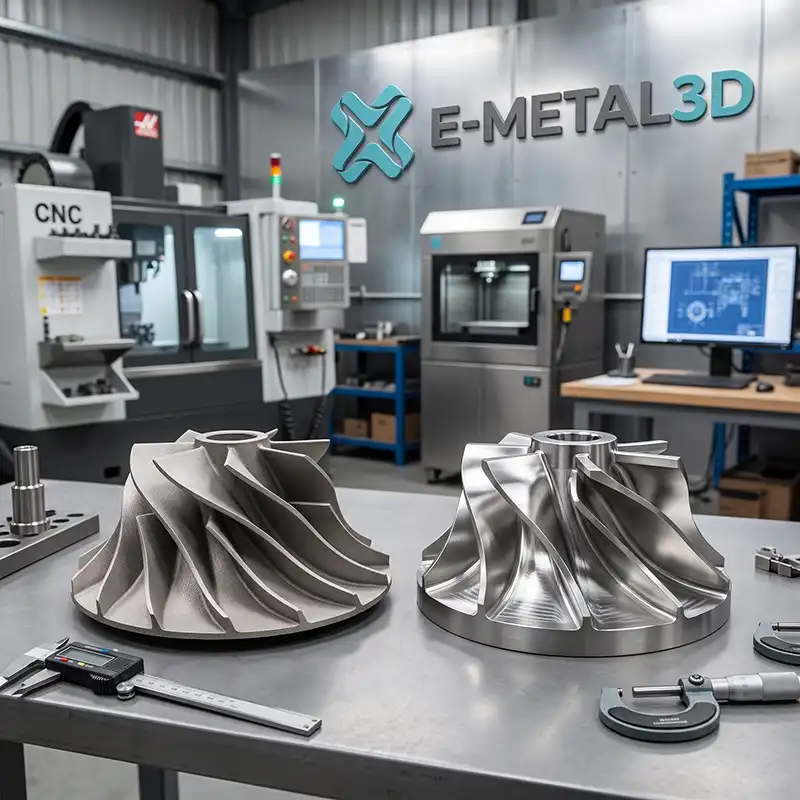
For a detailed comparison of the two manufacturing approaches, read Metal 3D Printing vs CNC Machining: Which Is Better for Industrial Parts?.
4. Use Metal 3D Printing for Suitable Replacement Parts
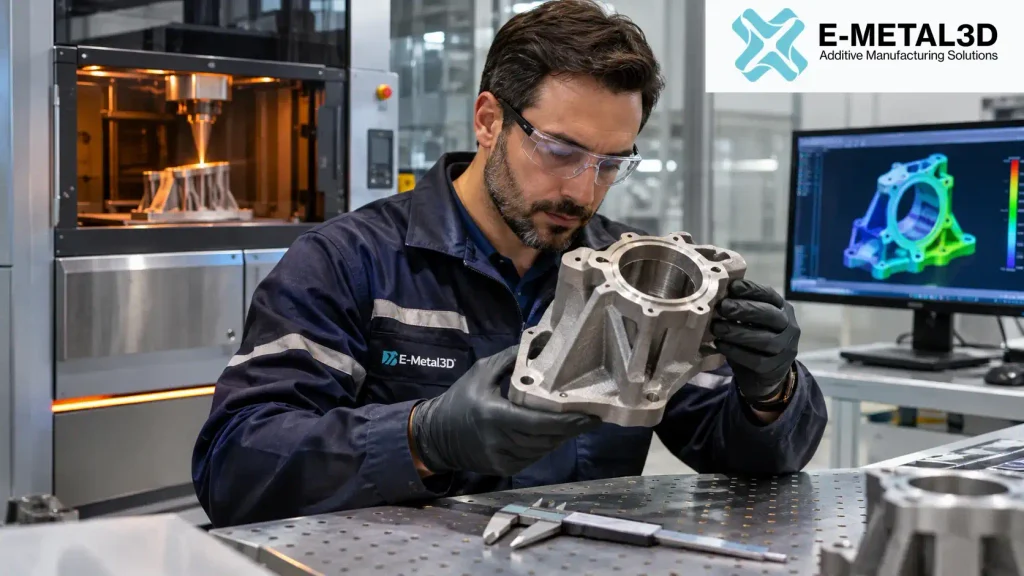
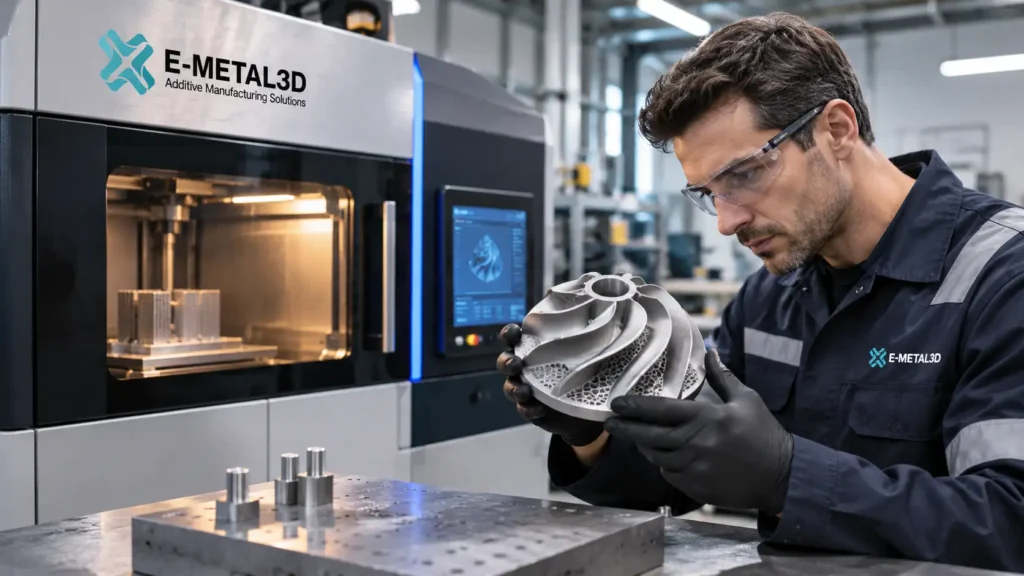
Metal additive manufacturing provides another option for selected low-volume, geometrically complex or difficult-to-source components.
Unlike subtractive machining, metal 3D printing builds components layer by layer from a digital design.
Potential applications include complex brackets, specialised housings, selected flow components and engineering prototypes.
Advantages may include reduced tooling requirements and the ability to manufacture complex shapes that would otherwise require multiple machining or assembly operations.
However, additive manufacturing is not automatically faster or cheaper. Build preparation, material selection, heat treatment, support removal, machining and inspection can all influence the final delivery time.
Explore E-Metal3D’s metal 3D printing services for information about the manufacturing process and its applications.
OEM vs Reverse Engineering vs CNC vs Metal 3D Printing
The following comparison provides a practical starting point for replacement-part planning.
| Replacement route | Best suited to | Main consideration |
|---|---|---|
| OEM replacement | Available, approved standard parts | Supplier lead time and availability |
| Reverse engineering | Missing drawings or obsolete designs | Geometry reconstruction and engineering verification |
| CNC machining | Conventional geometries and precise features | Material stock, setup and machining access |
| Metal 3D printing | Selected complex or low-volume components | Material suitability, post-processing and qualification |
Reverse engineering is a design-recovery process rather than a manufacturing method. A reverse-engineered component may ultimately be manufactured using CNC machining, metal 3D printing, casting or another appropriate process.
The objective is to select the route that provides an acceptable combination of technical performance, cost, lead time and risk.
A Practical Five-Step Plan to Reduce Spare Parts-Related Downtime
Step 1: Identify the Component’s Critical Requirements
Before requesting a replacement, establish the information needed to assess manufacturing feasibility.
This may include:
- Component function and operating environment
- Existing part photographs and dimensions
- Material grade or known material requirements
- Loads, temperatures, pressures and exposure conditions
- Critical mating surfaces and dimensional tolerances
- Required quantity and delivery timeframe
- Applicable safety, inspection or regulatory requirements
For safety-critical or pressure-retaining components, additional engineering review and qualification may be necessary before a replacement can enter service.
Step 2: Determine Whether Usable Engineering Data Exists
Check for original CAD models, technical drawings, maintenance documentation or previous manufacturing records.
If reliable data is unavailable, a physical sample may be used to initiate reverse engineering.
E-Metal3D’s engineering solutions can be considered when CAD reconstruction, design review or manufacturing feasibility assessment is required.
Step 3: Compare Manufacturing Routes
The most suitable process should be selected based on the complete replacement requirement, not simply the quoted production time.
For example, a relatively simple component may be faster to machine from available stock than to manufacture additively.
Conversely, a complex low-volume component may benefit from additive manufacturing if suitable material, production capacity and post-processing resources are available.
Step 4: Define Inspection and Acceptance Criteria
Producing a part with the correct appearance does not establish that it will perform safely in service.
Dimensional verification, material assessment, surface finishing and relevant mechanical or non-destructive testing may be required.
The National Institute of Standards and Technology (NIST) identifies dimensional complexity, internal defects and material properties as important challenges in qualifying additively manufactured components.
The international standard ISO/ASTM 52920:2023 also defines qualification principles and quality-related requirements for industrial additive manufacturing processes and production sites.
The required level of inspection should reflect the part’s function, operating conditions and applicable standards.
Step 5: Preserve the Engineering Data for Future Replacements
Once a replacement has been successfully engineered and validated, retaining controlled digital records can simplify future procurement.
Useful records may include:
- Approved CAD files and engineering drawings
- Material and manufacturing specifications
- Inspection requirements and results
- Revision history
- Approved manufacturing methods
- Supplier and production documentation
This approach supports the development of a digital spare-parts inventory for suitable components.
For further reading, see Digital Spare Parts: How Australian Manufacturers Can Reduce Dependence on Physical Inventory.
Industrial Applications Across Australia
Mining Equipment and Maintenance
Mining operations often rely on equipment that operates in abrasive, demanding environments and may be located far from major manufacturing centres.
Selected brackets, housings, wear-related components and other mechanical parts may be candidates for engineering assessment and local replacement.
Learn more about metal additive manufacturing for the mining industry.
Oil and Gas Equipment
Pumps, valves and flow-handling systems may contain components with complex geometries and demanding service requirements.
Replacement decisions must consider material compatibility, pressure conditions, corrosion exposure and applicable engineering standards.
Metal additive manufacturing may be considered for suitable components, but safety-critical applications require appropriate engineering validation.
Explore engineering and additive manufacturing applications in oil and gas.
Manufacturing and Production Facilities
Manufacturing plants can face downtime when specialised machine components, fixtures or legacy parts become unavailable.
Reverse engineering and local production may offer alternatives for selected components, particularly when low-volume replacement is required.
See industrial additive manufacturing solutions for manufacturing.
Medical and Precision Engineering
Medical and precision-engineering applications often require high dimensional accuracy, traceability and controlled manufacturing processes.
Rapid prototyping and design development may benefit from advanced manufacturing, but medical devices intended for clinical use require appropriate regulatory and quality-system controls.
Explore 3D printing applications in the medical industry.
When Is Metal 3D Printing Worth Considering?
Metal 3D printing deserves evaluation when a component has one or more of the following characteristics:
- Complex geometry that is difficult to machine
- Low production volume
- Limited access to original tooling
- Potential for part consolidation
- A need for design modification or optimisation
- Suitable material and qualification requirements
It may be less attractive for simple high-volume components, parts requiring extensive machining after printing, or applications where qualification requirements make the process impractical.
The final decision should be based on engineering feasibility and total delivered cost.
Read What Determines the Cost of Metal 3D Printing? to understand the main factors affecting pricing.
How E-Metal3D Can Support Industrial Spare Parts Projects
E-Metal3D provides a range of services relevant to industrial component assessment, digital reconstruction and manufacturing.
Depending on project requirements, these may include:
- Industrial 3D scanning to capture existing component geometry.
- Engineering solutions for CAD reconstruction, design development and manufacturing assessment.
- Metal 3D printing for technically suitable components.
- Industrial 3D printing systems and equipment for organisations evaluating in-house additive manufacturing capabilities.
A replacement-part project should begin with a review of the available component data, operating requirements and intended application.
This helps determine whether reverse engineering, conventional manufacturing or additive manufacturing is the most appropriate path.
Frequently Asked Questions
How can Australian manufacturers reduce downtime caused by unavailable spare parts?
They can assess OEM availability, maintain records of critical components, identify local manufacturing alternatives and develop controlled engineering data for suitable replacement parts. The most appropriate strategy depends on the equipment, operating risks and required delivery timeframe.
Can a spare part be manufactured without original CAD drawings?
Potentially, yes. An existing physical component can be measured and scanned, then reconstructed into a CAD model. Engineering verification is still required to address wear, tolerances, material requirements and functional performance.
Is metal 3D printing faster than CNC machining?
Not necessarily. Metal 3D printing may offer advantages for selected complex, low-volume components, while CNC machining can be more efficient for simpler geometries. Total lead time must include preparation, manufacturing, post-processing and inspection.
Can obsolete industrial parts be reverse engineered?
Many obsolete parts can be assessed for reverse engineering, provided sufficient physical or technical information is available. However, not every component can be safely or economically reproduced.
Is 3D scanning enough to manufacture a replacement part?
Usually not on its own. Scan data captures measurable geometry, but a manufacturing-ready replacement may also require CAD reconstruction, material identification, tolerance definition, engineering review and quality verification.
Can metal 3D printed parts be used in critical industrial equipment?
They may be suitable in certain applications, but suitability must be demonstrated through the relevant design, material, process-control, inspection and qualification requirements. Printing a component does not automatically qualify it for critical service.
Conclusion: Plan for Replacement Before Downtime Becomes a Crisis
Reducing industrial equipment downtime in Australia requires a practical approach to spare-parts availability.
OEM procurement remains important, but it is not the only option. Industrial 3D scanning, reverse engineering, CNC machining and metal additive manufacturing can provide alternative pathways for suitable components.
The strongest approach is to assess technical requirements early, select the appropriate manufacturing process and preserve verified engineering data for future use.
Need to assess an unavailable or obsolete industrial component?
Contact E-Metal3D to discuss the part’s geometry, available documentation, material requirements and manufacturing options. An initial engineering assessment can help identify a practical next step before committing to production.