Choosing between Metal 3D Printing vs CNC Machining depends primarily on part geometry, production volume, material, tolerances, lead time and total manufacturing cost. CNC machining is generally more suitable for relatively simple components requiring tight tolerances, excellent surface finish and repeat production. Metal 3D Printing becomes particularly valuable when components have complex geometries, internal channels, lightweight structures, low production volumes or designs that would require multiple machining and assembly operations. In many industrial projects, the best solution is not choosing one technology over the other, but using each process where it provides the greatest engineering and commercial advantage.
For Australian manufacturers, mining operators and engineering businesses, understanding this distinction is increasingly important. A manufacturing process that appears cheaper per kilogram or per machine hour may not necessarily deliver the lowest total cost once tooling, material waste, assembly, lead time and design limitations are considered.
How CNC Machining and Metal 3D Printing Differ
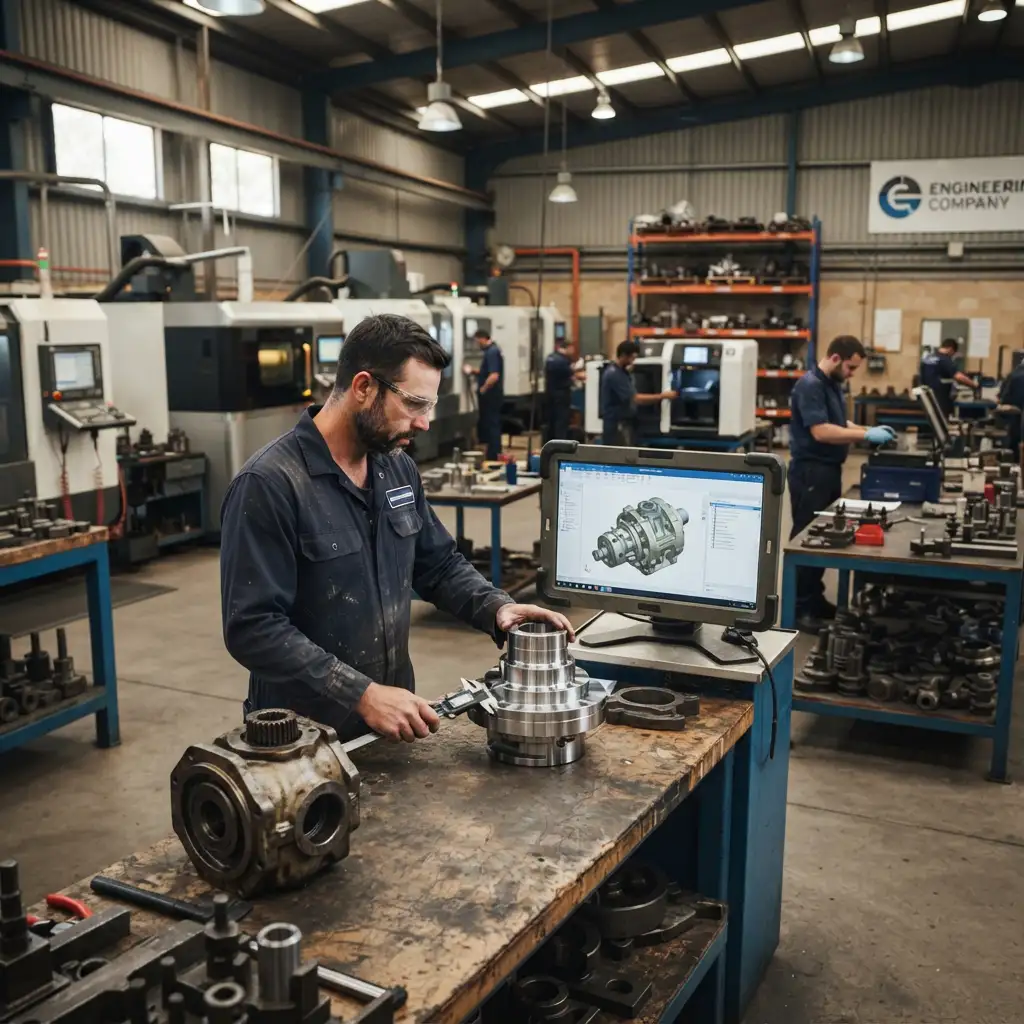
CNC machining is a subtractive manufacturing process. Production begins with a solid block, billet or other form of material, and cutting tools progressively remove material until the required geometry remains.
The process has been refined over decades and remains one of the most important manufacturing technologies available. It can achieve excellent dimensional accuracy, predictable material properties and high-quality surface finishes across a broad range of engineering materials.
Metal 3D Printing takes the opposite approach.
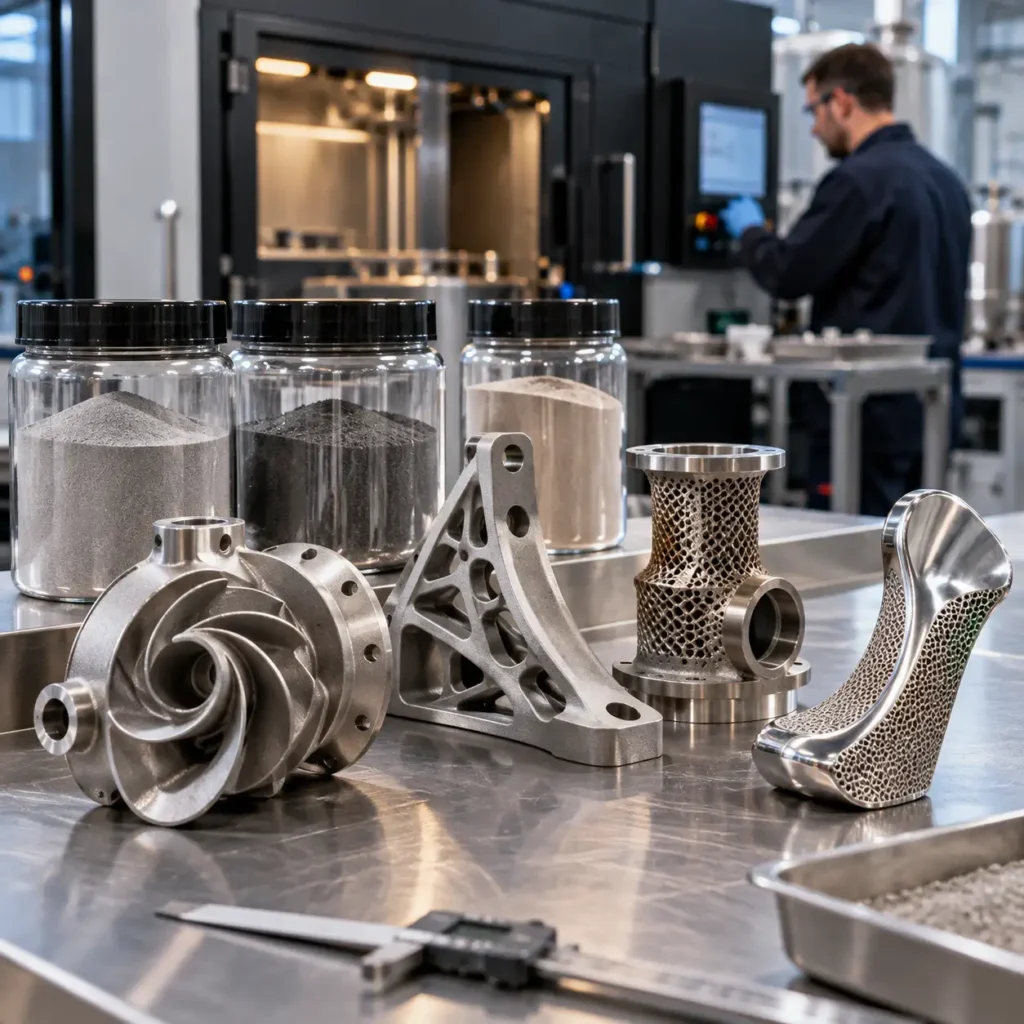
Rather than removing material, an additive manufacturing system builds a component layer by layer directly from a digital model. In metal Powder Bed Fusion processes, thin layers of metal powder are selectively melted according to the component’s geometry until the complete part is produced.
This fundamental difference changes what engineers can manufacture—and how they should design it.
When CNC Machining Makes More Sense
CNC machining remains an excellent choice when component geometry is relatively straightforward and cutting tools can access the required features.
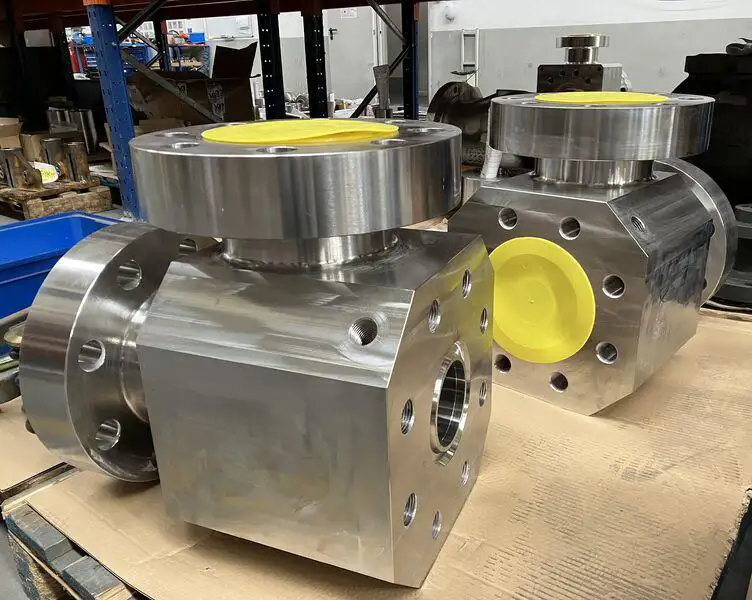
For shafts, plates, flanges, conventional housings and many precision mechanical components, machining may provide the most economical solution. This is particularly true when production quantities increase and machining programs, fixtures and processes have already been established.
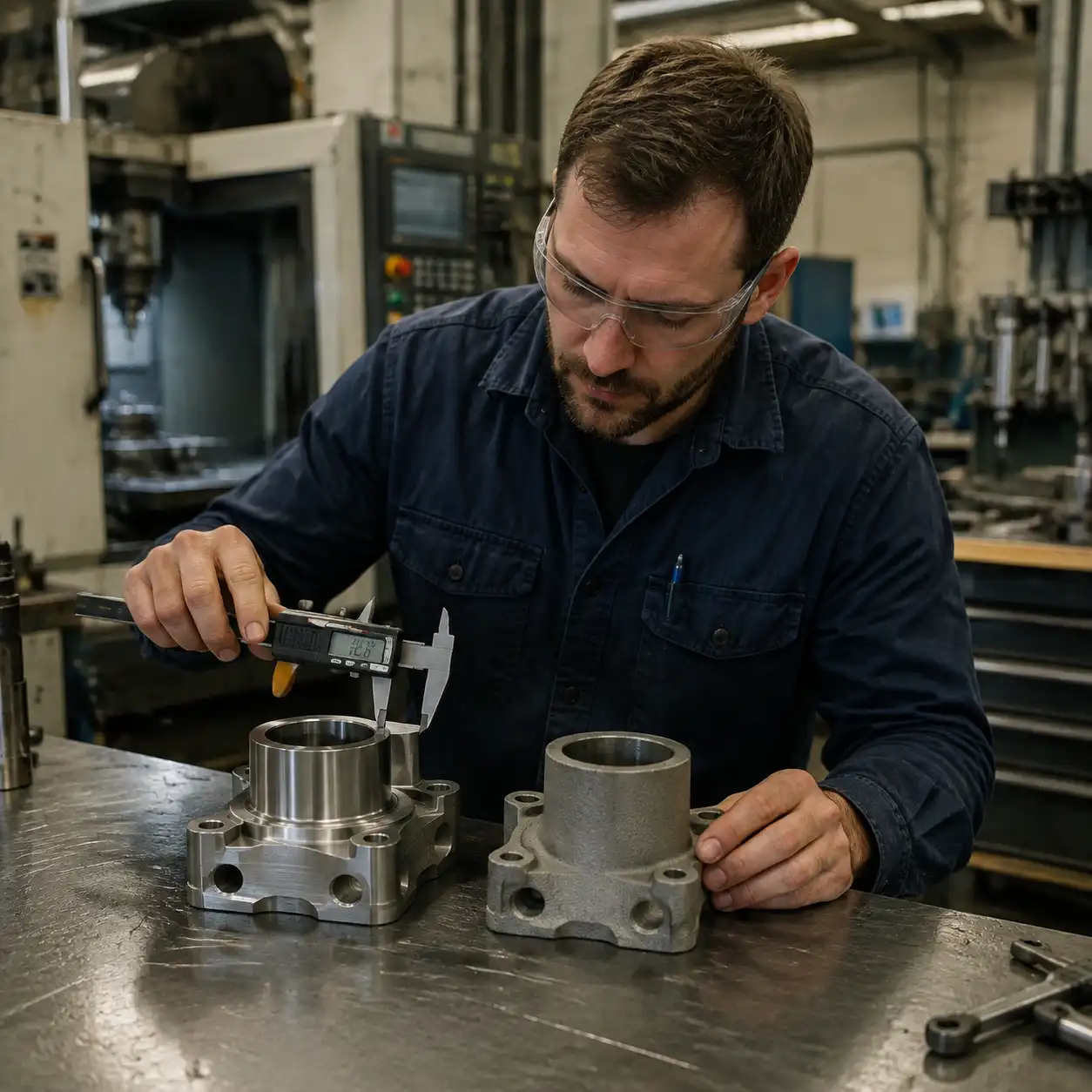
Tolerance is another important consideration. CNC machining can routinely achieve tight dimensional tolerances and high-quality machined surfaces without requiring extensive secondary finishing.
This does not mean Metal 3D Printing cannot manufacture precision components. Rather, critical surfaces on additively manufactured parts may require post-machining to achieve specific dimensional or surface-finish requirements.
For this reason, the two technologies frequently work together.
Where Metal 3D Printing Has the Advantage
The economics begin to change when component complexity increases.
A complicated part may require several CNC setups, specialised tooling or multiple separately manufactured components. Some internal geometries simply cannot be reached by conventional cutting tools.
Metal 3D Printing can manufacture these features directly.
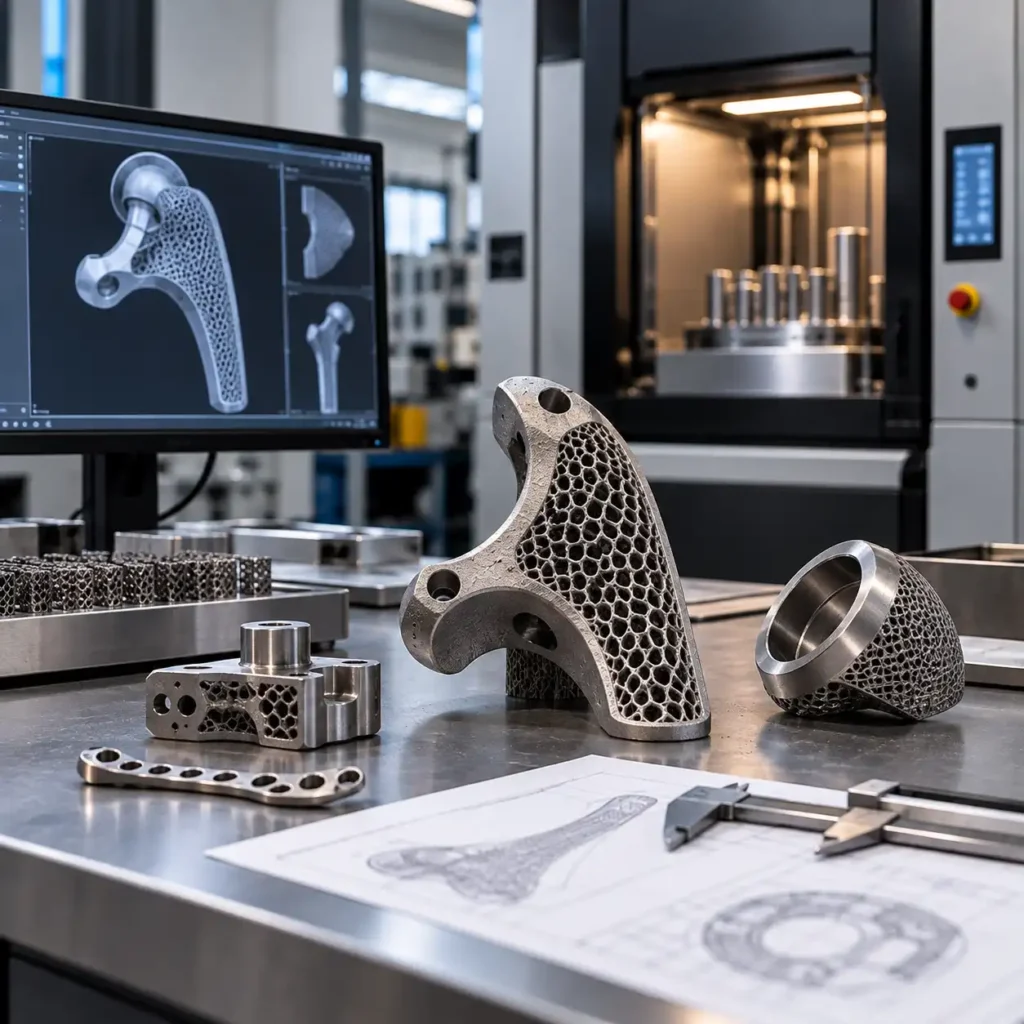
Internal fluid passages, conformal cooling channels, lattice structures and organic geometries can be incorporated into the component without dramatically increasing manufacturing complexity.
This is one of the most important differences between the technologies: complexity is often expensive in CNC machining, while additive manufacturing can make complexity commercially practical.
For engineers, this creates opportunities to design around performance rather than around tool accessibility.
Production Volume Changes the Calculation
Quantity has a major influence on the choice between CNC machining and additive manufacturing.
For established components manufactured in larger volumes, CNC machining can provide excellent productivity and competitive unit costs. Once programming, tooling and fixtures have been established, additional components can often be produced efficiently.
Metal 3D Printing is particularly attractive for prototypes, customised components and low-volume production because there is usually less dependence on dedicated tooling.
A business requiring five specialised components faces a very different manufacturing decision from a business requiring 50,000 identical parts.
This is why comparing the two processes purely by the cost of manufacturing a single component can be misleading. The complete production scenario needs to be considered.
Material Waste Can Be Significantly Different
Subtractive manufacturing inevitably produces removed material.
When a component is machined from a large billet, a significant percentage of the original material may become chips. Depending on the material and manufacturing process, some of this material can be recovered or recycled, but it still represents processing time and material utilisation that must be considered.
Metal additive manufacturing builds material primarily where the component requires it.
There are still support structures, powder handling considerations and process losses, so describing additive manufacturing as a zero-waste process would be inaccurate. However, for components with a high buy-to-fly ratio or expensive materials, additive manufacturing can substantially improve material utilisation.
The economics become particularly interesting when working with high-value alloys such as titanium or nickel-based superalloys.
Lead Time Is About More Than Printing Speed
Metal 3D Printing is often described as a faster manufacturing process, but this needs context.
The printer itself is not necessarily faster than a CNC machine.
The advantage often comes from eliminating other stages.
A conventionally manufactured component might require tooling procurement, several machining operations, welding, assembly and movement between suppliers. An additively manufactured component may consolidate several of those operations into a single build followed by appropriate post-processing.
For prototypes and low-volume components, eliminating tooling can also significantly shorten the time between finalising a design and manufacturing the first physical part.
This can be particularly valuable when downtime or development speed matters more than achieving the lowest possible unit price.
Part Consolidation Can Change the Entire Cost Comparison
One of the most interesting comparisons occurs when the object being evaluated is not actually a single part.
Consider an assembly containing several machined components, fasteners, seals and welded connections. Comparing the printing cost against the machining cost of just one component does not provide an accurate picture.
Using Design for Additive Manufacturing (DfAM), engineers may be able to redesign the complete assembly as one or two components.
Suddenly the calculation includes fewer individual parts, fewer purchasing operations, less assembly labour, fewer potential leak paths and fewer components requiring inventory.
In these situations, the business case for additive manufacturing may come from simplifying the entire product rather than reducing the manufacturing cost of one part.
Surface Finish and Tolerance Still Matter
Freshly machined surfaces generally provide a smoother finish than as-built metal additive surfaces.
If a component contains bearing interfaces, sealing faces, precision bores or other critical features, additional machining may therefore be required after printing.
This is not necessarily a disadvantage.
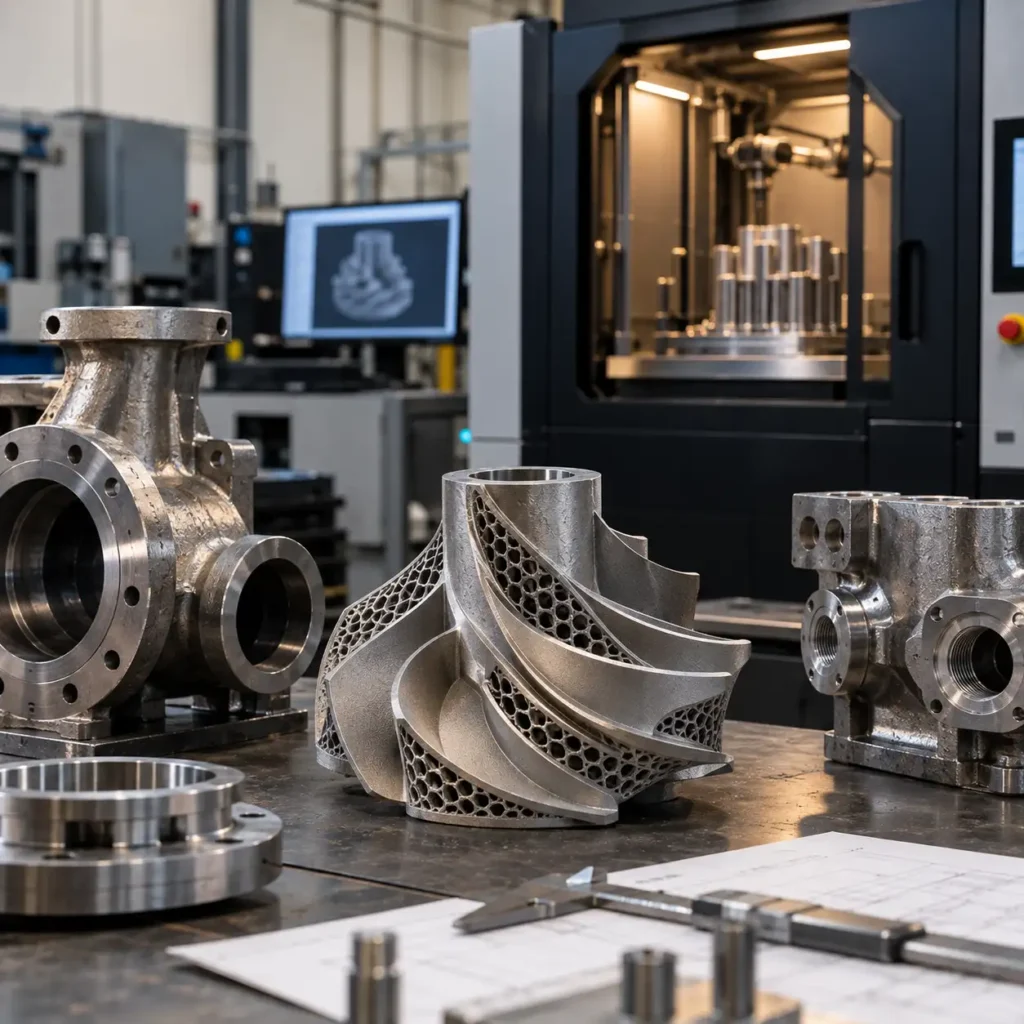
Modern industrial manufacturing increasingly uses hybrid workflows where additive manufacturing produces the complex near-net geometry and CNC machining finishes the critical interfaces.
Instead of viewing Metal 3D Printing and CNC machining as competing technologies, engineers can combine them to use the strengths of both.
What About Replacement and Obsolete Parts?
The comparison becomes particularly relevant when replacement components are difficult to source.
Australian mining and industrial businesses frequently operate equipment that has remained productive for decades. Eventually, replacement parts may become unavailable because the OEM has discontinued the component or the original engineering documentation has been lost.
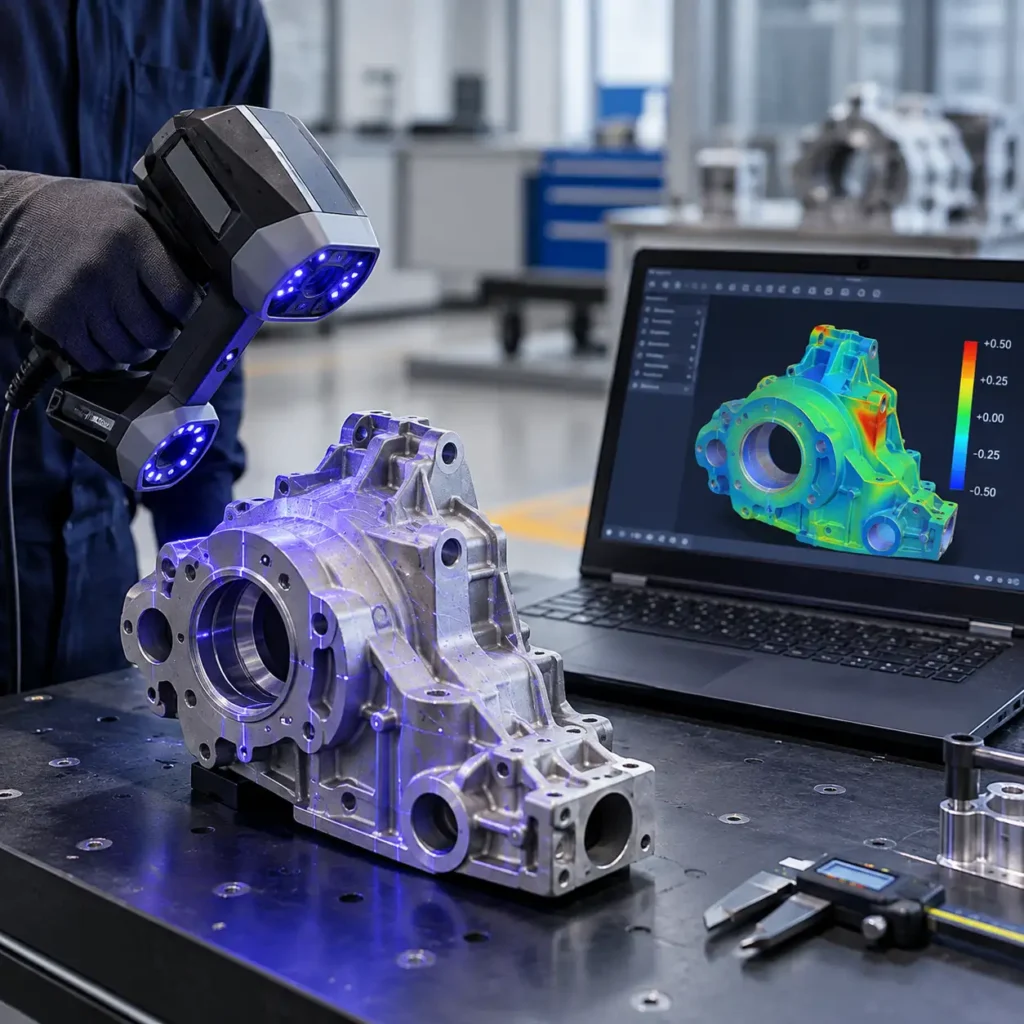
Using 3D Scanning Services and reverse engineering, an existing component can be digitally reconstructed even when the original CAD model is unavailable.
Engineers can then evaluate whether CNC machining, Metal 3D Printing or another production process provides the most practical replacement solution.
This workflow is increasingly important for Spare Parts Manufacturing because it allows manufacturing decisions to be made around the actual component rather than simply accepting long OEM lead times or replacing otherwise functional equipment.
Mining Is a Good Example of Why the Decision Matters
The Mining Industry provides a particularly useful example because manufacturing cost is only one part of the equation.
If a critical machine is unavailable while a replacement component travels through an international supply chain, the operational cost of waiting can exceed the price difference between manufacturing processes.
For a relatively simple component, local CNC machining may provide the fastest solution.
For a geometrically complex or unavailable component, reverse engineering followed by Metal 3D Printing may offer a more practical route.
In either case, the correct question is not simply “Which process is cheaper?”
It is “Which manufacturing strategy gets the required component back into service with the right performance, lead time and total cost?”
Manufacturing Companies Face a Different Decision
Within the broader Manufacturing Industry, companies often have more predictable production requirements.
CNC machining remains extremely competitive for repeatable precision components, while additive manufacturing provides new opportunities for specialised tooling, prototypes, lightweight components and low-volume products.
Additive manufacturing can also produce conformal cooling channels inside tooling that would be impossible to machine conventionally. Better thermal control can reduce cycle times and improve manufacturing consistency, creating benefits far beyond the cost of the tool itself.
The technology therefore needs to be evaluated at a system level rather than as a simple machine-to-machine comparison.
So, Which Process Should You Choose?
If your component has relatively straightforward geometry, requires very tight tolerances and will be produced repeatedly, CNC machining is often the logical starting point.
If the component is geometrically complex, produced in low volumes, requires internal channels, benefits from lightweighting or could replace a complicated assembly, Metal 3D Printing deserves serious consideration.
There is also a third answer that is becoming increasingly common: use both.
Additive manufacturing can create the geometry that conventional processes cannot efficiently produce, while CNC machining can finish critical surfaces to the required tolerance.
The right manufacturing decision therefore starts with engineering analysis rather than allegiance to a particular technology.
At E-Metal3D, our Engineering Solutions evaluate component geometry, material requirements, operating conditions and production objectives before determining whether Metal 3D Printing, conventional manufacturing or a hybrid workflow provides the most practical solution.
Is Metal 3D Printing cheaper than CNC machining?
Not always. CNC machining can be more economical for simple geometries and higher production volumes. Metal 3D Printing becomes particularly competitive for complex, low-volume or customised components where tooling, multiple machining operations or assembly would otherwise increase total manufacturing cost.
Is CNC machining more accurate than Metal 3D Printing?
CNC machining generally provides tighter tolerances and smoother surface finishes directly from the machine. Metal 3D Printed components can be post-machined when critical dimensions, sealing surfaces or precision interfaces require tighter tolerances.
Can Metal 3D Printing and CNC machining be used together?
Yes. Hybrid manufacturing is common in industrial applications. Metal 3D Printing can produce complex near-net geometries, while CNC machining is subsequently used to finish critical surfaces, holes and interfaces.
When should a company consider Metal 3D Printing instead of CNC machining?
Metal 3D Printing should be evaluated when a component has complex geometry, internal channels, low production quantities, high material waste, significant assembly complexity or opportunities for lightweighting and part consolidation.