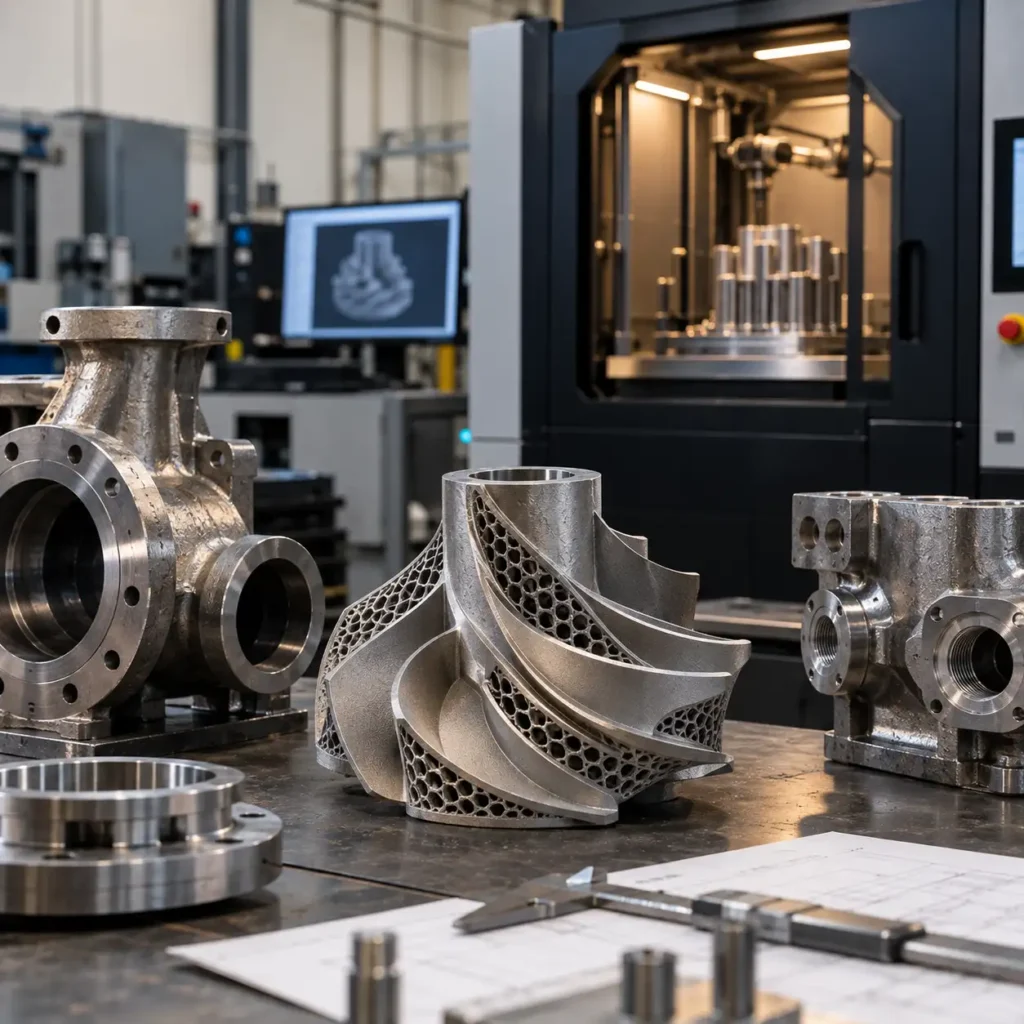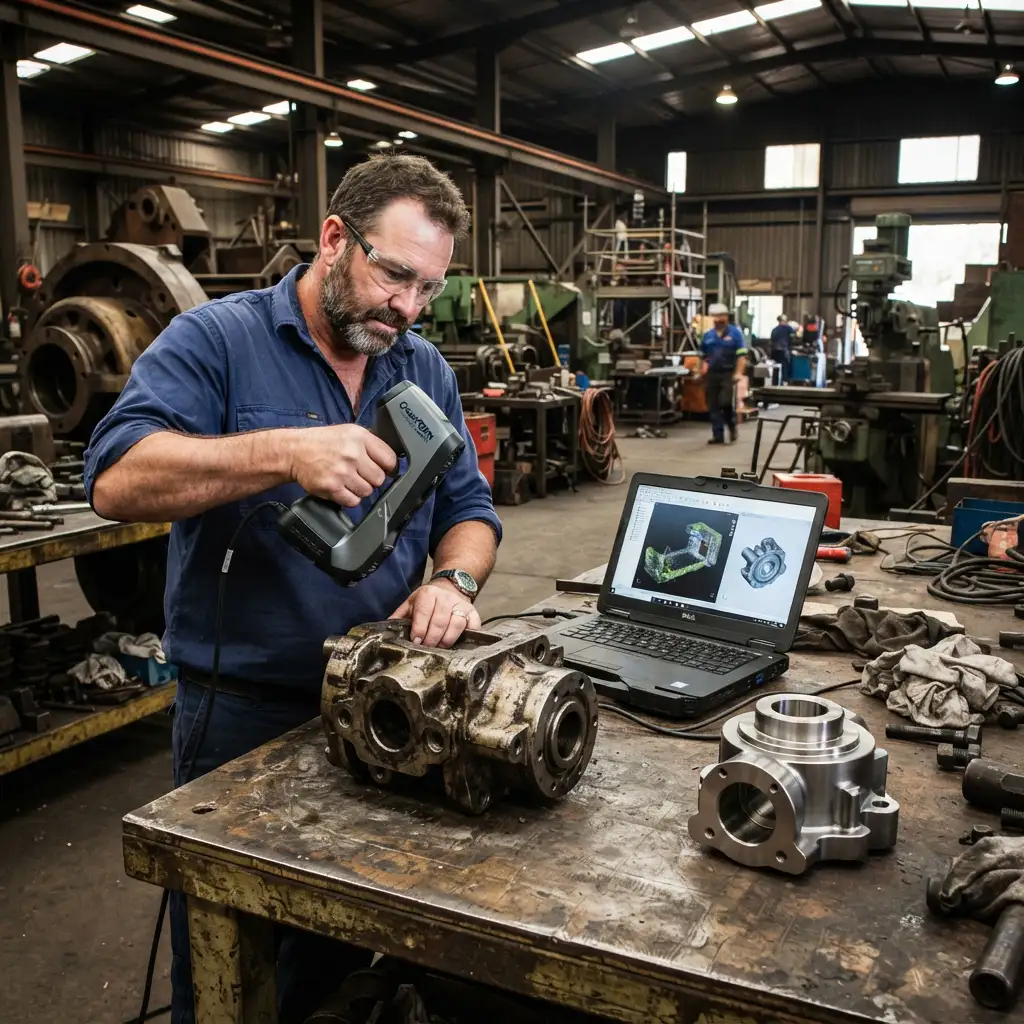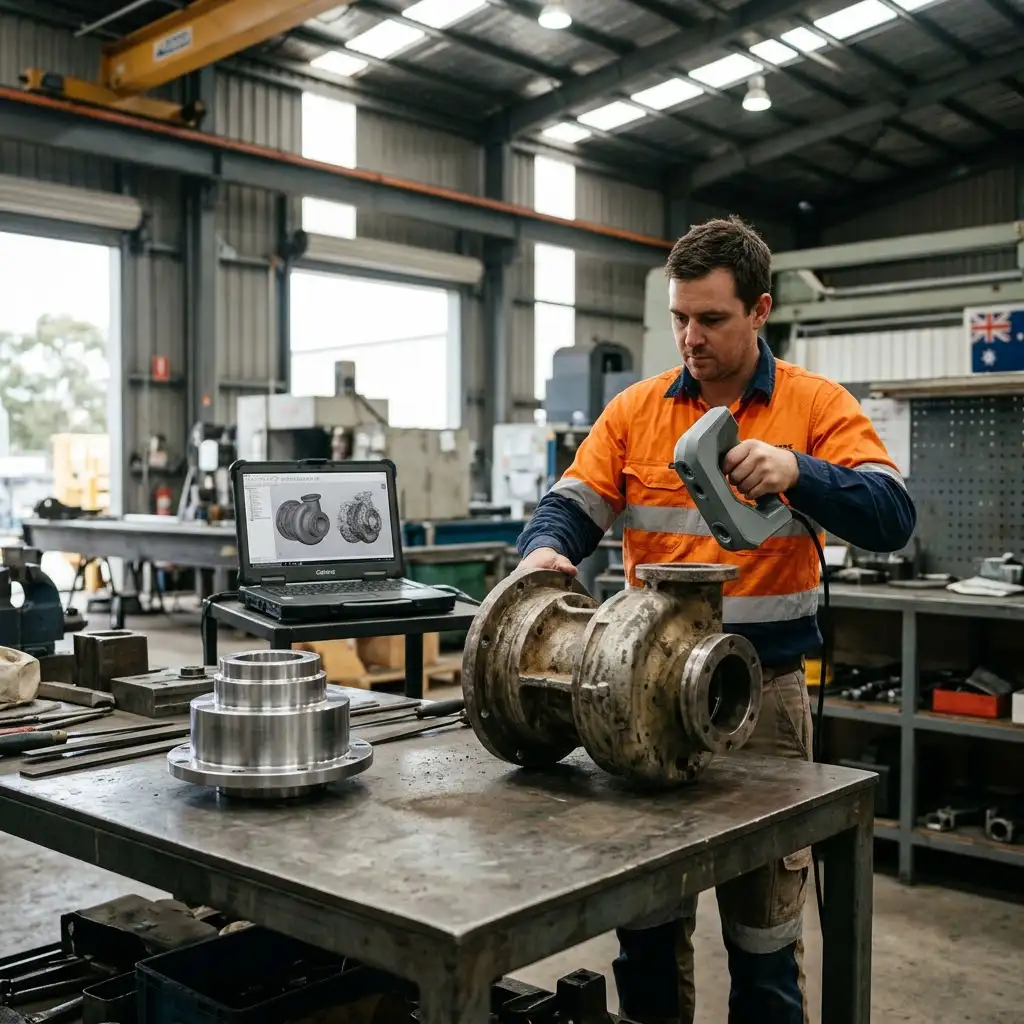
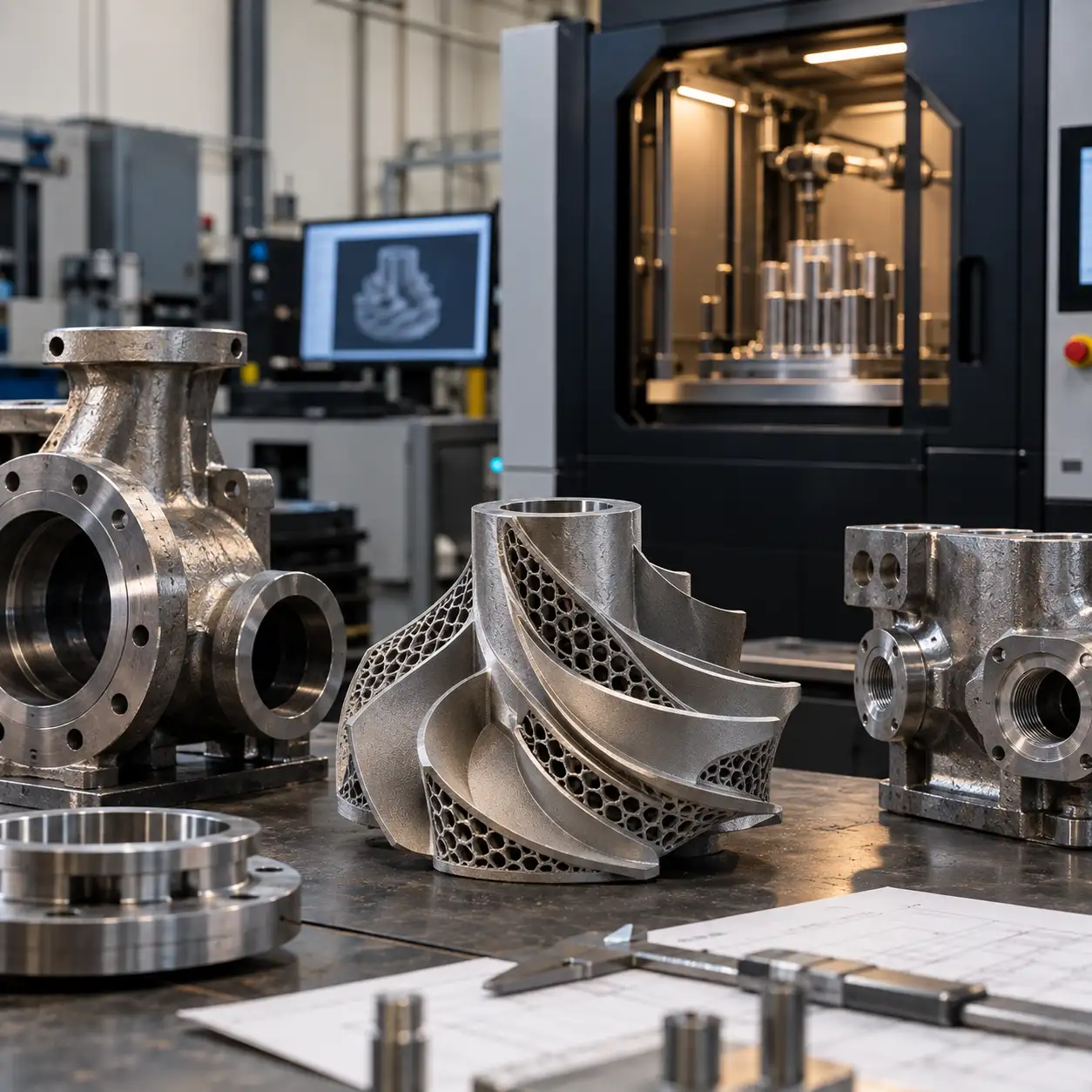
When an industrial component becomes obsolete, the equipment it belongs to does not necessarily become obsolete with it. Mining machinery, processing equipment, pumps, production systems and other industrial assets can remain operational for decades after an original component has been discontinued.
The challenge begins when a critical part fails and the original equipment manufacturer can no longer supply a replacement—or when the only surviving component exists physically, with no usable CAD model or manufacturing drawing.
Obsolete parts manufacturing provides a route from an existing physical component to a new, manufacturable replacement. Modern workflows can combine industrial 3D scanning, reverse engineering, engineering assessment and an appropriate manufacturing process to recreate parts that are no longer commercially available.
For Australian operations managing ageing equipment and long asset lifecycles, this approach can turn an unsupported component into controlled digital engineering data that can be manufactured again when required.
What Is Obsolete Parts Manufacturing?
Obsolete parts manufacturing is the process of recreating components that are no longer readily available through their original supply chain.
A part may become obsolete because:
- the OEM has discontinued it;
- the original manufacturer no longer exists;
- equipment has reached legacy status;
- drawings or CAD files have been lost;
- minimum order quantities make OEM procurement impractical;
- international lead times are excessive;
- or an existing component has been modified during years of operation.
In many cases, the starting point is not a drawing.
It is the physical component itself.
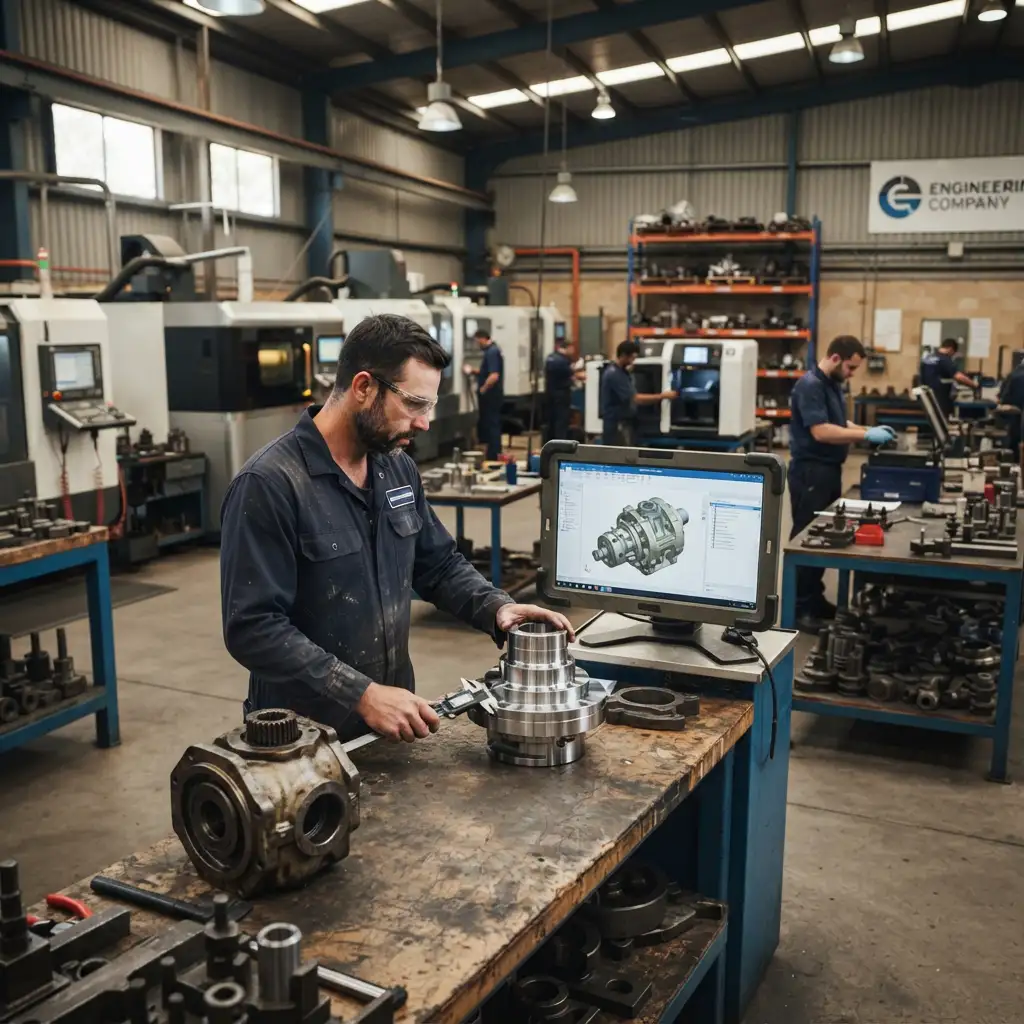
Modern reverse-engineering workflows can capture that component, reconstruct its geometry and convert it into controlled CAD data suitable for engineering review and manufacturing. Australian reverse-engineering providers already use scanning and CAD reconstruction specifically for obsolete, worn and undocumented components. Prometheus Engineering
The objective, however, should not simply be to create a digital copy.
The objective is to create a manufacturable replacement that performs the required function.
Why Obsolete Components Become an Industrial Problem
Industrial equipment frequently operates much longer than individual product lines remain commercially supported.
This creates a mismatch between asset life and spare-parts availability.
A processing plant, mining machine or production system may still be mechanically viable, while one relatively small discontinued component creates a maintenance bottleneck.
The consequences can include extended downtime, emergency procurement, expensive custom fabrication or—in extreme cases—premature replacement of otherwise serviceable equipment.
This is particularly relevant where the component is:
- operationally critical;
- difficult to source;
- required in low quantities;
- geometrically complex;
- expensive to inventory;
- or associated with equipment that must remain operational for many years.
Additive manufacturing research has identified obsolete spare parts and low-volume demand as cases where digital production can provide value, although suitability must be assessed part by part rather than assumed. ScienceDirect
From Physical Part to Digital Engineering Data
A typical obsolete-parts project can be represented as:
Physical Component → 3D Scanning → Reverse Engineering → Engineering Assessment → Manufacturing Data → Process Selection → Production → Inspection
Each stage addresses a different engineering problem.
Skipping stages can create significant risk.
A highly accurate scan, for example, does not automatically provide a manufacturing-ready design.
3D Scanning an Obsolete Industrial Component
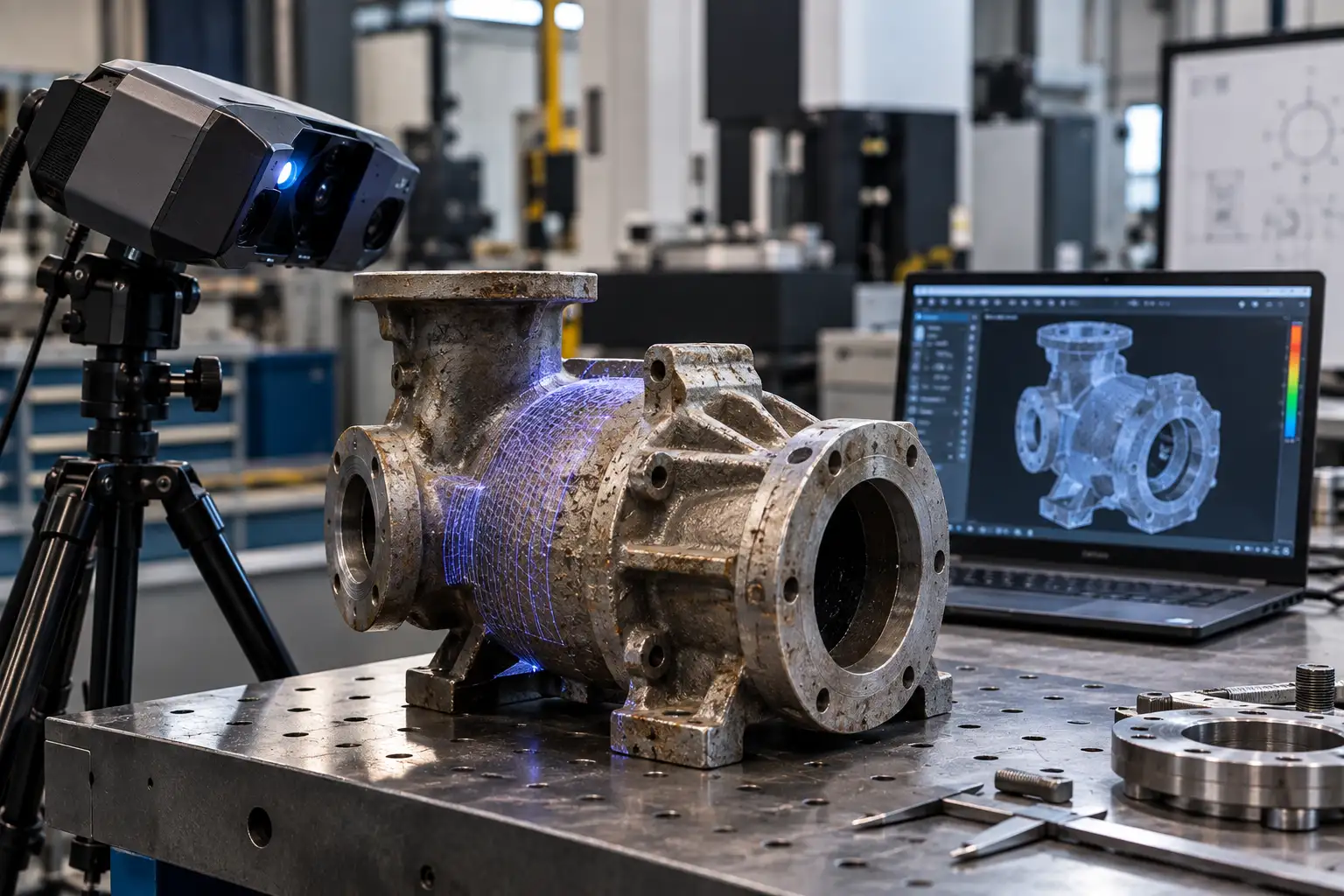
When original CAD data is unavailable, industrial 3D scanning can provide a digital representation of the existing component.
Depending on component geometry, size, surface condition and accuracy requirements, scanning can capture complex external surfaces and features much faster than attempting to reconstruct everything using conventional manual measurement alone.
The resulting data may take the form of a point cloud or polygon mesh.
This creates an important digital reference—but it should not automatically be treated as the final manufacturing model.
That distinction becomes particularly important when scanning worn components.
A 3D Scan Is Not the Same as Manufacturing CAD
One of the most important principles in obsolete parts manufacturing is:
The geometry of a worn part is not necessarily the geometry of the original part.
Imagine a shaft, housing, impeller or mechanical interface that has operated for thousands of hours.
Its scan may accurately capture:
- wear;
- deformation;
- damaged edges;
- corrosion;
- surface irregularities;
- distorted holes;
- or previous repairs.
Manufacturing directly from that geometry could reproduce the damage as well as the component.
This is why 3D scanning and reverse engineering should be treated as related but different processes.
Scanning captures the physical condition.
Reverse engineering interprets that information and reconstructs the intended component.
Australian scanning and reverse-engineering providers similarly distinguish scan data from editable, manufacturing-ready CAD and describe restoration of worn or damaged geometry as part of reconstruction. 3D Printing Australia
Reverse Engineering the Original Design Intent
Reverse engineering converts captured physical geometry into usable engineering data.
An engineer may evaluate:
- nominal dimensions;
- symmetry;
- hole positions;
- mating interfaces;
- bearing seats;
- sealing surfaces;
- wall thicknesses;
- tolerances;
- threads;
- fits;
- functional surfaces;
- and relationships with surrounding components.
Available information should also be incorporated where possible.
That might include old drawings, equipment manuals, photographs, assembly data, maintenance records, measurements from mating parts or another less-worn example.
The goal is not simply:
“What shape is this part now?”
The more useful engineering question is:
“What geometry does this part need in order to perform its intended function?”
This distinction separates basic geometric copying from engineering-led reverse engineering.
Recreating a Part When No Original CAD Exists
Lack of CAD does not automatically prevent a component from being reproduced.
If a suitable physical sample exists, the component can often be digitised and reconstructed.
A simplified workflow is:
1. Assess the component
Determine its function, condition, material, interfaces and critical dimensions.
2. Capture the geometry
Use 3D scanning and complementary measurement methods where appropriate.
3. Reconstruct CAD
Convert the physical reference into an editable engineering model.
4. Restore design intent
Correct wear, damage and deformation rather than blindly copying them.
5. Define manufacturing requirements
Establish materials, tolerances, surface requirements and post-processing needs.
6. Select the manufacturing process
Choose the process based on the component—not on a predetermined technology.
7. Manufacture and inspect
Produce the replacement and verify critical features against defined requirements.
This process creates something strategically valuable beyond the immediate replacement:
a digital manufacturing record.
Should Every Obsolete Part Be Metal 3D Printed?
No.
Metal additive manufacturing can be highly valuable for certain obsolete components, but it should not be treated as the default manufacturing process.
A simple shaft may be better suited to CNC machining.
A sheet-metal bracket may be more economical to fabricate conventionally.
A high-volume replacement component may justify tooling.
A geometrically complex metal part required in very low quantities, however, may be an excellent candidate for additive manufacturing.
The correct question is therefore not:
“Can we 3D print this part?”
It is:
“What manufacturing route provides the required performance, quality, lead time and economics for this part?”
That process-neutral approach is essential for credible obsolete-parts engineering.
Where Metal Additive Manufacturing Fits
Metal additive manufacturing becomes particularly relevant when conventional manufacturing is constrained by geometry, tooling requirements, low production quantities or long supply chains.
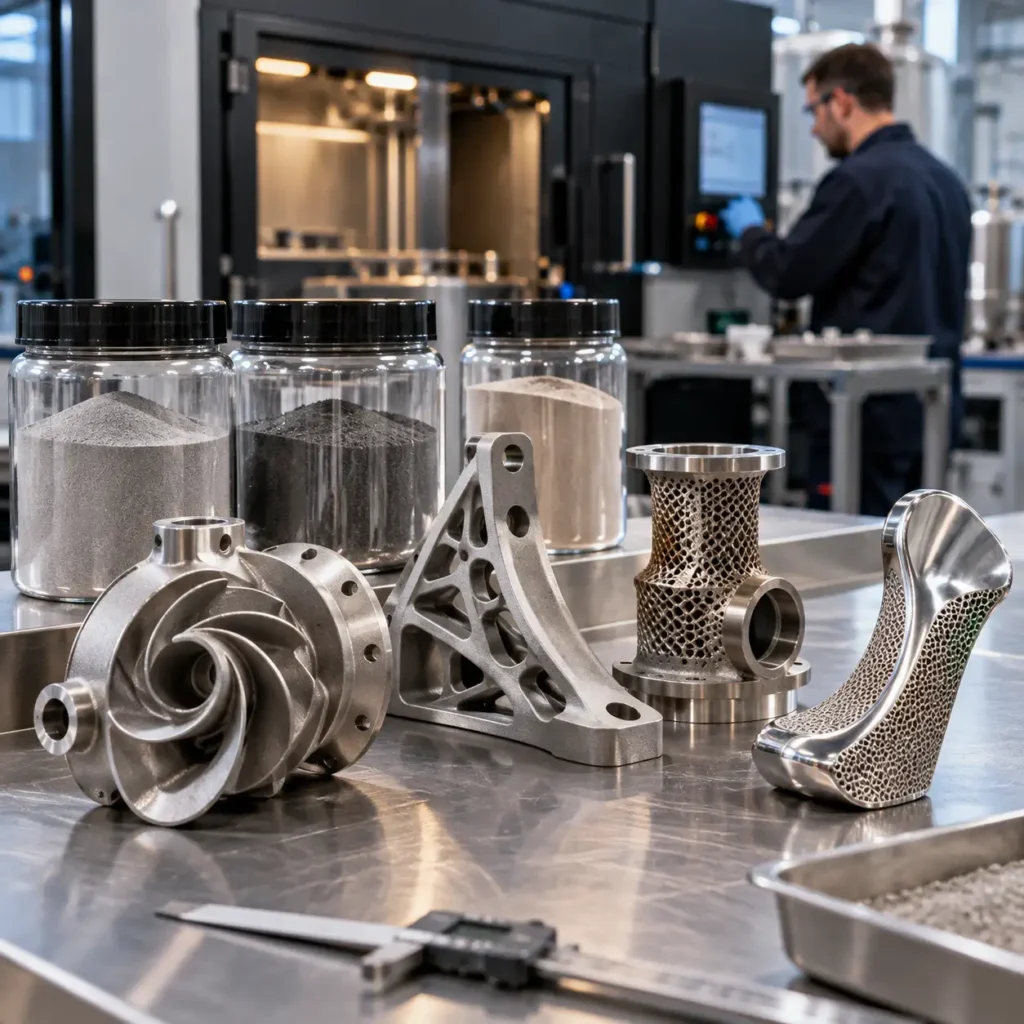
Laser Powder Bed Fusion (LPBF), for example, manufactures metal components directly from digital CAD data.
E-Metal3D’s current metal additive manufacturing capability is based around LPBF and integrates metal printing with DfAM, reverse engineering and 3D scanning. emetal3d.com.au
Potential candidate components can include parts with:
- complex geometry;
- internal channels;
- low annual demand;
- expensive or unavailable tooling;
- difficult conventional manufacturing sequences;
- high material waste;
- or opportunities for redesign and part consolidation.
Australian industrial capability also includes metal LPBF production and reverse engineering of legacy components, including documented capability in Western Australia. Western Australian Government
Reproduce or Improve?
Obsolete parts projects generally present two possible engineering strategies.
Like-for-Like Reconstruction
The first is to reproduce the component as closely as practical to its intended original geometry.
This can be appropriate where maintaining compatibility is the dominant requirement.
Examples include parts that interface closely with existing assemblies or where changing geometry could introduce unnecessary engineering risk.
Design Optimisation
The second approach is to use the obsolete component as a starting point for an improved design.
If historical failure data shows that the original component repeatedly cracks, wears or deforms in a particular region, reproducing exactly the same design may reproduce exactly the same weakness.
Depending on the application and engineering requirements, redesign could involve:
- increasing local wall thickness;
- improving stress distribution;
- modifying fillets;
- changing material;
- improving flow paths;
- consolidating multiple parts;
- reducing unnecessary mass;
- or redesigning geometry specifically for additive manufacturing.
This is where Design for Additive Manufacturing (DfAM) and engineering analysis become valuable.
Any modification still requires appropriate engineering assessment and validation before the replacement is placed into service.
Material Identification Matters
Geometry is only part of the original component’s design.
A replacement also needs appropriate material properties.
If documentation is unavailable, assuming a material based only on visual appearance can be risky.
Depending on component criticality, engineers may need to determine or verify relevant characteristics through available records, material analysis or testing.
Material selection should consider factors such as:
- mechanical strength;
- fatigue;
- corrosion;
- operating temperature;
- wear;
- chemical environment;
- thermal behaviour;
- and compatibility with the chosen manufacturing process.
For metal additive manufacturing, candidate alloys can include stainless steels, nickel-based superalloys such as Inconel, titanium alloys and other qualified materials depending on equipment and application.
The material must be selected for the service requirement, not merely because it can be printed.
Obsolete Parts in Australian Mining
Mining provides a particularly relevant environment for obsolete-parts strategies.
Mining operations can contain equipment from multiple manufacturers, generations and countries of origin. Assets may remain operational for long periods while individual components become increasingly difficult to source.
Potential applications include selected:
- brackets;
- housings;
- manifolds;
- equipment interfaces;
- specialised tooling;
- pump components;
- mechanical adapters;
- and low-volume replacement components.
Global mining equipment manufacturers have also explored digitally manufactured spare parts, partly because spare-part production can be geographically distant from major mining markets such as Australia. Sandvik has documented trials involving digitally produced mining-machine parts and localised spare-parts concepts. Sandvik Mining
The value proposition is not simply faster printing.
It is the ability to move from a physical spare-parts dependency toward controlled digital manufacturing data.
Obsolete Components in Oil and Gas
Oil and gas assets can present similar challenges.
Long equipment lifecycles, specialised components and legacy systems can create situations where original parts are difficult to obtain.
Reverse engineering can potentially support replacement-part development, but the engineering requirements can be demanding.
Pressure, temperature, corrosion, fatigue, material traceability, inspection and applicable standards may all influence whether and how a component can be reproduced.
For safety-critical components, reverse engineering and additive manufacturing must not be treated as shortcuts around engineering qualification.
The more critical the application, the more important documentation, material control, process qualification, inspection and validation become.
Supporting Australian Manufacturing and Legacy Equipment
The same workflow applies beyond resources and energy.
Australian manufacturers may operate production machinery that remains mechanically useful long after OEM support ends.
Replacing an entire machine because of one unavailable component may make poor economic sense.
Reverse engineering can instead create a new manufacturing route for selected components.
This is particularly useful where:
- only a few replacements are required;
- tooling no longer exists;
- imported parts have excessive lead times;
- the OEM is no longer operating;
- or equipment modifications mean the original spare no longer fits correctly.
Australian providers already offer reverse-engineering workflows for industrial machinery and discontinued parts, demonstrating a domestic market for this type of problem. CNC Machinist Pty Ltd
From Obsolete Part to Digital Spare Part
One of the most valuable outcomes of an obsolete-parts project is not necessarily the first replacement.
It is the digital asset created during the process.
Once a component has been properly reconstructed, its controlled digital record can support future manufacturing.
But a digital spare part should be more than an STL file stored in a folder.
A robust digital spare-parts record may need:
- controlled CAD geometry;
- manufacturing drawings;
- material specification;
- dimensional tolerances;
- critical features;
- manufacturing requirements;
- post-processing requirements;
- inspection criteria;
- revision history;
- and relevant engineering documentation.
This transforms a one-time reverse-engineering exercise into a reusable asset-management resource.
Digital Inventory and On-Demand Manufacturing
Traditional spare-parts strategies require organisations to predict future demand and physically warehouse components.
For slow-moving or obsolete parts, this can result in inventory being stored for years—or in critical parts not being stocked at all.
A digital inventory changes the model.
Instead of storing every possible physical spare, suitable components can be maintained as controlled manufacturing data and produced when required.
This does not mean every spare should be digitally manufactured.
Rather, organisations can identify parts where on-demand manufacturing provides a practical alternative to traditional inventory.
Potential benefits include:
- reduced dependence on obsolete supply chains;
- lower physical inventory requirements for selected parts;
- improved access to low-volume components;
- easier reproduction of legacy parts;
- and the ability to manufacture closer to the point of demand.
Research into additive-manufacturing supply chains has similarly identified low-volume obsolete spares and future availability as potential value drivers. ScienceDirect
Inspection Is Part of the Manufacturing Workflow
A replacement component is not complete simply because it has been manufactured.
Critical geometry needs to be verified against the defined engineering requirements.
Depending on the application, inspection may include:
- dimensional measurement;
- 3D scan-to-CAD comparison;
- surface inspection;
- material verification;
- non-destructive testing;
- mechanical testing;
- or other application-specific quality procedures.
For additive components, inspection requirements should be considered during process planning—not added as an afterthought.
The objective is traceability from the reconstructed design to the manufactured component.
When Does Obsolete Parts Manufacturing Make Sense?
The strongest candidates tend to combine several factors.
The original component is unavailable or difficult to procure.
There is sufficient information—or a suitable physical sample—to reconstruct it.
Future demand is relatively low.
Downtime or procurement lead time is expensive.
The component can be manufactured using a technically appropriate process.
And the economics of recreating the component are reasonable compared with alternative options.
By contrast, reverse engineering may provide limited value where a standard commercial replacement already exists at low cost or where the available physical component provides insufficient information to establish safe design requirements.
A Practical Obsolete-Parts Workflow
For industrial organisations considering this approach, the process should begin before the last surviving component fails.
Start by identifying parts with high operational consequence and weak supply-chain availability.
Then determine which components have:
- long procurement lead times;
- discontinued OEM support;
- low stock levels;
- high downtime consequences;
- repeated failures;
- or no reliable technical documentation.
Priority components can then be assessed for digitisation.
Where practical, scanning and reverse engineering a serviceable component before failure is usually preferable to reconstructing one after it has fractured or suffered severe wear.
This shifts obsolete-parts management from reactive emergency procurement toward proactive engineering.
Building a More Resilient Spare-Parts Strategy
Obsolescence cannot always be prevented.
It can, however, be managed differently.
Industrial companies no longer have to view the loss of OEM supply as the automatic end of a component’s manufacturing life.
3D scanning can recover physical geometry.
Reverse engineering can reconstruct usable CAD.
Engineering analysis can restore or improve design intent.
Digital inventory can preserve manufacturing information.
And technologies such as metal additive manufacturing can provide an additional production route when technically and economically appropriate.
The result is not simply a replacement part.
It is a transition from dependence on an unavailable component toward controlled digital engineering and repeatable manufacturing capability.
For Australian mining, energy and manufacturing organisations operating long-life industrial assets, that capability can become an important part of maintenance and asset-management strategy.
Engineering Obsolete Parts with E-Metal3D
E-Metal3D combines industrial 3D scanning, reverse engineering, engineering solutions and metal additive manufacturing to support the development of industrial replacement components in Australia. Its metal additive manufacturing service includes LPBF alongside DfAM and reverse-engineering capabilities. emetal3d.com.au
The appropriate workflow depends on the component itself. In some cases, the solution may involve reproducing the original geometry. In others, engineering optimisation or metal additive manufacturing may provide additional opportunities.
The starting point is therefore not choosing a manufacturing technology—it is understanding the component, its function and the requirements the replacement must satisfy.
Can an obsolete part be recreated without the original CAD file?
Yes, in many cases. If a suitable physical component is available, 3D scanning and measurement can capture its geometry, while reverse engineering can reconstruct manufacturing-ready CAD. Wear, damage and functional interfaces still need to be assessed rather than copied blindly.
Can a broken component be reverse engineered?
Potentially. The feasibility depends on how much usable geometry remains and what additional information is available. Mating components, drawings, photographs, symmetrical features or another sample may help reconstruct missing geometry.
Can worn parts be 3D scanned?
Yes. However, scanning records the existing worn geometry. Reverse engineering is normally required to determine which features represent intended geometry and which represent wear or damage.
Is an STL file enough to manufacture an obsolete part?
Not necessarily. Industrial manufacturing may require editable CAD, dimensions, tolerances, material specifications, surface requirements, post-processing instructions and inspection criteria in addition to mesh data.
Can obsolete metal parts be 3D printed?
Some can. Metal additive manufacturing can be useful for complex, low-volume or difficult-to-source components, but every part should be assessed for geometry, material, size, tolerances, criticality and economics.
Is metal 3D printing always better than CNC machining for obsolete parts?
No. CNC machining may be the better solution for relatively simple geometries or where machining provides superior economics and tolerances. Manufacturing technology should be selected after the component requirements are understood.
Can the original design be improved during reverse engineering?
Yes, where appropriate. Reverse engineering can create editable CAD that allows engineers to address known failure points or adapt the design to a modern manufacturing process. Any modification should be appropriately analysed and validated.
What industries benefit from obsolete parts manufacturing?
Potential applications exist across mining, oil and gas, manufacturing, transport, processing equipment and other industries operating long-life assets with legacy or unsupported components.
What is a digital spare part?
A digital spare part is a controlled digital manufacturing record that enables a component to be reproduced when required. For industrial use, it may include CAD, drawings, material specifications, tolerances, process requirements, inspection criteria and revision information.
Should companies wait until an obsolete component fails before reverse engineering it?
Where possible, no. Digitising critical components while a serviceable sample is still available can make geometry reconstruction easier and support a more proactive spare-parts strategy.