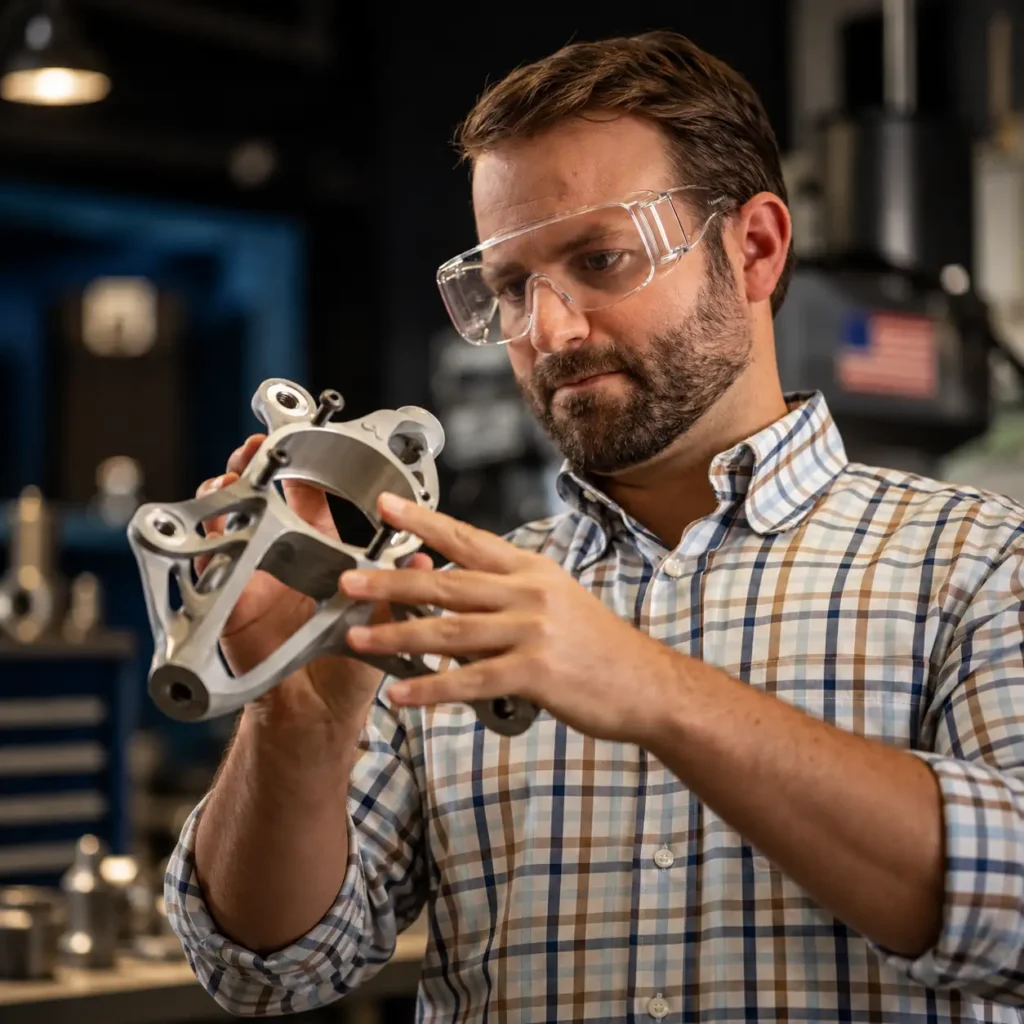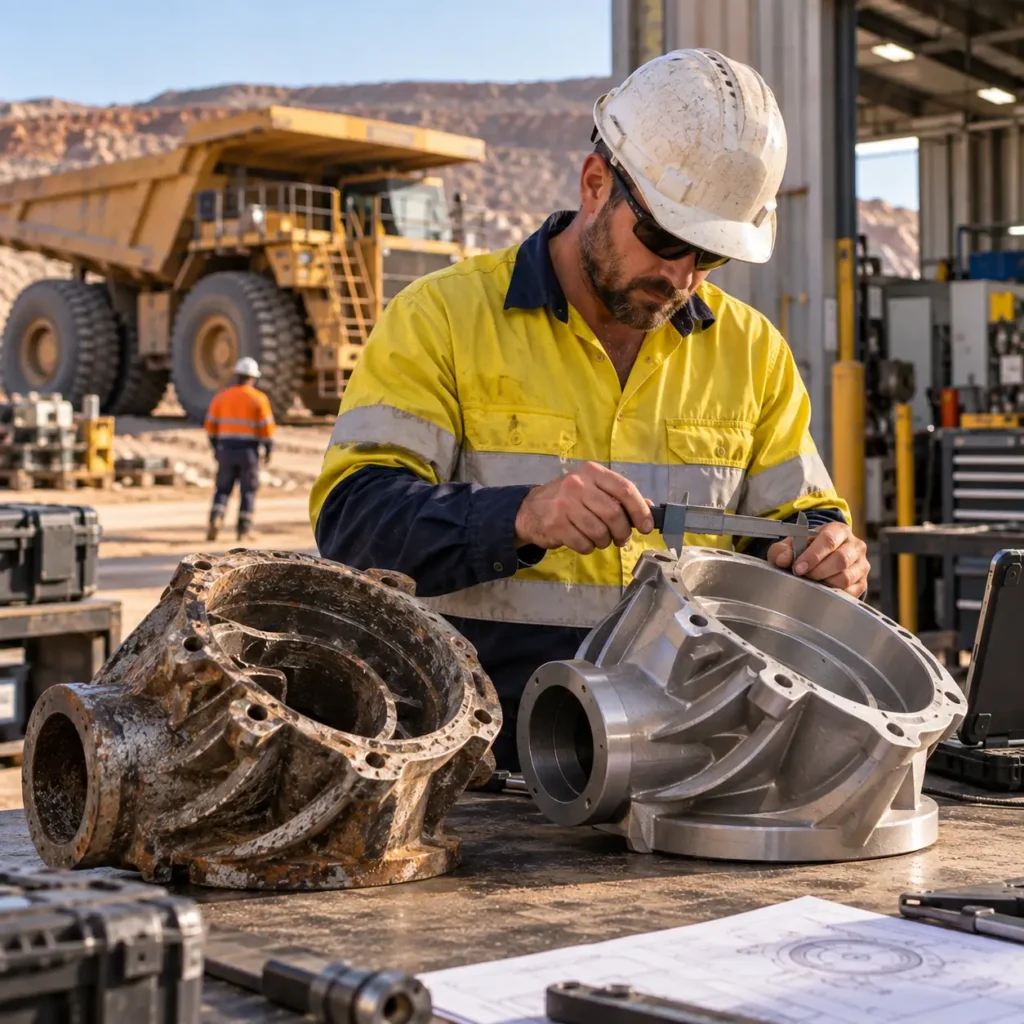
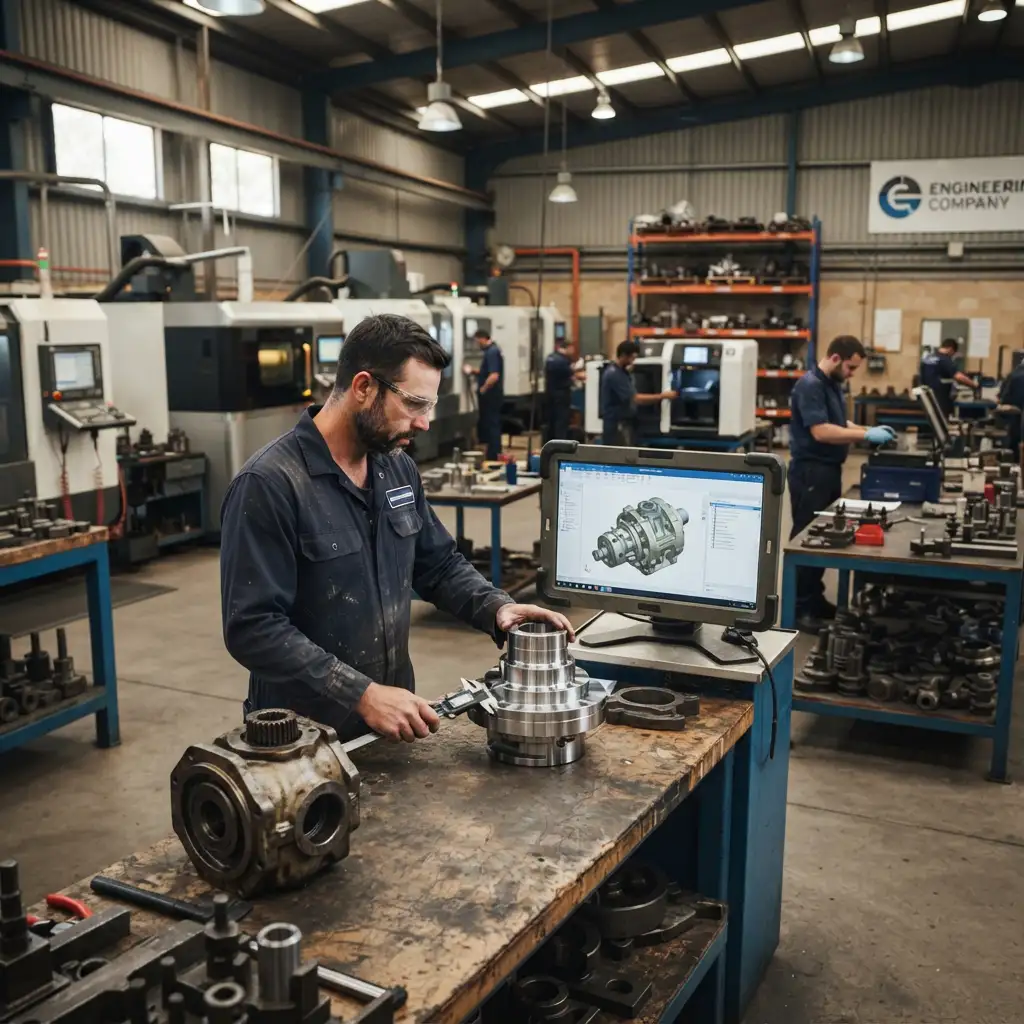
Industrial spare parts do not always need to sit on a warehouse shelf waiting for a future breakdown. On-demand manufacturing in Australia provides an alternative approach in which suitable replacement components are stored as digital engineering data and manufactured when required.
For mining, oil and gas, manufacturing and other asset-intensive industries, this model can be particularly valuable for low-volume, obsolete or difficult-to-source components. Instead of depending entirely on physical inventory or long international supply chains, companies can use 3D scanning, reverse engineering, digital inventory and appropriate manufacturing technologies to establish a more flexible pathway to replacement parts.
Metal additive manufacturing can play an important role in this process, particularly for complex or specialised metal components. However, on-demand manufacturing is not simply another name for 3D printing. It is a broader engineering and supply strategy that connects component identification, digital data, design validation, manufacturing and quality assurance.
What Is On-Demand Manufacturing?
On-demand manufacturing is a production model in which components are manufactured in response to an actual requirement rather than being produced and stored in large quantities in advance.
In a conventional spare-parts model, organisations may purchase and hold physical inventory to ensure critical components are available when equipment fails. This can provide immediate access to parts, but it also creates inventory costs and the possibility that some components will remain unused for years.
On-demand manufacturing changes where part of that inventory exists.
Instead of storing every suitable component physically, an organisation may maintain validated CAD files, manufacturing information, material specifications and other engineering data required to reproduce selected components when needed.
The physical spare part is therefore replaced, in appropriate cases, by a combination of digital inventory and responsive manufacturing capability.
This approach is particularly relevant to low-volume industrial components where maintaining large physical inventories may be inefficient.
Why Industrial Spare Parts Are a Supply-Chain Challenge
Industrial equipment can remain operational for decades, while the supply chains supporting individual components can change much faster.
Original equipment manufacturers may discontinue product lines. Suppliers may leave the market. Tooling can become unavailable, and overseas replacement parts can involve significant procurement and freight lead times.
At the same time, mining and industrial operations may depend on specialised equipment where the failure of a relatively small component can affect a much larger asset.
This creates a difficult inventory decision.
Holding every possible spare part can tie up capital and warehouse capacity. Holding too few can expose an operation to procurement delays when an unexpected failure occurs.
The challenge becomes greater for components that are:
- Used infrequently
- Expensive to inventory
- No longer supported by the OEM
- Imported with long lead times
- Unique to legacy equipment
- Required in very small quantities
- Geometrically complex
- Difficult to manufacture using original tooling
On-demand manufacturing does not eliminate these supply-chain challenges, but it can provide another option for selected components.
From Physical Inventory to Digital Spare Parts
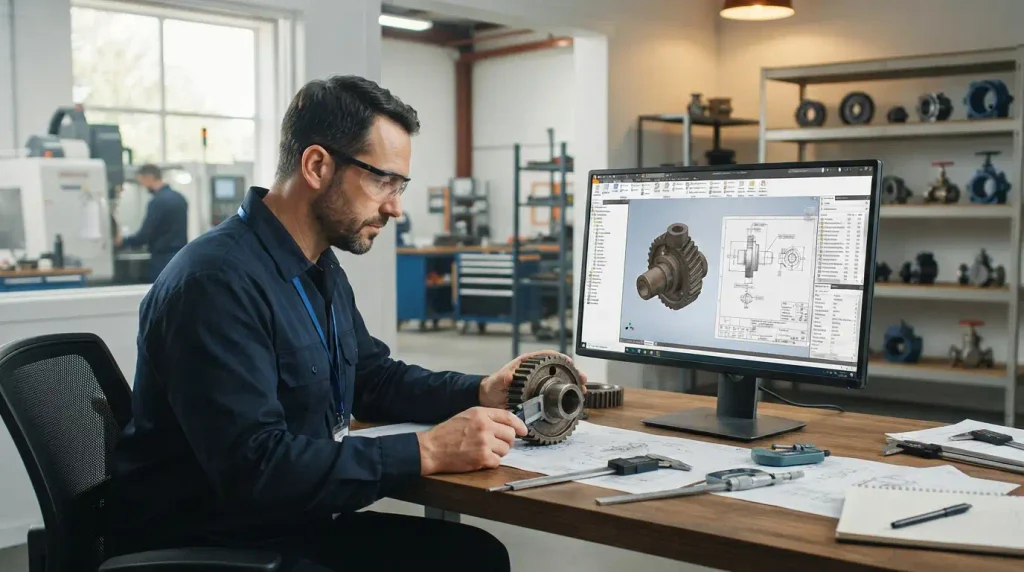
A digital spare part is more than an STL file stored on a server.
For industrial manufacturing, the digital record may need to include the information required to reproduce and verify the component reliably.
Depending on the application, this can include the CAD model, drawings, dimensional requirements, material specification, manufacturing instructions, revision history, inspection criteria and post-processing requirements.
The result is a digital inventory of manufacturing-ready or manufacturing-relevant information.
When a replacement component is required, the appropriate digital record can be retrieved, reviewed and used to initiate production through a suitable manufacturing process.
This concept changes the role of inventory.
Instead of asking only:
“How many physical spare parts should we keep?”
companies can also ask:
“Which components should remain physical inventory, and which could be maintained as controlled digital manufacturing data?”
That distinction is central to a practical on-demand spare-parts strategy.
Which Spare Parts Are Suitable for On-Demand Manufacturing?
Not every industrial spare part should be converted into digital inventory.
Fast-moving standard components such as common bearings, fasteners or seals may already have efficient and inexpensive supply chains. Producing these parts on demand would often provide little benefit.
The stronger candidates tend to be components where conventional procurement creates a specific operational or economic problem.
These may include obsolete components, low-volume specialised parts, long-lead-time replacements, custom machine components and parts for legacy equipment.
A suitable candidate might be a metal housing required only once every several years, for example, or a specialised bracket for equipment that is no longer supported by its original supplier.
Other candidates may include selected pump and valve components, tooling, fixtures, machine components and specialised maintenance parts.
The decision should be based on engineering and commercial analysis rather than the assumption that any component can or should be manufactured on demand.
Obsolete Parts and Legacy Equipment
Obsolescence is one of the strongest use cases for on-demand spare-parts manufacturing.
Industrial machinery often remains productive long after individual replacement components have been discontinued.
If an original component is no longer commercially available, replacing the entire machine may be disproportionate to the actual problem. The missing element may be only one mechanical component.
Where appropriate, the existing part can provide the starting point for reconstructing the required engineering data.
If original CAD files or drawings are available, these can be assessed directly. If reliable digital documentation does not exist, industrial 3D scanning and reverse engineering can help reconstruct the component.
This creates a potential pathway from an obsolete physical component to a controlled digital design and eventually to a replacement part.
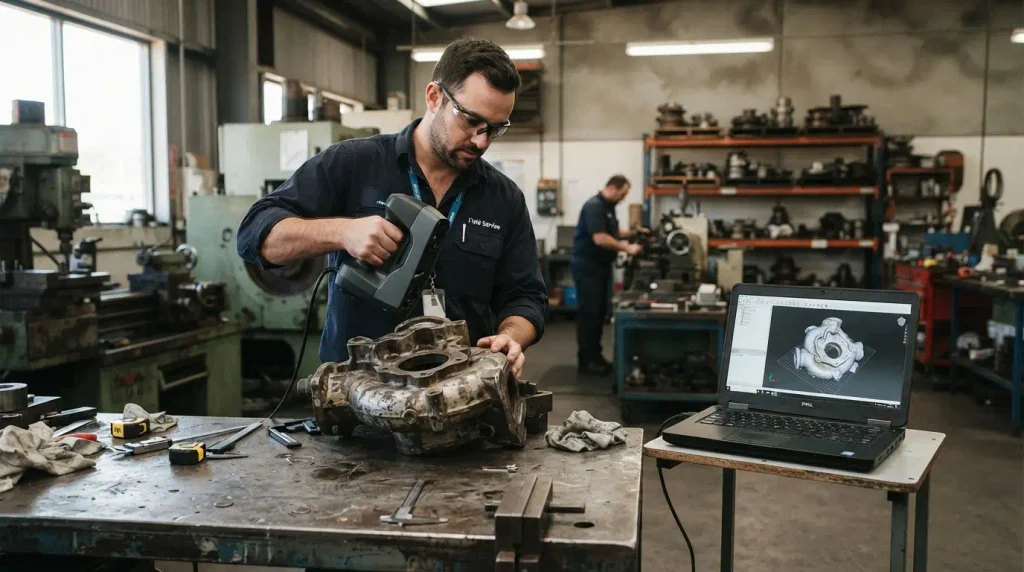
3D Scanning Existing Spare Parts
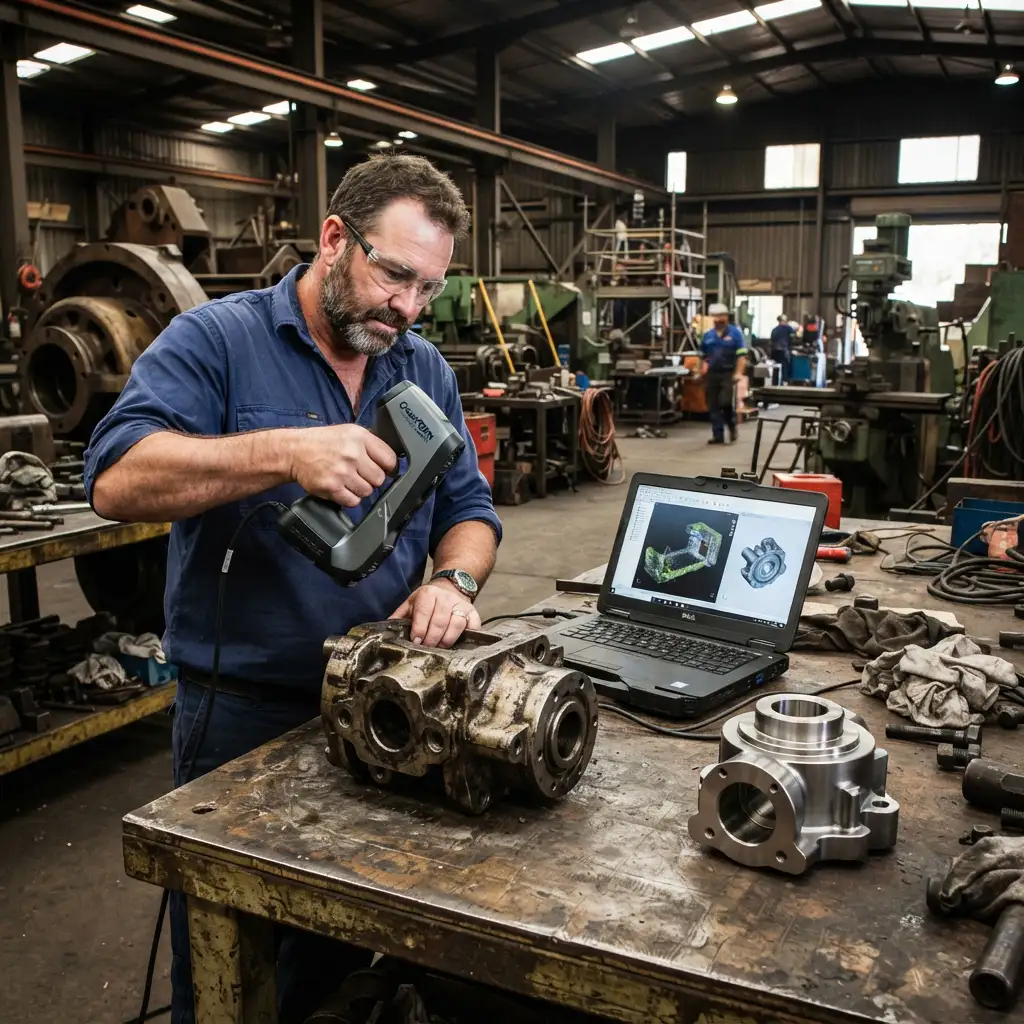
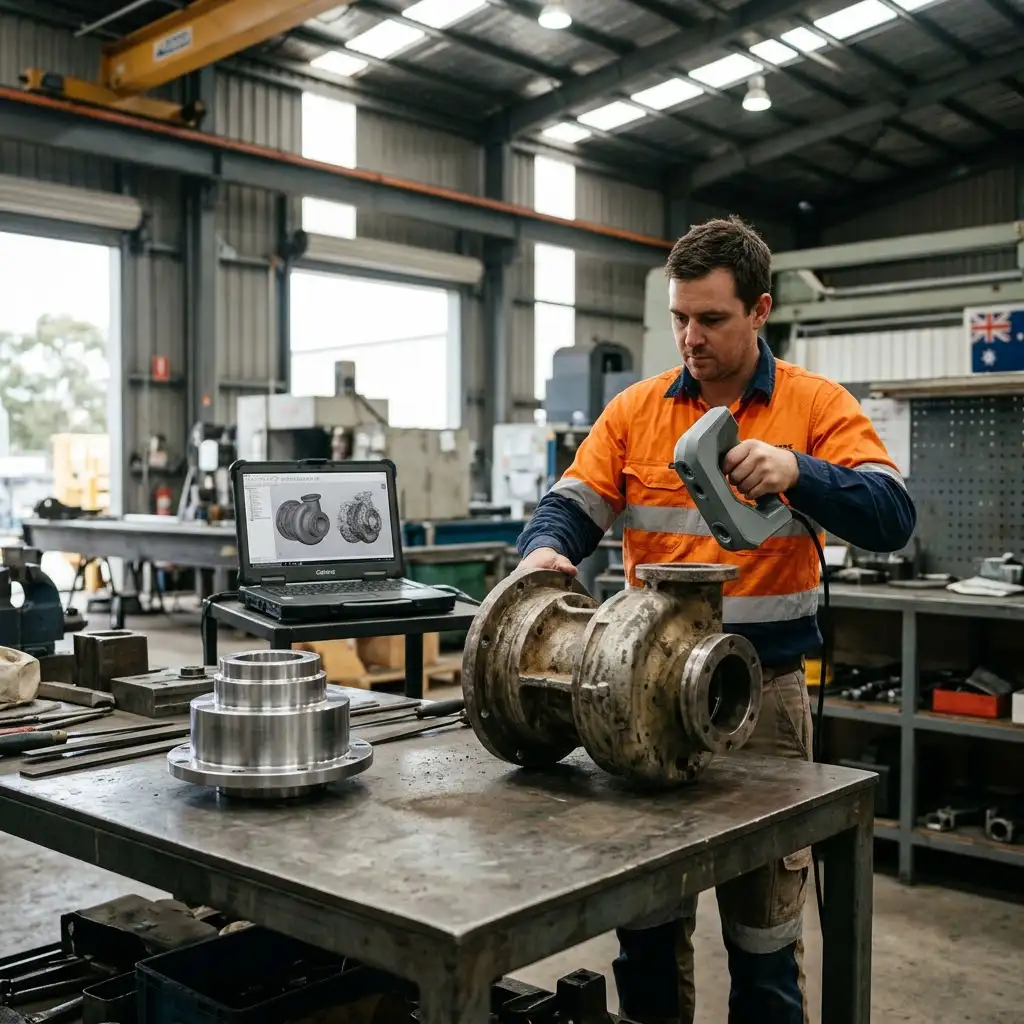
Industrial 3D scanning can be useful when a replacement component exists physically but its original CAD data is missing, incomplete or outdated.
A scanner captures the external geometry of the component as digital measurement data.
For geometrically complex parts, this can provide substantially more information than a small number of manual measurements.
However, a scan should not automatically be treated as a manufacturing-ready spare part.
The physical component may be worn, damaged, corroded or modified. Scan data may therefore represent the condition of the component at the time of measurement rather than its intended original geometry.
This is why 3D scanning is usually the beginning of the digital spare-parts workflow rather than the end.
Reverse Engineering: From Scan Data to Usable CAD
Reverse engineering converts information from an existing physical component into usable engineering geometry.
Scan data can be processed and interpreted to reconstruct surfaces, dimensions and functional features in CAD.
For industrial spare parts, engineers may need to identify mounting surfaces, holes, bores, mating interfaces, wall thicknesses, symmetry, clearances and other functional characteristics.
They also need to distinguish intentional geometry from wear or damage.
For example, scanning a worn bore and reproducing its current dimensions could result in a replacement component that contains the same dimensional problem.
A proper reverse engineering process therefore seeks to recover design intent, not merely copy every imperfection present in the physical sample.
Once reconstructed and appropriately validated, the CAD model can become the foundation for future manufacturing.
From Reverse Engineering to Design Optimization
Reconstructing an obsolete component does not always mean that the replacement must be identical to the original.
The existing geometry may have been shaped by a manufacturing process, tooling requirement or assembly constraint that no longer applies.
Once a usable CAD model exists, engineers can evaluate whether the component should simply be reproduced or whether redesign provides a meaningful benefit.
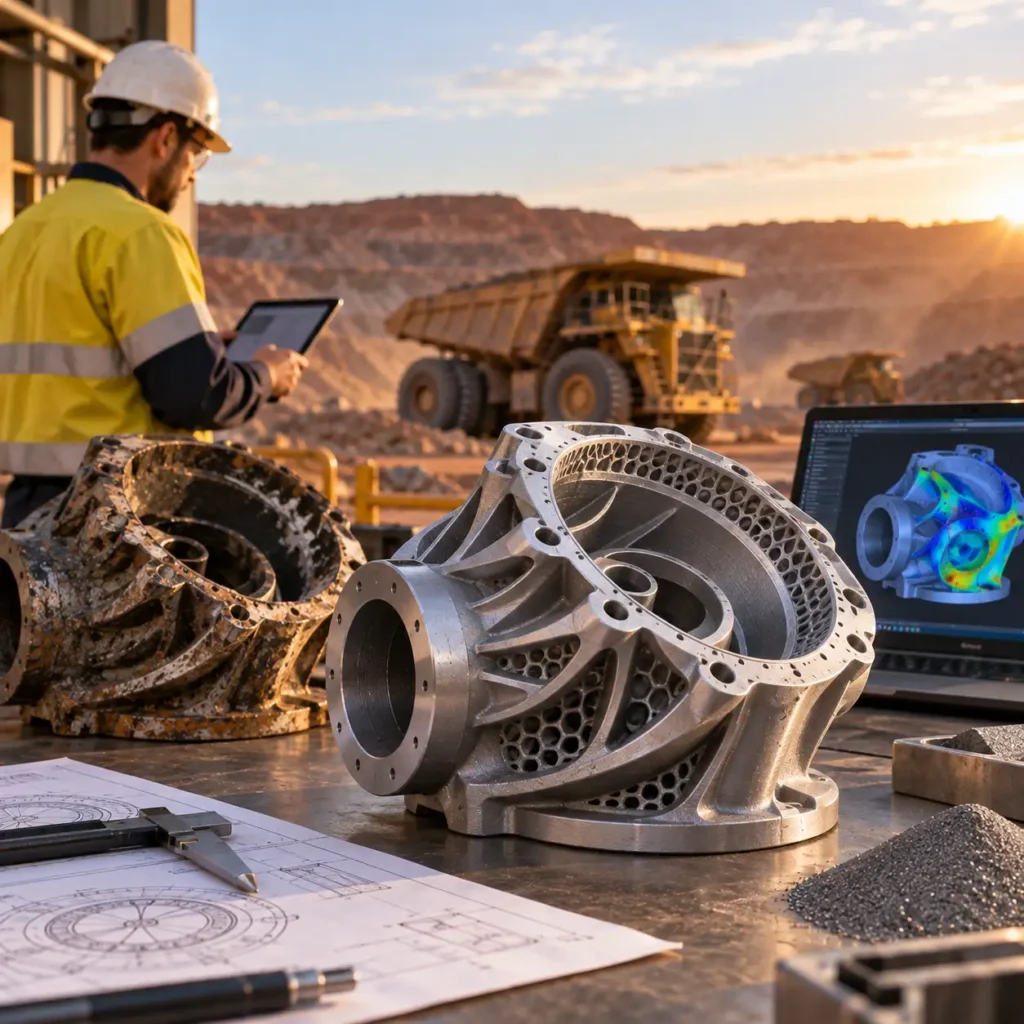
For selected components, this may involve improving stress distribution, modifying problematic geometry, reducing unnecessary material or consolidating several parts into a smaller assembly.
Where metal additive manufacturing is being considered, design for additive manufacturing (DfAM) can help determine whether the geometry should be adapted to the capabilities and constraints of the selected printing process.
This creates a progression from component recovery to component improvement:
Existing part → 3D scanning → reverse engineering → engineering assessment → design optimization → manufacturing
The optimization stage should only be introduced where there is a defined engineering reason for changing the component.
How Metal 3D Printing Supports On-Demand Spare Parts
Metal additive manufacturing can be particularly relevant to on-demand spare parts because it does not rely on many of the dedicated tools required by conventional manufacturing processes.
A component is produced directly from digital geometry through a layer-by-layer manufacturing process.
For suitable applications, this can make low-volume production of complex metal components technically attractive.
Potential applications include specialised brackets, housings, manifolds, tooling and selected fluid-handling or machine components.
The technology can also enable geometries that would be difficult to manufacture conventionally, including complex internal channels, consolidated assemblies and topology-optimized structures.
However, the absence of conventional tooling does not mean that metal 3D printing is automatically fast, inexpensive or appropriate for every spare part.
Build preparation, material requirements, printing time, supports, heat treatment, machining, inspection and qualification can all contribute to the final manufacturing process.
The correct question is therefore not:
“Can this spare part be 3D printed?”
A more useful engineering question is:
“What is the most appropriate manufacturing route for this component, quantity and operational requirement?”
On-Demand Manufacturing Is Not Limited to 3D Printing
A digital spare-parts strategy should remain manufacturing-process neutral.
Once a component exists as controlled engineering data, it may be produced using metal additive manufacturing, CNC machining, fabrication, casting or another suitable process.
The choice depends on geometry, quantity, material, tolerances, lead time, cost and application requirements.
A simple prismatic component may be better suited to CNC machining.
A fabricated assembly may remain most economical as a welded structure.
A highly complex, low-volume metal component may present a stronger case for additive manufacturing.
The value of the digital inventory is that the engineering information can support an informed manufacturing decision rather than locking the organisation into a single process.
On-Demand Manufacturing for Australian Mining
Australian mining operations provide a strong context for digital spare parts because equipment may operate in remote locations while relying on complex global supply chains.
Mining assets can also remain in service for long periods, increasing the likelihood that some replacement components will eventually become difficult to source.
A suitable on-demand manufacturing strategy could allow selected mining components to be digitised before they become urgent.
For example, a critical low-volume component could be scanned during planned maintenance. Its geometry could then be reconstructed, engineering requirements documented and manufacturing options assessed.
If the component is later required, much of the engineering work has already been completed.
This is fundamentally different from waiting until a breakdown occurs before beginning the reverse engineering process.
For mining operations, the greatest value of digital spare parts may therefore come from preparation before failure, rather than simply faster manufacturing after failure.
Prioritising Critical Mining Spare Parts
Creating a digital model of every component in a mining operation would rarely be practical.
A more useful strategy is to prioritise components according to operational risk and supply difficulty.
An organisation might consider how critical a component is to equipment operation, how frequently it fails, whether replacements are readily available and how long procurement normally takes.
The existence of a usable physical sample is also important.
If a rare component is expected to become obsolete, digitising it while an unworn or serviceable example remains available can be more effective than attempting to reconstruct the geometry after the last available part has failed.
This allows digital inventory to become part of asset and maintenance planning rather than an emergency response.
On-Demand Spare Parts for Oil and Gas
Oil and gas operations can face similar challenges with ageing equipment, specialised components and long international supply chains.
Selected replacement parts may be required in small quantities while still needing specific materials, dimensional requirements and documented manufacturing controls.
Digital spare-parts strategies can help preserve the engineering information required to reproduce appropriate components when needed.
For suitable metal components, additive manufacturing may also provide an alternative production route where geometry, quantity and technical requirements support its use.
However, oil and gas applications can involve demanding pressure, temperature, corrosion and safety requirements.
For such components, on-demand manufacturing must be approached as a controlled engineering process.
Material traceability, inspection, applicable standards, testing and qualification requirements may be as important as the manufacturing technology itself.
On-Demand Manufacturing for Australian Manufacturers
The same principles apply beyond mining and energy.
Australian manufacturers may operate imported production machinery for many years, even after suppliers discontinue individual replacement parts.
A failed legacy component can create a disproportionate production problem when no replacement is available locally.
Creating a digital model can provide another pathway.
The component can be inspected, scanned where appropriate, reconstructed in CAD and assessed for local production.
Over time, manufacturers can progressively build digital records for selected high-risk or difficult-to-source components rather than waiting for an unexpected failure to expose the absence of technical data.
This approach can support maintenance resilience while retaining flexibility over the eventual manufacturing process.
Local Manufacturing and Supply-Chain Resilience
Digital inventory becomes particularly useful when combined with qualified local manufacturing capability.
A digital design can be transferred more efficiently than a physical component, but the final part still needs to be manufactured, inspected and delivered.
For Australian companies, local manufacturing can reduce dependence on some international freight and procurement steps for suitable components.
This does not mean that every imported spare part should be replaced by local production.
Global suppliers can remain the most efficient option for many standard or high-volume components.
The strategic value appears when a particular part has a difficult supply profile: low volume, long lead time, high obsolescence risk or significant operational consequences if unavailable.
In these situations, digital engineering and local manufacturing can provide an additional supply option.
Digital Inventory Requires Configuration Control
One of the most important aspects of industrial digital inventory is also one of the easiest to overlook: version control.
A CAD model stored in a folder is not necessarily a reliable digital spare part.
Organisations need confidence that the correct revision, material, dimensional requirements and manufacturing information are associated with the component.
If a part has been redesigned, the previous version should not accidentally be used for future production.
Similarly, modifications made during maintenance need to be assessed before becoming part of the controlled digital record.
A mature digital inventory may therefore require:
- Unique component identification
- CAD and drawing revision control
- Material specifications
- Critical dimensions and tolerances
- Manufacturing process information
- Post-processing requirements
- Inspection criteria
- Approval status
- Production and modification history
The digital file is only one element of the spare-part record.
Material Selection for On-Demand Metal Parts
The material used for a replacement component must be selected according to its engineering requirements, not simply according to what is available in a particular manufacturing system.
Industrial components may need specific combinations of strength, toughness, fatigue resistance, corrosion resistance, wear performance or temperature capability.
If the manufacturing process changes, engineers should assess whether the proposed material and resulting properties remain suitable for the application.
This is particularly important when moving from a conventionally manufactured component to an additively manufactured alternative.
Material behaviour can be affected by the manufacturing route, process parameters, build orientation, heat treatment and surface condition.
A replacement part should therefore be evaluated in its intended final manufacturing condition.
Post-Processing and Inspection Still Matter
Producing the basic geometry is only part of the manufacturing workflow.
A metal additively manufactured spare part may require support removal, heat treatment, machining, surface finishing or dimensional inspection before it is ready for service.
Critical bores, sealing faces and mounting surfaces may require machining even when most of the component is produced additively.
Inspection requirements should also be defined according to the component and its function.
This may involve dimensional inspection, comparison against CAD data or other testing appropriate to the application.
These steps should be included when evaluating lead time and cost.
Comparing only the printing stage with the purchase price of a conventional component can create a misleading economic assessment.
Quality and Validation of Digital Spare Parts
A digital spare part should not be considered manufacturing-ready simply because a CAD model exists.
The model needs an appropriate level of verification.
Depending on the component, validation may involve dimensional comparison with the physical reference, engineering review, material verification, simulation, prototype production or functional testing.
Higher-risk applications can require substantially more extensive qualification.
This is particularly important if the replacement design differs from the original component or uses a different manufacturing process.
The appropriate level of validation should reflect the consequences of component failure and the technical requirements of the application.
The Economics of On-Demand Manufacturing
The business case for on-demand manufacturing is broader than unit manufacturing cost.
A conventionally sourced spare part may have a lower individual purchase price while still carrying inventory, procurement and obsolescence costs.
Conversely, an additively manufactured replacement may eliminate dedicated tooling but involve substantial engineering, printing and post-processing costs.
A useful assessment can therefore consider:
Physical inventory costs — warehousing, working capital and unused stock.
Procurement lead time — particularly for overseas or obsolete components.
Engineering cost — scanning, reverse engineering, redesign and validation.
Manufacturing cost — including material, machine time and setup.
Post-processing and inspection — including machining, heat treatment and quality assurance.
Operational consequence — the potential impact of not having the component available when required.
The most attractive applications are generally those where digital manufacturing solves a real supply, engineering or operational problem.
When On-Demand Manufacturing Makes Sense
On-demand manufacturing can be worth investigating when several conditions occur together.
The component may be required infrequently but be operationally important. Procurement lead time may be long. The OEM may no longer support the equipment. The required quantity may be too small to justify conventional tooling.
The geometry may also favour a digital manufacturing process, or a redesign may provide additional engineering benefits.
In contrast, commonly available standard parts with reliable supply chains and low purchase costs are unlikely to benefit from extensive reverse engineering or additive manufacturing.
The objective should therefore be selective digitisation rather than digitisation for its own sake.
A Practical Digital Spare-Parts Workflow
A structured on-demand manufacturing program can begin with the spare-parts portfolio rather than with a 3D printer.
The first step is identifying components where supply risk, lead time, obsolescence or inventory cost creates a meaningful problem.
Available engineering data can then be reviewed.
Where accurate CAD and drawings already exist, they may provide the digital foundation. Where they do not, 3D scanning and reverse engineering can be used to reconstruct the required information.
The component is then assessed for material requirements, critical dimensions, design condition and manufacturing feasibility.
If additive manufacturing is being considered, DfAM can be used to determine whether the component should be adapted for the selected process.
The final digital package can then be validated, controlled and stored for future manufacturing.
A practical workflow is:
Part identification → supply-risk assessment → 3D scanning where required → reverse engineering → engineering validation → manufacturing assessment → DfAM where appropriate → production → post-processing → inspection → controlled digital inventory
This approach treats the digital spare part as an engineering asset rather than simply a CAD file.
From Reactive Replacement to Proactive Spare-Parts Engineering
The most significant opportunity in on-demand manufacturing may not be manufacturing speed alone.
It is the ability to move spare-parts engineering earlier in the asset lifecycle.
When a component has already failed and production is waiting, there is limited time for scanning, reverse engineering, redesign, material assessment and validation.
A proactive strategy identifies difficult-to-source components while equipment is still operating and physical samples remain available.
Engineering data can then be created and validated without the same emergency pressure.
Over time, organisations can build a digital inventory focused on the components that create the greatest combination of supply risk and operational consequence.
For Australian mining, manufacturing and industrial companies, this can create an additional pathway between existing physical assets and local manufacturing capability.
Conclusion
On-demand manufacturing provides a different way to think about industrial spare parts.
Instead of relying exclusively on physical inventory and established supply chains, suitable components can be represented by controlled digital engineering data and manufactured when required.
3D scanning can capture existing geometry. Reverse engineering can reconstruct usable CAD. Engineering analysis and DfAM can prepare appropriate components for new manufacturing routes, while metal additive manufacturing can provide a production option for selected complex and low-volume parts.
The strongest applications are not determined by technology alone. They emerge where supply risk, component geometry, production quantity, engineering requirements and operational value support a digital manufacturing approach.
For Australian industries managing mining equipment, legacy machinery and specialised industrial assets, digital spare parts can therefore become part of a broader strategy for engineering resilience and local manufacturing.
E-Metal3D supports this workflow through industrial 3D scanning, reverse engineering, engineering solutions and metal additive manufacturing, helping Australian companies assess the pathway from existing components to validated digital designs and manufactured replacement parts.
What is on-demand manufacturing?
On-demand manufacturing is a production approach in which components are manufactured in response to actual demand rather than being produced and stored in advance. For industrial spare parts, it can combine digital inventory with local or distributed manufacturing capability.
What are digital spare parts?
Digital spare parts are controlled digital engineering records that contain the information required to support future production of a component. Depending on the application, this can include CAD models, drawings, material specifications, tolerances, manufacturing information and inspection requirements.
Can spare parts be manufactured from a 3D scan?
A 3D scan can provide geometric information for reverse engineering, but scan data alone is not necessarily manufacturing-ready. The component may need CAD reconstruction, engineering review, dimensional correction and validation before manufacturing.
Can obsolete parts be reverse engineered?
Yes. Where a suitable physical reference exists, obsolete components can often be measured or scanned and reconstructed in CAD. Engineers still need to account for wear, damage, materials, tolerances and the original functional requirements.
Can metal 3D printing be used for spare parts?
Yes, for suitable components. Metal 3D printing can be particularly relevant to low-volume, geometrically complex or specialised metal spare parts. Its suitability depends on material, geometry, quantity, quality requirements and economics.
Is on-demand manufacturing suitable for mining spare parts?
It can be suitable for selected mining components, particularly where conventional replacements have long lead times, low demand or obsolescence risk. Engineering requirements and operating conditions must still be assessed for each component.
Does on-demand manufacturing eliminate spare-parts inventory?
No. Critical standard components and frequently used parts may still need to be held physically. Digital inventory is better viewed as a complement to conventional spare-parts strategies rather than a complete replacement.
Is on-demand manufacturing the same as additive manufacturing?
No. Additive manufacturing is a manufacturing technology. On-demand manufacturing is a production and supply strategy. An on-demand component may be produced through additive manufacturing, CNC machining, fabrication or another appropriate process.
How do you choose which spare parts to digitise?
Priority can be given to components with long procurement lead times, high obsolescence risk, low demand, significant inventory cost or major operational consequences if unavailable. Manufacturing feasibility and access to reliable engineering information should also be considered.
Can digital spare parts support local manufacturing in Australia?
Yes. Where suitable engineering data and qualified manufacturing capability are available, digital spare parts can support local production of selected components. The appropriate process still depends on material, geometry, quality requirements and economics.