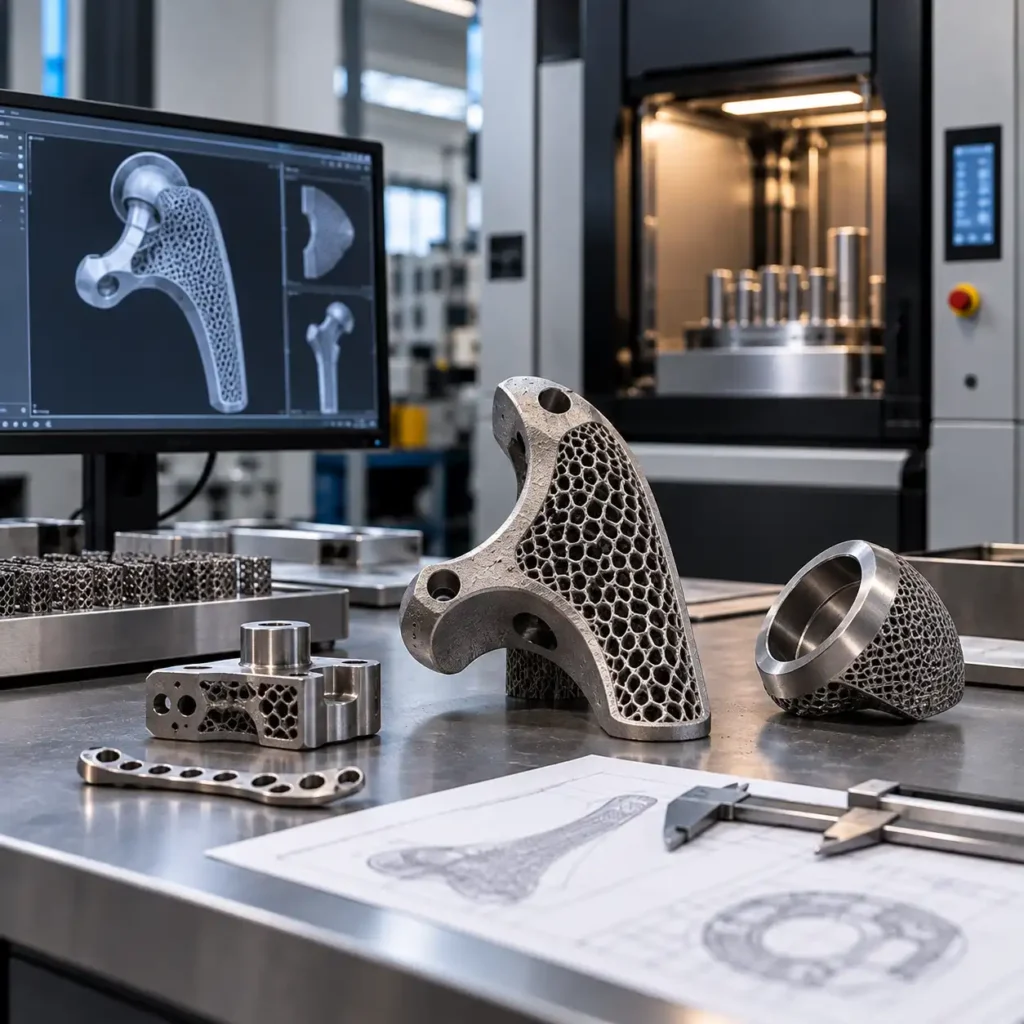
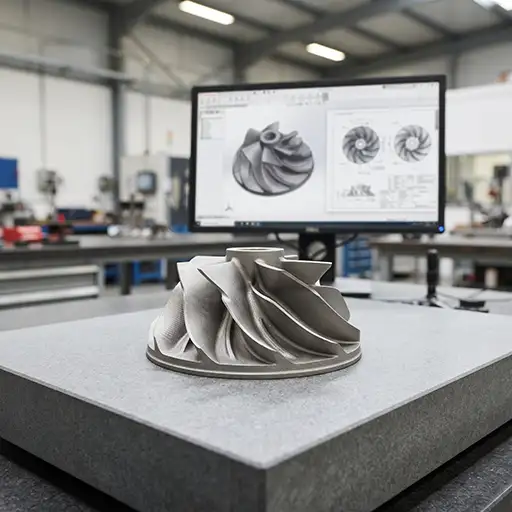
Metal 3D printing can make complex industrial components possible, but the price of a printed part is rarely determined by material weight alone. Geometry, build time, support structures, material selection, finishing operations and inspection requirements can all influence the final manufacturing cost.
For engineers and procurement teams, understanding these factors is essential when deciding whether metal additive manufacturing is appropriate for a component. It also helps explain why two parts of similar size can receive very different quotations.
This guide explains eight factors that influence metal 3D printing costs and outlines practical ways to prepare a component for a more informed manufacturing assessment.
1. Part Geometry and Design Complexity
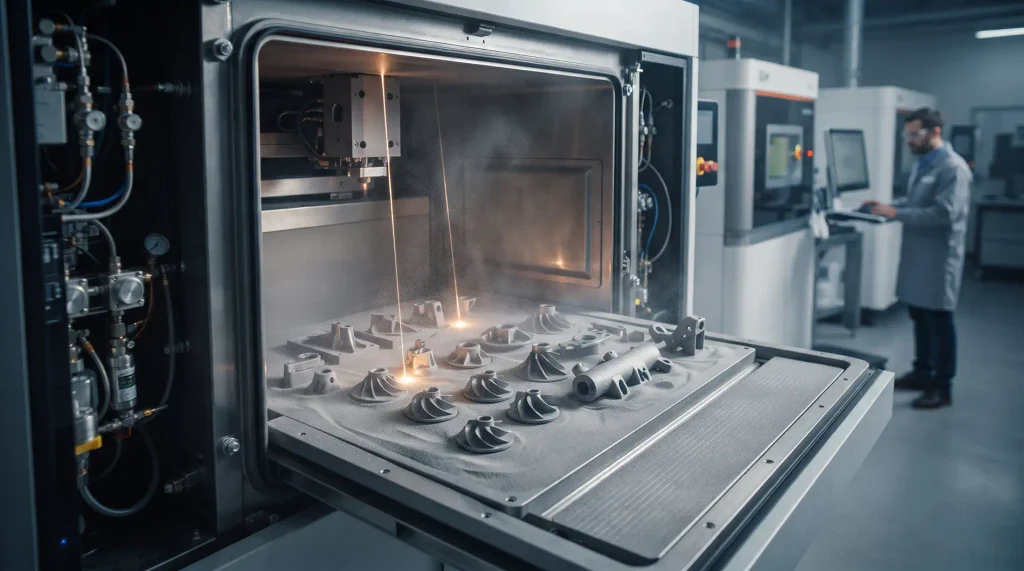
The geometry of a component is one of the first things to consider when estimating metal 3D printing costs.
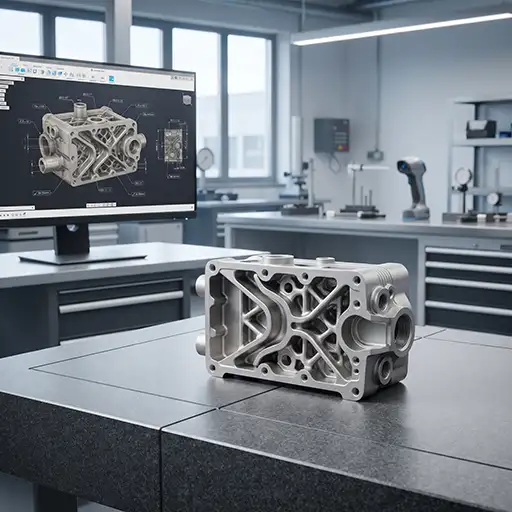
A compact component with relatively simple geometry may require less preparation and fewer support structures than a part with complex overhangs, enclosed channels or delicate features. However, complexity does not automatically make a part expensive. In some cases, additive manufacturing can produce a complex design without the tooling or assembly operations that conventional manufacturing would require.
The important question is how the geometry affects the complete manufacturing workflow.
Features that may increase cost include:
- Difficult-to-support overhangs and complex surfaces.
- Thin walls or small details that require careful process assessment.
- Internal channels that are difficult to clean or inspect.
- Geometries that increase build height or restrict part orientation.
- Critical features that require additional machining after printing.
A design review can help identify which features are essential to performance and which may be simplified without compromising the component’s function.
Design for Additive Manufacturing (DfAM) is particularly useful at this stage. It evaluates whether a component can be adapted to the process rather than simply transferring a conventional design into a 3D printing workflow.
2. Material Selection
Material choice affects more than the cost of the metal powder. It can influence process settings, build requirements, finishing methods and the inspection needed for the final application.
Industrial metal additive manufacturing may involve materials such as stainless steel 316L, precipitation-hardening stainless steel 17-4PH, nickel-based superalloys such as Inconel 625 or 718, aluminium alloys and titanium alloys. Their suitability depends on the component’s operating environment and engineering requirements.
For example, a component exposed to elevated temperatures or demanding chemical conditions may require a different material assessment from a general industrial bracket. Material selection should be based on the required mechanical properties, corrosion resistance, operating conditions and applicable specifications.
When comparing quotations, confirm that the proposed material meets the design requirements. A lower material price is not necessarily an advantage if the selected material is unsuitable for service or requires additional qualification.
It is also important to distinguish between the price of raw material and the total cost of producing a finished component. Material utilisation, build strategy and process-specific requirements can affect the final quotation.
3. Build Time and Machine Utilisation
Metal powder bed fusion processes, including laser powder bed fusion (LPBF), build components layer by layer. The time required depends on several factors, including the build height, the cross-sectional area of the geometry, scan strategy, process parameters and the number of parts included in the build.
A tall component may require more layers than a shorter design, even if the two parts have similar mass. Complex scanning patterns can also affect build time.
Machine utilisation matters as well. A manufacturing team may be able to arrange multiple suitable components in one build, but the practical benefit depends on their geometry, orientation, material compatibility and production schedule.
For this reason, a component’s dimensions and weight alone are not enough to predict its price accurately.
When seeking a quotation, supply a complete CAD model and the required quantity. This allows the manufacturing team to assess the part in the context of the intended process rather than relying on a rough estimate based only on volume.
4. Support Structures and Material Utilisation
Support structures may be required to stabilise overhangs, manage thermal behaviour and connect selected regions of a component to the build plate.
The amount and complexity of support material depend on the design and build orientation. Supports can also affect the time and effort needed for removal, surface finishing and access to critical features.
A geometry that appears efficient in CAD may be less efficient to manufacture if it requires extensive supports or makes them difficult to remove.
Engineering review can help assess whether changes to orientation or geometry would reduce these requirements. Such changes must still satisfy the component’s functional and dimensional constraints.
It is also important to avoid treating powder utilisation as a simple one-to-one relationship between the mass of the finished part and the material required for the build. The manufacturing process involves additional material handling and process considerations, so actual costs depend on the supplier’s workflow.
5. Post-Processing and Finishing
A printed component is not necessarily ready for installation immediately after the build.
Depending on the application, post-processing may include support removal, stress relief or other heat treatment, machining, surface finishing, drilling, reaming and cleaning. The exact requirements depend on the material, process, geometry and final specification.
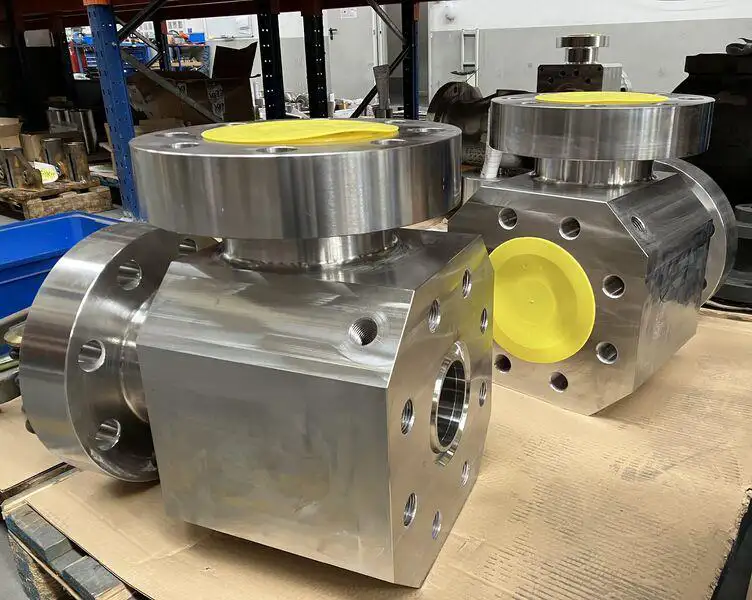
Machining can be particularly important for interfaces that require defined dimensions, fits or surface finishes. These may include bearing seats, sealing faces, threaded holes and other critical features.
The cost of finishing can increase when a component has limited tool access, intricate geometry or several surfaces with different requirements.
To avoid unnecessary work, identify critical dimensions and surfaces during the design stage. The manufacturing package should distinguish between features that may remain as-built and those that must achieve a specified final condition.
A realistic quotation should account for the operations needed to deliver the required component, not just the printing stage.
6. Inspection, Testing and Qualification
Inspection requirements can have a significant influence on the total cost of an industrial metal 3D printed part.
A general prototype may require only basic dimensional checks, while a component used in a demanding industrial application may need more extensive documentation, testing or qualification. The appropriate approach depends on the consequences of failure, customer requirements and any applicable industry standards.
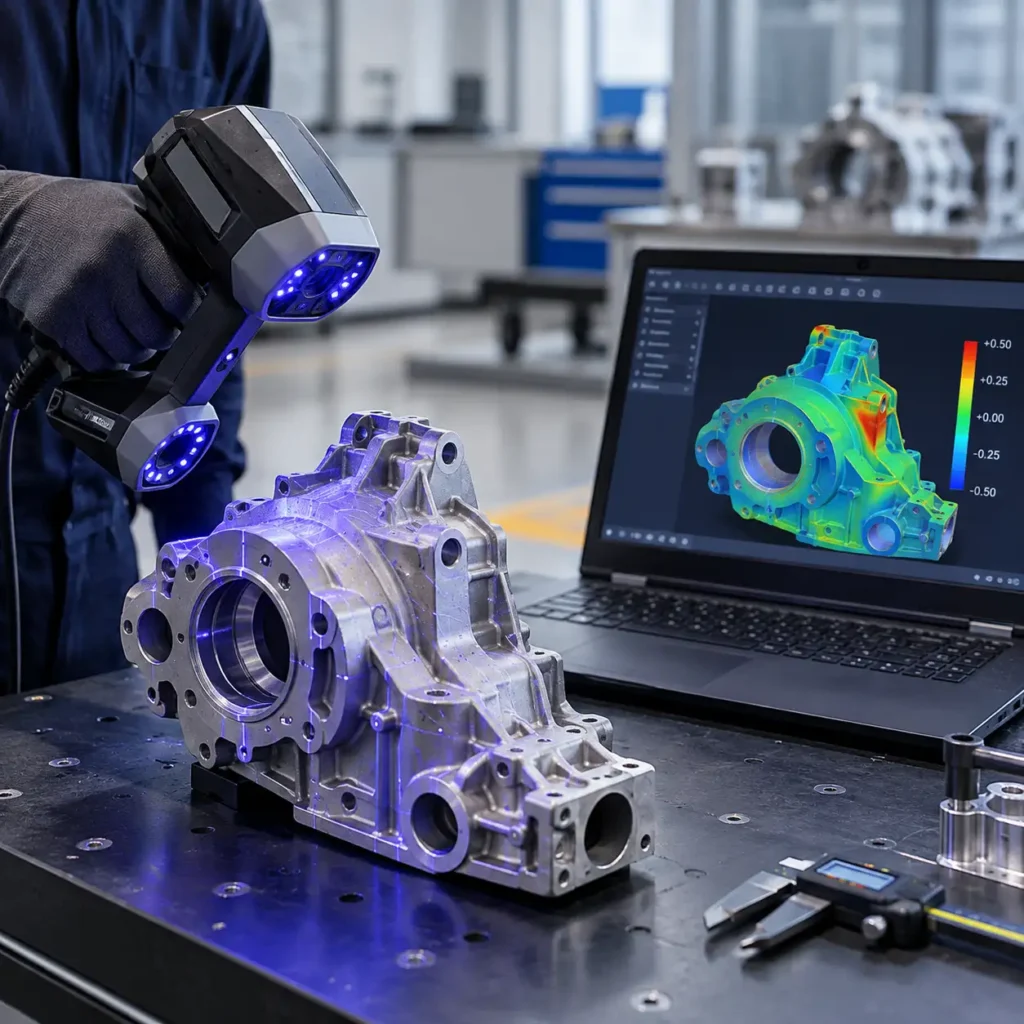
Possible activities include dimensional inspection, surface assessment, non-destructive testing and material or process documentation. Not every component requires every method, and the specific inspection plan should be established for the application.
Complex internal passages may be particularly challenging because some features cannot be measured directly using conventional external methods. Where internal geometry is functionally important, the design and inspection strategy should be considered together.
For components subject to formal acceptance criteria, agree on the required evidence before manufacturing begins. This helps avoid discovering late in the workflow that a critical feature cannot be verified using the originally planned method.
7. Production Quantity and Repeatability
The required quantity affects how manufacturing preparation and production costs are distributed across the order.
A single component may carry the full cost of certain preparation activities, while a suitable batch may allow some costs to be shared across multiple parts. However, savings are not guaranteed: parts must be suitable for the same build, and production capacity, material requirements, orientation and scheduling all matter.
Metal additive manufacturing can be attractive for low-volume production, replacement components and designs that are difficult to manufacture conventionally. It can also be useful when avoiding dedicated tooling is important.
For larger quantities, conventional manufacturing methods may offer economic advantages depending on geometry, tooling requirements, production rate and finishing operations. In other cases, additive manufacturing may remain attractive because of part consolidation, design flexibility or reduced assembly requirements.
The appropriate comparison is therefore based on the complete manufacturing route and the required quantity, rather than assuming that metal 3D printing is always cheaper or always more expensive.
8. Engineering Preparation and Design Readiness
The quality of the information supplied for quotation can influence how efficiently a component moves through manufacturing assessment.
A complete, well-prepared model helps the team understand the geometry, identify critical features and determine which finishing and inspection operations may be required. Incomplete files, unclear tolerances or missing functional requirements can create uncertainty and additional clarification work.
Before requesting a quotation, prepare the following information where applicable:
- A valid CAD model and the requested exchange format.
- The required material or relevant operating conditions.
- The intended production quantity.
- Critical dimensions, datums and tolerances.
- Surface-finish and machining requirements.
- Any known inspection, testing or documentation requirements.
- Relevant service conditions, such as temperature, loading or exposure to corrosive environments.
Not every enquiry requires a complete engineering drawing at the initial stage. However, the more clearly the functional requirements are communicated, the easier it is to assess the manufacturing route and identify unresolved questions.
Where a component is being redesigned for additive manufacturing, engineering assessment may also identify opportunities to simplify geometry, consolidate assemblies or improve access for finishing.
How to Obtain a More Useful Metal 3D Printing Quotation
A useful quotation should be based on the actual component and its required final condition.
Start with the intended function, material requirements and production quantity. Provide the available CAD data and clearly identify critical features. If the part needs machining, special inspection or specific documentation, include those requirements in the enquiry rather than assuming they are included automatically.
It is also worth asking what the quotation covers. Confirm whether the price includes manufacturing preparation, printing, support removal, heat treatment, machining, inspection and any required documentation. The scope can differ between suppliers and projects.
For industrial parts, the lowest initial quotation may not represent the lowest total cost if additional operations or acceptance requirements are excluded. Comparing quotations on a consistent scope provides a more meaningful basis for a purchasing decision.
E-Metal3D provides information about its metal 3D printing services and engineering solutions for industrial
applications.
How much does metal 3D printing cost?
There is no single price that applies to all metal 3D printed parts. The cost depends on the material, geometry, build requirements, production quantity, finishing operations and inspection scope. A reliable estimate requires assessment of the specific component and its requirements.
Is metal 3D printing more expensive than CNC machining?
It depends on the component and production volume. Metal 3D printing may be attractive for complex geometries, low-volume parts or designs that benefit from part consolidation. CNC machining may be more economical for suitable geometries and larger quantities. The comparison should include finishing, tooling, assembly and other relevant production costs.
Does a heavier metal 3D printed part always cost more?
Not necessarily. Mass is one consideration, but build time, height, geometry, support requirements, material and finishing can also influence the price. Two parts with similar mass may require different manufacturing workflows.
Which materials affect metal 3D printing costs?
The selected alloy can affect material expenses and the manufacturing and finishing requirements. Stainless steel, nickel-based alloys, aluminium alloys and titanium alloys have different properties and process considerations. The appropriate choice should be based on the component’s functional requirements rather than price alone.
Can design changes reduce metal 3D printing costs?
Potentially. Changes to geometry, orientation, support requirements and finishing access may improve manufacturability. However, any redesign must preserve the required function and should be assessed against the component’s engineering constraints.