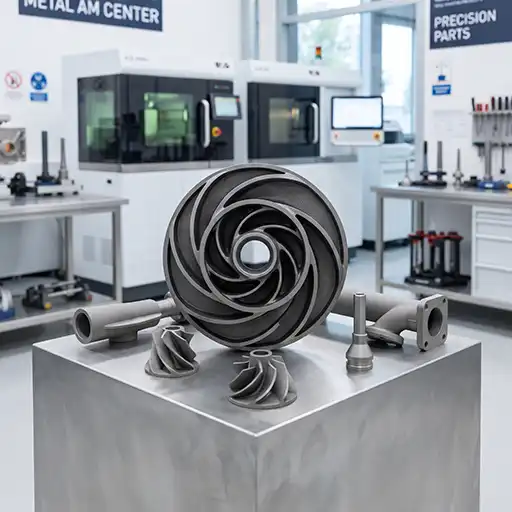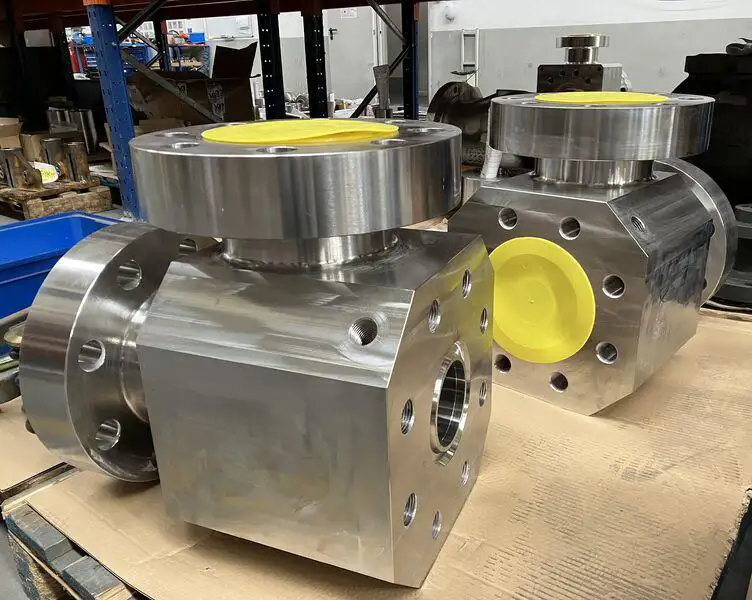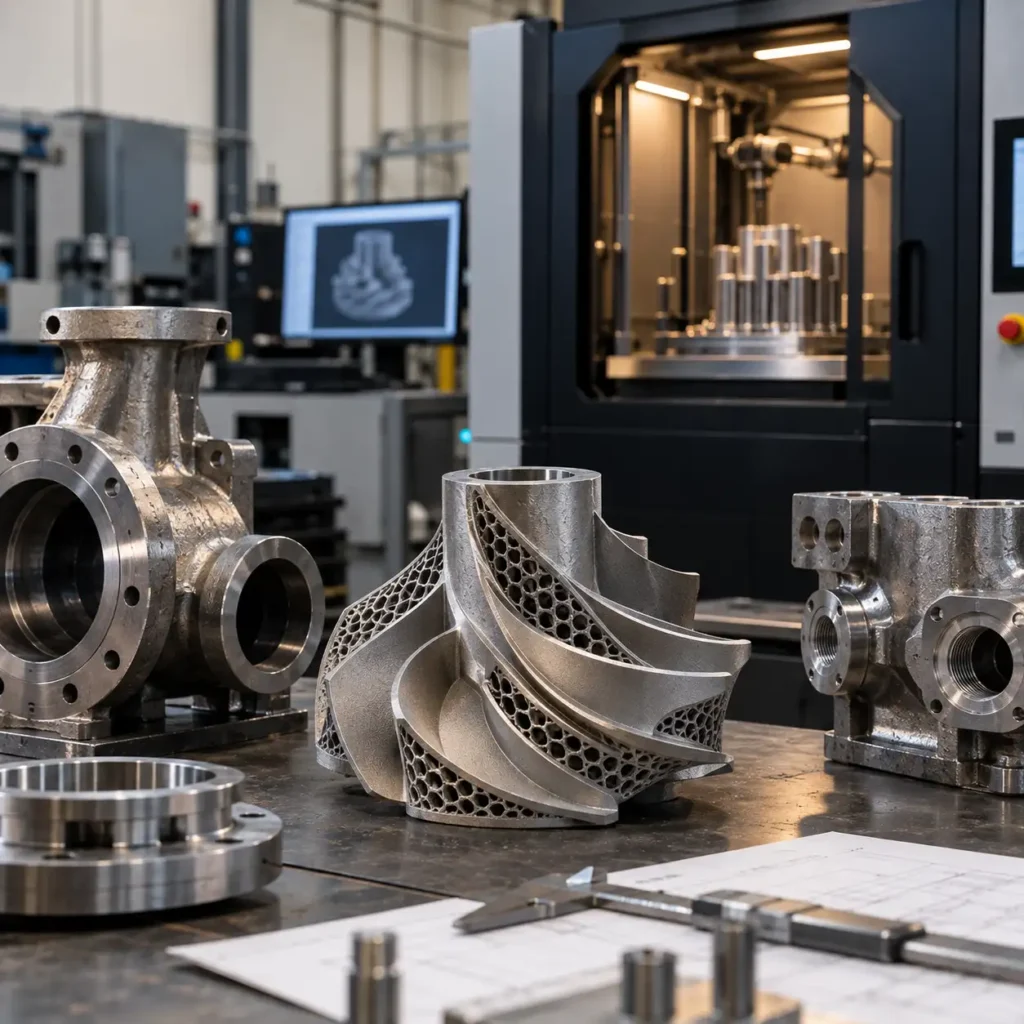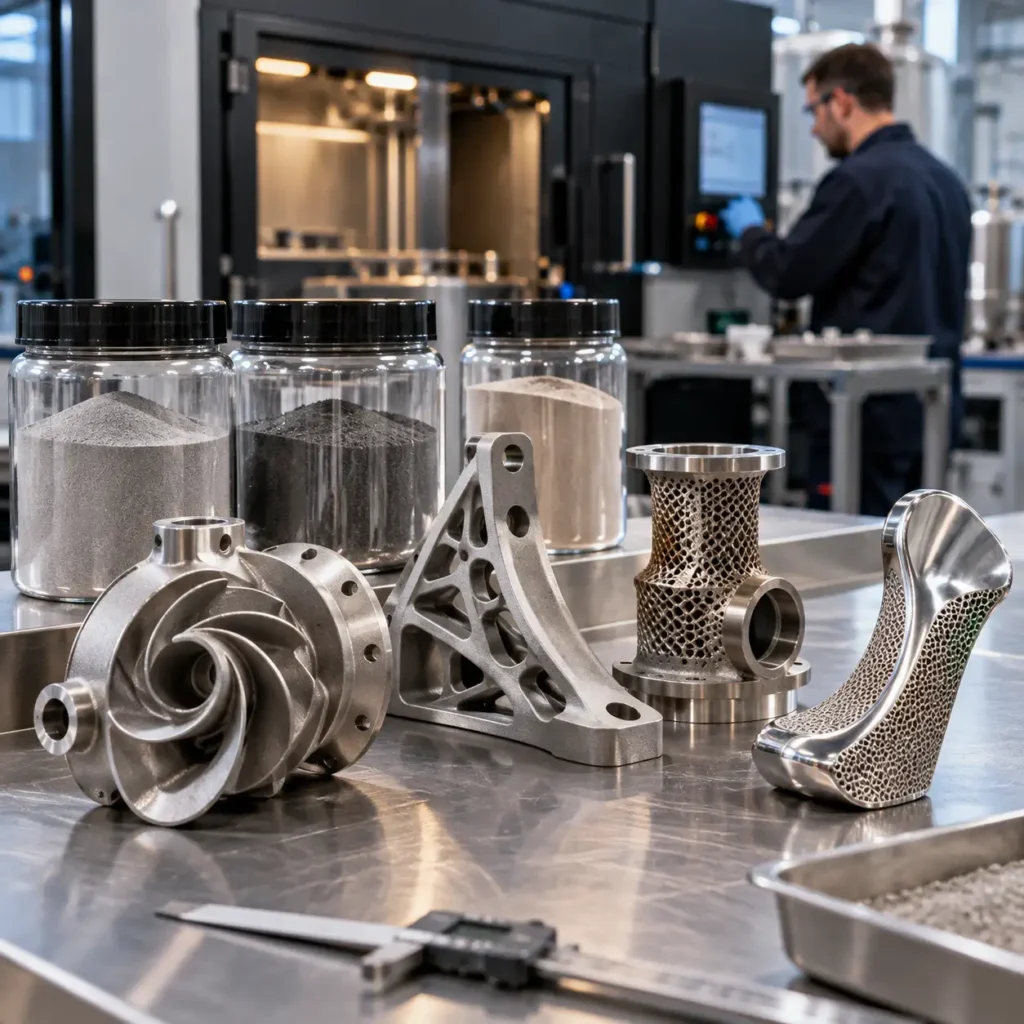
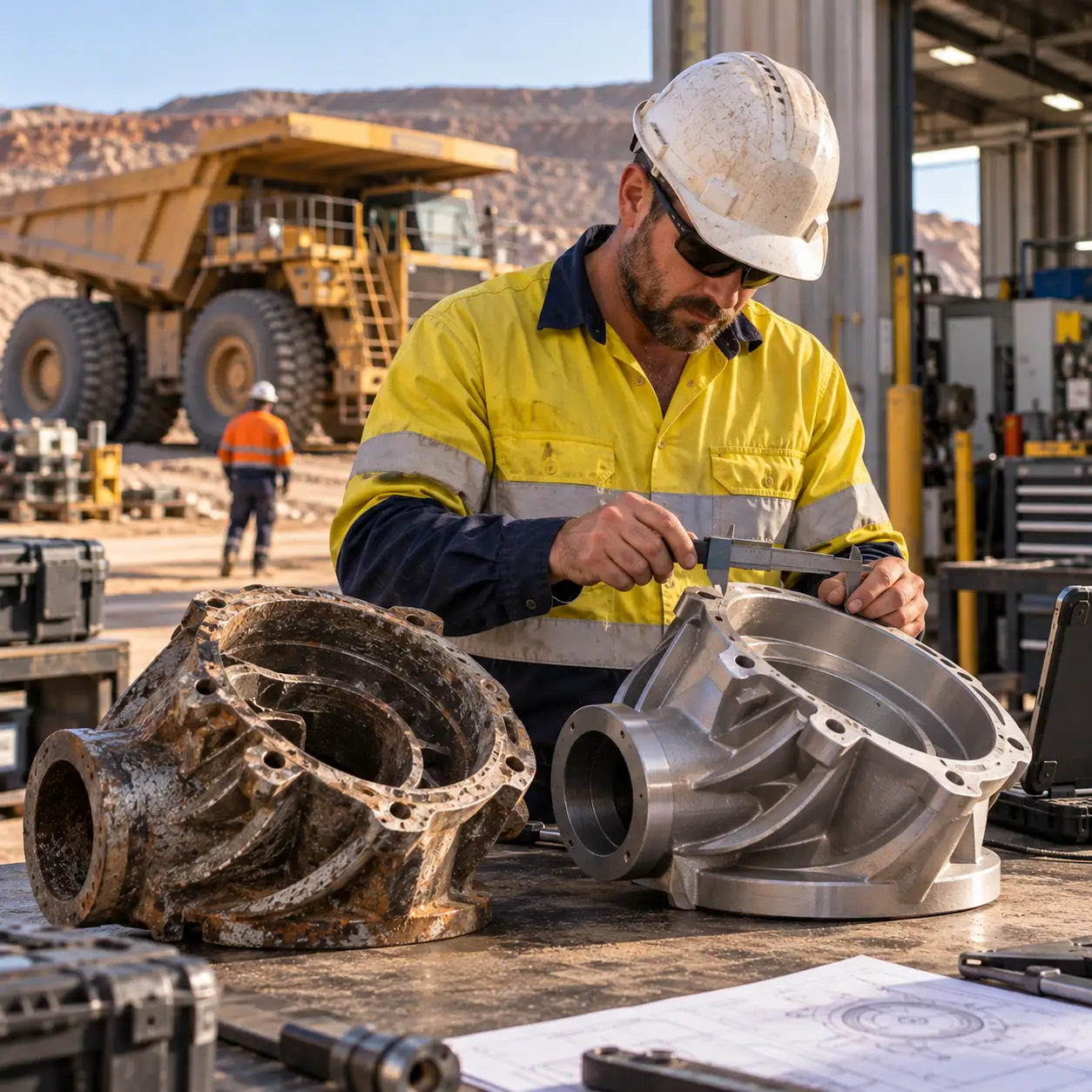
For Australian mining operations, a failed component can become a supply-chain problem long before it becomes an engineering problem. Metal 3D printing for mining in Australia offers another route for selected critical, obsolete and difficult-to-source parts: capture the existing component digitally, reconstruct its intended geometry, validate the engineering requirements and manufacture a replacement locally.
This approach is particularly valuable when an OEM replacement has a long lead time, original drawings are unavailable or only a small number of parts are required. By combining 3D scanning, reverse engineering and metal additive manufacturing, mining companies can potentially turn physical spare parts into reusable digital manufacturing data.
The important point is that metal 3D printing is not a universal replacement for CNC machining, casting or conventional spare-parts procurement. Its strongest value appears where complexity, low production volume, obsolescence and downtime make traditional sourcing inefficient.
Why Spare Parts Are a Particular Challenge for Australian Mining
Mining equipment is expected to operate under conditions that accelerate wear. Pumps, crushers, processing equipment, conveyors and other systems may be exposed to abrasive material, vibration, impact, corrosion, heat and continuous mechanical loading.
When a component eventually fails, the replacement may not be sitting in a warehouse nearby.
Australia’s mining geography can make this problem more difficult. A replacement part may need to be manufactured overseas, shipped internationally and then transported to a remote operation. For equipment that has been in service for many years, the original component may also have been discontinued.
The real cost of the problem can therefore extend well beyond the purchase price of the spare part. The operational question becomes how quickly the correct component can be returned to service.
For certain parts, local digital manufacturing provides another option.
Instead of treating the overseas supply chain as the only source, an existing component can become the starting point for a new engineering and manufacturing workflow in Australia.
From a Worn Mining Component to a Digital Model
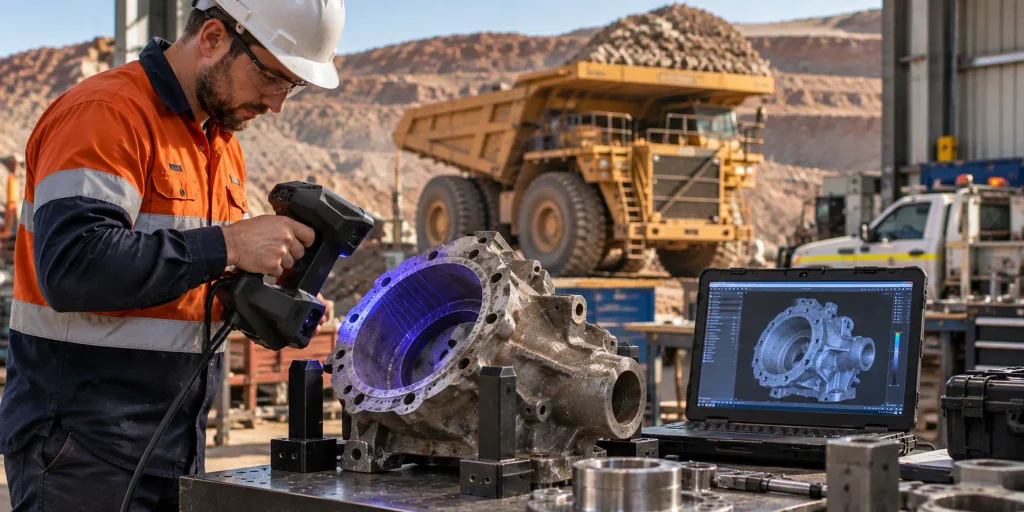
The first challenge is obtaining reliable geometry.
If the original CAD model and engineering drawings are available, engineers already have a strong starting point. With legacy mining equipment, however, those files may be missing, incomplete or inaccessible.
This is where 3D scanning services become useful.
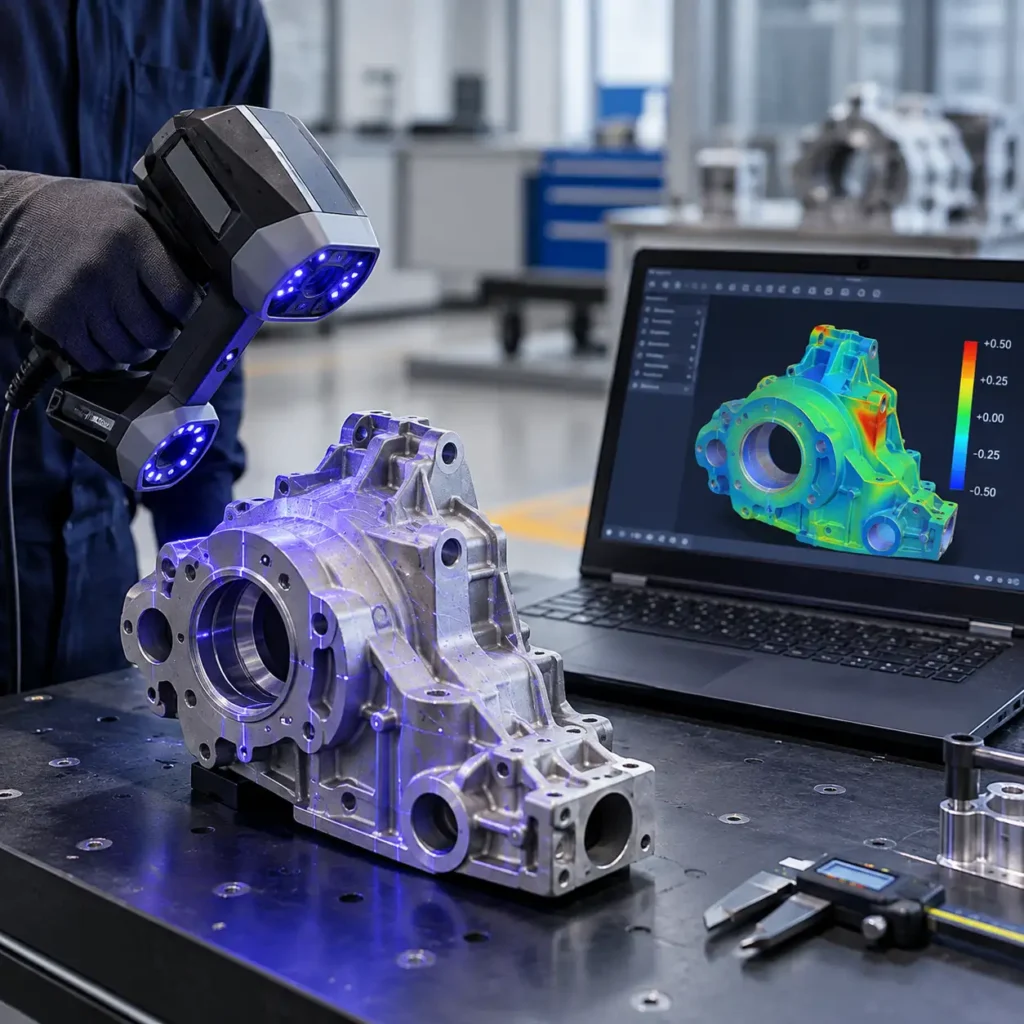
Industrial 3D scanning can capture complex surfaces and features far more efficiently than attempting to reconstruct every dimension manually. The scan produces a detailed digital representation of the available physical component.
But the resulting scan should not automatically be treated as the design of the replacement part.
A mining component may have spent thousands of hours in service. Surfaces can be worn, edges damaged, holes enlarged and critical features distorted. An exact digital copy could reproduce those defects.
The scan therefore becomes engineering evidence rather than the final manufacturing file.
Existing Part → 3D Scanning → Geometry Analysis → Reverse Engineering → CAD Model → Engineering Validation
This distinction is fundamental when reproducing industrial components.
Why Reverse Engineering Matters
Reverse engineering converts captured geometry into an engineering model that can actually be evaluated and manufactured.
Consider a worn pump housing or impeller removed from mining equipment. A 3D scanner may capture the component accurately, including the areas that have deteriorated in service. The engineer then needs to distinguish original design intent from wear and damage.
Mating surfaces need to align correctly. Bolt patterns need to match adjoining equipment. Clearances, wall thicknesses and functional interfaces need to be reconstructed appropriately.
This process can also incorporate traditional dimensional inspection where higher confidence is required around specific features.
The resulting CAD model is far more useful than a raw scan. It can become a controlled digital asset for engineering analysis, future modifications and subsequent manufacturing.
For ageing mining equipment, that has strategic value. A component that previously existed only as a physical object can now become part of a digital spare parts inventory.
Where Metal 3D Printing Enters the Workflow
Once the component has been reconstructed and validated, engineers still need to decide how it should be manufactured.
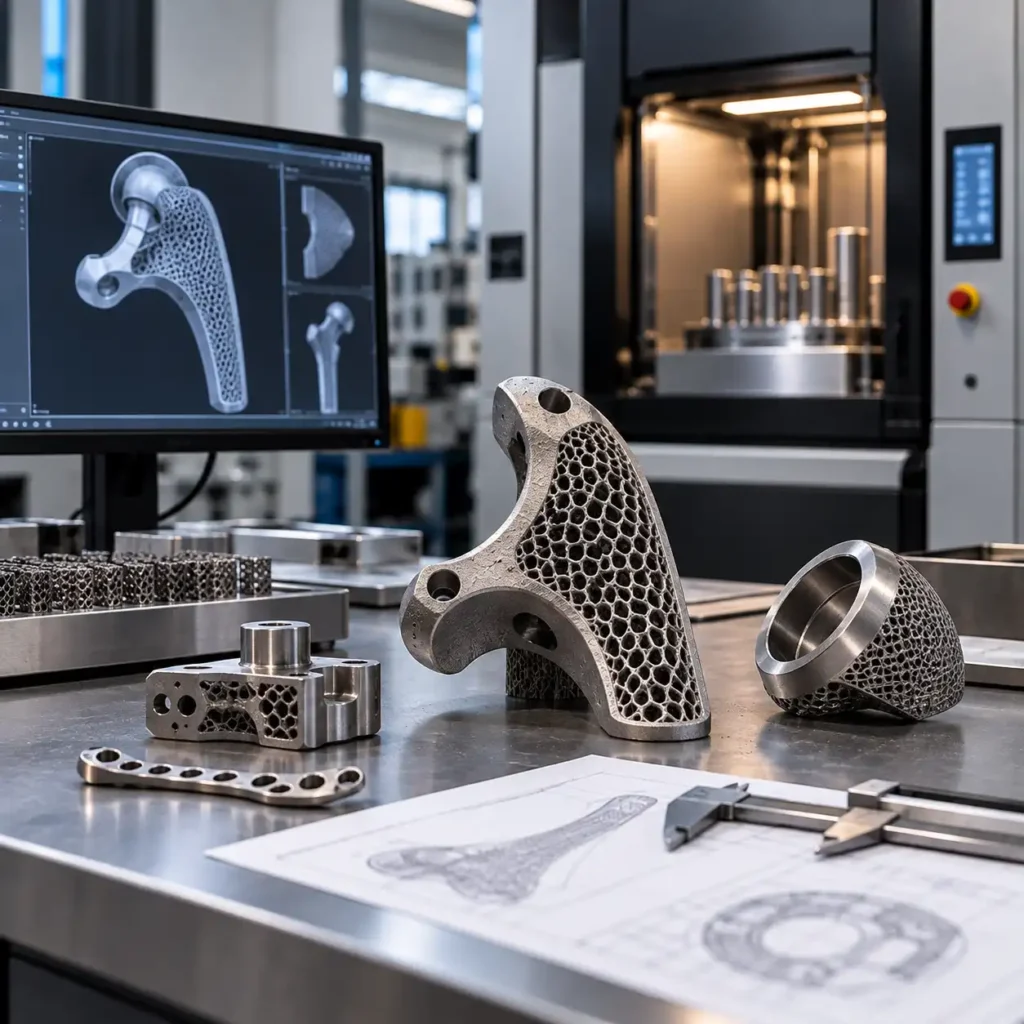
Metal additive manufacturing builds components directly from digital geometry, typically layer by layer. This removes some of the tooling constraints associated with conventional manufacturing and makes the technology particularly interesting for complex and low-volume parts.
For Australian mining applications, this can matter when only one or a few replacements are required.
Producing tooling for a very small batch may be commercially unattractive. A complex geometry may also require several conventional manufacturing operations. If the component is technically suitable for metal 3D printing, additive manufacturing can provide another production route.
However, the decision should be driven by the part rather than the technology.
A relatively simple component may be produced faster and more economically using CNC machining. A large part produced repeatedly may favour casting. Fabricated assemblies may remain better suited to conventional fabrication.
A good engineering workflow asks which manufacturing method best satisfies the component’s functional, material, dimensional, quantity and lead-time requirements.
The Opportunity to Improve a Part Instead of Simply Copying It
Reverse engineering creates another opportunity that is easy to overlook.
The replacement does not necessarily have to be identical to the original component.
Suppose a mining component repeatedly fails at the same location. Simply scanning the failed part and producing another identical copy may reproduce the same weakness.
Once the component exists as an editable CAD model, engineers can investigate why it is failing.
Depending on the application and engineering requirements, geometry may potentially be modified, stress concentrations reduced, wear-prone regions reconsidered or material selection reviewed.
Additive manufacturing can expand the available design space further because engineers are less constrained by some conventional manufacturing geometries.
This does not mean an old component should be casually redesigned. Changes need appropriate engineering analysis and validation.
But it changes the objective from:
“How do we copy this broken part?”
to:
“What component does this equipment actually need?”
That is a much more valuable engineering question.
Material Selection for Mining Components
A successful replacement component depends on much more than its external shape.
Mining parts operate in different combinations of mechanical loading, wear, temperature and corrosion. Material selection must reflect those operating conditions.
Stainless steels can be appropriate where corrosion resistance is important. Tool steels can provide useful hardness and wear characteristics in suitable applications. Nickel-based alloys may be considered where elevated temperature or demanding corrosion conditions justify their use. Other steels and alloys may be selected depending on the specific component and manufacturing process.
The original material is an important reference, but it should not be considered in isolation.
Manufacturing route, heat treatment, surface finishing and post-processing can all influence final properties. An additively manufactured alloy may also require a defined sequence of thermal treatment and machining before the component reaches its finished condition.
This is why material selection should form part of the engineering assessment rather than being decided simply because a particular powder happens to be available.
Post-Processing Is Part of Metal Additive Manufacturing
A common misconception is that a metal component leaves the 3D printer completely finished.
For many industrial applications, printing is only one stage in the production chain.
Depending on the component and additive process, post-processing can include heat treatment, removal from the build platform, support removal, CNC machining of critical interfaces and surface finishing.
Dimensional inspection may then be required to confirm that important features meet the engineering requirements.
The complete workflow is better represented as:
Digital Model → Build Preparation → Metal Printing → Heat Treatment → Machining / Finishing → Inspection → Final Component
For mining applications, viewing the entire process is important because the final component is what matters—not the fact that a 3D printer was used somewhere in its production.
Local Production and Remote Australian Mining Operations
One of the strongest arguments for advanced manufacturing in Australia is supply-chain flexibility.
The goal is not necessarily to manufacture every mining spare part next to the mine. Rather, it is to reduce dependence on a single distant source for selected components where local production makes technical and commercial sense.
Digital engineering helps separate the location of the original component from the location of future manufacturing.
Once a component has been scanned, reverse engineered and appropriately validated, its engineering data can be retained for future production.
The next requirement may therefore begin with a digital file rather than another search for an obsolete physical spare.
This is particularly relevant for equipment expected to remain in operation for many more years.
Mining companies can identify vulnerable components before they fail, digitise suitable parts and determine which ones are realistic candidates for future Australian production.
That is considerably more useful than beginning reverse engineering only after critical equipment has already stopped.
From Physical Warehouses to Digital Spare Parts
Traditional maintenance strategies rely heavily on physical inventory.
For frequently replaced parts, this remains entirely logical. A component that is inexpensive, predictable and critical should often be kept physically available.
Problems arise with expensive components that are rarely required.
Holding one part for many years ties up capital and storage space. Holding no spare introduces supply risk. Maintaining large fleets of ageing equipment multiplies the problem.
A digital spare-parts strategy offers a middle ground for suitable components.
Rather than replacing physical inventory entirely, companies can classify their parts according to how they should be managed.
Common and frequently consumed components can remain in conventional inventory. Specialist, obsolete or low-demand components can be assessed for digitisation and on-demand production.
Over time, this creates a hybrid inventory consisting of both physical parts and validated digital manufacturing information.
For Australia’s geographically dispersed mining industry, that model deserves serious consideration.
Which Mining Parts Are Suitable for This Approach?
The strongest candidates are generally not standard components that can already be purchased easily.
The business case becomes more compelling when a part is obsolete, has an extended procurement lead time, is required in small quantities or is sufficiently complex that conventional tooling becomes uneconomical.
Components that create significant downtime when unavailable may also justify the engineering effort required for digitisation.
However, technical suitability remains essential.
Size, geometry, loading, material requirements, tolerances, fatigue behaviour, surface requirements and operating environment all influence whether a component is suitable for metal additive manufacturing.
Safety-critical parts require additional scrutiny and may be governed by standards, certification requirements or site-specific engineering controls.
The correct starting point is therefore not:
“Can we 3D print it?”
It is:
“What are the functional and engineering requirements of this component, and what is the most appropriate way to manufacture it?”
A Practical Digital Spare-Parts Strategy for Mining Companies
The greatest value may come from addressing spare-parts risk before equipment fails.
Maintenance teams already know which machines are difficult to support. They often know which components have long lead times, which suppliers are becoming unreliable and which legacy assets remain operational despite declining OEM support.
Those components can be prioritised for assessment.
An existing spare or serviceable component can be inspected and scanned while it is still available. Engineering data can then be reconstructed and documented before an emergency occurs.
Not every assessed part needs to be manufactured immediately.
The immediate output may simply be better engineering information and a clear understanding of whether local manufacturing is viable.
That transforms additive manufacturing from an emergency production technology into part of a broader asset-management strategy.
What This Means for Australian Mining
Metal 3D printing will not replace conventional manufacturing across the mining sector, nor should it.
Its more realistic role is as part of a broader digital manufacturing capability that combines 3D scanning, reverse engineering, engineering validation and appropriate production technologies.
For selected obsolete, complex and low-volume components, that capability can give Australian mining operations an alternative to long international supply chains.
The most important asset may ultimately not be the printer.
It may be the validated digital engineering data that allows a component to be understood, reproduced and potentially improved when it is needed.
For E-Metal3D, this creates a natural end-to-end workflow: an existing component can be assessed through 3D scanning and reverse engineering, evaluated as an engineering problem, and then directed toward metal additive manufacturing or another appropriate production process.
For mining companies dealing with ageing equipment or difficult-to-source spare parts, the first step is therefore not deciding how to print a component. It is determining whether that component is a good candidate for digitisation and local manufacturing.
Can metal 3D printing produce mining spare parts in Australia?
Yes, selected mining spare parts can potentially be produced using metal additive manufacturing in Australia. Suitability depends on component size, material, geometry, loading, tolerances, required quantity and applicable engineering requirements.
Can an obsolete mining part be reproduced without the original CAD file?
Potentially. A physical component can be captured using 3D scanning and reconstructed through reverse engineering. Engineers then need to establish the intended geometry and validate the model before manufacturing.
Is 3D scanning enough to manufacture a replacement component?
Usually not by itself. A scan represents the physical condition of the component, including wear or damage. Reverse engineering is generally required to create a suitable CAD model and reconstruct design intent.
Is metal 3D printing faster than ordering mining parts overseas?
It can reduce lead time in suitable circumstances, particularly for obsolete, specialised or low-volume components. The complete production process—including engineering, printing, post-processing and inspection—must be considered when comparing lead times.
What metals can be 3D printed for mining applications?
A range of industrial alloys can be processed using metal additive manufacturing, including certain stainless steels, tool steels and nickel-based alloys. The appropriate material depends on the component’s actual service conditions and manufacturing requirements.
Should mining companies replace physical spare-parts inventory with digital inventory?
Not completely. A hybrid strategy is generally more practical. Frequently used and highly critical components may remain physically stocked, while selected obsolete or low-demand parts can be assessed for digital inventory and on-demand manufacturing.